What art have I seen?
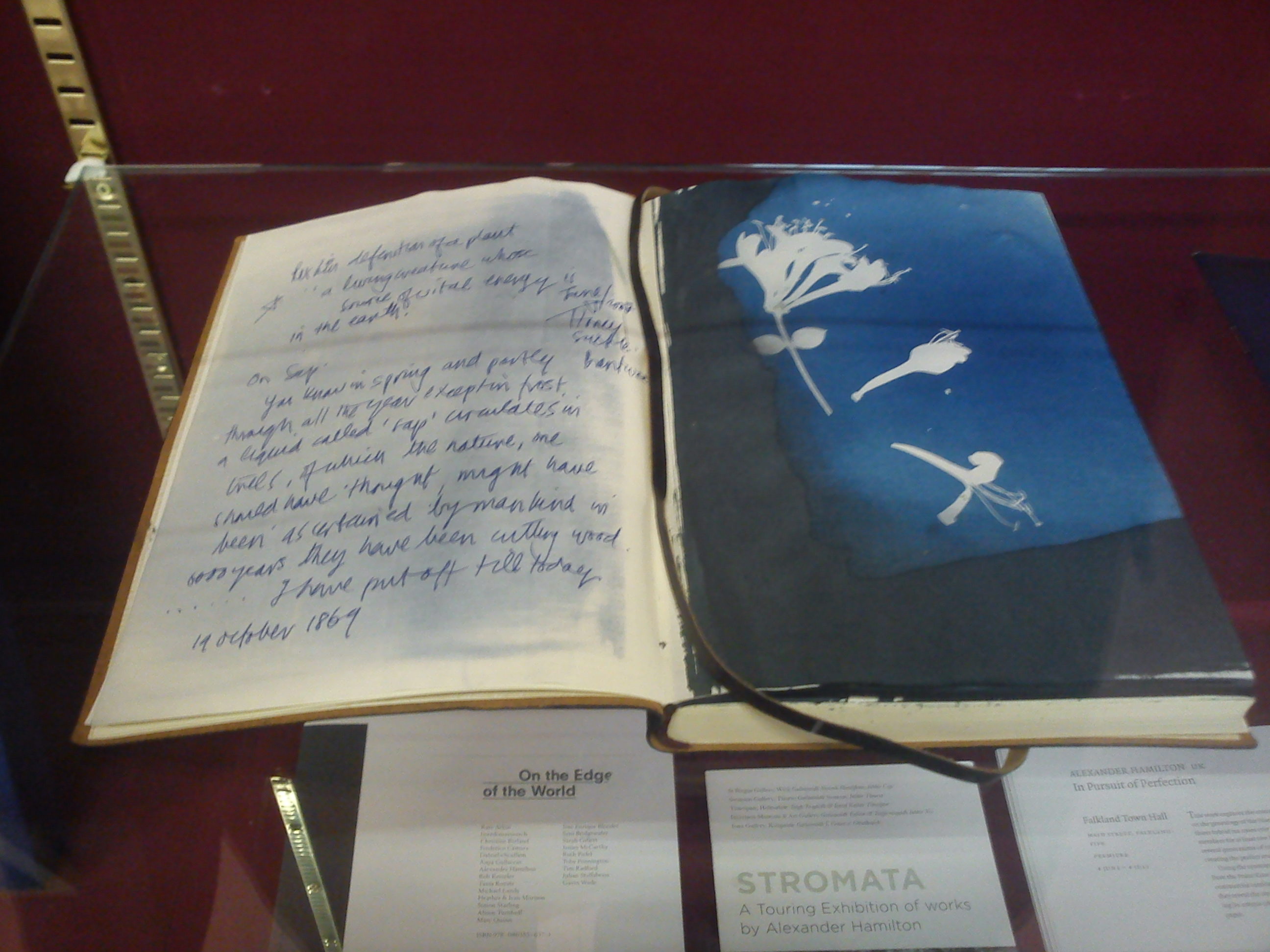
Alexander Hamilton’s notebook. Photo Chris Fremantle
Alt-photo at Edinburgh College of Art.
The Essential Monument Pt. 1 | Public Art Scotland
First part of a report on The Essential Conference in Edinburgh,
“I feel uncomfortable with the term public art, because I’m not sure what it means. If it means what I think it does, then I don’t do it. I’m not crazy about categories.” Barbara Kruger
Working artists and curators don’t tend to talk about monuments as part of the contemporary public art. Not sure they’d be considered essential. The recent conference, The Essential Monument, held at the Storytelling Centre in Edinburgh (8th February 2013), proved everyone wrong. The provocation clearly worked.
Before talking about the conference I need to say that the new monument to Patrick Geddes installed in the Garden of Sandeman House is one of the finest pieces of sculpture I’ve seen in a long time.
Grupo Etcetera on failure
From Grupo Etcetera presentation at CCA Glasgow.
Errorism: practice philosophy that bases its actions on error
Errorists: multitudes, subjects or groups that practice errorism
“The Movement also opens ways to consider the notion of error as a fundamental human condition in the capitalist world that eschews mistakes and failures.”
see also http://actipedia.org/project/international-errorist-movement
What art have I seen?
A Different Way of Working: The Prints of Wilhelmina Barns-Graham and St Ives Painting, at the Dick in Kilmarnock. Particularly interesting images of glaciers and broken trees.
What art have I seen?
ECONOMY at the CCA in Glasgow and Stills in Edinburgh.
My uncle wrote a book entitled God and Money.

His book is about the Italian Renaissance. I’ll send you a copy if you are interested (let’s just say you’ll owe me). These days fewer people believe in God, more believe in art, and money involves more in the way of belief. IS there a big difference between indulgences and Hedge Funds? But it’s too easy to slip into that trope.
David Haley says,
“…economy need not be limited to monetary concerns, but may carry the virtues and the values of efficiency, good management, good housekeeping, and dwelling correctly, or ecologically. And this meaning, also, imples the profoundly simple/complex aesthetic when describing the ‘economy’ of Shaker furniture, the profound simplicity of a Zen brushstroke, or the Bauhaus term, “the art of the highest utility”.
There are two parts to the exhibition Economy, one in Glasgow and one in Edinburgh. I saw them on pretty much consecutive days (I then got a e-flux announcement about “It’s the Political Economy, Stupid” at the Pori Art Museum in Finland). We in the arts need to acknowledge our complicity, even our role as the avant garde in global capital and mobility.
Economy has a subtitle – work, sex, life, enclosures, crisis, spectres, exodus. David would like the inclusion of the Project Row Houses – they might be in the life category. Theirs is a minimal contribution: a poster highlights the resistance to the encroaching gentrification of the Third Ward in Houston where the Project Row Houses are located. David would appreciate the elegance of 21 shotgun houses used, seven as afterschool clubs, seven homes for single mothers and seven for artists residencies plus an office. Check it out – its growing.
Irony is also a useful tool for exploring economics. Hito Steyerl film (which is also part of a survey at the Art Institute of Chicago at the moment) deserves time spent with it. The film follows Steyerl’s search for one set of bondage photos taken of her whilst she was in Tokyo studying film some 10 years previously. She doesn’t know the name or location of the studio, magazine, photographer or ropemaster. As the ingenue she is able to visit and explore this strange world. Everyone wants to help. They are proud to be asked.
Who is he?
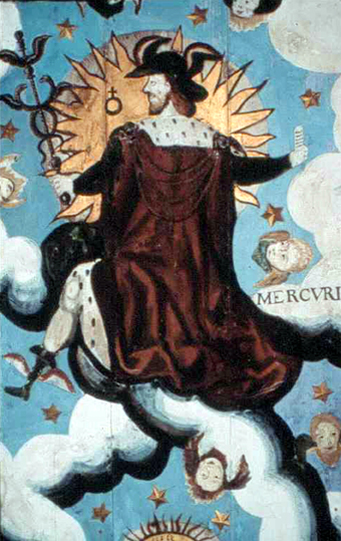
Cullen House 16th Century tempura painted ceiling (detail of Mercury)
I use this image (or an even smaller crop) , rather than a photograph of myself, when asked for one by websites.
It is the figure of Mercury from the Scottish Renaissance tempura painted ceiling in Cullen House, Aberdeenshire. Sadly it was destroyed by fire in the late 80s. If you are looking for more information on the Cullen House ceiling get hold of a copy of ‘Celestial Ceiling’, the publication of the On The Edge Research project. The book documents the process of remaking the lost ceiling as a digital projection, and commissioning Robert Orchardson to make a new painted ceiling for the house.
What art have I seen?
In pursuit of the Question Mark – a retrospective exhibition at the Mitchell Library, Glasgow. A really packed exhibition of the work of George Wyllie.
Collaboration
Billy Klüver again,
The “expertise” that artists bring to the collaboration comes directly from their experience in making art. The artist deals with materials and physical situations in a straightforward manner without the limits of generally accepted functions of an object or situation, and without assigning a value hierarchy to any material. The audacity of Picasso’s collages in his time, Meret Oppenheim’s surrealist objects, and Rauschenberg’s combines and cardboard pieces all illustrate this quality. The artist makes the most efficient use of materials, and achieves the maximum effect with minimum means. Surplus of material leads to decorative work. The artist is sensitive to scale and how it affects the human being. From cave drawings to Persian miniatures, cathedral frescoes, or Christo’s Running Fence, scale has been a consistent concern of the artist. The artist is sensitive to generally unexpressed aesthetic assupltions, which are based on subjective preference masquerading as “objective,” practical, economic, or social factors. The artist assumes total responsibility for the artwork. The artist knows that a work is the result of personal choices: this sense of commitment and responsibility gives the artist and the work a unique quality.
Artists, Engineers, and Collaboration (published in Culture on the Brink: Ideologies of Technology, A Manifesto for Cyborgs. Bender, G. and Druckrey, T. (Eds) Dia Center for the Arts, Discussions in Contemporary Culture Number 9. Seattle: Bay Press, 1994).
Collapse
Billy Klüver reminds us of Jean Tinguely’s work on collapse in Artists, Engineers, and Collaboration Klüver-Billy-Artists-Engineers-and-Collaboration (published in Culture on the Brink: Ideologies of Technology, A Manifesto for Cyborgs. Bender, G. and Druckrey, T. (Eds) Dia Center for the Arts, Discussions in Contemporary Culture Number 9. Seattle: Bay Press, 1994).
Jean Tinguely came to New York City in early 1960. On seeing the city for the first time, he decided to build a large machine that would violently destroy itself in front of an audience in a theater, throwing off parts in all directions. A protective netting would save the audience. When the Museum of Modern Art invited Jean to build his machine in the garden of the museum, he asked me for help. I took him to the New Jersey dumps, which in those days were not covered with dirt. He found bicycle wheels, parts of old appliances, tubs, and other junk, which we hauled to the museum and threw over the fence into the garden.
Enlisting the help of Harold Hodges at Bell Laboratories, we built a timer that controlled eight electrical circuits that closed successively as the machine progressed towards its ultimate fate. Motors started; smoke, generated by mixing titanium tetrachloride and ammonia, bellowed out of a bassinet; a piano began to play and was later set on fire; smaller machines shot out from the sculpture and ran into the audience. In order to make the main structure collapse, Harold had devised a scheme of using supporting sections of Wood’s metal, which would melt from the head of overheated resistors. The whole thing was over in twenty-seven minutes. The audience applauded, and then descended on the wreckage for souvenirs. Jean called the event Homage to New York. During those three or four weeks of the construction of the machine I learned how to listen to the artist, and to give him as many technical choices as I could – as quickly as possible. And as Jean has said repeatedly since, it couldn’t have happened without our collaboration.
For information see http://www.moma.org/collection/browse_results.php?object_id=33838
Body Pods podcast
Each podcast in this series, co-produced by Fuel and Roundhouse, has been made by an artist in collaboration with a scientist, exploring a different part of the human body.
What art have I seen?
The Artist and the Organisation: Artist Placement Group 1966-1979 at Raven Row. Extensive documentation of a significant number of placements in industry and public service including correspondence on setting up of placements, feasibility studies and reports as well as films and other documentation. Films from ‘I am an archive’ (see Laura Trevail’s website for more info).
Ayr Common Good workshop
ayr converses (Lianne Hackett and Chris Fremantle) have organised a free workshop on Ayr Common Good for Saturday 8th December, 10am- 1pm, in the former courtroom at Ayr Town Hall. Please follow the link for more information.
Booking is required. Places are limited to 30 participants & will be allocated on a first come first served basis. Please email ayr converses info@ayrconverses.org.uk with “Ayr Common Good Booking” in the subject line.
Failures
I’ve started adding examples of failure into my blog. I’ve tried to put them into the blog at the time they happened. This will probably mean that there is a clump retrofitted into the time before I started actually keeping the blog. And to be honest I’m not going to be able to put anything that’s going on right now that might constitute failure for obvious reasons, so this will be a backwards looking exercise.
The first I put in is a misunderstanding from the late 90s. I was running SSW and trying to learn about artists working in the landscape. I was picking up on references to John Latham and his work in Scotland. I had heard that it had something to do with the bings of West Lothian. So I was down, probably visiting with relatives and went looking. I came across the Five Sisters near a now defunct retail park. I took a load of pictures. I thought at the time John Latham was an important largely unknown British land artist in the American sense. I thought he had literally shaped this monumental earthwork. It took a while for me to understand what was really going on. I did write about that a while ago here.
I think this is typical for me. Often I’ll misunderstand something to start with, and it will take a while for me to get it the right way around, sort out what’s important. Interestingly Johan Siebers recently highlighted the Slow Science movement and in their manifesto they say,
We do need time to think. We do need time to digest. We do need time to misunderstand each other, especially when fostering lost dialogue between humanities and natural sciences. We cannot continuously tell you what our science means; what it will be good for; because we simply don’t know yet. Science needs time.
The next example is a piece I was asked to write as an introduction to a catalogue. This would be around 2001. The catalogue was for the exhibition Common Place at The Lighthouse in Glasgow. I was living and working up in the North East of Scotland and I got completely obssessed by farm bothies, bothy ballads, Bob Dylan and the way that these were connected. I wrote the piece. It definitely wasn’t what was wanted. There is a model for writing an introduction to an exhibition catalogue and I missed that model completely. It’s taken me a very long time to work out that models are important. You don’t have to reinvent the wheel every time. I like starting with a blank sheet of paper. Not everyone else does. You can read it here.
This brings me onto another failure – if being made redundant from a local authority is a failure (could it actually be a badge of success?). Before I went freelance I worked as the Arts Links Officer for South Ayrshire Council. They made me redundant at the end of the contract in 2006. I went freelance and have not looked back. Even in South Ayrshire, where I still live, I think I’ve achieved more since than I ever did during. But I do think there was a conceptual failure on my part. I don’t think I understood that I was simply there to deliver on existing models. What I should have been doing was networking with other Links Officers to find out what was being done in other Local Authorities across Scotland and simply bring those programmes to South Ayrshire. I was doing some of that, but I was always looking to make it distinctive, specific to that place.
Another much earlier failure, again at SSW, was not managing to deliver the tenth edition of the Scottish Sculpture Open. That should have opened in 1999 in early July. I had a number of meetings with SSW Board members and we discussed and or approached a couple of people to be guest artists (I remember Martin Puryear and John David Mooney). I remember writing to Puryear and sending him some images of Kildrummy Castle. He didn’t want to do it. The Sculpture Open had been done on a shoe string in the past and we had, with the ninth edition, tried to do it properly with at least some fees and production expenses. It has to be said that there were a few other things going on at the time, but essentially I definitely failed to keep the programme going.
So why put examples of failure into my blog? Failure is something we don’t talk about enough. There is Beckett’s brilliant quote,
Ever tried.
Ever failed.
No matter.
Try Again.
Fail again.
Fail better.
Samuel Beckett
Failure is about taking risks. There seems to be a bigger and bigger gap between the public sector and the private sector in terms of risks. It is talked about a bit in terms of design and innovation – fail fast, fail frequently. On the other side the requirements in the public sector for clear identification of outputs, outcomes and risk assessments are all limiting the bureaucratic exposure to risk and pushing it onto individuals and organisations.
Working with staff at Gray’s School of Art on a research residency last year we discussed failure a lot. The staff highlighted how difficult it is to promote failure as an important way of working for art school students. All the staff were quite happy to talk about failure in their own practice. Most said that failure was a more common experience than success. No one had any problem talking about failure.
But they described the situation where students need to be prepared to make works that fail, but they are constantly worried about grading and being failed. How can you develop a practice that has a healthy relationship with failure if the structure you are working in constantly threatens you with failing the course?
Failure is about learning. By listing failures I am also listing things I have learnt from (or should have learnt from). Talking to Chris Hewson from Manchester School of Architecture, who’s doing research into multi-faith spaces, he said that the Planner on the research team is always wanting to visit spaces that don’t work, rather than the ones that are exemplary. He says you learn more. People can tell you exactly why spaces don’t work, but find it more difficult to explain why things do work.
There are some good books on failure:
Antebi, N., Dickey, C., Herbst, R. (Eds). (2007). Failure! Experiments in Aesthetics and Social Practices. Los Angeles, CA : The Journal of Aesthetics and Protest Press. http://www.journalofaestheticsandprotest.org/ accessed 26 November 2012.
Hope, S. (2011). Participating the Wrong Way: Four Experiments by Sophie Hope. London: Cultural Democracy Editions. http://culturaldemocracyeditions.sophiehope.org.uk/ accessed 26 November 2012.
Le Feuvre, L. (ed). (2010). Failure (Documents of Contemporary Art). London: Whitechapel Art Gallery.
What art have I seen?
Heliotrope, Botanic Gardens, Glasgow. Intense 12 minute experience of light and sound whilst lying down in a tent in the Kibble Palace.
If you are interested in the experience of the seasons, SADS, or public art as performance then you should experience this. If you have a venue, then there is a tour being planned.
BONFIRE: Open International Architectural Competition. Papa Westray. Orkney
Interesting brief – architecture of a bonfire. Deadline 12 December 2012.
BONFIRE: Open International Architectural Competition. Papa Westray. Orkney.
What art have I seen?
Donald Urquhart’s Sanctuary for the Chaplaincy at the University of Edinburgh.
What art have I seen?
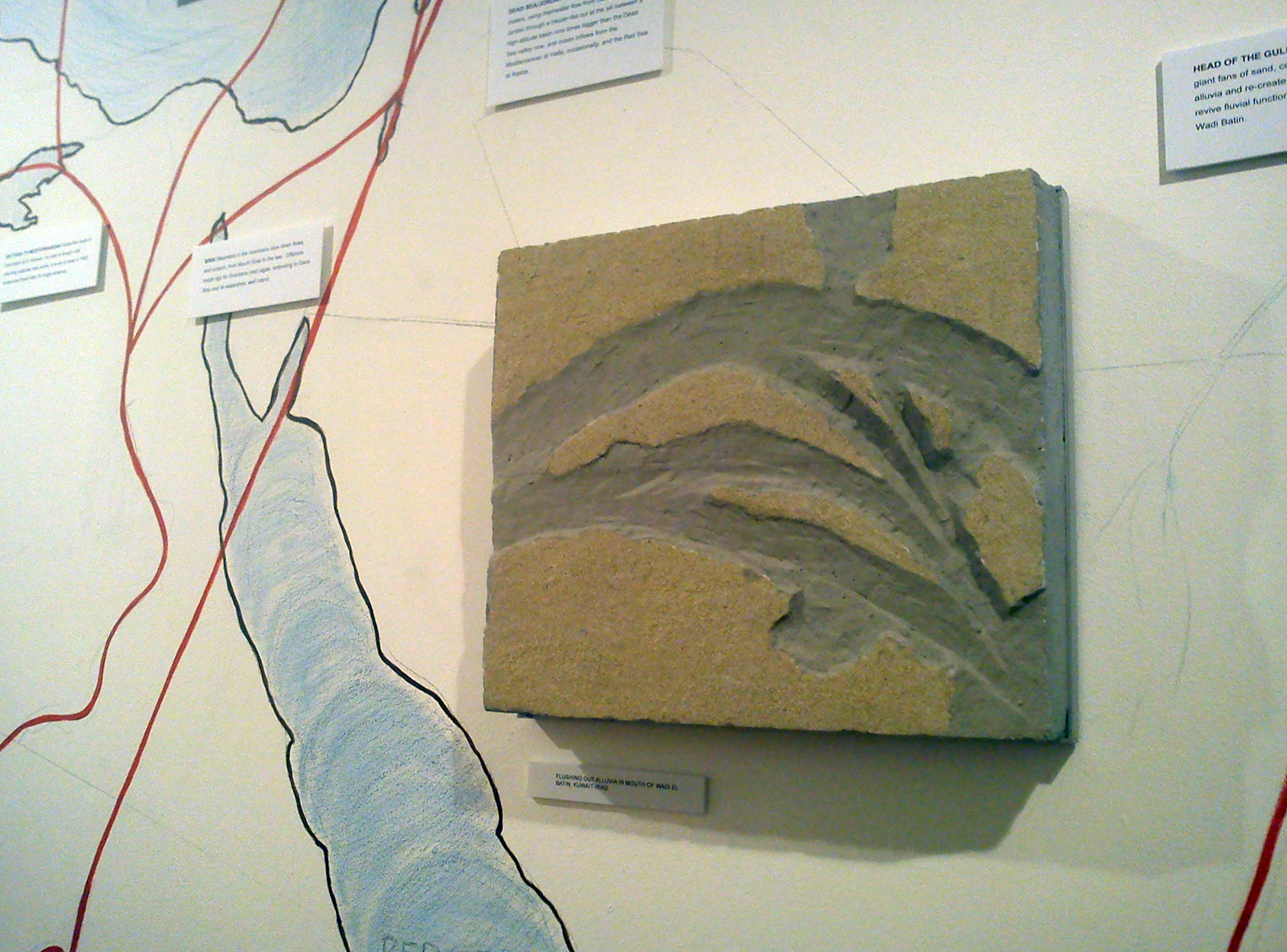
Detail of Peter Fend’s installation, Photo Chris Fremantle
Oilscapes at Peacock Visual Arts, Aberdeen
What art have I seen?
The School of the Art Institute of Chicago Sullivan Galleries
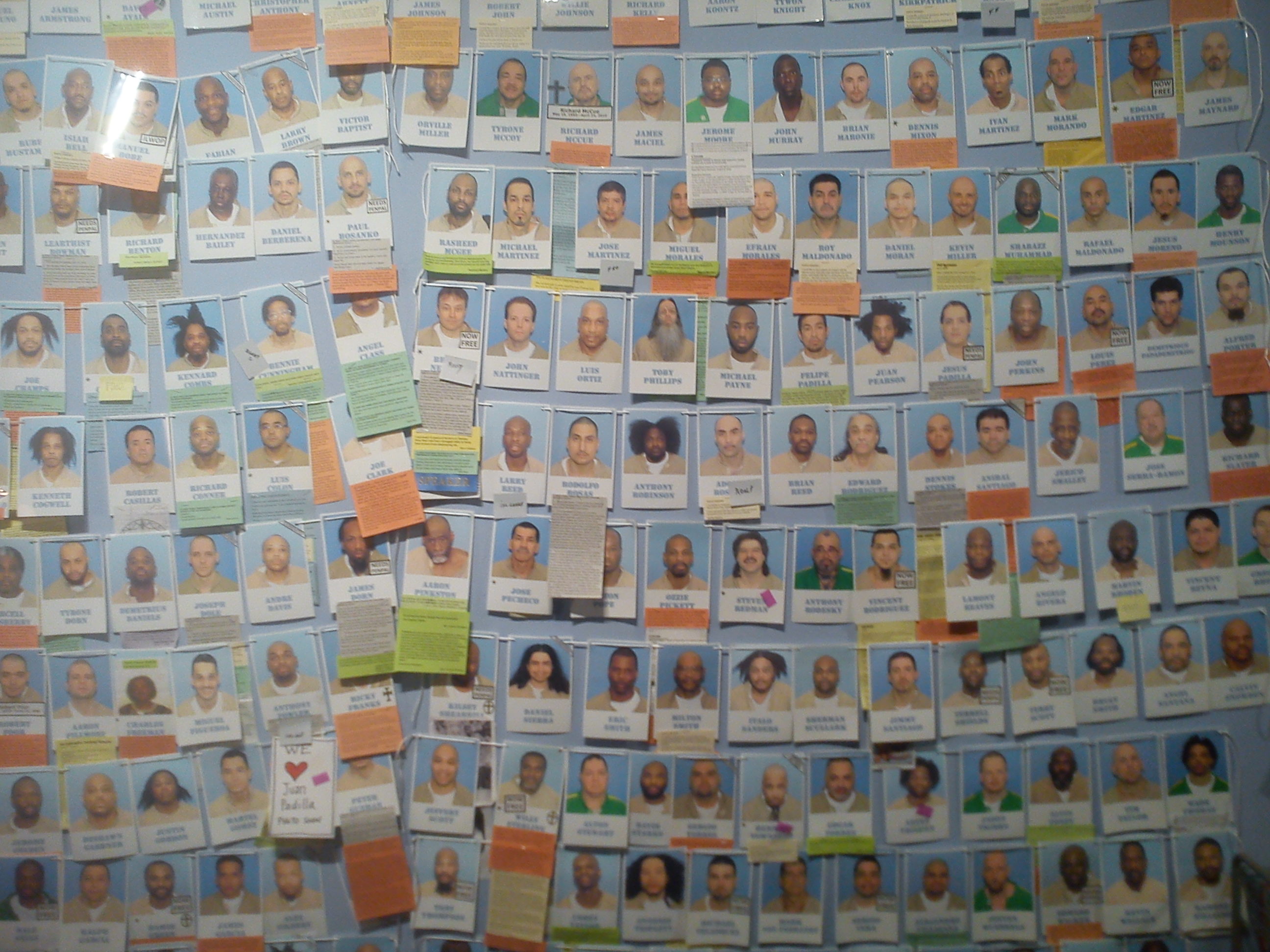
Tamms Ten Year Campaign Office (detail). Photo Chris Fremantle
Tamms Ten Year Campaign Office – Tamms was a supermax prison designed to hold individuals in solitary confinement and sensory deprivation. Amongst the Tamms Ten Year Campaign initiatives to get people to use their airmiles to send inmates magazine subscriptions.
Opening the Black Box: The Charge is Torture – more than 70 proposals for a memorial to the victims of the Chicago Police Department.
Preview: A Segment from Natural Life (a work in progress). Imagine having been put away for life aged 15. Actors narrate the experiences of middle aged men as well as the their victims.
Scotland vs The USA
Scotland vs The USA: Who has agency in public art?
Panel session at the ISC Sculpture Conference, Chicago.
Moderator: Chris Fremantle
Panelists: George Beasley, Mary Bates Neubauer, Jana Weldon
Presentations can be found on issuu.
What art have I seen?
Of Natural and Mystical Things, Royal Scottish Academy, Edinburgh
What art have I seen?.
The Individual and the Organisation: Artist Placement Group 1966-1979 at Raven Row, London.

Review of The Time Is Now: Public Art of the Sustainable City
There is no question that energy generation impacts on landscape, both urban and rural. It always has. The current re-engineering of systems towards renewable energy is, on one level, not different. Wind turbines are just one example around which there is a very polarised debate. As a result there has been considerable work done in Scotland on the visual as well as environmental impact. Sophisticated modelling of proposed installations in landscape contexts has become a normal part of public consultation processes. There is now for instance a mobile virtual landscape theatre, developed by The James Hutton Institute. Behind the issues of visual and environmental impact there is a significant public policy commitment in Scotland. This public policy commitment drives funding and decision-making to deliver on the targets. It is intended to shape or focus the…
View original post 1,307 more words
Artists’ fees: “The cost of labour must be paid for.” | News | a-n
Reposting the report Artists’ fees: “The cost of labour must be paid for” carried on a-n about the W.A.G.E. event in Glasgow earlier this week.
It’s a pretty good summary of the presentations, and once again highlights the real challenges of working in the visual arts. The Scottish Artists Union campaigns for better conditions and has guidance on Rates of Pay for workshops and residencies.
Corin Sworn highlighted the situation in Canada where CARFAC has secured legislation for exhibition fees – based on what was presented (which might be out of date) these would probably work out as about £750 for an exhibition is a public gallery with a turnover of less than £300,000 per year, and perhaps £1,400 for a larger institution. It’s adjusted for group shows, etc.
The principle is regardless of any budget for production, travel, per diem, installation, publication, the institution pays the artist in effect a copyright royalty payment for the right to use their work for the show. This applies to institutions, not (legally anyway) to self organised events. It’s not intended to hinder grassroots activity, although it does establish a principle to aspire to.
That principle seems like a sensible one on which to determine exhibition fees, i.e. not on how long did it take, was it new work or existing work, did the work take manual work to produce, etc. Simply the institution is gaining (financially as well as in terms of profile) from being able to present the artists’ work, it is literally using that work, therefore it should make a payment for the use of the work.
Interestingly Lise Soskolne had done an analysis in relation to one organisation in NY where the exhibition fees were costing the organisation 1% of turnover and adopting the CARFAC model raised that to 3%. Not a big difference for a respectful and appropriate recognition of the use of artists’ work by institutions.
Thanks to Corin and Charlotte for making this happen.
Northern Perspectives Arctic Art Education and Arts Based Research methods

Professors Timo Jokela & Glen Coutts, University of Lapland will be speaking at Northern Perspectives: Arctic Art Education and Arts-based Research Methods at this UWS seminar 2-4pm Saturday 22nd September at the Gallery of Modern Art, Glasgow. Alison Bell and I are respondents
Sensory Maps by Kate McLean
Sensory Mapping of Cities – a smell map of Glasgow is a must.
Glasgow’s smells are of movement, of reinvention, of rebuilding, of regeneration. A city of renewal. Researched with contributions from author Michael Meighan (author of “Glasgow Smells” and “Glasgow Smells Better”) as well as commuters, residents, workers, tourists, the Glasgow City council. To be displayed and sniffed at the Glasgow Science Centre from September 2012.
It’s worth exploring the website – City of the Eternal Itinerant, Sensory Map of the Barras, Glasgow and the smelliest block in NYC this summer.
First people (not cars)
Yesterday evening at the annual Patrick Geddes Commemorative Lecture the audience was charmed into seeing the world a different way and recognising our own failures in the process. The lecture was given by Jan Gehl, an internationally acknowledged champion of urban quality focused on and driven by people and their well-being (rather than cars or egos).
In fact his critique of architects represented them as people who looked at the world from 3 kilometres up and dropped buildings into skylines. His counter was that the skyline was not as important as the way that the building meets the ground. In the analysis he offered us of Edinburgh, the topography and skyline are excellent, but the point where you move the human eye level you see the disaster.
His critique of traffic engineers was equally damning. In his analysis the past 50 years have been dominated by the motor car at the expense of everyone and everything else. In 2012 we need to make prioritising the car in public as unacceptable as smoking – that’s the level of challenge in effect Gehl was suggesting.
So much is true and in so many ways self evident, but the full ramifications of the analysis are wider and more comprehensive than you might think. For instance, having a Department of Walking, Cycling and Transport? Having the driver press the button at the junction to get permission to cross, rather than the pedestrian? Having newspaper articles about bicycle congestion and demands for wider bicycle lanes?
What was a shame was that there were only a couple of artists in the room (lots of architects and obviously a majority of urban planners), but I didn’t see people who really ought to have been there – no-one from the VeloCity programme for Glasgow, no-one from Ayr Renaissance, and I didn’t recognise anyone from the health sector.
There was a really interesting question at the end. The individual noted that Gehl had not used the word design once in his presentation. The questioner contrasted this with the Scottish Government’s consultation on a new Policy on Architecture and Place-making. Gehl basically said that he did two things. He (and his practice) worked on “programmes and Strategies” and these set the tasks for the designers. He (particularly in his academic life) worked on the in depth understanding of people and their experiences in public spaces. These two obviously complement each other, but in essence he is ‘bracketing’ the designers – by evaluating (and that was his word) what works and what doesn’t, and then inscribing it into Programmes and Strategies, he is driving the design agenda.
For me this demonstrated an important articulation of the value of operating between the academic and the practice, as well as everything else he said. It all seems so obvious when Gehl says it, but then you look around.
Maybe his books should be mandatory reading not only on urban planning programmes?
What art have I seen?
Inspired Editions: Prints and Multiples at the Robert Burns Birthplace Museum. Very good answer to the question “What does Robert Burns mean to you?” when asked to Scottish artists living and working now.
The National Trust for Scotland’s press release:
Earlier this year, conservation charity The National trust for Scotland launched a programme of contemporary exhibitions for the first time. Inspired Editions: Prints and Multiples brings together 14 of the very best artists today and will run between 7 September and 24 December 2012.
All of the sculptures and prints on show are ‘editions’ – that means there are a small number of versions available for purchase – a move which makes them much more affordable to the general public.
The artists taking part in Inspired Editions are:
· ROB AND NICK CARTER (The Red Rose)
· CALUM COLVIN (Burns Country)
· GRAHAM FAGEN (Red Rose)
· EUAN HENG (Volunteer)
· KENNY HUNTER (Monument to a Mouse)
· WHYN LEWIS (Survivor)
· DAVID MACH (Robbie Burns)
· JO McDONALD (The Songs you used to Play II)
· HARLAND MILLER (Sweet Afton)
· ROBERT POWELL (A Tripartite Diptych: The Ploughman Poet flanked by Ossian/Macpherson and Topaz McGonagall)
· JEPHSON ROBB (Love & Kisses)
· CATHERINE SARGEANT (Tirl)
· FIONA WATSON (My Heart’s in the Highlands a-chasing the Deer)
Affordability, without compromising on quality, was an important consideration for this new exhibition, which was curated by Sheilagh Tennant.
Commenting on the exhibition, Sheilagh said:
“There are over a dozen artists involved and it’s fascinating to see the variety of different interpretations of Burns’ work.”
The roots of the new exhibition were in Inspired 2009, an exhibition of original work inspired by the life and times of Robert Burns. This exhibition was part of the 2009 Homecoming Scotland programme of events and was also curated by Tennant.
Sheilagh adds:
“Inspired 2009 was a labour of love really – I had been aware for a long time that there had never been a major exhibition of contemporary art inspired by the work of Burns and the Homecoming celebrations provided a perfect vehicle.
“However, during the run of the exhibition, I became aware that, while many would have liked to, most people were disappointed that they could not afford to buy the work on show in Inspired 2009. When I was invited to manage the new contemporary exhibition programme at the RBBM, this provided the opportunity to exhibit a series of editioned work inspired by Burns’ life and works.”
Inspired Editions runs daily at the Robert Burns Birthplace Museum in Alloway. Entry to the exhibition is free and a proportion of all sales from the museum will go to support the property.
The museum is a cultural hub for Ayrshire and beyond, attracting the best from the world of art, music and literature and presenting their works with irreverence and fun.
Along with the Auld Kirk and Brig o’ Doon, the cottage where Burns was born has been combined with the Burns Monument and the new award-winning museum building to form the Robert Burns Birthplace Museum. Generously supported by the Scottish Government and the Heritage Lottery Fund, the museum commemorates the life and works of Robert Burns.
Since opening to the public in December 2010, the museum has welcomed more than half a million visitors and has won a series of accolades including being selected as a finalist for the prestigious Art Fund prize, securing a five star rating from VisitScotland and being named as Horace Broon’s ‘new favourite place in Scotland’.
What art have I seen?
“Cheer up! It’s not the end of the world…” (or ‘we’re a’ doomed’)
at Edinburgh Printmakers
Ricky Allman, Martin Barrett, Gordon Cheung, Etienne Clement, Jake & Dinos Chapman, David Faithfull, Damien Hirst, Konstantin Kalinovich, Kris Kuksi, Lori Nix, Andy Warhol.
Curated by Norman Shaw and Sarah-Manning Shaw

In recent years there has been a great deal of interest amongst health researchers in the role of social stigma in affecting health. Social stigma can be articulated as a majority view that works to spoil the identity of others on the basis of a discriminating characteristic such as race, gender or class. The social stigma associated with some minority groups has been shown to have health salience in terms of providing an obstacle to gaining access health care, housing provision, welfare, employment and other underlying factors affecting health. Groups that have been the subjects of research include disabled, homeless and itinerant populations and this body of work has revealed the multitude of interpersonal and institutional factors linking discrimination with health. Stigma has also been adopted as a deliberate strategy in health promotion initiatives, most notably in tobacco control with recent work beginning to question whether the denormalisation and stigmatisation…
View original post 595 more words
Collaborate Creatively
Workshop in association with World Event for Young Artists (WEYA) and a-n.
Nottingham, 12-3pm, 13th September 2012 open to participants in the WEYA event.
Presenters:
Drawing on his text for a-n Reflections on Collaboration, Chris Fremantle will explore with guest artists the principles and approaches to creating great collaborative relationships amongst artists and into other disciplines and contexts. Includes informal and facilitated discussion exploring how artists can realise their ambitions and a hands-on workshop highlighting contexts for innovation and guiding good practice.
Collaboration is one of those hot topics. Missions, Models, Money have had a whole stream of work around the issue over the past few years, Grant Kester‘s new book The One and the Many theorises the subject, and a-n has been tagging articles as ‘Collaborative Relationships‘ for about five years.
Donald Campbell 1942-2012 RIP

Donald Campbell, Garden Villa I Tatti, Gesso, tempera and graphite on panel
Donald Campbell was one of the best painters I ever had the privilege of knowing. He was also one of the most sensitive and intelligent people. He will be sadly missed.
Arts and Health Projects
Bio-hacking highlighting three different individuals exploring the augmentation of their own bodies (on the back of the Wellcome exhibition Superhuman):
Superhuman: The artist, the scholar and the zealot « Wellcome Trust Blog.
W.A.G.E. – 7pm on 18 September, Glasgow

W.A.G.E. (Working Artists for the Greater Economy) are speaking at a public meeting at The Art School (New Vic) 468 Sauchiehall Street, Glasgow, at 7pm on 18 September on their ‘exhibition fees’ campaign.
There will be an introduction by Charlotte Prodger and Corin Sworn and an open discussion.
This event has been organised by Transmission and the Scottish Artists Union.
Circulate the poster WAGE event 180912
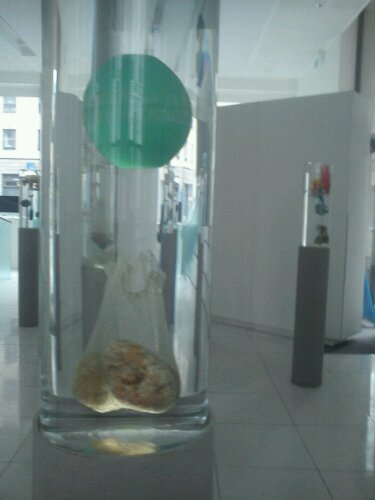
Arts and Health Projects
I never saw the Montreal based Canadian Centre for Architecture’s exhibition on the medicalization of architecture, but the book is excellent. Art Agenda announcement.
What art have I seen?

Donald Urquhart and Gerry Loose Orchard at the Scottish Poetry Library
Arts & Health projects
Alexander Melamid’s ironic project on the health benefits of exposure to art.
He wanted to know the specifics about the patient’s malady, and about any museums he had visited recently. Told that the patient had been looking at a lot of Whistlers, be nodded and said, “Not enough masterpieces.”
Alexander Melamid’s Art Healing Ministry in SoHo – NYTimes.com.
What art have I seen?

Attended an outstanding seminar with Tim Rollins and the K.O.S. at the Talbot Rice Gallery, Edinburgh. Saw the exhibition being installed and the workshop working with Darwin’s Origin of Species.
What am I reading?
Hackerspaces and DIYbio in Asia: connecting science and community with open data, kits and protocols in Journal of Peer Production.
Nothing and Everything: The Influence of Buddhism on the American Avant Garde: 1942 – 1962
Buddhism emerges in various ways over the past 40 years, whether with Ginsberg et al or with Gary Snyder, or more recently with Mary Jane Jacobs amongst others. Ellen Pearlman has written a history of the early period of this development and she is in conversation in Brooklyn Rail here.
What art have I seen?
Socrates Sculpture Park: last visit was in 2009. This time the summer is taken up by Civic Action: A Vision for Long Island City, a show jointly put together with the Noguchi Museum. Civic Action includes projects by Mary Miss, Natalie Jeremijenko and xClinic, Rirkrit Tiravanija and George Trakas.
Quite a line up.
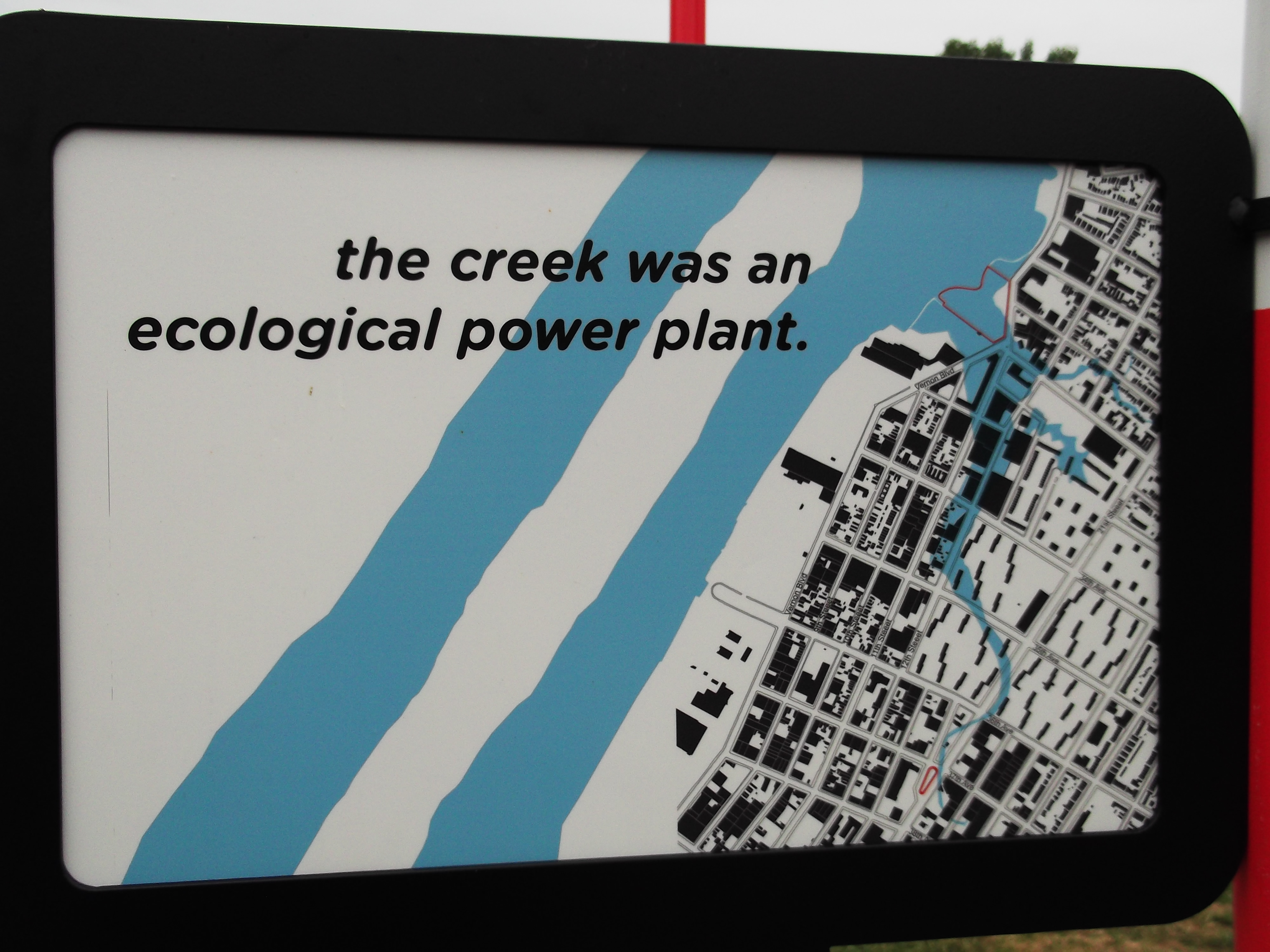
Civic Action, Photo Chris Fremantle
Various experiments in thinking about site, place, economy, conviviality and ecology. The projects started with discussions and seminars at the Noguchi Museum and have resulted in prototypes in Socrates.
Civic Action Curator, Amy Smith-Stewart states:
The exhibition at Socrates shows us what the neighborhood once was and what it could be. It asks questions. Why can’t the community reclaim its scenic riverfront? How can the cultural activity of the Park extend out beyond its immediate surroundings? Why does the ecology around us matter? And how can this place become an innovative district for artists, scientists and urban planners and how can the area improve the quality of life for New Yorkers?
What is Socrates: if a sculpture park is normally like a museum (ie looking after stuff), then Socrates is more like a contemporary art gallery (showing new ideas and installations) mixed with some aspects of a workshop (bringing communities into contact with artists). And its also a public park being used for walking, practising the trumpet and sitting in the sun.
The curatorial approach has also evolved. In the past it was perhaps more like a sculpture park as museum – some works installed for long periods, stand alone objects to be admired.
A publication for Civic Action would be good.
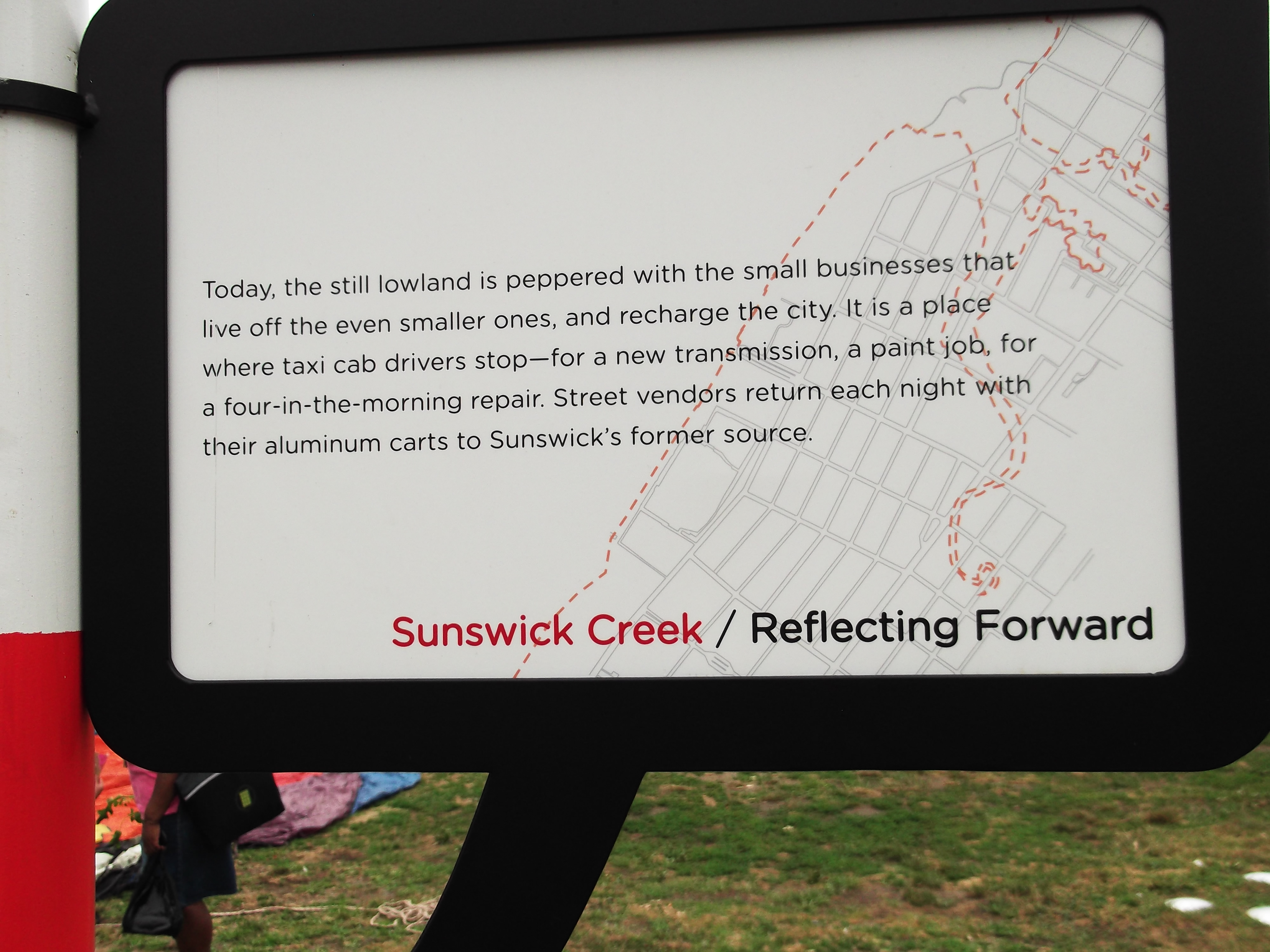
Civic Action, 2012, Photo Chris Fremantle
Making Policy Public – MAS CONTEXT

Vendor Power, Copyright Kevin Noble for CUP
The Center for Urban Pedagogy‘s Making Policy Public series is a standout project engaging marginalised interest groups with designers and communities. MAS Context provides and overview of the series here. Its a good description, though it doesn’t offer a critical commentary.
What Art have I seen?
Brandon Ballengée’s the Collapse: The Cry of Silent Forms at Ronald Feldman, NYC.
NB Ballanjee has put together significant amounts of background research into a series of ‘appendices’ available on Feldman’s.

 CHRIS FREMANTLE
leave a comment