What art have I seen? Christo and Jeanne-Claude ‘Air’
You walk up from Green Park past the Ferrari and Lamborghini dealerships to get to the Gagosian where Christo and Jeanne-Claude’s unrealised proposal for a work wrapping air has now been made by one of the premium commercial galleries. Do you buy the car or the art? The storage and maintenance handbooks are probably equally thick.
Air Package on a Ceiling fills the first gallery space. It is a suspended form lit internally by the gallery lighting (the blurb says “internally illuminated”). It was originally conceived in 1968 for the Institute of Contemporary Art, Philadelphia (see maquette below).
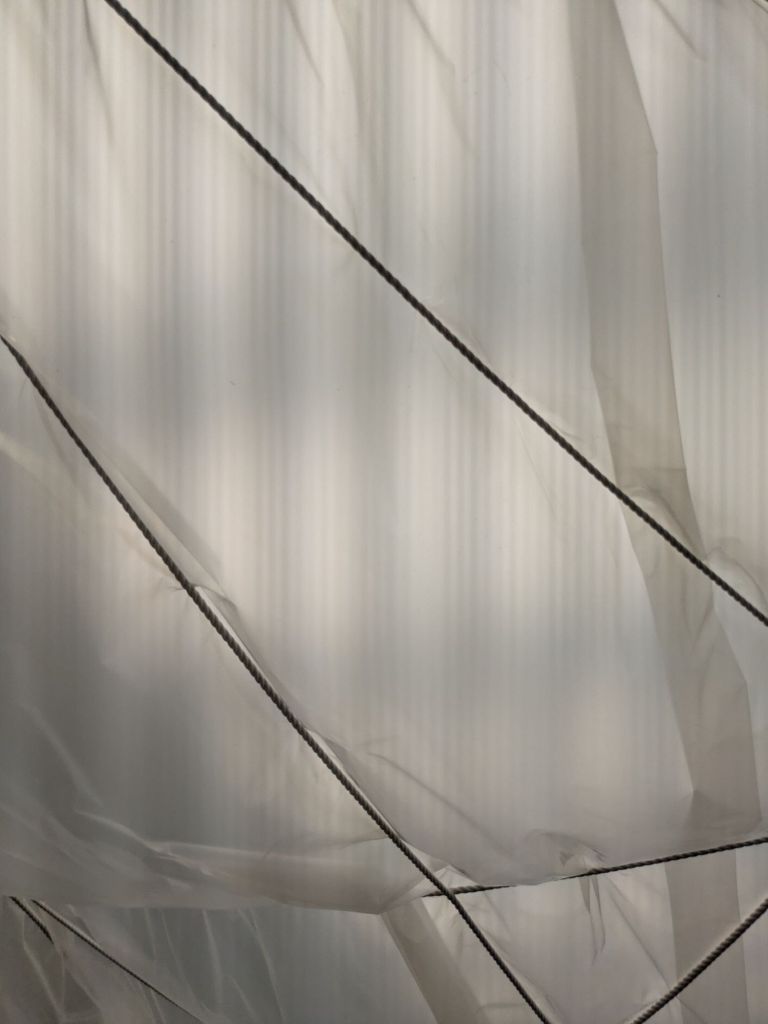
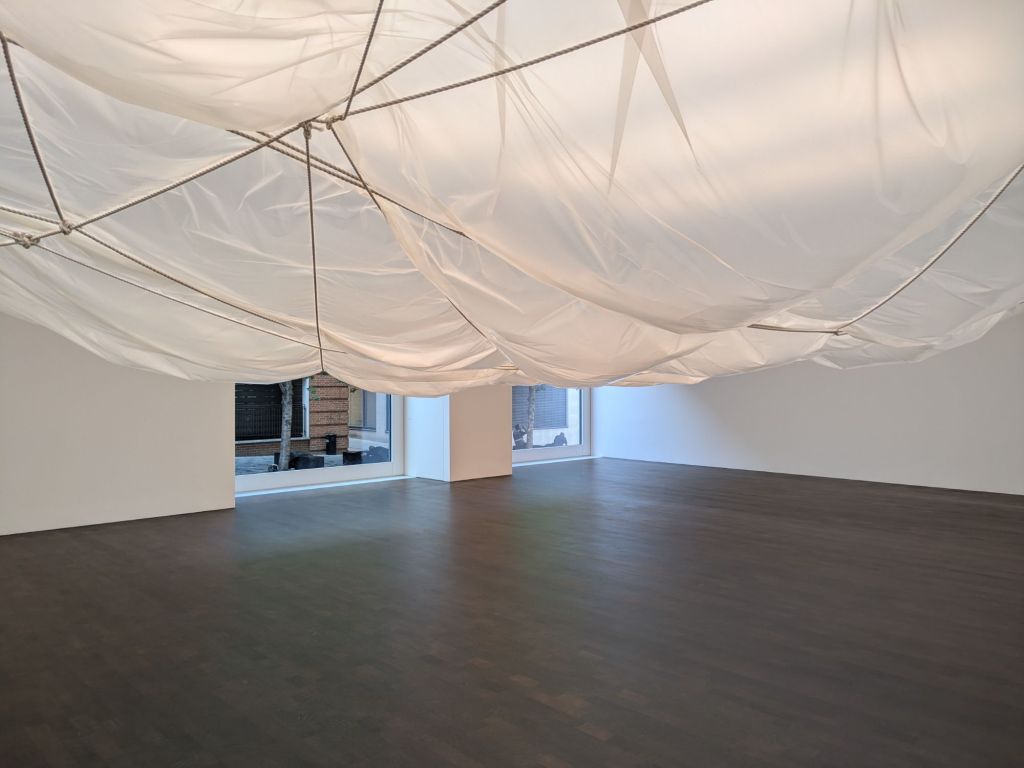
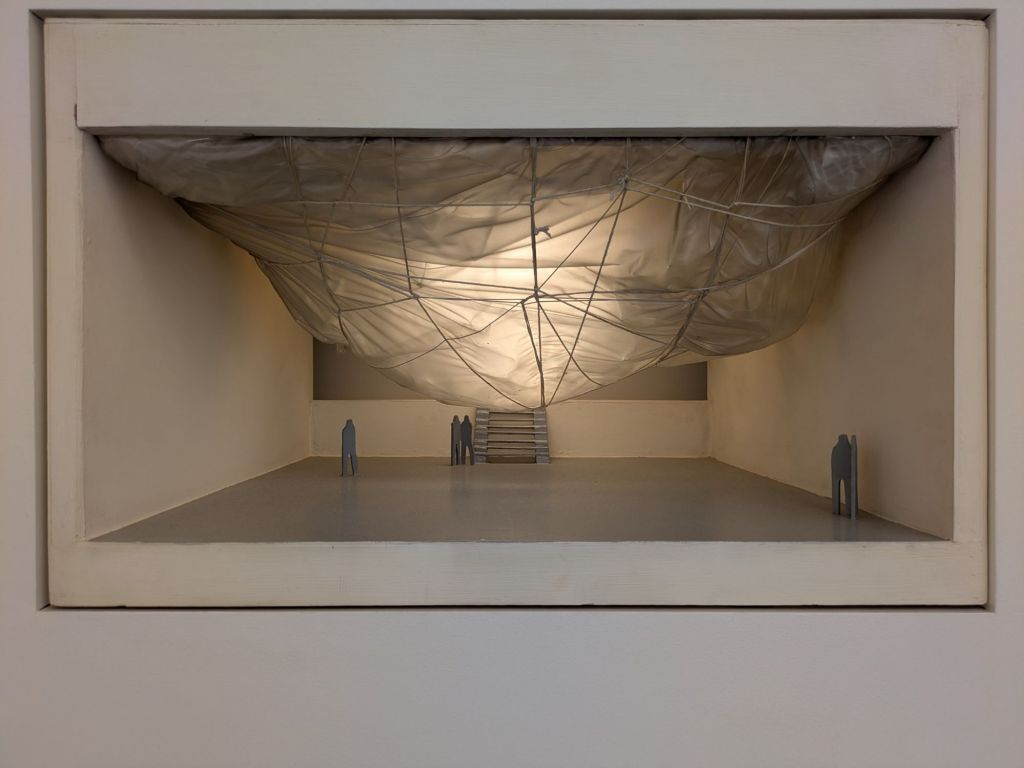
Christo and Jeanne-Claude basically funded all their always temporary installations by creating multiple versions and multiples of the proposal materials. When the Mastaba was in the Serpentine, two different commercial galleries in London had exhibitions of Christo and Jeanne-Claude proposal pieces. It was a jamboree. I remember being confused at first, thinking I had seen the commercial show and seeing a listing for a different gallery. I couldn’t believe two normally competing commercial galleries had both programmed basically similar shows on the basis that the Serpentine piece would create so much interest that they would all make money.
In the second gallery at Gagosian is a wrapped Volvo from the early 80s which further complicates our understanding. It’s not a Ferrari but…
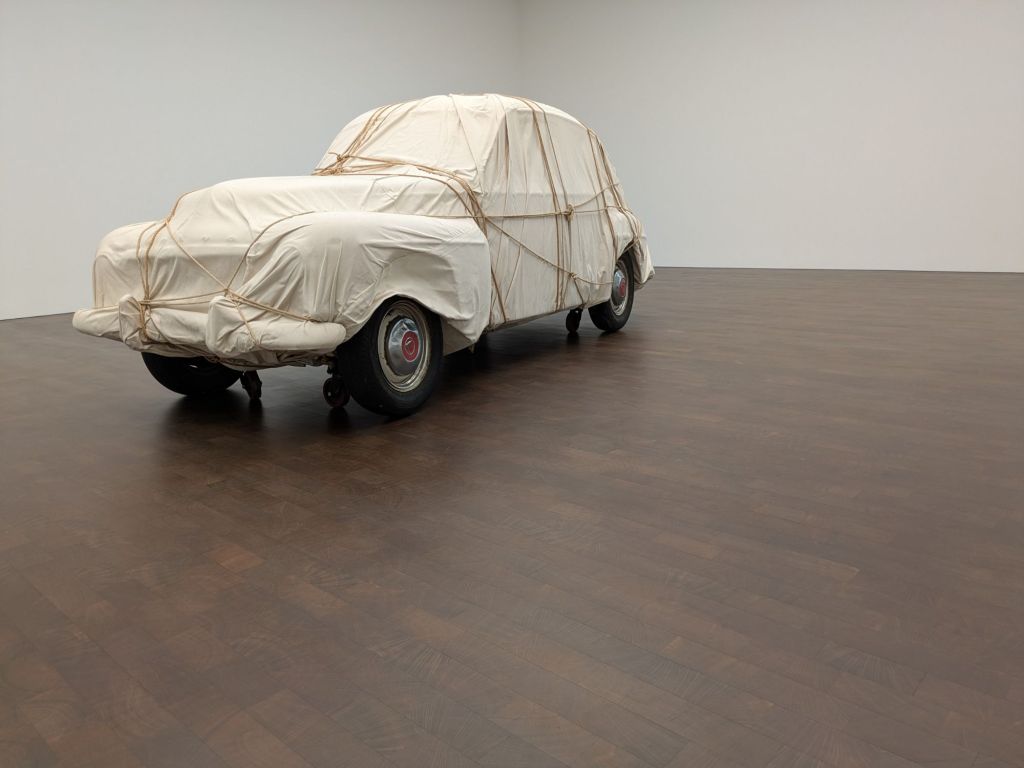
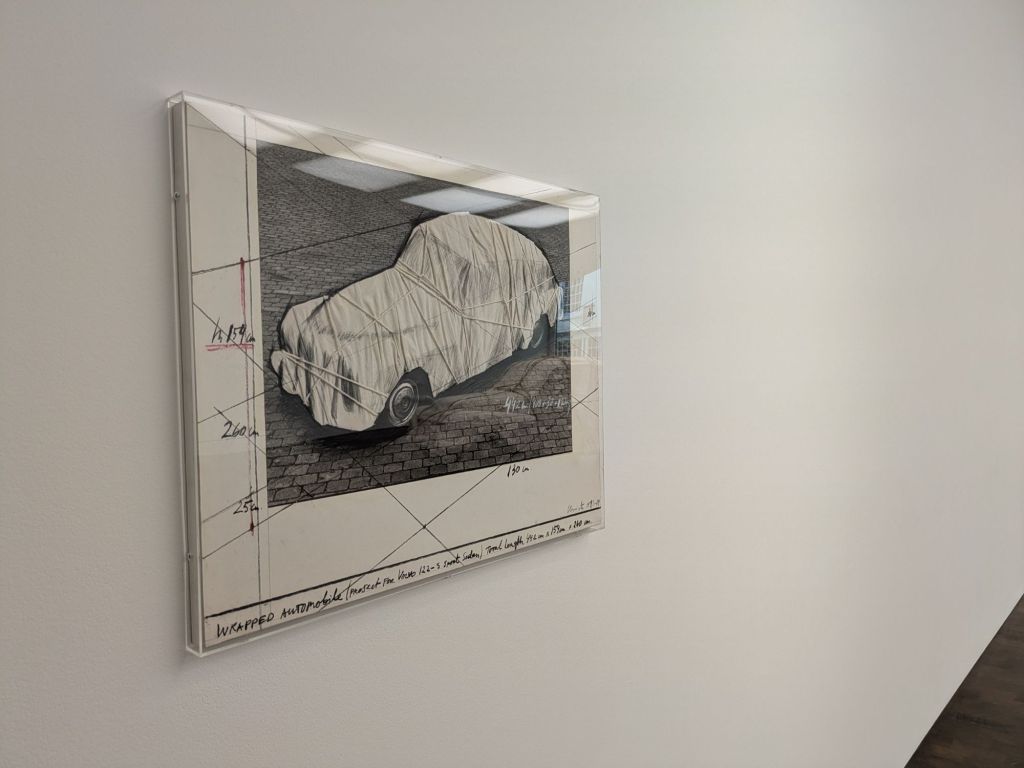
Wrapped Automobile—Volvo, Model PV-544 (1981), which has not been exhibited for thirty years. Before it was wrapped, the car belonged to Serge De Bloe, an art dealer and friend of Christo and Jeanne-Claude, who was acquiring a new vehicle but didn’t want to see the old one—about which he felt sentimental—destroyed. He asked Christo to wrap the car as an artwork, which the artist did in a Brussels body shop prior to exhibiting the work in Berlin.
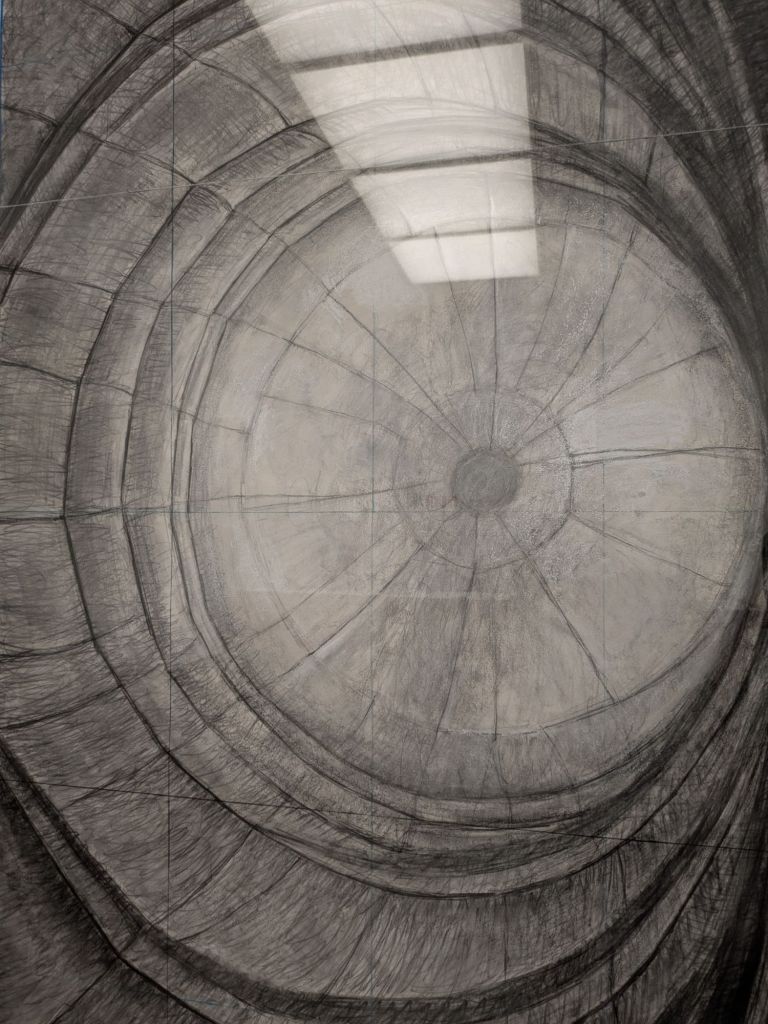
We know Christo and Jeanne-Claude for the temporary installations, but the drawing and collage, the engineering calculations and proposals are also so engaging and part of the aesthetic.
I resent the writing out of Jeanne Claude. She is in the actual work credits but the title at the entrance leaves her out… It suggests the gallery thinks the audience wants the brand rather than the actual artists… tragic.
But regardless of cars, dealerships, the art market, this work and this practice is so significant in what it does to the possibilities of contemporary art. As a public art practice, as an environmental art practice, as an artists’ approach to the art economy, as an exercise in control… So many reasons to pay attention.
What art have I seen? More Christo drawings and collages
More Christo and Jeanne-Claude, this time at Repetto Gallery. Drawings are all attributed to Christo, though the installed projects are Christo & Jeanne-Claude. One public installation in the Serpentine Lake, one public exhibition at the Serpentine Gallery, two commerical gallery exhibitions simultaneously (Stern Pissarro and Repetto).
I hadn’t realised before that some of the drawings are collages including fabric and string. In particular Wrapped Wall has fabric stapled to the image which is then drawn on, so some of the creases are ‘real’ and some inscribed – remarkable. The more you look at these works, the more they give you.
You can see in the 1976 The Pont Neuf Wrapped collage below that there is fabric inserted into the image – the media are listed as “Pencil, fabric, twine, photograph by Wolfgang Volz, wax crayon, pastel, charcoal and map.”

What art have I seen? Mastaba by Christo & Jeanne-Claude
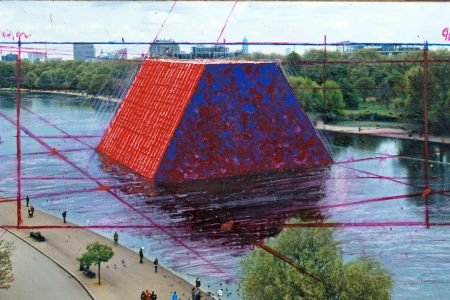
The Mastaba on the Serpentine, works related to barrels in the Gallery, other works at Stern Pissarro.
Curiously the Mastaba floating on the lake is more like the 2D works in the Gallery than you expect – it has an unreal quality, perhaps because of the formal geometry and the colour too. All the earlier proposals going back to the late 60s are yellow, red and orange, but this is maroon and purple. Maybe more complementary to the greenness of Hyde Park?
There is definitely a Dada streak in this, the absurdity of this large form, just as there is a Dadaism in wrapping things.
Mies van der Rohe said art addresses the conditions of the time – his were industrialisation and mass production. Christo and Jeanne Claude’s work has a curious relation both to industrial and post-industrialisation, but the temporariness – here now, gone in September – reveals more. Temporary abnormality sensitises us to the normal.
Christo clearly denies any political intent but this monumental structure composed of oil barrels is a reminder of our, as Brett Bloom calls it, petro-subjectivity.


leave a comment