What art have I seen? Parco Arte Viviente
Finally got to visit this project, started by Piero Gilardi the Italian ecological artist, on a day when the temperature hit 37°. PAV is near the railway lines, overlooked by high-rise housing, and has a tire shop opposite. It is a little patched at the moment, but it is still cooler in amongst the trees and they have cold water for visitors – the only place we visited with free cold water…
I think I first encountered PAV through an announcement of an exhibition called EARTHRISE, Visioni pre-ecologiche nell’arte italiana (1967-73), a group show of Italian artists and designers who were making ecological work from the late 1960s in a distinct mode from Anglo American artists of the same period. Earthrise included works by artists Piero Gilardi and Gianfranco Baruchello, Ugo La Pietra, and by architect group 9999. I didn’t see the exhibitions but I have the catalogue in the ecoartscotland library.*
PAV comprises three elements: the outdoors and installations, the permanent work by Gilardi installed in part of the building, and the galleries for temporary exhibitions. There is also an extensive education and engagement programme.


The winter entrance is the obvious one into the main buildings. The summer entrance is on the street around the corner and takes you into the park first. The main buildings are embedded in the landscape, earth mounded up around them – Gilles Clément’s ‘Jardin Mandala’ structures the roof space.
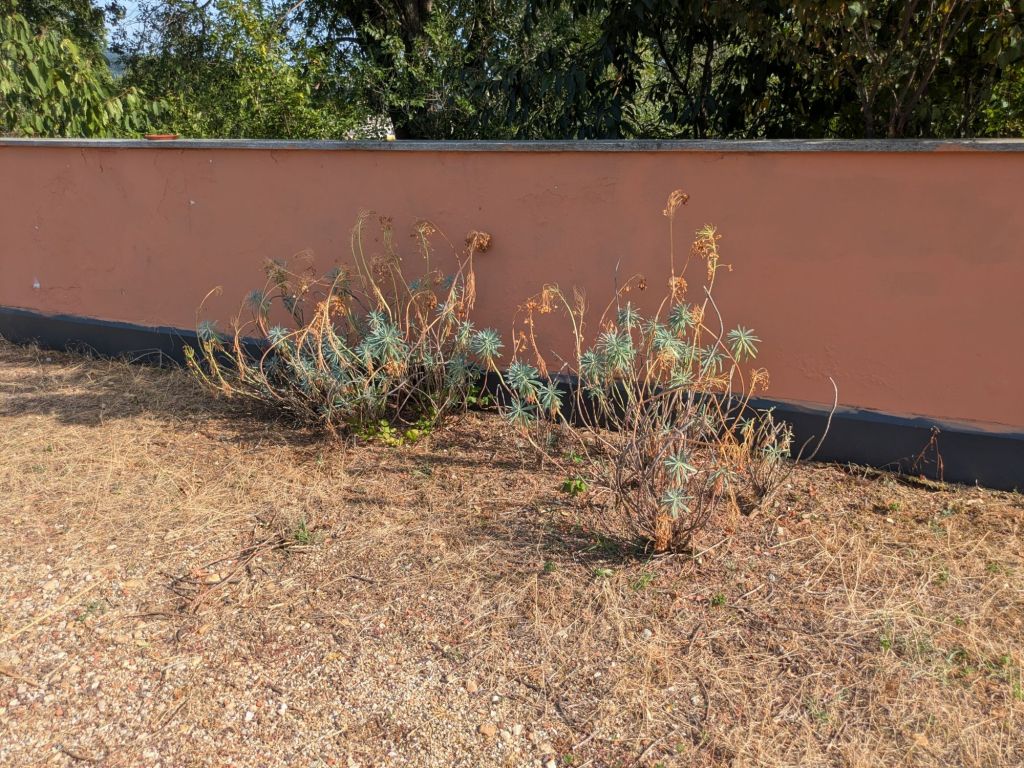


There are a number of works installed across the park alongside infrastructure for school visits. These are mostly focused by biodiversity one way or another.
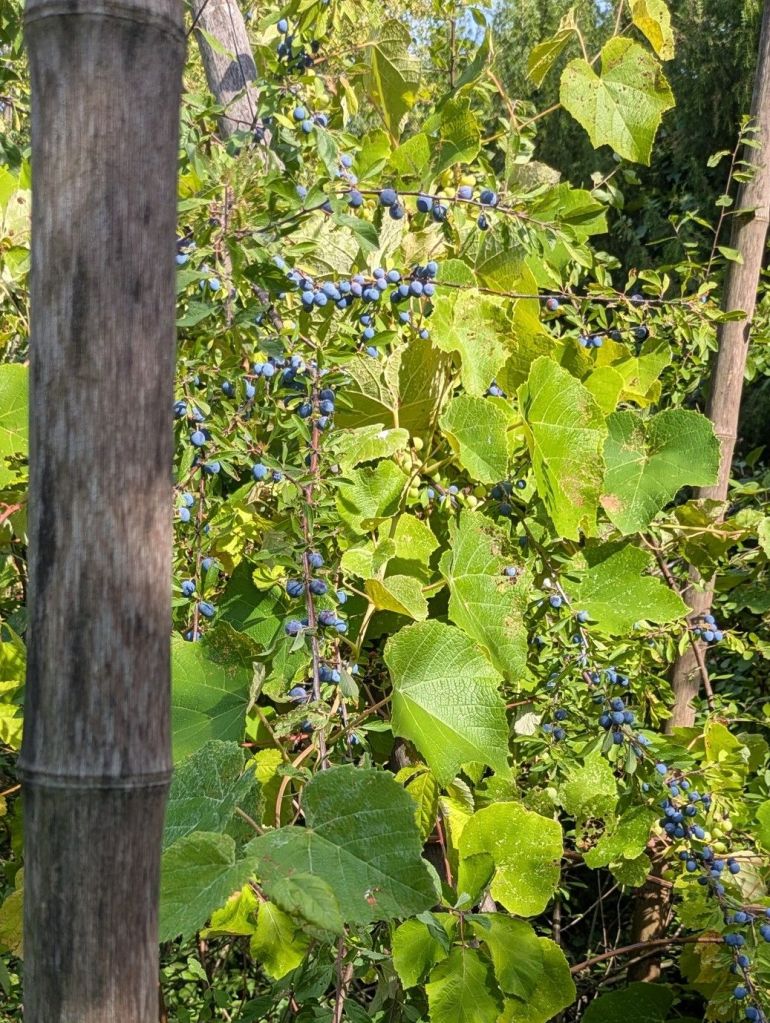

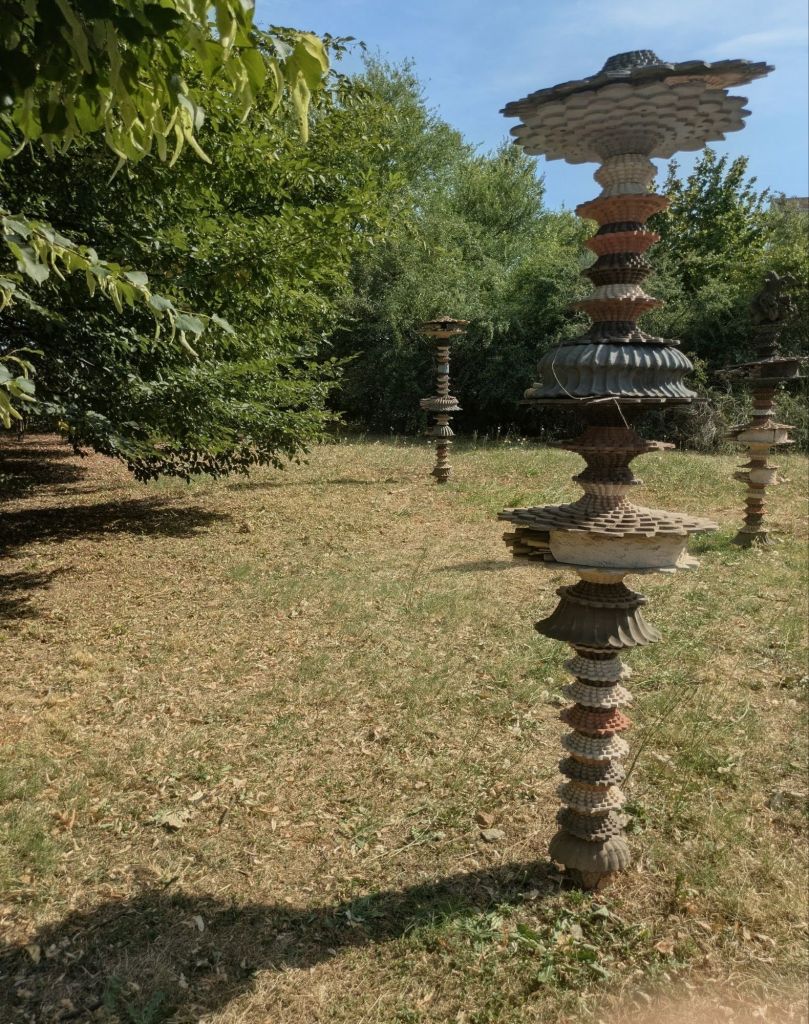
Some structures are more ornate, for example Michelle Guido’s bug hotels. Full list of works here.
‘Biome’, the permanent ‘ambient’ installation by Gilardi in the main building, is a series of interactive works in a flowing series of rooms. Building off Gilardi’s 1960s ‘carpet nature’ works, these pieces engage different senses. Made in the 2004/08, where the carpet works were late 60s, these invite and react to touching. There is something very much about the animacy of everything at the heart of this. Description of ‘Biome’ here.
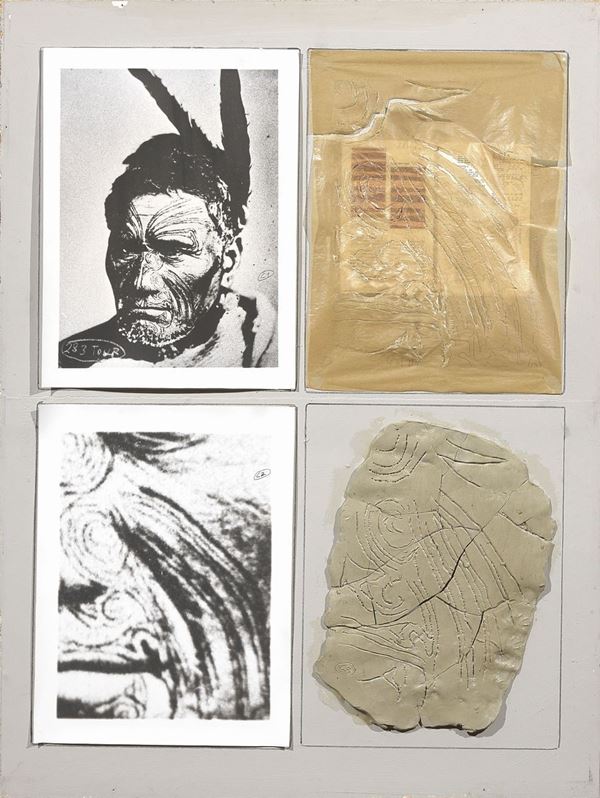
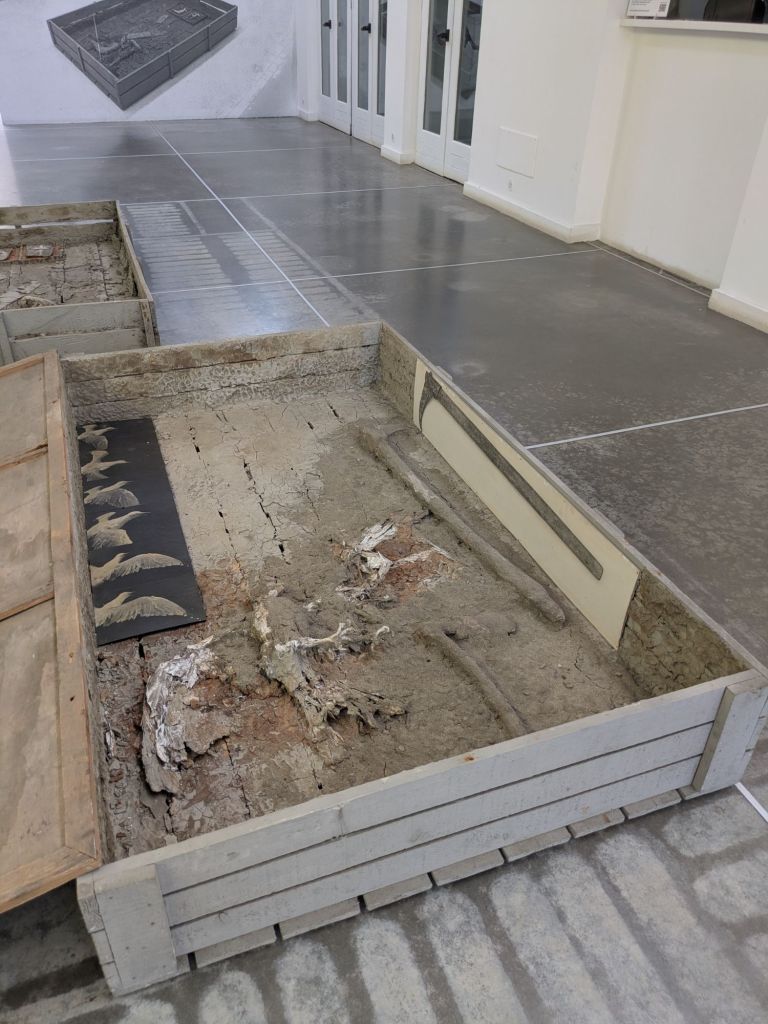
The temporary exhibition is a retrospective of Claudio Costa (1942-1995) entitled ‘Metamagico’ and curated by Marco Scotini, who also curated EARTHRISE. The works suggest a journey with a central developing focus: “…Costa theorises the concept of ‘Work in Regress,’ a journey backwards toward human origins as an alternative to linear progress.” This framing provides a useful undergirding to the body of work, as does the affiliation with Arte Povera and Fluxus.
The publication explains why Costa is specifically relevant to the PAV mission saying “Claudio Costa occupies a unique position: he does not represent nature; he uses it as an archive, as a system of signs, as material that carries within itself the traces of biological and cultural time, convinced that the natural past is not list but always latent, capable of being exhumed by the artistic gesture.”
There is something very contemporary about Costa’s developing and changing interest in traditional ecological knowledge.
English text of publication here:
and list of works here:


It is interesting having just seen Kiefer’s ‘The Alchemists’ because all the women honoured and celebrated in that would have recognised the philosophy behind PAV, they would have walked around the grounds understanding the value of the planting, and they would have been interested in Costa’s work too. In the park they would have directed more pruning and maintenance and they, given how many of them produced books of guidance, might have asked for the interpretation to be more focused on the practical and spiritual uses of the plants. I can imagine they would expect a room in PAV to be devoted to the alchemy practiced by these women focused on distillation, the preparation of spirits and salts, domestic pharmacopoeia, and the management of gardens. Many of the women were part of the nobility, so they would recognise the grandeur of Kiefer’s installation, but they would know how to use PAV.
*It provokes an interesting thought about the need to pay attention to the different geographies of emerging ecological practice, in Scotland, in Japan, in South America. After all the Earthrise photo was ubiquitous in its distribution and impact, as were other events and concerns.


leave a comment