What art have I seen?
Navid Nuur’s Renderender at DCA in Dundee
Suffragettes and Burns Cottage
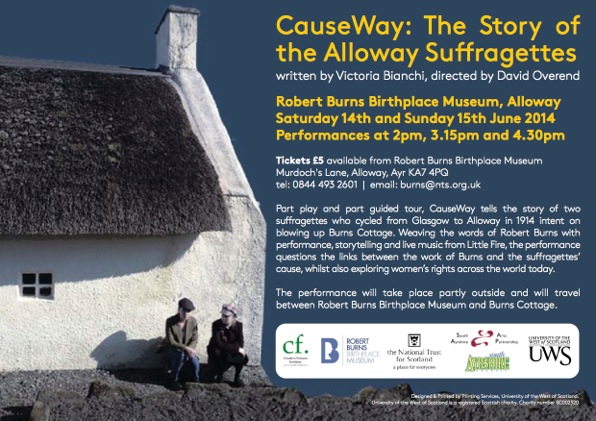
I don’t know how many of you are aware that Lord Kitchener’s niece was a Suffragette and that she and another Scottish Suffragette cycled down to Alloway and attempted to blow up Burns Cottage in 1914? David Overend and Victoria Bianchini have developed a new promenade performance work which you can experience in Alloway on Saturday 14th and Sunday 15th June 2014. You can get tickets from the Robert Burns Birthplace Museum.
London LASER 04 programme announced

London LASER 04
Tuesday 17 June 2014
6.30 – 9.00pm (registration from 6pm)
University of Westminster, Fyvie Hall, 309 Regent Street, London W1B 2UW
The fourth London LASER for 2014 hosts Rob La Frenais in conversation with Los Ferronautas, Cristina Miranda de Almeida on the Internet of Things, and Chris Freemantle on art and science collaborations in medicine and ecology.
The event is free but booking is essential: londonlaser04.eventbrite.co.uk
Los Ferronautas (Ivan Puig and Andres Padilla Domene) will be in discussion with Rob La Frenais, curator, about their project SEFT-1 Abandoned Railways Exploration Probe: Modern Ruins 1:220. Between 2006 and 2011, the artists travelled across Mexico and Ecuador in the SEFT-1 (Sonda de Exploración Ferroviaria Tripulada or Manned Railway Exploration Probe) exploring Mexico’s abandoned railways: http://www.seft1.com. This iconic railway infrastructure now lies in ruins, much of it abandoned due to the privatisation of the railway system in 1995, when many…
View original post 409 more words
What art have I seen?
Christine Borland, Dalziel+Scullion and Graham Fagen at Gracefield Arts Centre in Dumfries.
What art have I seen?
‘Life & Invitation& Vapour in Debri&’ at The Modern Institute.
What art have I seen?
The Arrival of Spring new works by David Hockney at Annely Juda. The charcoal drawings are masterpieces, where the ipad drawings are interesting, striking, etc.
What art have I seen?

Rosnes Benches, Dalziel + Scullion, 2014, Otter Pool, Dumfries and Galloway (Photo: Chris Fremantle)
Rosnes Benches. Took Jana Weldon, Senior Public Art Project Manager for Scottsdale in Arizona, to see some of Dalziel + Scullion‘s Rosnes Benches in Dumfries and Galloway yesterday. She also came in a heard presentations from the MFA Art Space and Nature at Edinburgh College of Art earlier in the week.
The team including Dalziel + Scullion, Kenny Hunter, Wide Open and Jim Buchanan have done a fantastic job realising this project – thirty benches are installed in clusters across the Dark Skies/Biosphere area of Dumfries and Gallowa, but they look like it’s been there for a long time. The benches themselves are really comfortable. They skim beautifully between being surfboards on land, referencing cup and ring marks, a bit hippy but really elegantly done. They speak of a different relationship with the trees, birds, rivers, peat moss, boulders and other elements around them.
Reflections on Health Hackathon
Hacking health in Glasgow (tempted to make a joke about smokers). Sunday evening 6pm. After 48 hrs at The Hub on the banks of the Clyde. Lots of very dried out sandwiches, empty red bull cans and laptops. Blog posts are always better with pictures. Sorry I didn’t take one of empty pizza boxes.
But seriously, ten really interesting and pretty diverse approaches to making a difference to health in Glasgow through playing with data. Ten teams all hoping for £20k to get their project off the ground.
The presentations that really worked showed us something in prototype – it was more compelling and somehow we believed that they could deliver. And WOW was the pitch important! Paint a picture in the mind, show us something that looked plausible. Don’t get lost in the tech.
The point was to use open data to innovate. Sometimes that’s making a connection that no-one else has yet made, a bit leftfield. So my two takeaways were:
- once you have an idea, look again at all the datasets available and see if there is a way to add value.
- don’t forget the physical environment that you’re focused on – the smartphone isn’t the only interface with the city.
- and it may seem really obvious but definitely ask the people involved what their challenges are. It’s very compelling when you see the challenges faced by professionals, communities and interest groups being taken into account.
There were strong arguments to support at least half of the pitches, and if you didn’t win it doesn’t mean we weren’t impressed. Some of these projects would make my life better, so I really hope they come through.
This is part of the TSB Future City Demonstrator, You can find my blog in preparation for the Health Hack blog-for-open-glasgow-health-hack-v2.
What art have I seen?
Abstract Drawing at the Drawing Room. http://drawingroom.org.uk/exhibitions/abstract-drawing
What art have I seen?
Deutsche Borse Prize at the Photoprapher’s Gallery particularly Jochen Lempert exploring pattern and complexity but also Richard Mosse making landscape military.
What art have I seen?
C, an exhibition at the Edinburgh Centre for Carbon Innovation by MFA/MA Art Space and Nature. Yanli’s manifest anger, the sound of breathing, Christina’s clouds moving across the atrium, Javier’s black cubes emerging from amazing geology, ‘designer’ algae in the cafe, a 3D 3 question graph.
What art have I seen?

View of Reclaimed. Photo Chris Fremantle
Reclaimed: The Second Life of Sculpture at the Briggait, Glasgow
and then Broth Mix screening at the Kinning Park Complex (with a discussion afterwards)
What art have I seen?
John Singer Sargent watercolours at the Museum of Fine Art Houston. I went with Donna Glassford.
The quarries at Cararra, Bedouin in the middle east, harbours around the Mediterranean, Venice, gardens in Firenze, vagrants and other artists, Tommies at the end of the war.
Sargent was an outstanding society painter, but this exhibition of watercolours is so much more inspiring. Watercolour is a particular skill and you will never see better, but there is a fascinating compositinal judgement – a harbour seen through a row of trees, the underside of the Rialto.
Also interesting that this exhibition is of works held by the MFA Boston and Brooklyn Museum. It represents the work shown in two shows at Sargent’s New York dealer (1909 and 1912) which were both bought ‘in toto’ by the then Brooklyn Museum Director.
Scottish artists bring nature into healthcare presentation
My presentation for the Global Alliance for Arts & Health is now on slideshare.
Science and Art Commission
Outstanding opportunity to **write your own brief** as artist/curator in residence at the new Labs block (incorporating Pathology, Genetics, Microbiology and Blood Science) on the New South Glasgow Hospitals site.
How can data impact on health?
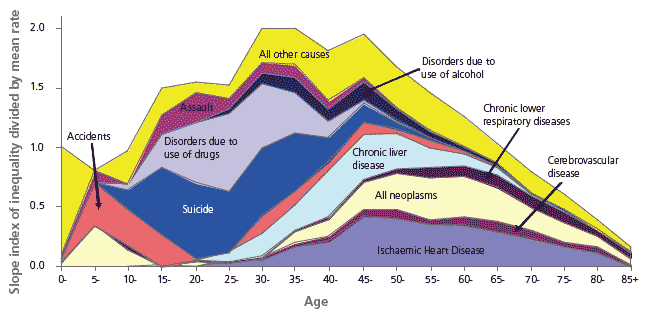
Can you think of a way to improve the health of Glasgow? Do you think that the environment impacts on the health of the people living in the dear green place? More and more data derived from monitoring all sorts of things is available – do you think that data could make a difference? Can you imagine how? If you are a health professional the third of Open Glasgow’s Hackathons. If your idea is good enough you could get £20,000 to develop it.
The team asked me to write a piece to stir up thinking about data and health – you can read it below. And it looks like I’m going to be on the judging panel which should be fun.
AESOP 1 | A Framework for developing and research arts in health programmes
If you are interested in planning research and/or evaluation into your arts and health projects, then you need to have a look at this new tool. The point is that research needs structure, to be done reasonably consistently, and this looks like a very good way to build some consistency.
AESOP 1 | A Framework for developing and research arts in health programmes.
Very much look forward to hearing more about this as it develops.
What have I read?

Townley and Bradby’s publication for the Turf Twinning Project (2012-2013)
I met Townley and Bradby at a Collaborate Creatively seminar at firstsite in Colchester, part of a-n’s Granted! programme. They were Associate Artists with firstsite working on social practice projects. One of the projects they presented was Turf Twinning, and they just sent me the publication. Jonathan P Watts’ excellent essay, Six Cuts, takes us on a journey that encompasses Durer and Haacke as well as Nash to position Turf Twinning in a longer field of practice. The publication should be available from firstsite.
What art have I seen?
Oceans, Tania Kovats at The Fruitmarket,
and
Constructions of Landscape: Works in Progress 3
Sam Dransfield, Ryan Gibson, Paolo Monti, Aleksandra Zawadaat Stills
Digital health comes to the UK | Nesta
If you are interested in things like biosensing and the internet of things (or perhaps people) then this article Digital health comes to the UK | Nesta is very relevant discussions about putting people at the heart of health and well-being.
Some of the ideas are very challenging and we are deeply into the realm of biopolitics (sensors embedded in medication reporting when it’s taken and how it’s digested). There is no question that the relationship between the body and the world is going to change through various forms of bio-sensing – see for instance the work of Manifest.AR.
I wonder what Michel Foucault would have made of this? I know Ivan Illich would have fought against it tooth and nail.
Recent publications on art in new healthcare buildings
Updated 22 3 2014
This is a short summary of books on arts & health from Glasgow and Scotland that I’m aware of and have on a shelf. Any reminders and recommendations happily received. Artists and organisations try to produce books of these projects because firstly they are participatory and durational so sometimes the book is the only tangible outcome, but secondly they are not generally visible to the public beyond immediate communities hosting the projects, so this is the only means of showing what happened and why it mattered.
There have been several books produced to document arts projects in new healthcare buildings in Glasgow. These join the books produced by Art in Hospital highlighting their long term work with patients. Also included in this provisional bibliography are other books of Scottish projects.
Space to Heal: Humanity in Healthcare Design. (2009) is published by Reiach and Hall Architects, and reflects their thinking at the time they completed the New Stobhill Hospital. Includes essays by Andy Law (Architect) and Thomas A Clark (poet).
The Grace of the Birch: Art Nature Healing, the Collection for the Ward Block, New Stobhill Hospital (2011). Edited by Dr Lindsay Blair documents the new Collection of artworks forming a ‘choosing wall’. Probably available from Reiach and Hall (above) or Jackie Sands (below).
Aware of Time: Art Poetry Healing, Renfrew Health and Social Work Centre (2012). Greater Glasgow and Clyde Health Board. ISBN 978-1-906150-17-4. Documentation of the project with Richard Dunn and Toby Paterson, curated by Dr Lindsay Blair. Probably available from Reiach and Hall (above) or from Jackie Sands, Arts & Health Senior, Health Improvement, NHS Greater Glasgow & Clyde, West House, Gartnavel Royal Hospital, Great Western Road, Glasgow, G12 OXH.
Dignified Spaces: Designing Rooms for conversations within the clinical environment. (2013) Alexander Hamilton’s catalogue associated with the exhibition/website on the Dignified Spaces project for the New South Glasgow Hospitals, setting out design ethos and participation programme. Available as download (catalogue dignified spaces), or from Jackie Sands (as above). This project was also presented at the European Design 4 Health Conference, Sheffield, 2013 and will be included in the proceedings.
Art in Hospital publications
If they are still available, they can be obtained from Art in Hospital (Order form here – contact details on the website).
“I’ll be doing this sky in my dreams tonight” Art in Hospital (2006). Published by Art in Hospital. This is an excellent overview of the work of this organisation which has been working with patients in hospitals in Glasgow since 1991.
Object Scores, Kirsty Stansfield and Art in Hospital (2007). Published by Art in Hospital. Documents, through reproducing an extended email exchange, the Object Scores project.
The Pattern of a Bird. (2008). Published by Art in Hospital. ISBN 13 978-0-9554440-2-9. Documentation and essays on arts in palliative care.
Artlink Edinburgh publications
A number are available electronically from the website.
200 Years 200 Objects. Mark Dion. (2013). Published by Artlink Edinburgh and Lothians. ISBN 978-0955188268. Part of the Ever Present Past project.
Extraordinary Everday: Explorations in Collaborative Art in Healthcare. (2005). Published by Artlink Edinburgh ISBN 978-0-9551882-0-6. Documenting and discussion the Functionsuite programme of work, 14 collaborative art projects that took place in hospitals across Edinburgh and the Lothians between 2003 and 2005.
Something in the Pause (2009) Nicola White. Published by Artlink Edinburgh ISBN 978-0-9551882-2-0 and available electronically as above. A story about an artist, and infomatics specialist and a man with a liking for music.
Other Scottish
The Sanctuary: The Royal Infirmary of Edinburgh: A space designed by Donald Urquhart. (2003). Published by Ginkgo Projects ISBN 1-904443-01-X Documents the award winning Sanctuary at Edinburgh Royal Infirmary. Copies might be available from Ginkgo Projects.
ARTworks Royal Aberdeen Children’s Hospital 2006-2009. Published by Grampian Hospital Art Trust. documents the participatory work leading to installed artworks in the new Children’s Hospital in Aberdeen. It should be available from The Archie Foundation or from the Grampian Hospital Art Trust.
Creative Therapies. Undated, self-published. Documentation of their art therapy work with East Dunbartonshire and South Ayrshire Councils which is probably available from them.
Boundaries
Revisiting a project from 2001. You can see front and centre the furnace, to the back left the bridge and on the right the iron arc cast in situ over the Deskry in one evening. This is the first time I’ve been back to the site since the morning after when we opened the mould.
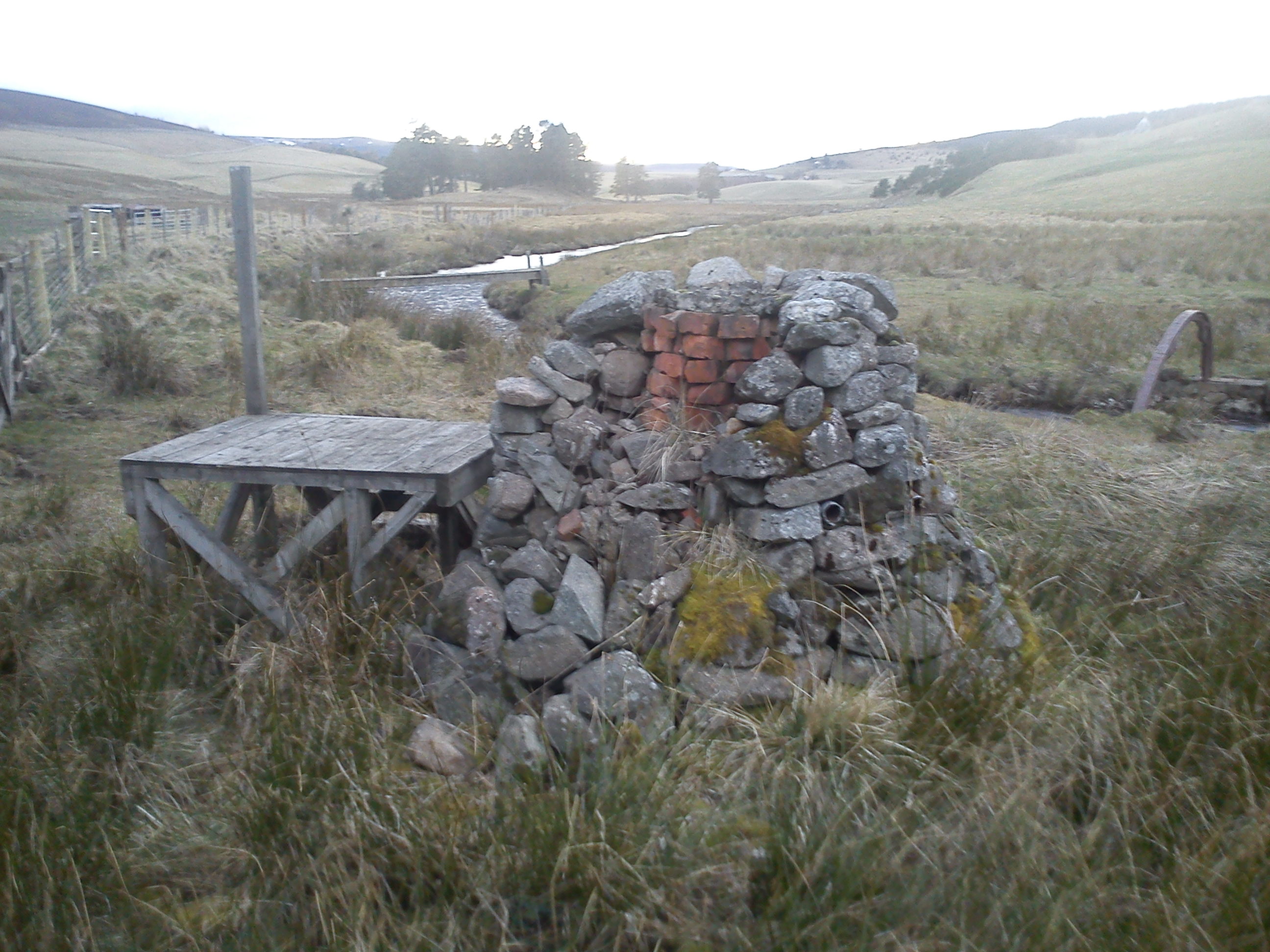
George Beasley and Helen Denerley with many helpers, 2001, Boundaries. Photo Chris Fremantle
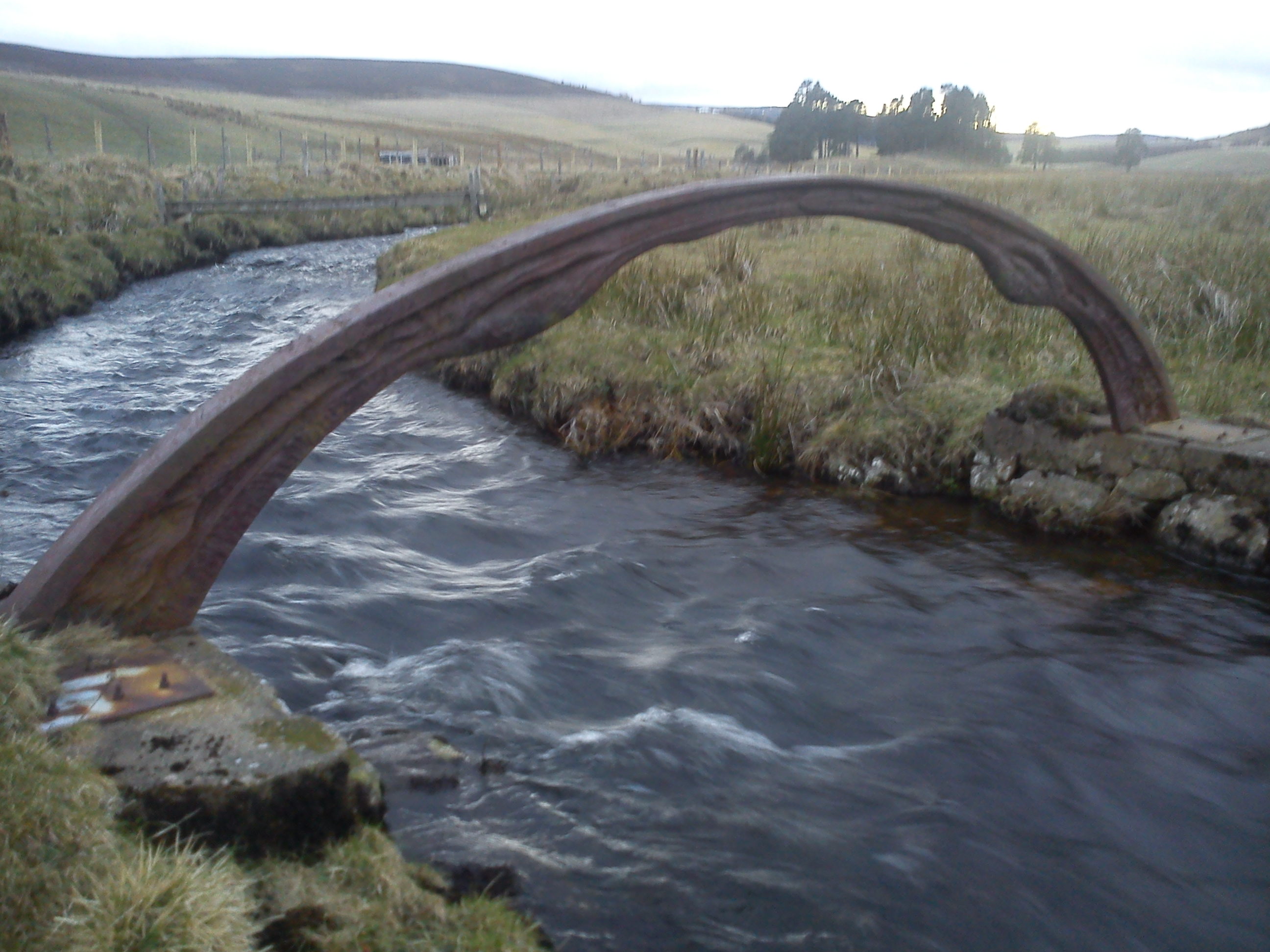
The result of a collaboration between two artists working with metal. Photo Chris Fremantle (sorry for quality)
Art in Salutogenic Design Dominic Pote
This blog by Dominic Pote discusses well-being and how artworks can contribute to a sense of health. It draws on ideas of ‘coherence’ as a way to understand health and well-being. Well worth reading Art in Salutogenic Design | by Dominic Pote Fine-art photographer.
Presenting at Enhancing Lives Through Arts & Health, Houston, TX
My proposal for a paper “Scottish artists bring nature into healthcare” has been accepted for the Global Alliance for Arts & Health 25th Conference in Houston, Texas in April.
The abstract is,
Scotland has a strong portfolio of arts and health projects including both public art installations within healthcare buildings and participatory programmes, in particular with people with long term conditions. This presentation will focus on public art installations by artists and designers which use biophilic and other design approaches to bringing nature into buildings. It addresses the conference themes of Patient Care, Healing Environments and Caring for Caregivers.
It is well known thanks to the work of Robert Ulrich that views of nature contribute to patient recover, and it is clear from the work of Stephen Kaplan that views of nature can play a role in restoring our ability to give our attention. OPENspace Research at Edinburgh College of Art (http://openspace.eca.ac.uk/ ) has further substantiated the connections between nature and wellbeing focusing on inclusive access to the outdoors.
In Scotland there have been a number of projects in the context of Healthcare where artists and designers have specifically sought to use art and design to bring nature into buildings in addition to what the architects and landscape designers are able to achieve.
Four key examples are:
Thomas A Clark’s (http://thomasaclarkblog.blogspot.co.uk/) project with the architects Reiach & Hall, ‘A Grove of Larch in a Forest of Birch,’ for the New Stobhill Hospital in Glasgow integrated poetry and visual arts into what the architects described as the architecture of waiting. The Aim was to create spaces in which users of the hospital could wait for appointments in “a place apart having the brightness and stillness of a woodland glade.”
Alexander Hamilton’s (http://www.alexanderhamilton.co.uk/) Designing for Dignity (http://designingfordignity.co.uk/Inspired-by-Nature) is an approach that draws on a deep understanding of the Victorian poet and artist John Ruskin and of the more recent Biophilia Hypothesis. Hamilton is currently developing designs including furniture and art for the Quiet or Family rooms in the New South Glasgow Hospitals based on an extensive programme of creative engagement. Hamilton is also working on the design of a healthcentre in Glasgow.
Dalziel + Scullion’s (http://www.dalzielscullion.com/) practice is increasingly focused on addressing nature deficit disorder. Their work encompasses exhibitions and public art. Their scheme for the wards of the New South Glasgow Hospitals will bring the whole landscape of Scotland into one building. Their project Rosnes Benches, currently being installed in the landscape of Dumfries and Galloway, they have also contributed work to the Vale of Leven Health Centre (http://www.wide-open.net/index.php?page=vale-of-leven)
Donald Urquhart has completed public art projects for four mental health hospitals including most recently Midpark Acute Mental Health Hospital (http://www.wide-open.net/index.php?page=healing-spaces) and developed Sanctuary spaces for both hospitals and universities. His award winning design for the Sanctuary at Edinburgh Royal Infirmary has become a benchmark (http://www.ginkgoprojects.co.uk/projects/royal-infirmary-edinburgh).
These artists and others demonstrate key aspects of the role of art in bringing nature into healthcare contexts including focus on characteristics of nature such as colour, pattern and movement. As artists they use attention, framing and synthesis.
In addition to sharing these developments with the conference audience I hope to identify other artists exploring similar issues.
I’m very much hoping to find other artists and designers working along these lines with the depth of thinking as well as the quality of work.
WRITING ROOT & CLAW: A WEEKEND WORKSHOP
Em Strang asked us to highlight a Weekend Workshop of creative writing, discussion and walking in October in Cumbria. Check it out – you’ll be in good hands.
La mia Cura Open Source / My Open Source Cure
“We can transform the meaning of the word “cure”. We can transform the role of knowledge. We can be human.”
Salvatore Iaconesi
Salvatore’s diagonsis with brain cancer has led to his open sourcing of his medicalisation by cracking the digital files associated with his Magnetic Resonance Imaging (MRI) scans, and inviting anyone to contribute to his cure. Of course he had surgery, and the point of the process is not whether any one suggestion was more likely to be successful, but rather that he opened up the process to a shared dialogue demonstrating FLOSS principles. He argues that this enabled him to be human again at a point where he had disappeared in the industrialised process of healthcare.
La mia Cura Open Source / My Open Source Cure and the project page on Art is Open Source including links to the extensive press coverage.
What art have I seen?
Foreign Bodies, Common Ground at the Wellcome Trust. The exhibition is extended to 16 March and is well worth a visit. There are some outstanding works, including in particular Katie Paterson’s Fossil Necklace, Miriam Syowia Kyambi and James Muriuki’s Pata Picha Photo Studio, but also Zwelethu Mthethwa’s participatory photography project focused on ‘impilo engcono’ (good health).
Stuart Hall 1932-2014
Grant to provide, promote or publicise health
Scottish Government grant funding to national voluntary organisations which provide, promote or publicise health or health-related services. The list of previous grants includes several arts organisations as well as a number working in the environment. National Voluntary Organisations 16b Grants.
What art have I seen?
Table of Contents by the Siobhan Davies Dance, which was engrossing. I have to admit, I also saw the Sarah Lucas retrospective – the Tramway website avoids any images of the main theme of the exhibition – I’m at a loss to understand why.
What art have I seen?

Empty Military Road, Roseneath, Eòghann Mac Colla (I hope the artist doesn’t mind me doing this – I haven’t asked permission)
Eòghann Mac Colla‘s Place Changes Perspective in the Village Hall in Dunlop, Ayrshire. Well worth the jaunt on a Friday evening to see new work, hear Eòghann’s brother play the pipes, and see a community come out to support an artist (and also now elected member of the local authority).
What art have I seen?
Living with war: artists on war and conflict at the Gallery of Modern Art, Glasgow
Bomb Ponds
http://www.guggenheim.org/video/vandy-rattanas-bomb-ponds-photographs-and-video
War and landscape, one of the oldest themes.
Illuminating art, design and health
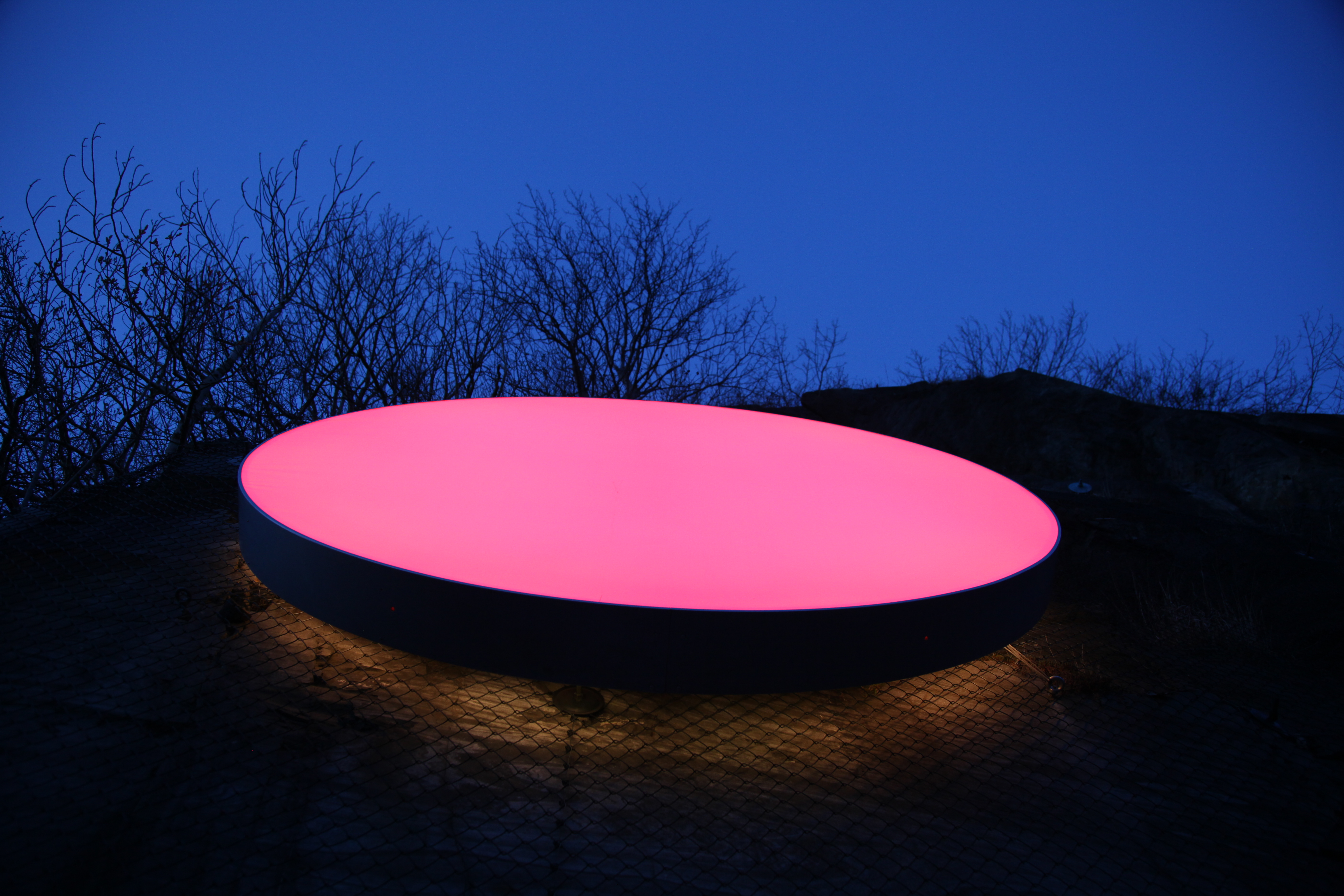
Lisa Pacini and Christine Istad,
Sun, 2012 – photo courtesy of Marres
Two interesting trajectories across the need for light particularly in winter. The one is a blog from the Wellcome Trust on research being undertaken by their Research Fellow, Dr Tania Woloshyn, on the history of phototherapy, and the other is an exhibition at Marres House for Contemporary Culture in the Netherlands entitled Winter Anti Depression where they have created an Art Resort, a sensory environment in response to the winter.
The idea that the lack of sunlight affects those of us living in northern climates is not new, and research into the history of treatments highlights the complexity of the amount of sunlight that is healthy.
The exhibition demonstrates a number of art and design approaches to activating the senses. Different works explore different senses from textured surfaces that you feel through your feet, to sounds to cocoon you in your bed, to light and colour. The installation comprising a range of yellows is particularly evocative (see below).
Light and colour are increasingly significant in the design of healthcare contexts. New technologies such as ‘Sky Ceilings’ and lightboxes can bring a feeling of daylight into rooms that lack windows. The ‘temperature’ of light, especially with the increasing availability of LED bulbs, is enabling much more sophisticated design of environments. But what is clear is that light and colour are not ‘universals’. On the one hand their meaning is culturally informed, and as these examples highlight, also informed by seasonality. We might want healthcare to be 24/7, but our bodies respond to seasonality just as they do to day and night.
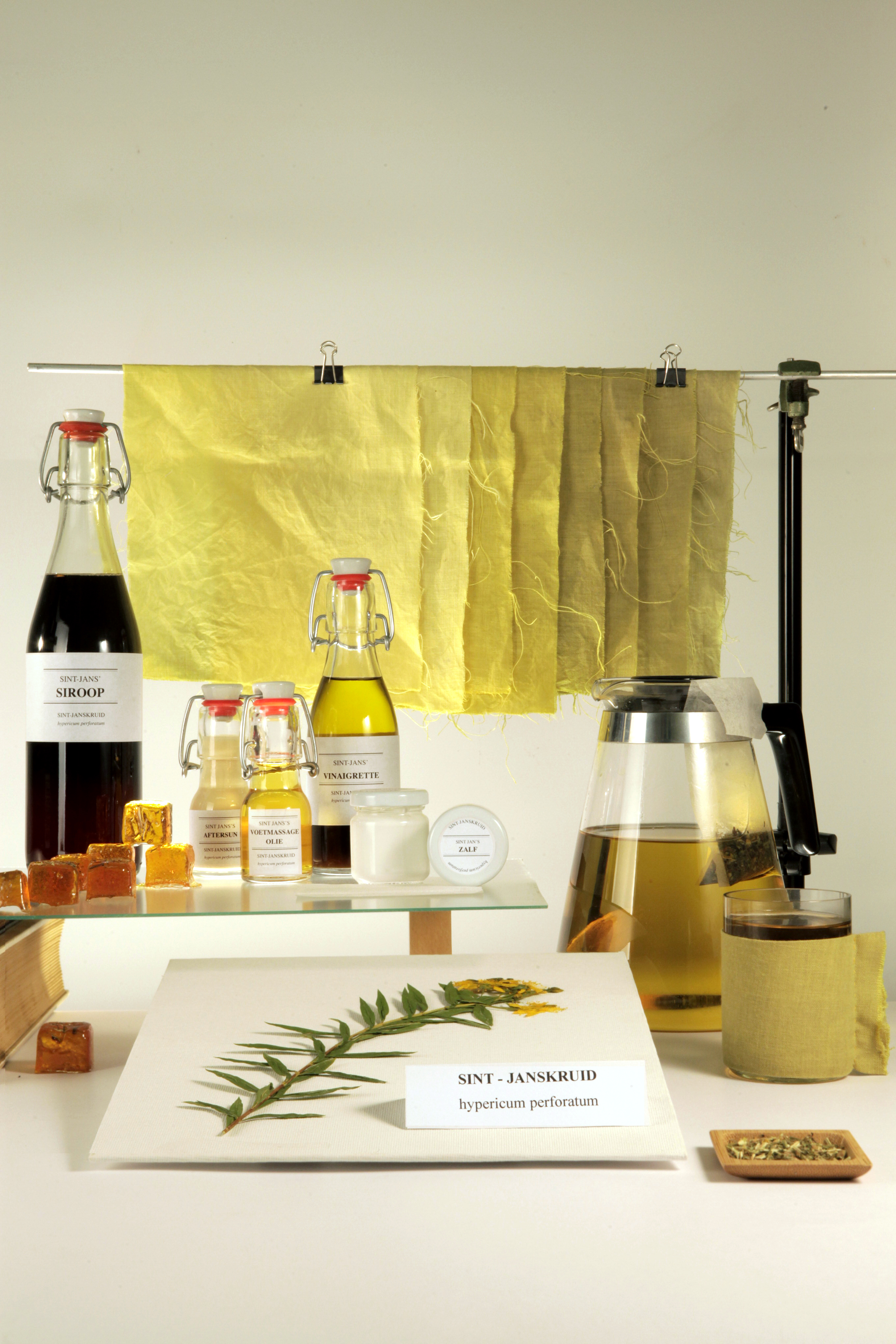
Katja Gruijters
Saint John’s wort Lab, 2014, photography Jonas de Witte Courtesy of Marres
A response to ‘Are dialogic and relational aesthetics relevant to all participatory and co-creative practitioners?’

This excellent piece (Chris Fremantle’s blog 6.1.2014) frames the debate on participation and co-creation in art and design as a priviledging of process (over product) and social concerns (over artistic concerns). This presupposes in some way a radical break with what has gone before that might have particular relevance at this point in time to design, architecture and new media.
There is without question a perceived ‘Social Turn’ in art (Lind 2005/6, Bishop 2006/12, Jackson 2011) and this is frequently articulated as a concern with process and the social (Bishop 2004). However, to play devil’s advocate for a moment (as Claire Bishop herself suggests in 2012), how are these concerns not true of all art and any time? Have artists not always situated their practices within the social? In what sense is this set of concerns a new endeavour, a turn in direction from what went before?
View original post 997 more words
What art have I seen?
Sylvia Grace Borda’s Camera Histories at Streetlevel.
Comments on Farm Tableaux are posted on ecoartscotland.
Things I’ve been trying to remember
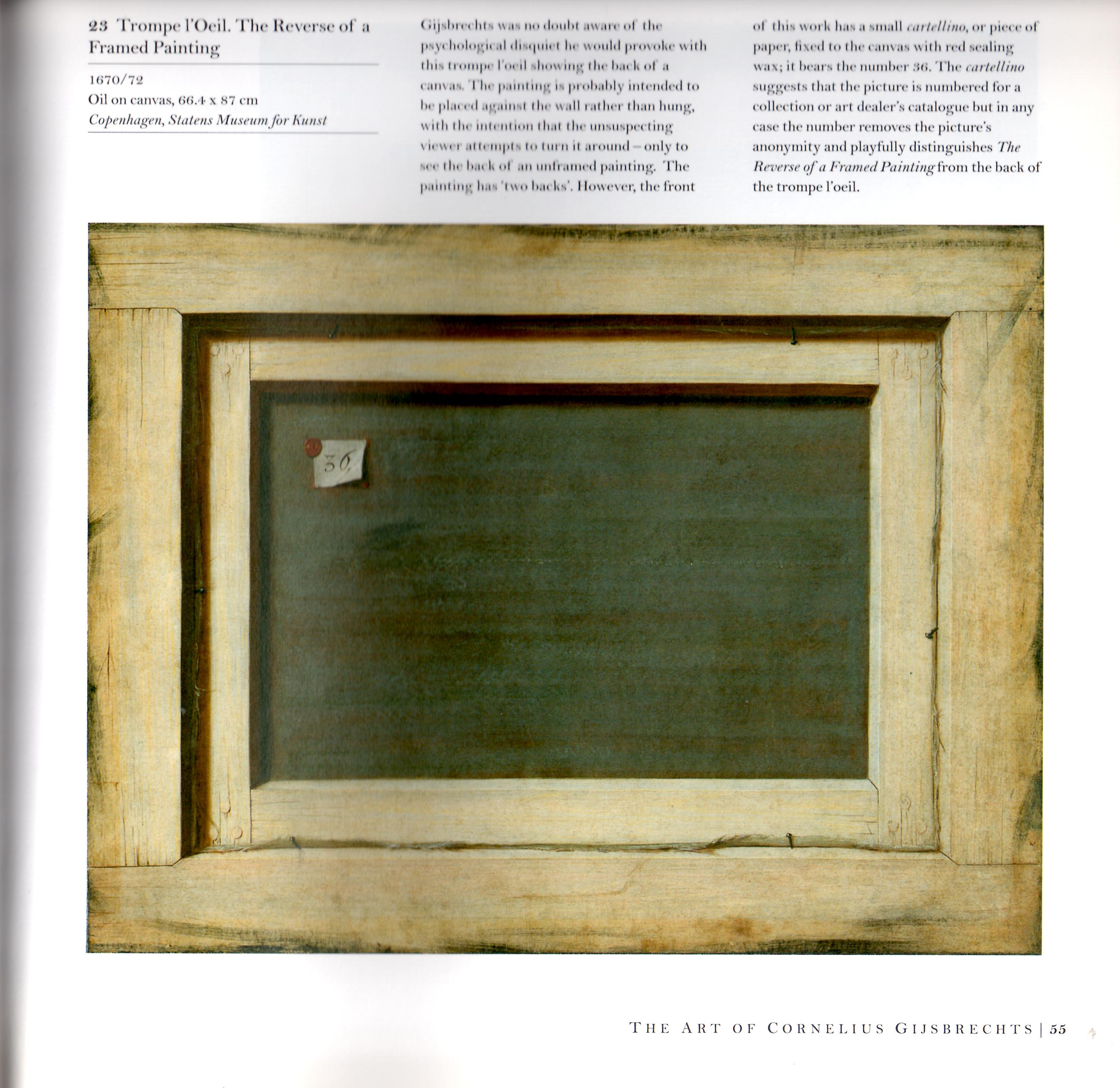
From ‘painted illisions’ The Art of Cornelius Gijsbrechts, London: National Gallery, 2000
I was trying to remember the details of this painting last year. Imagine trying to google ‘trompe l’oeil painting of reverse of painting’. Without the artist’s name I think this painting may actually be impossible to find.
More Good Now: A Working Manifesto for Artist-Producers
Excellent manifesto for all of us however we work

I’m an artist who also works as a producer. I set up and still help run the spoken word organisation Inky Fingers, and I co-direct the live art series ANATOMY. The idea of artists leading artistic production – artists organising nights, festivals, buildings – seems to be taking off at the moment. At the last Buzzcut Festival (an artist-led festival), the organisers worked with the Live Art Development Agency to organise a day blether on artist-led projects around the UK. There was excitement and community and possibility. This is wonderful.
At the same time, there’s a lot of discussion happening about the issue of artists working for free, artists struggling to get paid, artists getting exploited by venues. A lot of the response has been about how artists can work together and by themselves to improve their treatment by producers and venues – like here and
View original post 2,531 more words
Are dialogic and relational aesthetics relevant to all participatory and co-creative practitioners?
Artists understand the potential of an aesthetics of process and the social. But does this mean anything to the designers, architects, programmers and others who work with participation and co-creativity? Further thoughts on the Practising Equality paper published in the Participations Journal.

One of the questions we asked in the conclusions of the Practising Equality paper (2013), looking across art, design, architecture and new media at practices of co-creativity and participation, is whether the development of thinking about the aesthetics of participation in art has relevance to design, architecture and new media?
The emergence of a debate around the aesthetics of process and the social in art is one of the important developments of the past 25 years. Whether we are talking about Bourriaud’s ‘relational aesthetics’ discussing participatory work in galleries, or Kester’s attention to ‘dialogic aesthetics’ in situated practices, or Bishop’s interest in the perversity of participation, all are concerned with an aesthetics of process and social relations.
Suzanne Lacy, who is both the subject of one of Kester’s case studies and also a contributor to the discourse herself, draws attention to Allan Kaprow’s concerns. Kaprow’s practice is fundamentally participatory and…
View original post 1,179 more words
What art have I seen?
J D Fergusson and Louise Bourgeois at the Scottish National Gallery of Modern Art.
What art have I seen?
40/40 forty years forty artists from Glasgow Print Studio at the Maclaurin Galleries, Ayr
Architects for Health’s Presentations on SlideShare
Architects for Health is a membership organisation. Check out the presentations from recent events on SlideShare.
PearsonLloyd hospital redesign “reduces violence by 50 percent”
Providing easily understood information in a well designed and clear form about the stages of your hospital visit, whether that’s the Emergency Department or Outpatients, can reduce stress for patients and according to this article, PearsonLloyd hospital redesign “reduces violence by 50 percent”. Thanks to Alexander Hamilton for highlighting this important project.
.
Nairn Primary Care Centre
Simon Fildes and Katrina McPherson have made two new works for the Nairn Primary Care Centre, in a project managed by IOTA. They have installed two elements:
Little Birds connects the inside with the outside, building on recent research into the impact of birdsong on wellbeing. You can see the work here.
Hand Heart Head is an eight screen video installation developed with the choreographer and dancer Janice Parker. Have a look here.
HANGING OUT WITH TIM ROLLINS AND K.O.S. – The Brooklyn Rail
One of the earliest entries in this blog, back in 2004, resulted from reading a text by Tim Rollins that formed part of the Civil Arts Enquiry at the City Arts Centre in Dublin.
I had the privilege of attending a workshop at the Talbot Rice in Edinburgh with Tim Rollins and some of the Kids of Survival in August 2012.
Now Brooklyn Rail has published an excellent article, Two Days in the Lives of Art as Social Action, which name checks the event in Edinburgh.
What art have I seen?
Interwoven Connections: The Stoddard Templeton Design Studio and Design Library, 1843-2005 at the Mackintosh Museum in Glasgow School of Art


leave a comment