What art have I seen?
John Singer Sargent watercolours at the Museum of Fine Art Houston. I went with Donna Glassford.
The quarries at Cararra, Bedouin in the middle east, harbours around the Mediterranean, Venice, gardens in Firenze, vagrants and other artists, Tommies at the end of the war.
Sargent was an outstanding society painter, but this exhibition of watercolours is so much more inspiring. Watercolour is a particular skill and you will never see better, but there is a fascinating compositinal judgement – a harbour seen through a row of trees, the underside of the Rialto.
Also interesting that this exhibition is of works held by the MFA Boston and Brooklyn Museum. It represents the work shown in two shows at Sargent’s New York dealer (1909 and 1912) which were both bought ‘in toto’ by the then Brooklyn Museum Director.
Scottish artists bring nature into healthcare presentation
My presentation for the Global Alliance for Arts & Health is now on slideshare.
Science and Art Commission
Outstanding opportunity to **write your own brief** as artist/curator in residence at the new Labs block (incorporating Pathology, Genetics, Microbiology and Blood Science) on the New South Glasgow Hospitals site.
How can data impact on health?
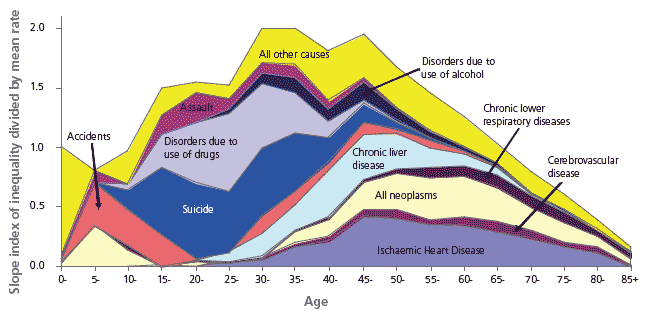
Can you think of a way to improve the health of Glasgow? Do you think that the environment impacts on the health of the people living in the dear green place? More and more data derived from monitoring all sorts of things is available – do you think that data could make a difference? Can you imagine how? If you are a health professional the third of Open Glasgow’s Hackathons. If your idea is good enough you could get £20,000 to develop it.
The team asked me to write a piece to stir up thinking about data and health – you can read it below. And it looks like I’m going to be on the judging panel which should be fun.
AESOP 1 | A Framework for developing and research arts in health programmes
If you are interested in planning research and/or evaluation into your arts and health projects, then you need to have a look at this new tool. The point is that research needs structure, to be done reasonably consistently, and this looks like a very good way to build some consistency.
AESOP 1 | A Framework for developing and research arts in health programmes.
Very much look forward to hearing more about this as it develops.
What have I read?

Townley and Bradby’s publication for the Turf Twinning Project (2012-2013)
I met Townley and Bradby at a Collaborate Creatively seminar at firstsite in Colchester, part of a-n’s Granted! programme. They were Associate Artists with firstsite working on social practice projects. One of the projects they presented was Turf Twinning, and they just sent me the publication. Jonathan P Watts’ excellent essay, Six Cuts, takes us on a journey that encompasses Durer and Haacke as well as Nash to position Turf Twinning in a longer field of practice. The publication should be available from firstsite.
What art have I seen?
Oceans, Tania Kovats at The Fruitmarket,
and
Constructions of Landscape: Works in Progress 3
Sam Dransfield, Ryan Gibson, Paolo Monti, Aleksandra Zawadaat Stills
Digital health comes to the UK | Nesta
If you are interested in things like biosensing and the internet of things (or perhaps people) then this article Digital health comes to the UK | Nesta is very relevant discussions about putting people at the heart of health and well-being.
Some of the ideas are very challenging and we are deeply into the realm of biopolitics (sensors embedded in medication reporting when it’s taken and how it’s digested). There is no question that the relationship between the body and the world is going to change through various forms of bio-sensing – see for instance the work of Manifest.AR.
I wonder what Michel Foucault would have made of this? I know Ivan Illich would have fought against it tooth and nail.
Recent publications on art in new healthcare buildings
Updated 22 3 2014
This is a short summary of books on arts & health from Glasgow and Scotland that I’m aware of and have on a shelf. Any reminders and recommendations happily received. Artists and organisations try to produce books of these projects because firstly they are participatory and durational so sometimes the book is the only tangible outcome, but secondly they are not generally visible to the public beyond immediate communities hosting the projects, so this is the only means of showing what happened and why it mattered.
There have been several books produced to document arts projects in new healthcare buildings in Glasgow. These join the books produced by Art in Hospital highlighting their long term work with patients. Also included in this provisional bibliography are other books of Scottish projects.
Space to Heal: Humanity in Healthcare Design. (2009) is published by Reiach and Hall Architects, and reflects their thinking at the time they completed the New Stobhill Hospital. Includes essays by Andy Law (Architect) and Thomas A Clark (poet).
The Grace of the Birch: Art Nature Healing, the Collection for the Ward Block, New Stobhill Hospital (2011). Edited by Dr Lindsay Blair documents the new Collection of artworks forming a ‘choosing wall’. Probably available from Reiach and Hall (above) or Jackie Sands (below).
Aware of Time: Art Poetry Healing, Renfrew Health and Social Work Centre (2012). Greater Glasgow and Clyde Health Board. ISBN 978-1-906150-17-4. Documentation of the project with Richard Dunn and Toby Paterson, curated by Dr Lindsay Blair. Probably available from Reiach and Hall (above) or from Jackie Sands, Arts & Health Senior, Health Improvement, NHS Greater Glasgow & Clyde, West House, Gartnavel Royal Hospital, Great Western Road, Glasgow, G12 OXH.
Dignified Spaces: Designing Rooms for conversations within the clinical environment. (2013) Alexander Hamilton’s catalogue associated with the exhibition/website on the Dignified Spaces project for the New South Glasgow Hospitals, setting out design ethos and participation programme. Available as download (catalogue dignified spaces), or from Jackie Sands (as above). This project was also presented at the European Design 4 Health Conference, Sheffield, 2013 and will be included in the proceedings.
Art in Hospital publications
If they are still available, they can be obtained from Art in Hospital (Order form here – contact details on the website).
“I’ll be doing this sky in my dreams tonight” Art in Hospital (2006). Published by Art in Hospital. This is an excellent overview of the work of this organisation which has been working with patients in hospitals in Glasgow since 1991.
Object Scores, Kirsty Stansfield and Art in Hospital (2007). Published by Art in Hospital. Documents, through reproducing an extended email exchange, the Object Scores project.
The Pattern of a Bird. (2008). Published by Art in Hospital. ISBN 13 978-0-9554440-2-9. Documentation and essays on arts in palliative care.
Artlink Edinburgh publications
A number are available electronically from the website.
200 Years 200 Objects. Mark Dion. (2013). Published by Artlink Edinburgh and Lothians. ISBN 978-0955188268. Part of the Ever Present Past project.
Extraordinary Everday: Explorations in Collaborative Art in Healthcare. (2005). Published by Artlink Edinburgh ISBN 978-0-9551882-0-6. Documenting and discussion the Functionsuite programme of work, 14 collaborative art projects that took place in hospitals across Edinburgh and the Lothians between 2003 and 2005.
Something in the Pause (2009) Nicola White. Published by Artlink Edinburgh ISBN 978-0-9551882-2-0 and available electronically as above. A story about an artist, and infomatics specialist and a man with a liking for music.
Other Scottish
The Sanctuary: The Royal Infirmary of Edinburgh: A space designed by Donald Urquhart. (2003). Published by Ginkgo Projects ISBN 1-904443-01-X Documents the award winning Sanctuary at Edinburgh Royal Infirmary. Copies might be available from Ginkgo Projects.
ARTworks Royal Aberdeen Children’s Hospital 2006-2009. Published by Grampian Hospital Art Trust. documents the participatory work leading to installed artworks in the new Children’s Hospital in Aberdeen. It should be available from The Archie Foundation or from the Grampian Hospital Art Trust.
Creative Therapies. Undated, self-published. Documentation of their art therapy work with East Dunbartonshire and South Ayrshire Councils which is probably available from them.
Boundaries
Revisiting a project from 2001. You can see front and centre the furnace, to the back left the bridge and on the right the iron arc cast in situ over the Deskry in one evening. This is the first time I’ve been back to the site since the morning after when we opened the mould.
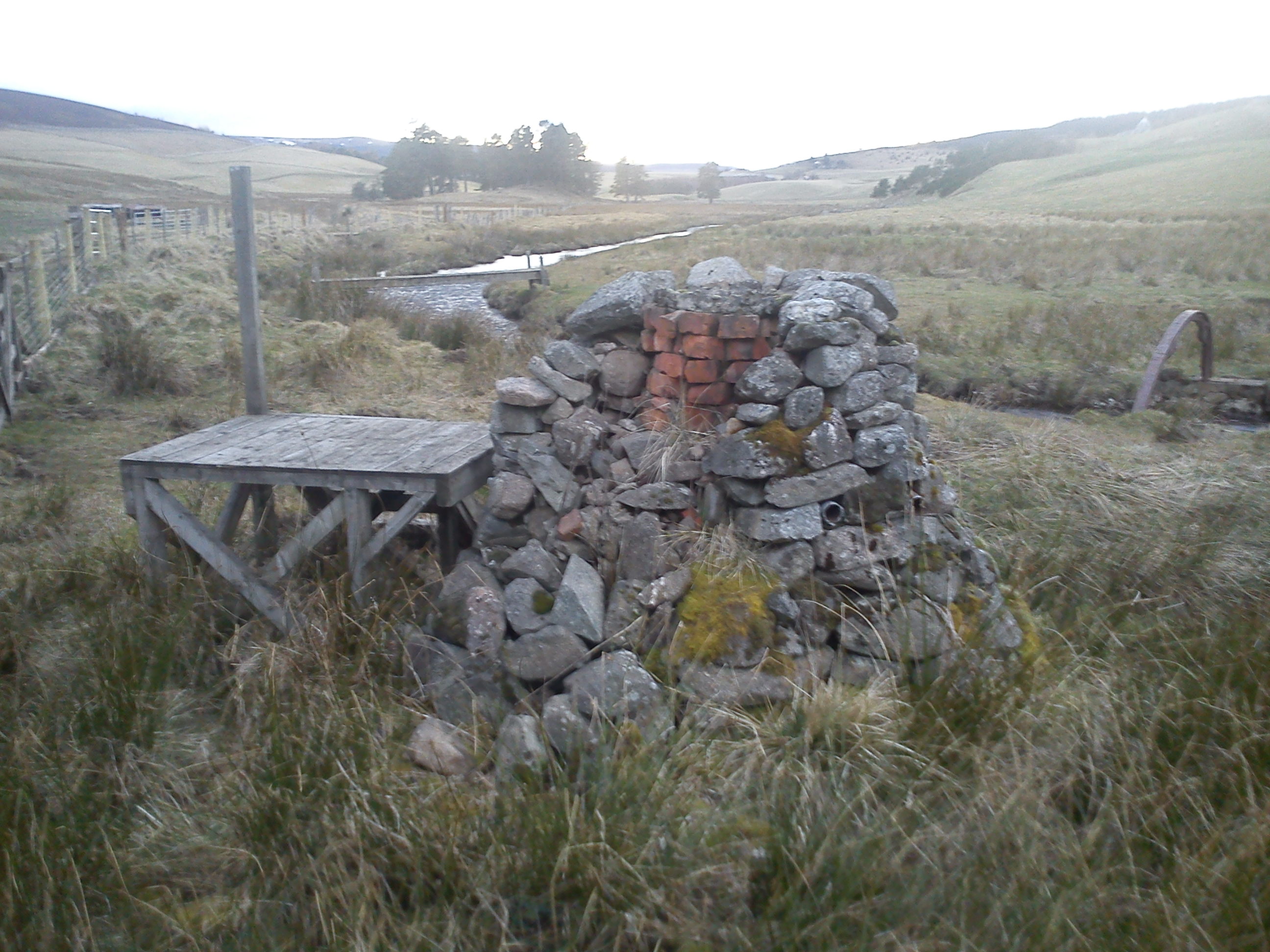
George Beasley and Helen Denerley with many helpers, 2001, Boundaries. Photo Chris Fremantle
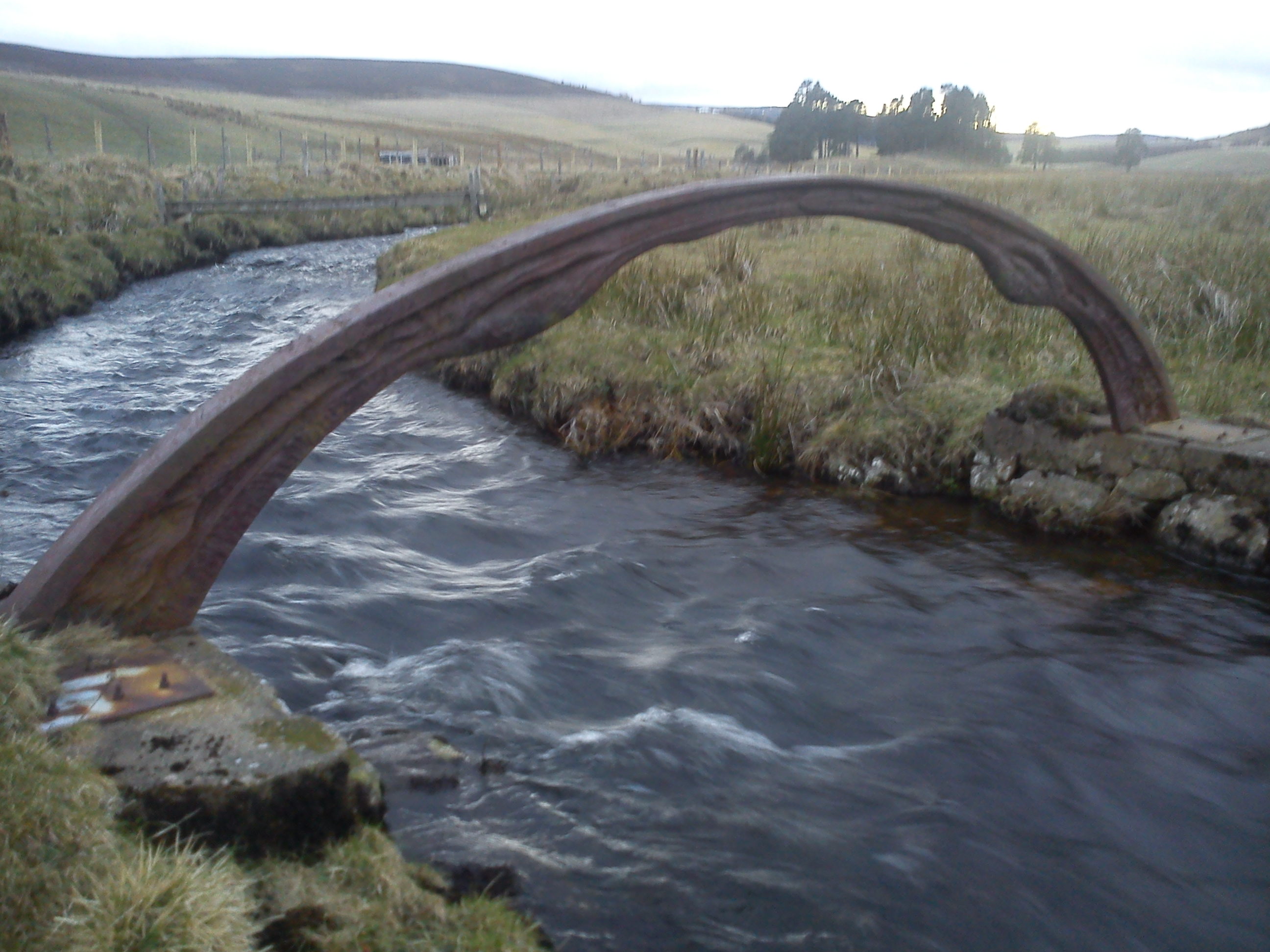
The result of a collaboration between two artists working with metal. Photo Chris Fremantle (sorry for quality)
Art in Salutogenic Design Dominic Pote
This blog by Dominic Pote discusses well-being and how artworks can contribute to a sense of health. It draws on ideas of ‘coherence’ as a way to understand health and well-being. Well worth reading Art in Salutogenic Design | by Dominic Pote Fine-art photographer.
Presenting at Enhancing Lives Through Arts & Health, Houston, TX
My proposal for a paper “Scottish artists bring nature into healthcare” has been accepted for the Global Alliance for Arts & Health 25th Conference in Houston, Texas in April.
The abstract is,
Scotland has a strong portfolio of arts and health projects including both public art installations within healthcare buildings and participatory programmes, in particular with people with long term conditions. This presentation will focus on public art installations by artists and designers which use biophilic and other design approaches to bringing nature into buildings. It addresses the conference themes of Patient Care, Healing Environments and Caring for Caregivers.
It is well known thanks to the work of Robert Ulrich that views of nature contribute to patient recover, and it is clear from the work of Stephen Kaplan that views of nature can play a role in restoring our ability to give our attention. OPENspace Research at Edinburgh College of Art (http://openspace.eca.ac.uk/ ) has further substantiated the connections between nature and wellbeing focusing on inclusive access to the outdoors.
In Scotland there have been a number of projects in the context of Healthcare where artists and designers have specifically sought to use art and design to bring nature into buildings in addition to what the architects and landscape designers are able to achieve.
Four key examples are:
Thomas A Clark’s (http://thomasaclarkblog.blogspot.co.uk/) project with the architects Reiach & Hall, ‘A Grove of Larch in a Forest of Birch,’ for the New Stobhill Hospital in Glasgow integrated poetry and visual arts into what the architects described as the architecture of waiting. The Aim was to create spaces in which users of the hospital could wait for appointments in “a place apart having the brightness and stillness of a woodland glade.”
Alexander Hamilton’s (http://www.alexanderhamilton.co.uk/) Designing for Dignity (http://designingfordignity.co.uk/Inspired-by-Nature) is an approach that draws on a deep understanding of the Victorian poet and artist John Ruskin and of the more recent Biophilia Hypothesis. Hamilton is currently developing designs including furniture and art for the Quiet or Family rooms in the New South Glasgow Hospitals based on an extensive programme of creative engagement. Hamilton is also working on the design of a healthcentre in Glasgow.
Dalziel + Scullion’s (http://www.dalzielscullion.com/) practice is increasingly focused on addressing nature deficit disorder. Their work encompasses exhibitions and public art. Their scheme for the wards of the New South Glasgow Hospitals will bring the whole landscape of Scotland into one building. Their project Rosnes Benches, currently being installed in the landscape of Dumfries and Galloway, they have also contributed work to the Vale of Leven Health Centre (http://www.wide-open.net/index.php?page=vale-of-leven)
Donald Urquhart has completed public art projects for four mental health hospitals including most recently Midpark Acute Mental Health Hospital (http://www.wide-open.net/index.php?page=healing-spaces) and developed Sanctuary spaces for both hospitals and universities. His award winning design for the Sanctuary at Edinburgh Royal Infirmary has become a benchmark (http://www.ginkgoprojects.co.uk/projects/royal-infirmary-edinburgh).
These artists and others demonstrate key aspects of the role of art in bringing nature into healthcare contexts including focus on characteristics of nature such as colour, pattern and movement. As artists they use attention, framing and synthesis.
In addition to sharing these developments with the conference audience I hope to identify other artists exploring similar issues.
I’m very much hoping to find other artists and designers working along these lines with the depth of thinking as well as the quality of work.
WRITING ROOT & CLAW: A WEEKEND WORKSHOP
Em Strang asked us to highlight a Weekend Workshop of creative writing, discussion and walking in October in Cumbria. Check it out – you’ll be in good hands.
La mia Cura Open Source / My Open Source Cure
“We can transform the meaning of the word “cure”. We can transform the role of knowledge. We can be human.”
Salvatore Iaconesi
Salvatore’s diagonsis with brain cancer has led to his open sourcing of his medicalisation by cracking the digital files associated with his Magnetic Resonance Imaging (MRI) scans, and inviting anyone to contribute to his cure. Of course he had surgery, and the point of the process is not whether any one suggestion was more likely to be successful, but rather that he opened up the process to a shared dialogue demonstrating FLOSS principles. He argues that this enabled him to be human again at a point where he had disappeared in the industrialised process of healthcare.
La mia Cura Open Source / My Open Source Cure and the project page on Art is Open Source including links to the extensive press coverage.
What art have I seen?
Foreign Bodies, Common Ground at the Wellcome Trust. The exhibition is extended to 16 March and is well worth a visit. There are some outstanding works, including in particular Katie Paterson’s Fossil Necklace, Miriam Syowia Kyambi and James Muriuki’s Pata Picha Photo Studio, but also Zwelethu Mthethwa’s participatory photography project focused on ‘impilo engcono’ (good health).
Stuart Hall 1932-2014
Grant to provide, promote or publicise health
Scottish Government grant funding to national voluntary organisations which provide, promote or publicise health or health-related services. The list of previous grants includes several arts organisations as well as a number working in the environment. National Voluntary Organisations 16b Grants.
What art have I seen?
Table of Contents by the Siobhan Davies Dance, which was engrossing. I have to admit, I also saw the Sarah Lucas retrospective – the Tramway website avoids any images of the main theme of the exhibition – I’m at a loss to understand why.
What art have I seen?

Empty Military Road, Roseneath, Eòghann Mac Colla (I hope the artist doesn’t mind me doing this – I haven’t asked permission)
Eòghann Mac Colla‘s Place Changes Perspective in the Village Hall in Dunlop, Ayrshire. Well worth the jaunt on a Friday evening to see new work, hear Eòghann’s brother play the pipes, and see a community come out to support an artist (and also now elected member of the local authority).
What art have I seen?
Living with war: artists on war and conflict at the Gallery of Modern Art, Glasgow
Bomb Ponds
http://www.guggenheim.org/video/vandy-rattanas-bomb-ponds-photographs-and-video
War and landscape, one of the oldest themes.
Illuminating art, design and health
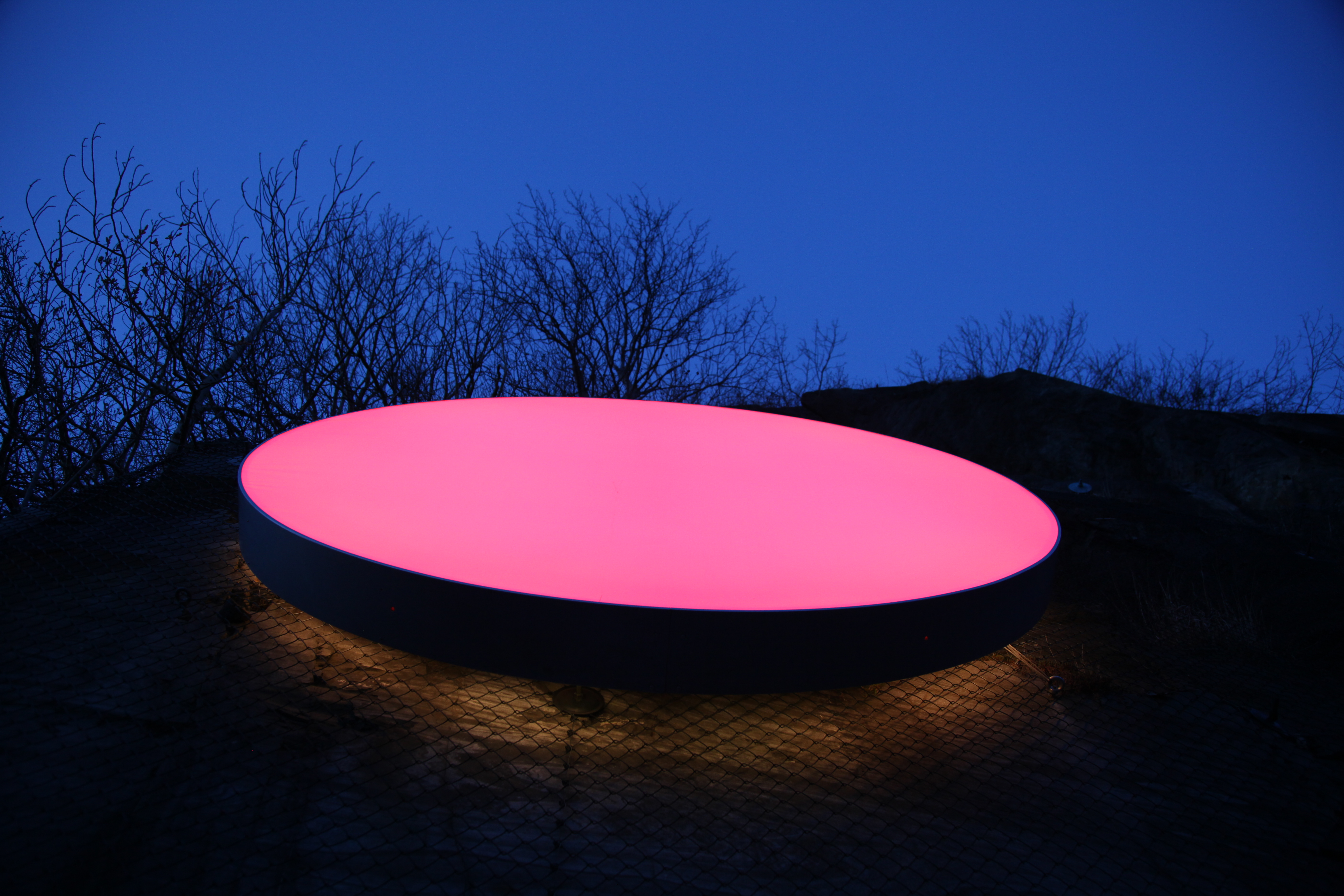
Lisa Pacini and Christine Istad,
Sun, 2012 – photo courtesy of Marres
Two interesting trajectories across the need for light particularly in winter. The one is a blog from the Wellcome Trust on research being undertaken by their Research Fellow, Dr Tania Woloshyn, on the history of phototherapy, and the other is an exhibition at Marres House for Contemporary Culture in the Netherlands entitled Winter Anti Depression where they have created an Art Resort, a sensory environment in response to the winter.
The idea that the lack of sunlight affects those of us living in northern climates is not new, and research into the history of treatments highlights the complexity of the amount of sunlight that is healthy.
The exhibition demonstrates a number of art and design approaches to activating the senses. Different works explore different senses from textured surfaces that you feel through your feet, to sounds to cocoon you in your bed, to light and colour. The installation comprising a range of yellows is particularly evocative (see below).
Light and colour are increasingly significant in the design of healthcare contexts. New technologies such as ‘Sky Ceilings’ and lightboxes can bring a feeling of daylight into rooms that lack windows. The ‘temperature’ of light, especially with the increasing availability of LED bulbs, is enabling much more sophisticated design of environments. But what is clear is that light and colour are not ‘universals’. On the one hand their meaning is culturally informed, and as these examples highlight, also informed by seasonality. We might want healthcare to be 24/7, but our bodies respond to seasonality just as they do to day and night.
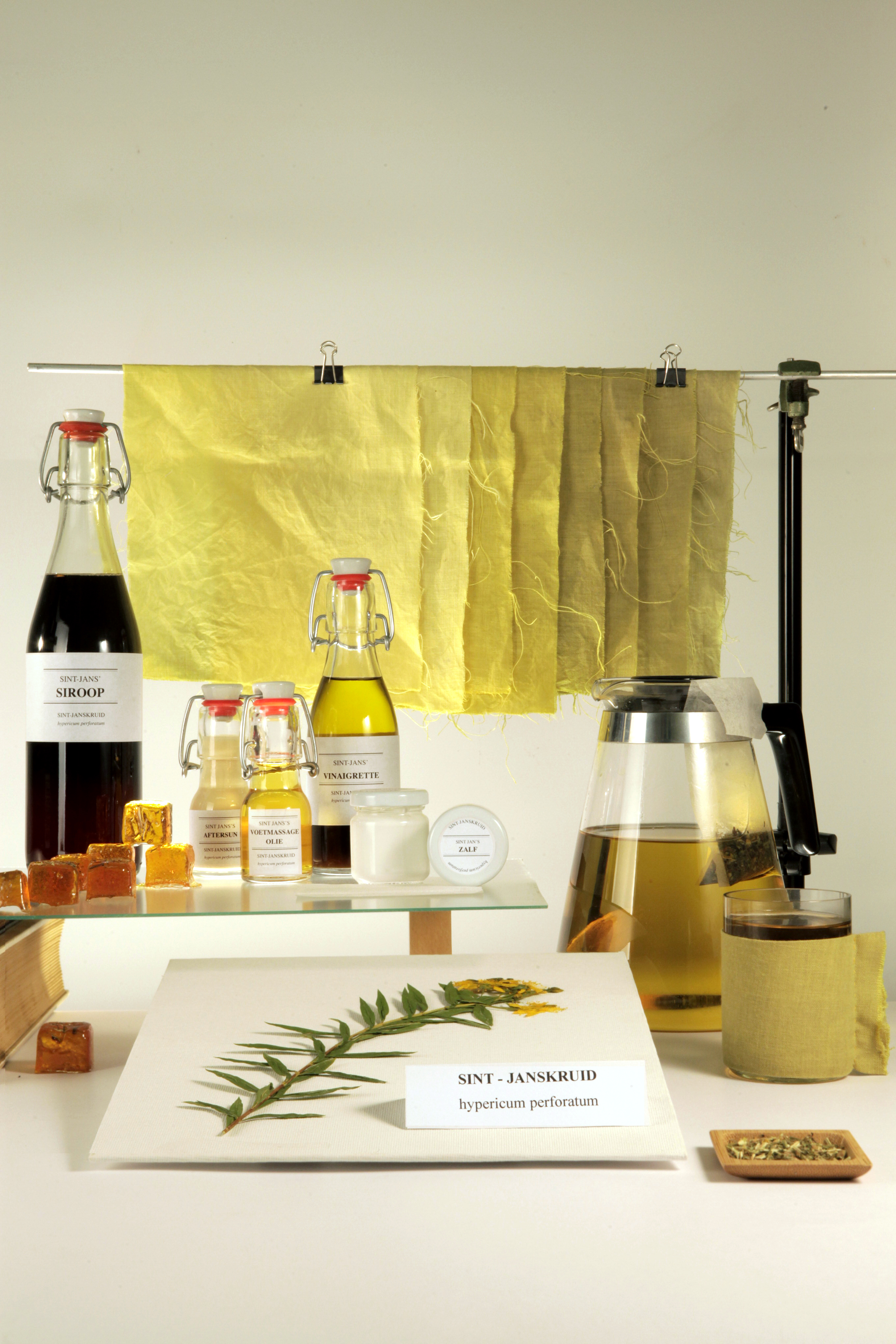
Katja Gruijters
Saint John’s wort Lab, 2014, photography Jonas de Witte Courtesy of Marres
A response to ‘Are dialogic and relational aesthetics relevant to all participatory and co-creative practitioners?’

This excellent piece (Chris Fremantle’s blog 6.1.2014) frames the debate on participation and co-creation in art and design as a priviledging of process (over product) and social concerns (over artistic concerns). This presupposes in some way a radical break with what has gone before that might have particular relevance at this point in time to design, architecture and new media.
There is without question a perceived ‘Social Turn’ in art (Lind 2005/6, Bishop 2006/12, Jackson 2011) and this is frequently articulated as a concern with process and the social (Bishop 2004). However, to play devil’s advocate for a moment (as Claire Bishop herself suggests in 2012), how are these concerns not true of all art and any time? Have artists not always situated their practices within the social? In what sense is this set of concerns a new endeavour, a turn in direction from what went before?
View original post 997 more words
What art have I seen?
Sylvia Grace Borda’s Camera Histories at Streetlevel.
Comments on Farm Tableaux are posted on ecoartscotland.
Things I’ve been trying to remember
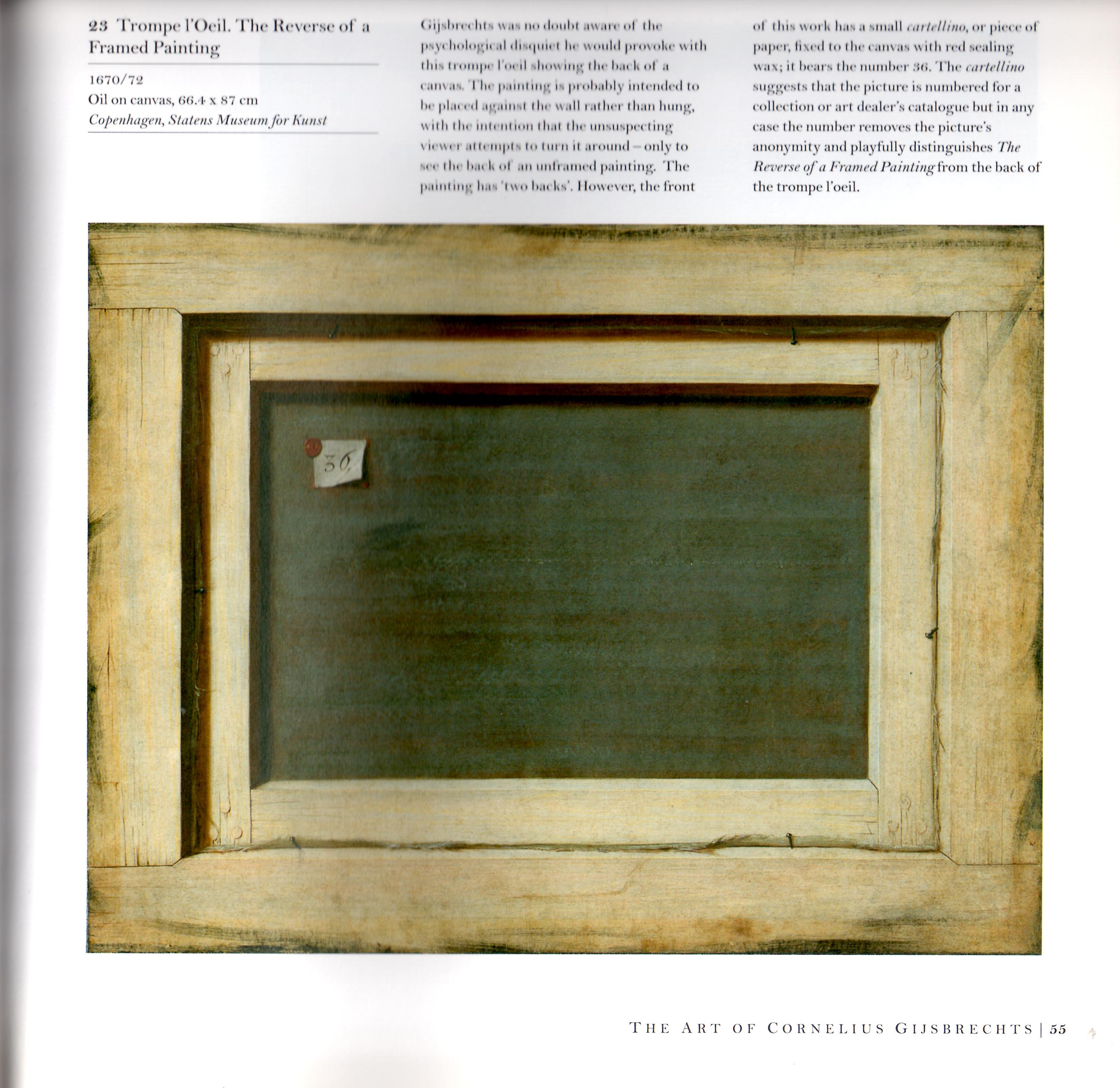
From ‘painted illisions’ The Art of Cornelius Gijsbrechts, London: National Gallery, 2000
I was trying to remember the details of this painting last year. Imagine trying to google ‘trompe l’oeil painting of reverse of painting’. Without the artist’s name I think this painting may actually be impossible to find.
More Good Now: A Working Manifesto for Artist-Producers
Excellent manifesto for all of us however we work

I’m an artist who also works as a producer. I set up and still help run the spoken word organisation Inky Fingers, and I co-direct the live art series ANATOMY. The idea of artists leading artistic production – artists organising nights, festivals, buildings – seems to be taking off at the moment. At the last Buzzcut Festival (an artist-led festival), the organisers worked with the Live Art Development Agency to organise a day blether on artist-led projects around the UK. There was excitement and community and possibility. This is wonderful.
At the same time, there’s a lot of discussion happening about the issue of artists working for free, artists struggling to get paid, artists getting exploited by venues. A lot of the response has been about how artists can work together and by themselves to improve their treatment by producers and venues – like here and
View original post 2,531 more words
Are dialogic and relational aesthetics relevant to all participatory and co-creative practitioners?
Artists understand the potential of an aesthetics of process and the social. But does this mean anything to the designers, architects, programmers and others who work with participation and co-creativity? Further thoughts on the Practising Equality paper published in the Participations Journal.

One of the questions we asked in the conclusions of the Practising Equality paper (2013), looking across art, design, architecture and new media at practices of co-creativity and participation, is whether the development of thinking about the aesthetics of participation in art has relevance to design, architecture and new media?
The emergence of a debate around the aesthetics of process and the social in art is one of the important developments of the past 25 years. Whether we are talking about Bourriaud’s ‘relational aesthetics’ discussing participatory work in galleries, or Kester’s attention to ‘dialogic aesthetics’ in situated practices, or Bishop’s interest in the perversity of participation, all are concerned with an aesthetics of process and social relations.
Suzanne Lacy, who is both the subject of one of Kester’s case studies and also a contributor to the discourse herself, draws attention to Allan Kaprow’s concerns. Kaprow’s practice is fundamentally participatory and…
View original post 1,179 more words
What art have I seen?
J D Fergusson and Louise Bourgeois at the Scottish National Gallery of Modern Art.
What art have I seen?
40/40 forty years forty artists from Glasgow Print Studio at the Maclaurin Galleries, Ayr
Architects for Health’s Presentations on SlideShare
Architects for Health is a membership organisation. Check out the presentations from recent events on SlideShare.
PearsonLloyd hospital redesign “reduces violence by 50 percent”
Providing easily understood information in a well designed and clear form about the stages of your hospital visit, whether that’s the Emergency Department or Outpatients, can reduce stress for patients and according to this article, PearsonLloyd hospital redesign “reduces violence by 50 percent”. Thanks to Alexander Hamilton for highlighting this important project.
.
Nairn Primary Care Centre
Simon Fildes and Katrina McPherson have made two new works for the Nairn Primary Care Centre, in a project managed by IOTA. They have installed two elements:
Little Birds connects the inside with the outside, building on recent research into the impact of birdsong on wellbeing. You can see the work here.
Hand Heart Head is an eight screen video installation developed with the choreographer and dancer Janice Parker. Have a look here.
HANGING OUT WITH TIM ROLLINS AND K.O.S. – The Brooklyn Rail
One of the earliest entries in this blog, back in 2004, resulted from reading a text by Tim Rollins that formed part of the Civil Arts Enquiry at the City Arts Centre in Dublin.
I had the privilege of attending a workshop at the Talbot Rice in Edinburgh with Tim Rollins and some of the Kids of Survival in August 2012.
Now Brooklyn Rail has published an excellent article, Two Days in the Lives of Art as Social Action, which name checks the event in Edinburgh.
What art have I seen?
Interwoven Connections: The Stoddard Templeton Design Studio and Design Library, 1843-2005 at the Mackintosh Museum in Glasgow School of Art
Recent Public Art Install
What a lovely, simple and effective idea from Ally Wallace – a great response to the architecture and courtyards of the new Hospital in Bristol. Very much look forward to seeing the rest of the scheme

The recent install of my public art piece for Bristol’s new Southmead Hospital. Nine painted aluminium discs atop posts, protruding from planting, to be viewed through windows of upper floors. The building opens in March 2014.


Last light on a Granny Pine in Black Rannoch Wood, Thurs 21 November, 2013
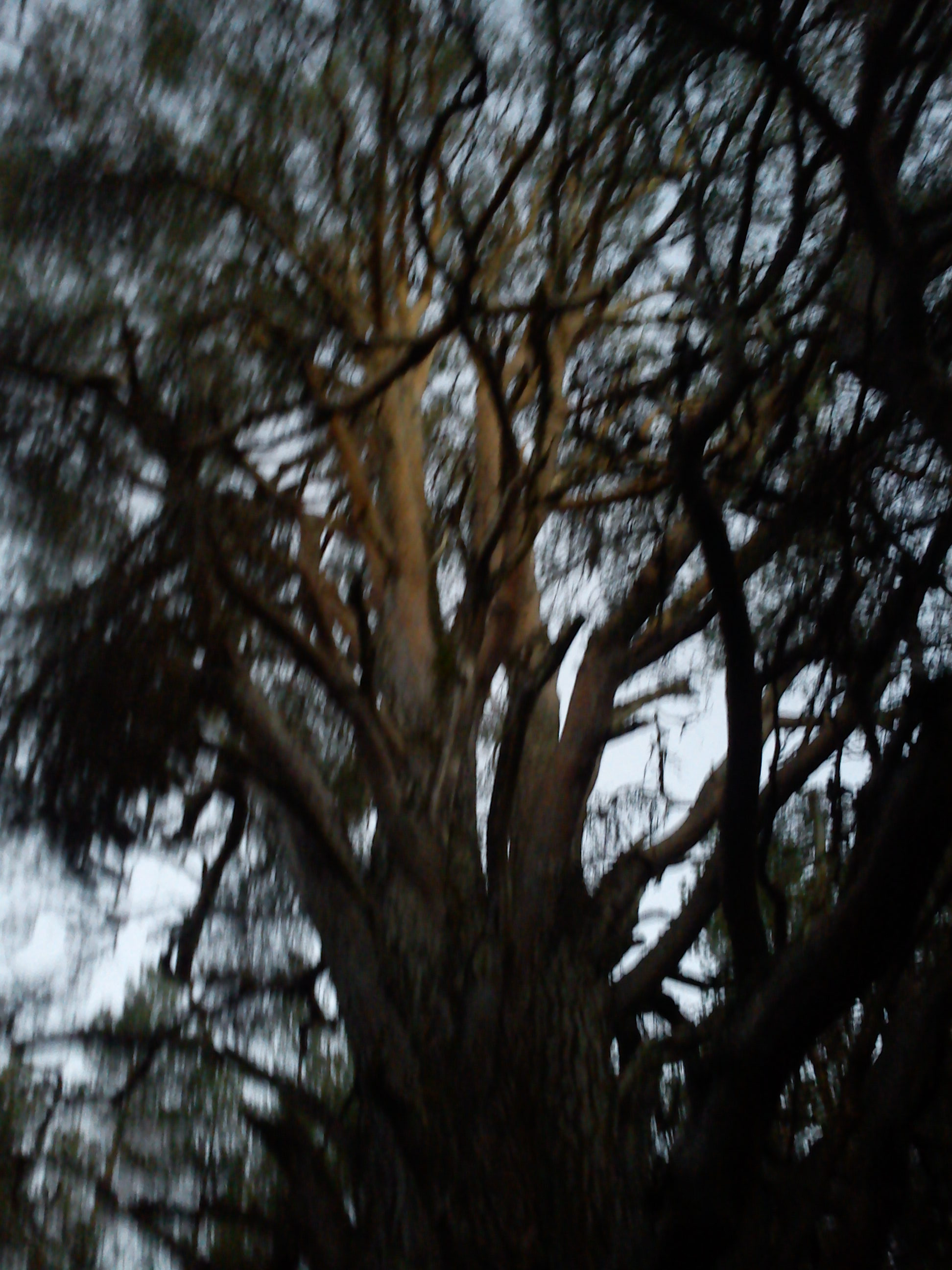
Last light caught on Granny Pine in Black Rannoch Wood, Thurs 21 November 2013, Photo Chris Fremantle
What art have I seen?

View of the Mercat Building at Glasgow Cross, Frank Boyle
Frank Boyle’s political cartoons and watercolours at South Block
Jeremy Deller’s ‘Manchester Procession’ and Chris Johanson’s ‘Considering’ at the Modern Institute.
Kevin Blackwell RIP

Of Boats & Buildings, Kevin Blackwell, 1997, Scottish Sculpture Open 9. Photo: Eric Ellington
Kevin was a gentle man who I got to know at the Scottish Sculpture Workshop. He would periodically appear working on a project. It was always a pleasure to talk to him and to see what he was working on. I’m deeply sad to hear of his passing and sad for Diana who is without him. Sadly Eric Ellington, who took the photographs for Scottish Sculpture Open 9 including the one above, also died a little while ago, leaving Elaine and Jamie without him.
Art is not a zero-sum game
Francois Matarasso offers an excellent articulation of the importance of art as “a way of knowing unlike others” and of the passion associated with that. He goes on to make an important point – other ways of knowing are also distinctive and equally valuable, “I believe that art is a way of knowing unlike others, but that doesn’t make it more important than the others.” His conclusion seemed to me to highlight something fundamental to collaboration and working with other ways of knowing, which we sometimes call ‘interdisciplinarity’. He says “To value one kind of experience, one glimpse beyond the selfish and material, does not require a rejection of all others. Life is not a zero-sum game. The heart is capacious.” When he says “The heart is capacious” he implies the critical thing, which is that to collaborate or work across disciplines requires acknowledging that the other way of knowing that you are engaging with is equally valid, and moreover, that you need to make space in your heart as well as your mind to love the other way of knowing as well. This is so evident in the practices of artists working in social and ecological contexts. It is absolutely obvious when you think about it that Helen Mayer Harrison and Newton Harrison for instance love and value the ways of knowing of ecological scientists.
What art have I seen?
Louise Bourgeois at The Fruitmarket in Edinburgh. Focused on the Insomnia Drawings. Went back on Wednesday 30th and looked at the large works upstairs.
Practising Equality
Over the past year I’ve been working with Prof Paul Harris and Prof Anne Douglas to explore common issues across art, design, architecture and media/Web 2.0 focusing on issues of co-creativity and participation. This short video made for a presentation at the Moving Targets Conference earlier this month highlights a few key thoughts and the paper will be published imminently in Participations Journal. I’ll post a link in due course.
Postscript
I just finish posting up this link to work we’ve been doing on participation and co-creativity, go back into my email and there is an Art&Education announcement of a major conference in Montreal entitled The Participatory Condition http://www.pcond.ca/ . Interestingly they have in their blurb aligned participation with democracy, something which we seek to question in our paper, and although they use the term relational, they don’t raise questions of the aesthetic of participation, questions which are critical within the art discourse but have not impacted on the discourse in design, architecture let alone media/Web 2.0.
Wellcome Trust asks, What has art ever done for science?
Interesting blog post on the Wellcome Trust – offered a short comment based on Jill Scott’s observations.
Deep Routes: research, scale and indigeneity
The Financial Times at the end of 2012 carried a review of an exhibition by Zeng Fanzhi at the Gagosian Gallery. The review opens with the following couple of sentences,
It has finally happened – a solo exhibition of a Chinese artist whose power and interest does not depend on Chinese themes or subject matter. Since the 1990s, China has been the promised land of the global arts scene, but not one of the numerous group shows staged in the past decade – at Tate Liverpool, the Saatchi Gallery, the Hayward – has been able to make a case that artists from the region are of more than local concern.
The image that accompanied the review is of one of Zeng’s paintings, a reworking of Durer’s ubiquitous Hare some 4m square, the surface appearing to be deeply cracked. Whether this was an ironic statement on the import of the canonical tradition of Western Art from the perspective of the East, or an aesthetic judgement, or the quality of the reproduction on pink paper, I don’t know. I didn’t see the exhibition and I haven’t read the press release.
It may be that in the ambit of art criticism published in the FT and moving elegantly between the transnational art fairs and galleries that construct value through those environments, this artist is significant. It may be that because this artist reworks iconic images from canonical western art that they are therefore of ‘power and interest.’ Their ‘power and interest’ might perhaps lie in the exquisite development of the surface of the canvas through brilliant brushwork, or their use of colour, seeming to soak the hare in the night-time neon lights of Shanghai, Hong Kong, New York or LA.
This painting, and the others in the exhibition, and in fact all the work for sale in Gagosian, or in any of the other key galleries and art fairs, only exists at the global level. As the review rightly states what is important at this level is that the work cannot be of local concern, it must speak to The Universal, the abstracted, deterritorialised. It will exist in no-place because thanks to the hard work of the FT reviewer and the hard work of the Gagosian curatorial team ensuring that their merch is only seen in the right places, it’s value has nothing to do with an specific locality, any personal intimate space, any town or region. It might hang in a domestic interior for a period, but it is more likely to go into storage in a warehouse somewhere as an investment: value stored for future exchange.
The reviewer wouldn’t have to highlight this point reviewing a Richard Serra exhibition (such as the one that opened Gagosian’s London space). It would be taken for granted that Serra was of global interest and power, an important element moving in the circuits of value of the international art world. A Chinese artist has now been allowed into this club.
↔
Claire Pentecost, in her essay (pdf: Pentecost Notes on Continental Drift) Notes on the Project Called Continental Drift offers an alternative structure for thinking about art. Her structure, and the wider structure of the book Deep Routes: The Midwest In All Directions (Compass Collaborators, 2012 see bottom for ways to get a copy), precisely values an analysis which is interested in multiple levels (p.17),
We aim to explore the five scales of contemporary existence: the intimate, the local, the national, the continental and the global. Within the mesh of scales, we want to understand the extent of our interdependence, how any action we may take has effects on and is shaped by all these scales at once. We attempt to understand these dynamics so that we can understand the meaning of our own actions, the basis for an ethical life.
But for Pentecost, global is not the exclusive realm of ‘power and interest’. Rather her global is a scale at which it is necessary to look to see the entwined flows that articulate our everyday lives. She wants to look at the food on our table (perhaps the jugged hare) and through following the lines of connection to see that we are connected to the workers making ceramics in China for sale in IKEA in Long Island City (cf Ai WeiWei perhaps). And through that examination to see the Phillippino crews of container ships continuously circumnavigating the planet (cf for instance Allan Sekula). For her the global simply cannot exist in isolation. No artist’s interest and power should be divorced from local themes and subject matters. It is simply not possible – those elements can be ignored, but they still exist – practically speaking iron ore is mined, corten steel is produced in foundries, barges, trucks and planes move sculptures. There are social and environmental interactions. A sculpture can be a sign separated from all the realities that are involved in it’s production and presentation – deracinated – separated from all considerations except value to enable it to circulate freely in this global space.
And where the exhibition at Gagosian and the review in the FT are elements in the urgent construction of capital, Pentecost takes us on a detour into a mis-remembered quote trying to latch onto an articulation of a different way of dealing with signs and the value they convey, or actually deferring dealing with signs and value (p.23),
… to the point where many of us aspire to practice an intricate, processual, and research-motivated version of art that resists evaluation by the prescriptive teams of institutions and markets.
Where for the critic and the gallery the essential acts are focused on the carefully orchestrated production and affirmation of the sign as value, Pentecost following the French artist Francois Deck, suggests that the most important act is to operate at the point before the sign is ‘finalised’ and value is conferred. So the artwork is always unfinished, it is always a project, precisely because at the point we confer value, that thing, whatever it is, whether food or art, moves into warehouses and other structures designed to enable and enhance the mobility of capital.
Pentecost’s essay is one of two that open up Deep Routes. Pentecost establishes some key points in a landscape characterised by the financial crisis and the occupy movement. The themes and contexts of the book are focused by the specificity of the midwest of the United States of America. Reading the book we get to know particular places such as Beardstown, IL, exploring through Ryan Griffis and Sarah Ross’ glossary of terms the ‘vertical integration’ of a small town into global commodities markets through ‘the cold chain,’ ‘engineered tiling,’ GMO, chemical fertilizers and GPS mapping. Matthias Regan’s narrative offers a different trajectory, of a Greyhound bus journey from Chicago to Detroit. This is a gentle, reflective meditation on breakdown in which (p.188),
The future does not emerge from amongst the technocratic elite; it will not be driven by new inventions in digital media. We should seek it instead in what is meager and humble, tentative and transitioning. Not rushing away from breakdown, but opening ourselves to its after effects.
↔
The other key trajectory established from the outset in Deep Routes takes us into indigenous experience, practice, pedagogy and critique. Alongside the spatial, economic and experiential journeys of the other authors, Dylan AT Miner’s interviews with First People’s organisers punctuate the book. Miner has been pursuing a project of imagining that we can all be indigenous – it’s not a condition restricted by genealogy, but rather a practice and a philosophy – a way of making sense of the world.
Near the end of the book, in the last interview, Jill Doerfler and Miner discuss tribalography, a methodology developed by by LeAnne Howe. Jill studied with LeAnne and explains the emergence of tribalography (p.228),
LeAnne has explained that tribalography grew out of the Native propensity to connect things together. It is the idea that Native writers often tell stories that combine autobiography, history, and fiction; we tell stories that include all these elements and also work in collaboration with the past, present, and future. …
Jill goes on to say,
These stories are not generally about finding out what really happened but are meant to teach us something and show us our place within our families, communities, nations, and the world. I found that in addition to serving as a critical lens for literary study and as a theoretical framework for cultural analysis, tribalography can also serve as an abundantly fruitful methodological approach relevant across the interdisciplinary field of American Indian studies.
I happened across Deep Routes staying with Sarah Ross and Ryan Griffis in Chicago in the autumn of 2012 (I was introduced to them by Brett Bloom when I asked him for help finding somewhere to stay in Chicago). They had just received delivery of a number of boxes from the printers. There was one on the coffee table. I picked it up and started reading. I realised it was the sequel to MidWest Radical Culture Corridor: A Call to Farms, which I had come across a few years ago. I was in Chicago for the International Sculpture Conference, but in many respects this book is better art than much of what I saw in the conference presentations. Not only did I meet Sarah and Ryan, but also Claire and Brian Holmes who came up with the concept of Continental Drift, and is the ’embedded’ critical theorist.
We ate preserved pears from the tree in their back garden and Sarah articulated some of the stress of working as a volunteer artist in a maximum security prison on her days off from teach at the School of the Art Institute of Chicago.
For me the description of tribalography tallies with my experience as an associate of a practice-led research programme. Practice-led research in the arts is autobiography. It is often history (contextualising practices in relation to precedents). It moves across the past, present and future (it has been said that practice-led PhDs are ways for artists to reinvent their practices). Truth in the sense of replicable experiment is not at the heart of practice-led research. But most provocatively fiction is sometimes there too (Sophie Hope’s work Participating in the Wrong Way certainly brings ‘fictionalising’ to bear on research).
Methods, whether Pentecost’s revisiting of the Modern School movement of the early part of the last century or tribalography, positively radiate out of this volume. It is built on the experience of a creative community that exists in a particular territory. Their art is research motivated, processual and intricately interwoven at different scales and with different collaborators. Ironically this work is of global power and interest even if it is all about the Midwest.
.
You can order a copy here, or if you are in Scotland and we can meet, then I’ll lend you one.
What art have I seen?

Soft Rush Mantle (detail) Photo Chris Fremantle
Encircled by Gold: Under Brigid’s Mantle, Caroline Dear at the Scottish Storytelling Centre in Edinburgh. There is a beautiful book which links the story of Brigid with the environment on Skye and the work of the archaeologists in the vicinity.
What art have I seen?
Leonardo da Vinci: the Mechanics of Man, Queen’s Gallery, Edinburgh. An in depth presentation on Leonardo’s anatomical studies. Remarkable drawing when as they point out he was using a goose feather – it’s incredibly even and tidy and smaller than you expect. But then it’s clear from the audio guide that present day anatomists are deeply impressed with his skill – they comment on how precisely the skull is bisected and then transected. They also comment on how easy it is to get septicemia particularly from the organs of the digestive tract, and that cleanliness and accuracy are key (not things one normally associates with the Renaissance or perhaps with artists?). There are references to where Leonardo was getting it wrong: he still thought that the arteries and veins were two separate systems – he hadn’t quite got to the circulation of blood, though he was clearly very close. The exhibition could have had more in depth interpretation – there is a huge amount of information on each page, but they have produced an ipad app which allows you to see each page, pan and zoom as you would expect, but also with provide a translation of all the text on the page in position.

 CHRIS FREMANTLE
leave a comment