The Heart Sutra [2004] | Chris Dooks
Listen to this. The Heart Sutra [2004] | Chris Dooks.
It is a wonderful voice, one that might actually aid the meditation on emptiness.

What art have I seen?

Image from Gagosian website
Paul Noble’s Welcome to Nobson at Gagosian.

Image from Royal Academy website
Building the Revolution: Soviet Art and Architecture 1915–1935 at the Royal Academy,
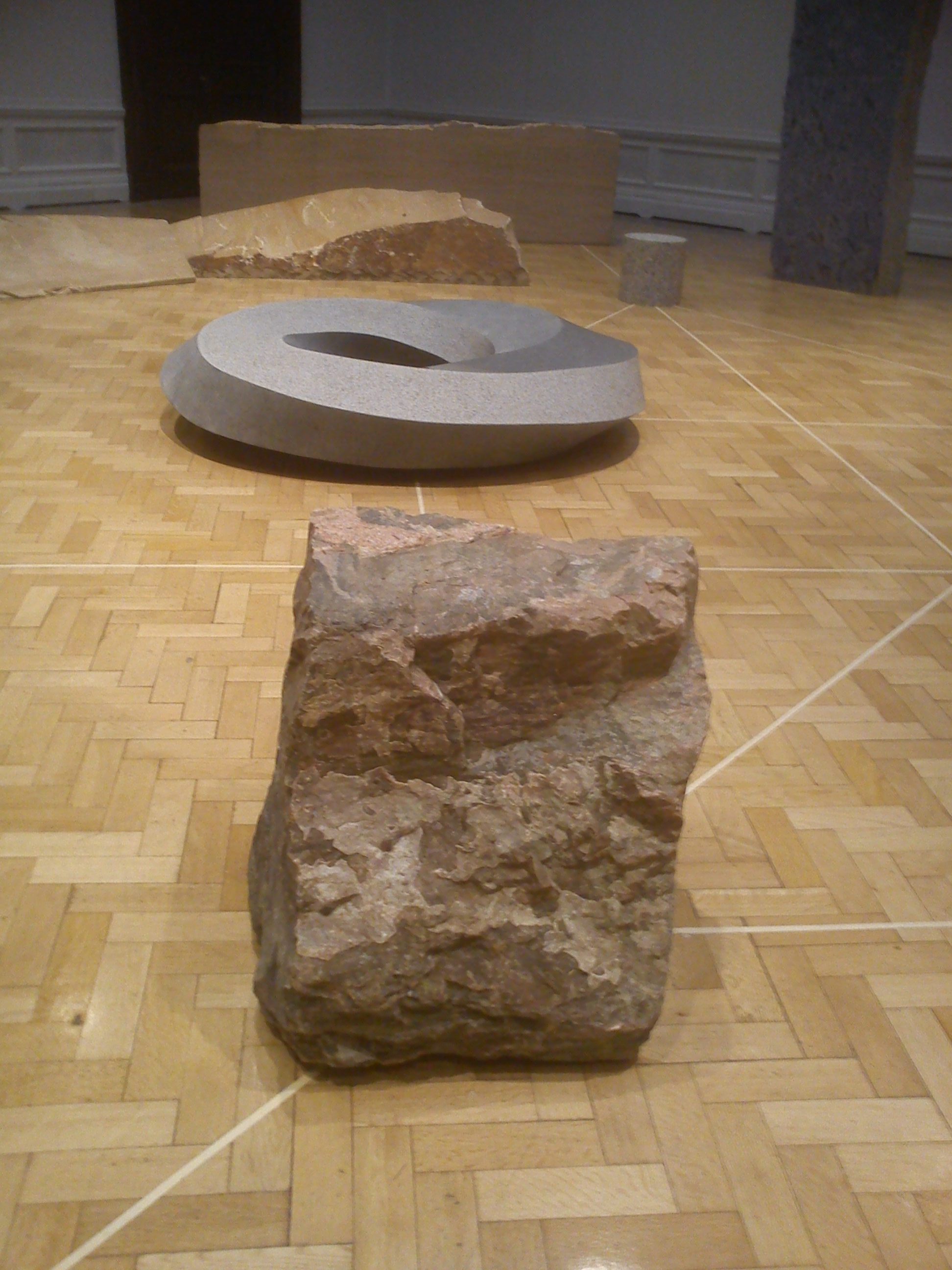
John Msinr RA, Installation in Weston Rooms at Royal Academy, Photo: Chris Fremantle
Artists’ Laboratory 04: John Maine RA After Cosmati
What art have I seen?

Hanna Tuulikki performed parts of her work Salutation to the Sun, first presented a few years ago, at the Sound Lab at the City Halls Glasgow. It was followed by the film The Crystal Liturgy about Olivier Messiaen and his interest in landscape and ornithology.
Co-Producing PAR+RS

Creative Scotland has just formally announced that I have, along with Trigger (Suzy Glass and Angie Bual www.triggerstuff.co.uk) been appointed as Co-Producers for PAR+RS www.publicartscotland.com, Creative Scotland’s public art development project.
So I’ve got a provocative question to start the ball rolling, is public art a subset of visual arts or is it everything across all artforms that takes place outside the temples of art?
Creative Scotland’s press release is here.
What art have I seen?
At the Wellcome Collection this morning:
Bill Fontana’s White Sound: an Urban Seascape;
Felicity Powell’s A Charmed Life: The Solace of Objects;
Infinitas Gracias: Mexian Miracle Paintings;
and at the Freud Museum, in addition to his collection of sculptures, Barbara Loftus’ Sigismund’s Watch: a tiny catastrophe.
What art have I seen?
Museum of Everything Exhibition #4 at Selfridges and Gerhard Richter at Tate Modern
The Oablib Effect

Linlithgow, Burgh Halls, 2009
Oablib is a town in northern Spain, near Bilbao. Formerly an important centre it had, in recent years, lost much of its purpose. Lacking the brashness and political connections of Bilbao it decided against a big, iconic “regeneration” spaceship, dropped down from on-high, and instead looked to the vigour of its local culture and built heritage to re-invent itself.
It has not looked back.
You are warmly invited to “The Oablib Effect”, a presentation by Malcolm Fraser, the award-winning architect. Q&A and conversation will follow, for which Malcolm will be joined by Morag Deyes MBE, Artistic Director of Dance Base, Scotland’s National Centre for Dance.
The presentation & conversation will be held from 6pm to 8pm on the evening of Monday 24 October 2011 in The Gallery, which is located in the Pavilion at Burns Cottage, Robert Burns Birthplace Museum, Alloway, close to the heart of Ayr town centre. Parking is available in the Burns Cottage car park.
Malcolm Fraser Architects have worked in and for ‘Oablibs’ all over Scotland, from Stromness to Berwick-upon-Tweed, and Malcolm would like to discuss how Ayr might discover its own Oablib Effect.
Following the presentation and Q&A, there will be the opportunity to converse with a drink and canapés by Su Casa, Ayr before a wrap-up session that looks forward to actions and future such presentations. A small charge will be made towards the use of The Gallery and refreshments.
Thanks to Robert Burns Birthplace Museum and Su Casa.
Would you kindly email your acceptance of this invitation by Thursday 20 October to Lianne Hackett who will produce a note of the evening with actions for the future.
If you have any questions or suggestions for participation, please contact Lianne Hackett on 07796466384.
What art have I seen? AHM State of Play
Ruth Ewan’s Brank & Heckle at Dundee Contemporary Arts.
There for the AHM State of Play symposium. Ross Sinclair’s rant by audio/powerpoint was very refreshing, Jean Urquhart MSP deserved a standing ovation and perhaps hit the nail on the head. The Manifestos were really good, especially Tara Beall’s.
Once again, and precisely because there was no policy agenda being promoted, one must think hard to understand the point. Most conferences are organised by bureaucracies seeking to promulgate their policy initiatives and secure adoption by practitioners. Conferences organised by practitioners tend to complicate and agitate.
So what were AHM attempting to complicate and agitate? The simple answer might be in Jean Urquhart MSP’s talk which ended with an invitation or a challenge for the artists to engage more directly with the political – get stuck in, get into the Parliament, get political, stop talking the talk and start walking the walk.
And this is probably true, although perhaps the ambition for AHM was more subtle and demonstrated through the one-minute manifestos. These were a platform for artists (in the broad sense) to articulate something, frankly anything, that they felt it was important to say. Over the three events, some were political, some humorous, some dadaist, some demonstrated their point through their form.
My manifesto was intended to set out what I think is important in doing what I do. I was glad to be able to be part of another two manifestos (in the end). I was part of Tim Collins Anthropocene Evolution Alliance and on the day I found myself being part of Tara Beall’s multivocal performance.
We all have stuff to say and we all believe that it matters.
AHM’s State of Play, Dundee
AHM‘s final State of Play event takes place in Dundee on Saturday 1 October.
As with previous events it will include a number of ‘One Minute Manifestos’. One of these has emerged through a collective process of writing initiated by Tim Collins and contributed to by a number of participants in the Values of Environmental Writing programme at Glasgow University.
Tim has asked me to post the manifesto and authorship, and to encourage anyone who broadly supports the manifesto, and is at the State of Play symposium, to come forward and share in the speaking of the manifesto.
“Who are we? Though the origins of this manifesto are the Values of Environmental Research Network conversations, this document is inclusive of all those who feel that the arts and humanities have a vital role in the effort to mitigate and prevent environmental damage.”
The Anthropo-scene Evolution
2011 saw the culmination of avarice that necessitates naming the human impact on all earthly things. In response we wish to reject humanity’s supposed dominion over nature and to take responsibility for wilful and excessive impact. Our intention is to constitute greater empathy between the world’s free-living things. As creative pragmatists committed to producing practical wisdom, we recognise a loss of humility and seek to reengage the aesthetic and the sublime, which provide interface and witness to spirit on earth. Cultural responses to the anthropo-scene realize that there are opportunities embedded in new constraints; but more importantly there is generative force amongst living things that must be engaged anew. We experiment with a new materialism and aim for new metaphysical purpose for the arts and humanities within the public domain.
Background
Draft1 scribed by Tim Collins (TC) with Reiko Goto, 18 June 2011, subsequently edited by Tom Bristow and Chris Maughan, with comments and encouragement from Aaron Franks and Chris Fremantle (CF). The AHM ‘State of Play in Scotland’ submission was initiated by CF. TC offered the first rough draft with proper word editing by Aaron Franks and Rachel Harkness, followed by strategic refinement by Rhian Williams, Kate Foster, Alistair McIntosh and Owain Jones. The full manifesto is a result of discussion that occurred on 17 June, 2011 with Aaron Franks, Owain Jones, Chris Maughan, Mike Robinson and Karen Syse. Tom Bristow and the ‘frog team’ were present in spirit if not in material form. The work was inspired and energized by presentations and dialogue with Alistair McIntosh and Gareth Evans all set within the wider context of the AHRC supported Values of Environmental Writing Network, organized by Hayden Lorimer, Alex Benchimol and Rhian Williams (2011).
What art have I seen?
Ingrid Calame at the Fruitmarket in Edinburgh
Martin Creed Work No. 1059, 2011
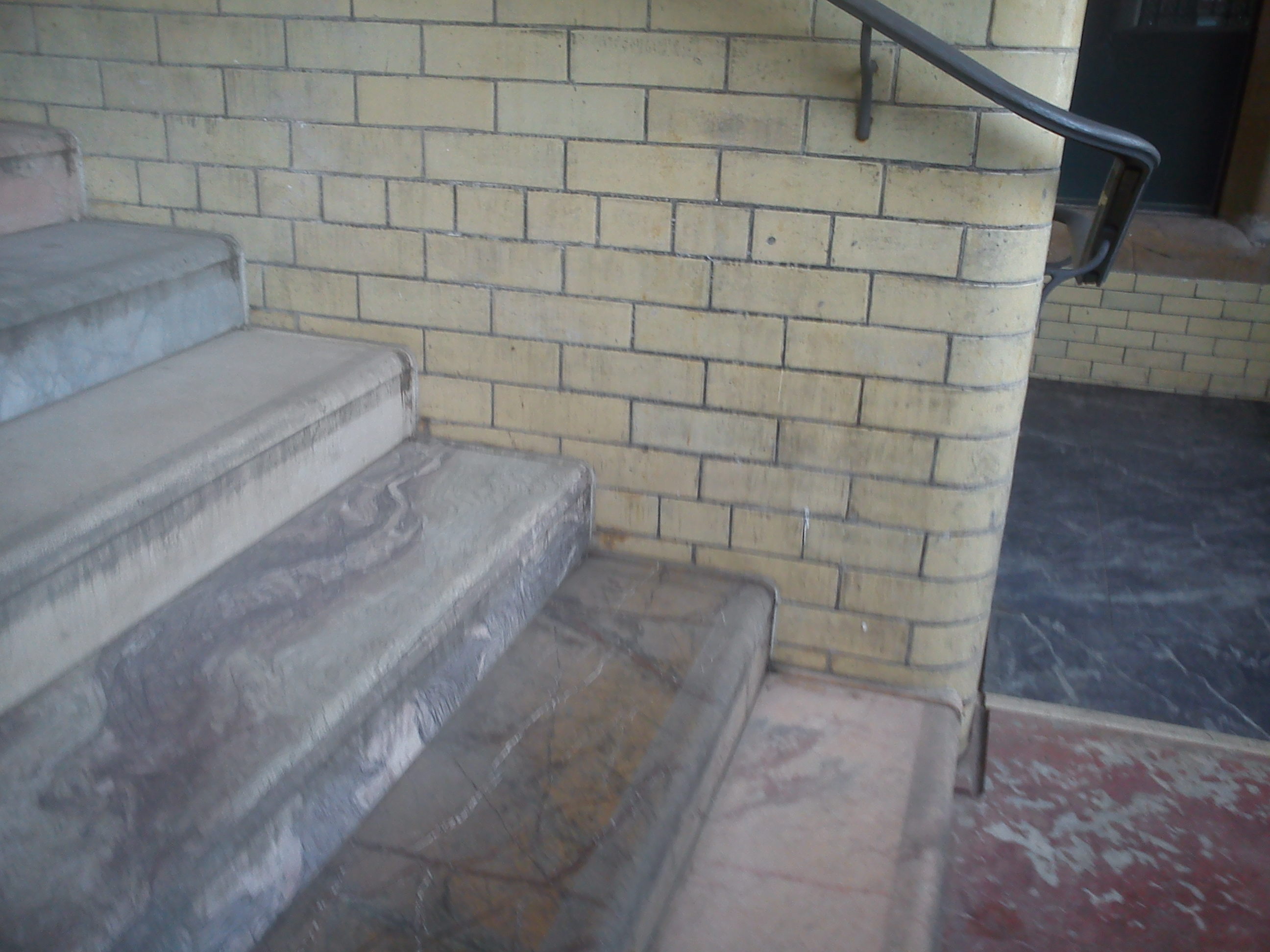
The Scotsman Steps, 2011, Photo: Chris Fremantle
Martin Creed Work No. 1059, 2011
What art have I seen?
Michelangelo Pistoletto’s Lavoro at the Simon Lee Gallery

and John Burningham: an illustrated journey at the Fleming Collection.
IN CASE SOMETHING DIFFERENT HAPPENS
Fascinating rumination and art historical contextualisation by David Levi-Strauss published in The Brooklyn Rail on the relationship between Joseph Beuys and the Twin Towers drawing out the meanings of his remaking in the postcard (below).
Levi-Strauss shows how Beuys transforms the architecture from the symbol of global capital into something quite different by transmuting steel and glass into butter and by applying the names of two healing saints (Cosmas and Damian) he superimposes a different mythology.
Thanks to Linda Weintraub for highlighting this really provocative piece.

Blue
Rebecca Solnit writes about blue the way that Donald Urquhart paints blue.
Rebecca Solnit has been doing a residency at Roni Horn’s Library of Water at Stykkishólmur, Iceland. One of the published pieces, The Blue of Distance, is all about mountains, Renaissance painting, distance.
Donald Urquhart talks about the blue of a perfectly clear day. He makes it into art: paintings, sculptures, places.

Donald Urquhart, Sea Beams, Oak and paint, 2007
Tango on the Border
This is the current state of UK Borders: turning back artists, writers, performers. There is a buzz of disquiet and anger, but it needs to become a torrent of vitriol against stupidity, bureaucracy and fear. The video was highlighted in a short piece on PAR+RS reporting on an event which took place during a walk along the (open) border between Scotland and England.
I wrote to my MP ages ago (I use the web site Write to Them which makes it easy) and got an “Its all perfectly reasonable” civil servant reply. I’m going to write again because the video and the writing is brilliant – more pointed and elegant than mine. You can also sign a petition and read more.

Fear and Loathing in the West Highlands Pt 2

The Water of Life, a Spirit Not to be Exorcised, Lonely Piper, 2006
“When the going gets weird, the weird turn pro”
This is the infamous advice contained in Fear and Loathing at the Superbowl, and this seems to be another very apt quote to attach to some further thoughts on Nemeton by Norman Shaw, awarded his PhD in 2003.
What is Nemeton? There is a lot of psycho-geography around at the moment (Sinclair, Self, Sebald) and a lot of nature writing (MacFarlane, Mabey and perhaps also Monbiot and McKibben). Nemeton isn’t either exactly. Psycho-geography is usually defined as the exploring the emotional and psychological impacts of geography, about ways of exploring the urban landscape, about rediscovering somewhere and introducing its idiosyncrasies to others. Nemeton is not in the mode of rediscovery, although the knowledge is in some respects lost. Nor is Nemeton concerned with the urban. Rather this is a landscape that is known and inhabited, even if Shaw is transgressing what might be regarded as the perceived norms of communities in the Highlands (although Scotland has regularly been a place where transgressive communities can find refuge under the radar, on the periphery). But Nemeton does explore the emotional and psychological, in particular in relation to the spiritual. Nor is Nemeton nature writing exactly. It’s not a celebration of nature. Rather its a celebration of the specific spiritual dimension of the West Highland landscape.
“It was dangerous lunacy, but it was also the kind of thing a real connoisseur of edge-work could make an argument for.” (Fear and Loathing in Las Vegas, p.80)
Edge-work is a term coined in Fear and Loathing. It captures the spirit of transgression that applies equally to both texts. The edge in question isn’t just the edge of consciousness, it’s also the edge of art, the edge of social acceptability, the edge of sanity, as well as working along the edge of what most people have experienced and then diving into spaces that they haven’t. Many people have been to Calanais, not many to the other stone circles, let alone carrying an electric guitar, modified amplifier, etc. seeking to capture the energies in the stones.
Just as Raoul Duke is searching for the American Dream in the hotels and conferences of Las Vegas,
“Let me explain it to you, let me run it down just briefly if I can… Well, we’re looking for the American Dream, and we were told it was somewhere in this area…. Well, we’re here looking for it, ’cause they sent us out here all the way from San Francisco to look for it. That’s why they gave us this white Cadillac, they figure that we could catch up with it in that…” (ibid, 164).
The Lonely Piper is looking for the Dreamworld or Otherworld of the West Highlands, the strange alternate universe of the faeries, of the mother….
The tour involved visits to selected nemetons in the Highlands, the fruits of which constitute the material gathered together in this publication. … As the project developed through accumulated visits and collaborations, a range of sub-themes emerged. Chance encounters during particular collaborations resulted in unforeseen iconoclasms and subversions, the direct result of unplanned happenstances and contingencies. These tangential developments were welcomed, and expanded upon, looping back into the main themes. (Nemeton, p.8)
Nemeton starts with an argument that magic mushrooms must have been used by the Celtic bardic culture to access the dreamworld and enter the faerie land under the faerie hills,
In my mind I was right back there in the doctor’s garden. Not on the surface, but underneath – poking up through that finely cultivated earth like some kind of mutant mushroom.” (Fear and Loathing in Las Vegas, p.65)
Talk about a trip… this is gonzo research.
Google sets itself against ‘two cultures’
Eric Schmidt, Chief Executive of Google, has hit the nail on the head. C. P. Snow‘s two cultures continue to exist embedded in the educational system in the UK, though perhaps less in Scotland. In his McTaggart Lecture at the Edinburgh Festival (full text on the Guardian website) he highlighted the major innovations (photography, computers and television) that were developed in the UK. He went on to say,
“The UK is the home of so many media-related inventions. You invented photography. You invented TV,” he said. “Yet today, none of the world’s leading exponents in these fields are from the UK.”
Of course there are two points to be made: one Scotland has a particular role in this history, and the critique is a challenge to politicians and policy makers, educators and innovators here. Secondly, his analysis predicates that the important exponent is the corporate entity rather than the individual creative person.
But these are two minor quibbles. Schmidt’s argument is more fundamental and important because he wants to challenge the cultural divide. His lecture is a catalogue of key historical figures who demonstrated excellence in both the arts and the sciences, and his particular focus is on the Victorian period: James Clerk Maxwell the published poet; Lewis Carroll the mathematics tutor at Oxford. Perhaps Modernism and the apparent association of ‘Victorian values’ with a recidivist conservative agenda is an oversimplification that needs to be challenged so that we can see again a period when the arts and the sciences were interwoven.
But, not that I want to harp on about Scotland again, Scotland also has a particular history in educating polymaths and a particular pedagogical tradition of valuing the generalist. Young people in Scotland learn within a system that is designed to see them take a range of humanities and sciences until they go to University, and even in University, the first year is designed to encourage broader study (I ended up doing joint honours in English and Philosophy because I had to choose an extra subject in first year and took Moral Philosophy).
So, value the generalist interested in both arts and sciences, and re-appraise the Victorians for exemplars. I’ve been reading a biography of Keir Hardie, a man at the centre of radical agitation at the turn of the century.
Annandale Observer – News – 21st August 11

Merz, Sanquhar
Models and Metaphors: David Ruston at Merz in Sanquhar, Dumfries & Galloway
Images associated with the show at the Herbert on Flickr
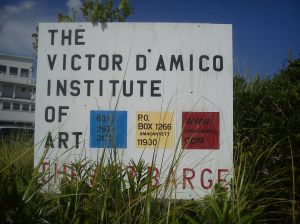
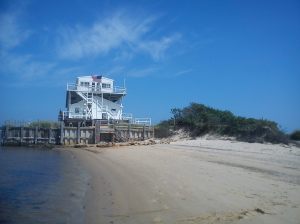
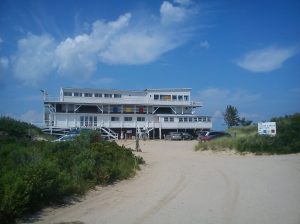
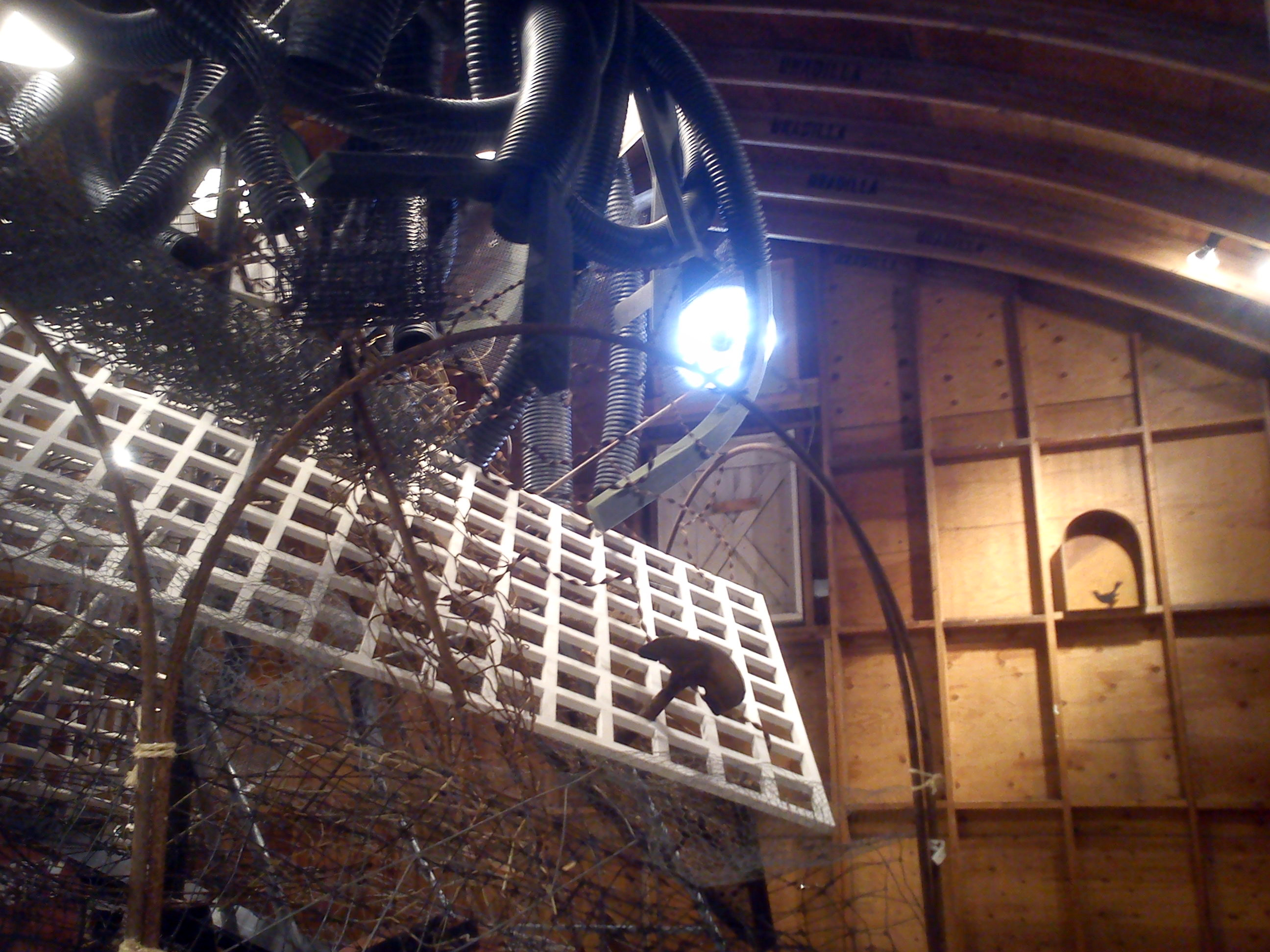
Get a message from Simon Beeson on Facebook that he’s headed south after his annual pilgrimage to Edinburgh. Sorry to miss us. He says he stopped in Sanquhar to see David Rushton’s Merz exhibition – he provided a postcode. David Rushton was involved in Art & Language and now lives in Edinburgh. Curious, so on Sunday head East to Cumnock and then South East (intentionally overshooting to the Drumlanrig Cafe in Thornhill for good pizza and coffee) to Sanquhar. Just off the main street around a corner is a smallish, previously industrial, building. Simon had said something about lemonade.
David Rushton’s studio and exhibition space, called Merz, presumably in homage to Schwitters, is just fantastic. It has all the mod cons including a basement studio, an attic to sleep in, a wall that swings out to reveal a kitchenette, and a toilet and shower tucked at the other end. All of these are pushed as far to the edges of the building as possible, in Rushton’s description, to make the most space for exhibiting, perhaps 800 sq. ft. maybe less. There is a woodburning stove at the end of the gallery next to the desk.
He has temporarily installed Models and Metaphors – a show he had in Coventry – in this space.
I haven’t wrapped my head around the work yet, except for the piece (all the works are 1/24th scale vignettes) of a fictitious Pripayat Cultural Centre with major conceptual art works installed. This exhibition opened on 26th April 1986. It was immediately irradiated in the Chernobyl disaster, instantly making conceptual art once again of no financial worth.
What is the importance of art? Is its importance financial? Rushton clearly thinks not if he imagines irradiating his own generations’ best work. He also thinks not, if he chooses to locate himself in Sanquhar. But it is a brilliant place to be. And this is a brilliant space. And brilliant things are going to happen in it.
The only press coverage I could find was in the local paper Annandale Observer – News – 21st August 11.
Without question the most interesting things happen on the edge, in the rural, where it’s least expected.
What Art have I seen?
Michaelangelo Pistoletto at the Serpentine Gallery (and I found the secret door to the Bidoun Library).
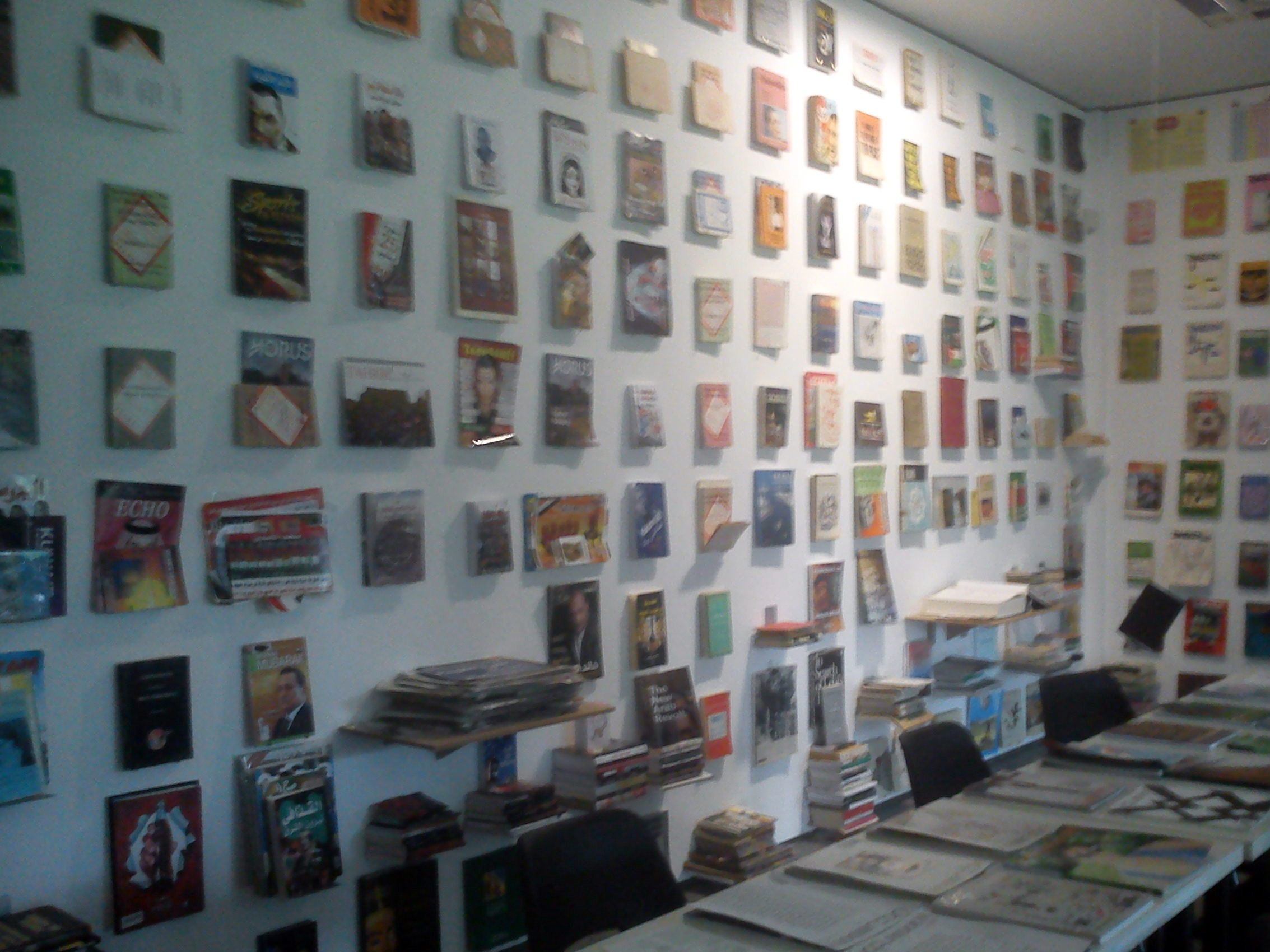
10 Rooms: Artists Take Over

Do you recognise this building in Ayr?
Holmston House used to be the Social Work HQ in Ayr, and before that was a purpose built ‘poor house’. It’s up for sale, but is going to be used over the ‘Open Doors’ weekend 3/4 September for a creative intervention – as far as I understand there will be five rooms, one each for artists to hang work, and five rooms, one each for artists to make site-specific installations on the theme ‘Buildings in Ayrshire.’
This isn’t my project, but I did think (making a mental leap) of the Artists’ Rooms and wondered what if Gordon Matta Clark was doing a room? What if Joseph Beuys was doing a room? Michelangelo Pistoletto? Marina Abramovic? (I’ve linked to pictures of the specific works in my mind’s eye).
Please feel free to add your own suggestions/links…
Art + Design Opportunities at NSGH
Creative Scotland: Find out about Art + Design Opportunities at NSGH.
The commissions in the New South Glasgow Hospitals Therapeutic Design and Art Strategy are beginning to be advertised. Ginkgo Projects, who I’m working for on this, together with Brookfield and NHS Greater Glasgow and Clyde are holding an event for artists and designers to find out more.
The event takes place from 5.30-7.30 on Tuesday 19 July at the Pearce Institute, Govan Road, Glasgow.
I’ll be describing the way that Donald Urquhart, Will Marshall and I developed the Strategy around the patient pathway and bringing the landscape into the building. I will outline the projects, but I’m going to focus on skills and competencies – the ability to collaborate closely with architects & landscape architects; to work within the framework of interior design to challenge and develop exciting projects; to engage and persuade the wider team including commissioning managers, hospital staff, clinicians, amongst many others.
The projects have been developed so that they can be tackled from a wide range of practices from the strongly authorial through to the participatory and engaged.
I’ll flesh this out and explain more about the process on the 19th.
Policy intervention renews free University movement
The Copenhagen Free University existed from 2001 to 2007 as a radical pedagogical artistic project. The aim was to reclaim power and undermine the ‘knowledge economy’.
“We wanted to turn the tide. We took power by using the available means: a mattress became a residency, the bedroom a cinema, the living room a meeting space, the workroom an archive, our flat became a university. Opening our private space turned it into a public institution. The Copenhagen Free University was a real collective phantom, hovering.”
The Copenhagen Free University was abolished for the same reasons it was established: it is as important to abolish power as it is to take it.
Recently, members of the Copenhagen Free University received a letter from the Danish Government,
“In December 2010 we received a formal letter from the Ministry of Science, Technology and Innovation telling us that a new law had passed in the parliament that outlawed the existence of the Copenhagen Free University together with all other self-organised and free universities. The letter stated that they were fully aware of the fact that we do not exist any more, but just to make sure they wished to notify us that “In case the Copenhagen Free University should resume its educational activities it would be included under the prohibition in the university law §33″. In 2010 the university law in Denmark was changed, and the term ‘university’ could only be used by institutions authorised by the state. We were told that this was to protect ‘the students from being disappointed’.”
As a result a statement (available here CFU Statement) has been issued,
“We call for everybody to establish their own free universities in their homes or in the workplace, in the square or in the wilderness. All power to the free universities of the future.”
A number of independent radical projects have reposted the statement as an act of solidarity including,
The University for Strategic Optimism
Please repost the statement.
Fear and Loathing in the West Highlands

Norman Shaw’s Nemeton lives up to Alastair McIntosh’s stated approach to writing, “In the absence of 300 micrograms of LSD, how can I trip them out?”
This is gonzo academic writing at its best: faeries, faerie hills (a nemeton is a sacred space in the ancient Celtic religion), second sight, Ossian, standing stones (Callanish in particular), Masons, shit socks, Psilocybin (magic) mushrooms, hazel nuts, the nuts of knowledge, salmon, poaching, patrols for poachers, Christianity, damnation, the second coming, the Jacobites, superquarries, peat, and of course Beuys.
Shaw documents visually and in text a series of journeys to explore specific nemetons, sites in the West Highlands where our world and the dream- or otherworld are connected. These journeys are deeper explorations of previous experiences: Shaw, a son of the Manse, grew up in Lewis and Dingwall amongst other Highland communities. Revisiting sites with the specific objective of researching their existence as meeting points brings him into contact with everyday Highland life as well as with the other world. Cycling, driving and walking through the Highlands in the heat and the rain, in fog and on clear days, sometimes in company and sometimes alone, the journeys are psychological as well as physical explorations.
Nemeton is a rumination on the nature of reality, West Highland reality, which is distinct from other realities, just as Hunter S Thompson’s West Coast reality is an alternate reality. Just imagine three cycles dumped outside a café in a community hall on Harris.
“My bike has a crucifix for handlebars, with a wooden Christ having from it. His legs form the two forks holding the front wheel. Thus Jesus forms a kind of figurehead for the trip. Roineval will be our Holy Mountain, our Calvary. The bike becomes our cross to bear, dragging it round the roads of Harris, whilst simultaneously being steered by Christ, whose humiliation haunts the moors and glens of the Hebrides – a voice crying in the wilderness. A fine twelve-pointed pair of red deer stag’s antlers form Eddie’s handlebars. The deer is a symbol of time and a symbol of love. Time the deer is in the wood… It also symbolises the surplus of deer that roam the sporting estates of the post-clearance highlands; or the horned god Cerrunos, hermes trismegistus – often depicted as Moses with horns (as in Roslin chapel, for instance). Lee’s bicycle is steered by the skull and jawbones of a basking shark. His bike is an appeal to the maritime history of this place, of fish-based economies and a hearkening back to old Atlantis or even Tir Nan Og.” (p.100).
Shaw makes a compelling argument that our post-modern imaginary, breaking down assumptions about cause and effect, disrupting the linear narrative, exploring the circular, is fundamentally more suited to developing an understanding of dimensions beyond those accessible to the sciences of physics and imperial(ist) histories.
There are contributions from others including Murdo Macdonald, the Professor of History of Scottish Art at the University of Dundee as well as the artists Eddie Summerton, Lee O’Connor and Tommy Crooks.
At the heart of this book is a rumination on nature and the spiritual. Shaw belongs in the long lineage of researchers into the otherworld or dreamworld of the Scottish Highlands. What is distinctive about this research, done in the context of contemporary visual arts (as broad as that method can be), is the acceptance of the participation of the researcher in the world. Other texts describe things learnt or things found. This text shares experiences of the research. In this text the spiritual is not other, studied objectively, but rather immanent, studied subjectively. The altered states of this text confront head on the haptic, the liminal, and the full complexity of the Highlands: damnation at the second coming, the schadenfreude of village life where failure eviscerates incomers. Fear is visceral.
Why this book is self-published I cannot for the life of me understand, but you can get a copy direct from the author email nshaw777@gmail.com or write to 2 Inzievar Courtyard, Inzievar Woods, Dunfermline, Fife, KY12 8HB.
Dr Norman Shaw
Born in 1970, grew up in the Highlands.
MA (Hons) in Fine Art, University of Edinburgh (1993)
MPhil in Art History, Edinburgh College of Art (1994)
MFA in painting, Edinburgh College of Art (1996).
PhD in Fine Art, University of Dundee (2004)
Taught Art History and Fine Art at Edinburgh College of Art and the University of Edinburgh, before lecturing at the University of Dundee.
Exhibits widely in group and solo exhibitions, nationally and internationally. Outputs include drawing and painting, printmaking, writing, sound, video.
Exhibitions include ‘Window to the West’ (City Art Centre, 2010), ‘Prints of Darkness’ (Edinburgh Printmakers, 2010 (touring)), ‘Highland’ (RSA, 2007), ‘The Great Book of Gaelic’ (An Lanntair, Stornoway, 2002 (touring)), ‘Calanais’ (An Lanntair,1996 (touring)).
Research and practice is multi-disciplinary and polymorphic. Major source is the Scottish Highland landscape; its natural and unnatural histories, mythologies, mysticisms and psychogeologies; tempered by a unique visionary iconography which draws on an expansive range of influences.
Visual research ranges from drawing and painting to printmaking and installation. Influences and obsessions range from prehistoric megalithic culture and Pictish art to early medieval British insular art; and from the early northern renaissance to the northern romantic tradition; William Blake, the Celtic revival, surrealism, neo-romanticism, psychedelia, and occult, subversive and ‘outsider’ art, marginal, alternative and hidden histories. Draws heavily on music-related artforms such as record covers and paraphernalia.
Judy Chicago in Conversation

Wednesday 15 June, 6-7.30pm. £5 (£4). Hawthornden Lecture Theatre, Scottish National Gallery, The Mound, Edinburgh
Judy Chicago is best known for her seminal installation, The Dinner Party (1979), a landmark of feminist art that symbolically presents a world history of famous women, and now in the Brooklyn Museum. In this special evening talk, the artist discusses her new book Frida Kahlo: Face to Face (Prestel), co-authored with Frances Borzello, and her career with Patrick Elliott, Senior Curator at the Gallery of Modern Art. Judy will be signing copies of this publication and the definitive book about The Dinner Party (Merrell).
Advance booking recommended. Tickets cost £5 (£4) and are available from the Information Desk in the Gardens Entrance of the Scottish National Gallery or by calling 0131 624 6560 between 9.30am-4.30pm with debit/credit card details.
Arts as Medicine
Three days of events organised by Jackie Sands, Arts & Health Co-ordinator at NHS Greater Glasgow and Clyde, highlighting the first class work going on in the field in Glasgow including:
Christine Borland on her recently completed Cast from Nature as well as her new project with medical students where she will work with students to explore ‘ways of seeing’ typical in visual arts and examine differences between this and ways of looking and seeing in medicine;
Marek Dominiczak, Professor of Clinical Biochemistry and Medical Humanities, University of Glasgow and leading light in the Medical Humanities;
Clare Simpson and Mark O’Neill, Glasgow Life, on Art, Health and the Commonwealth City;
Suzy Wilson on performance and the training of medical students;
Anne Moore, Grampian Hospital Art Trust and Donna Briggs, Artist, Artroom Project at Roxburghe House, Aberdeen;
Mary Hepburn, Consultant Obstetrician with Artists Sharon Goodlet Kane and Belinda Guidi, Art in Hospital on representation in the context of women and health (interesting link with one of the core themes of Suzanne Lacy’s research and the Working in Public Seminars);
Nadine George, Work on the Human Voice;
Events require registration here.
Gil Scott-Heron / Graham’s post
Graham Jeffrey also posted in response to the news that Gil Scott-Heron had died – he found some great film, which as he says, demonstrates the man’s greatness.
Gil Scott-Heron
Gil Scott-Heron, RIP
1949-2011
Gil Scott-Heron, my brave and brilliant friend – Jamie Byng, Observer
Creativity, leadership, wellbeing
Catherine Czerkawska‘s provocative piece in the Scottish Review highlights the increasing distance between the experiences of being a painter, sculptor, printmaker, photographer, maker, writer, poet, playwright, actor, musician, composer, dancer, choreographer, storyteller, and the languages used to articulate the value of creativity.
Even the listing of all the things that might be done in being an artist helps to question the narrative of artist = creativity = wellbeing. She highlights the important gaps between the reality of being an artist, and the language of creativity, between the act of making art and the process of being creative. The latter, the process of being creative, is currently being developed and defined, having been identified as an important aspect of economic success (Cox Review of Creativity in Business, 2005).
But what is interesting is that 15 years ago some people in the arts were arguing to be taken more seriously, not just by the cultural elite, but as as a relevant part of everyday life for all. Perhaps unfortunately the argument has been made successfully, the value of creativity has been acknowledged and some characteristics have been attached to it: “Questioning, innovating, problem-solving and reflecting critically”. Teamwork and leadership have been added to the mix (and I worked on the research project The Artist as Leader, which re-focused the discussion on the role of the artist and their ability to develop critical positions).
When Joseph Beuys declared in 1975 “Jeder mensch ein kunstler” or “everyone an artist” did he mean everyone can make works of art or that everyone could be creative?
Czerkawska, although she does not push the distinction between artist and creative person, does characterise the artist as a person involved in an emotional journey, “It can involve extremes of depression and elation, can be at once fulfilling and frustrating, energising and exhausting. Perhaps most problematic of all, from the point of view of potential employers, a significant percentage of creative people are not, in any sense, ‘joiners’.”
If the ambition for the arts to have a wider role in society is still on the table, then perhaps its time for artists to challenge the values that are being ascribed to creativity, to articulate, as Czerkawska does, some of the realities of creating art, and to help sharpen the distinction between creating art and being creative, rather than eliding this distinction in the process of attempting to secure greater economic relevance and power.
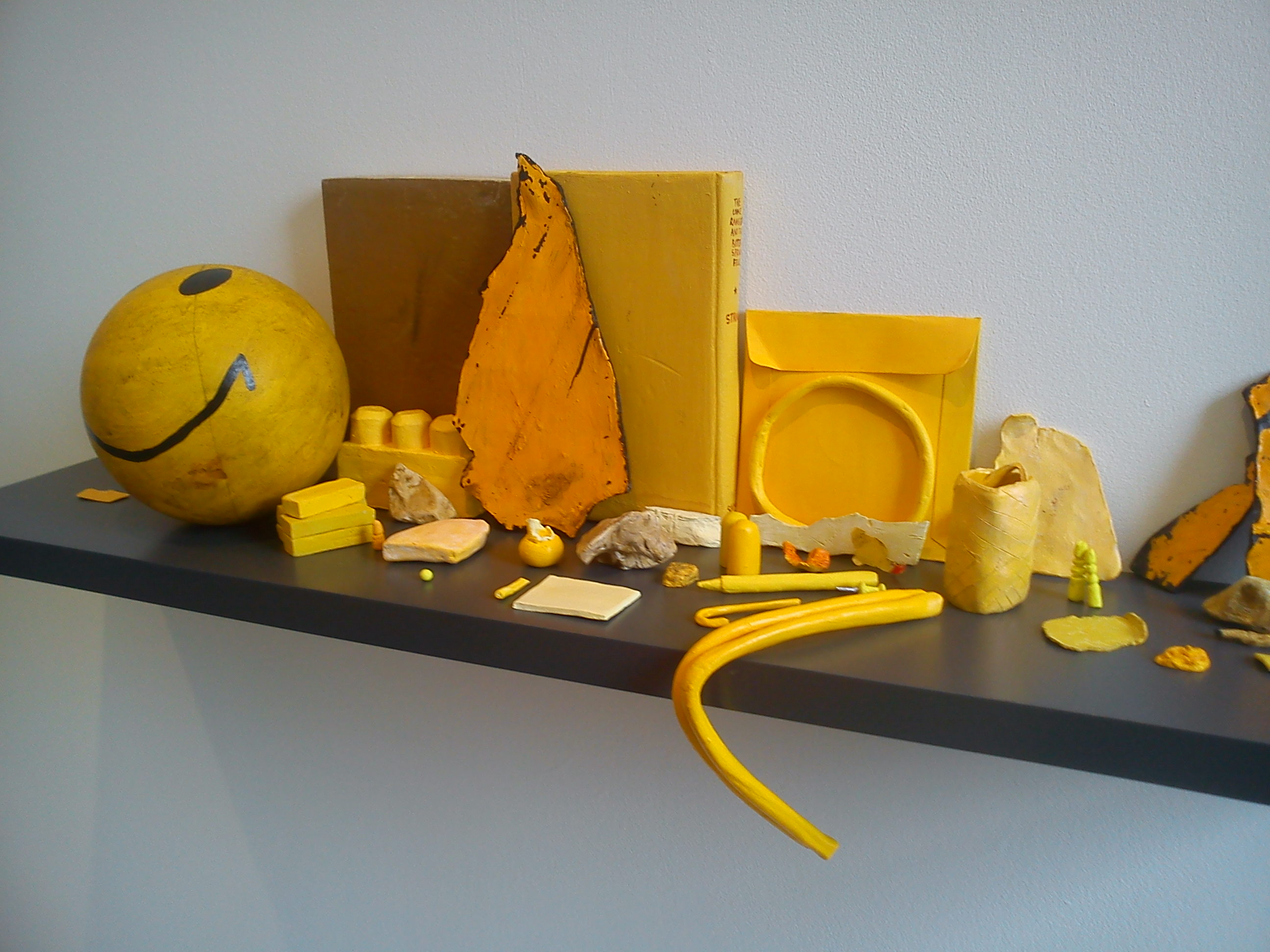

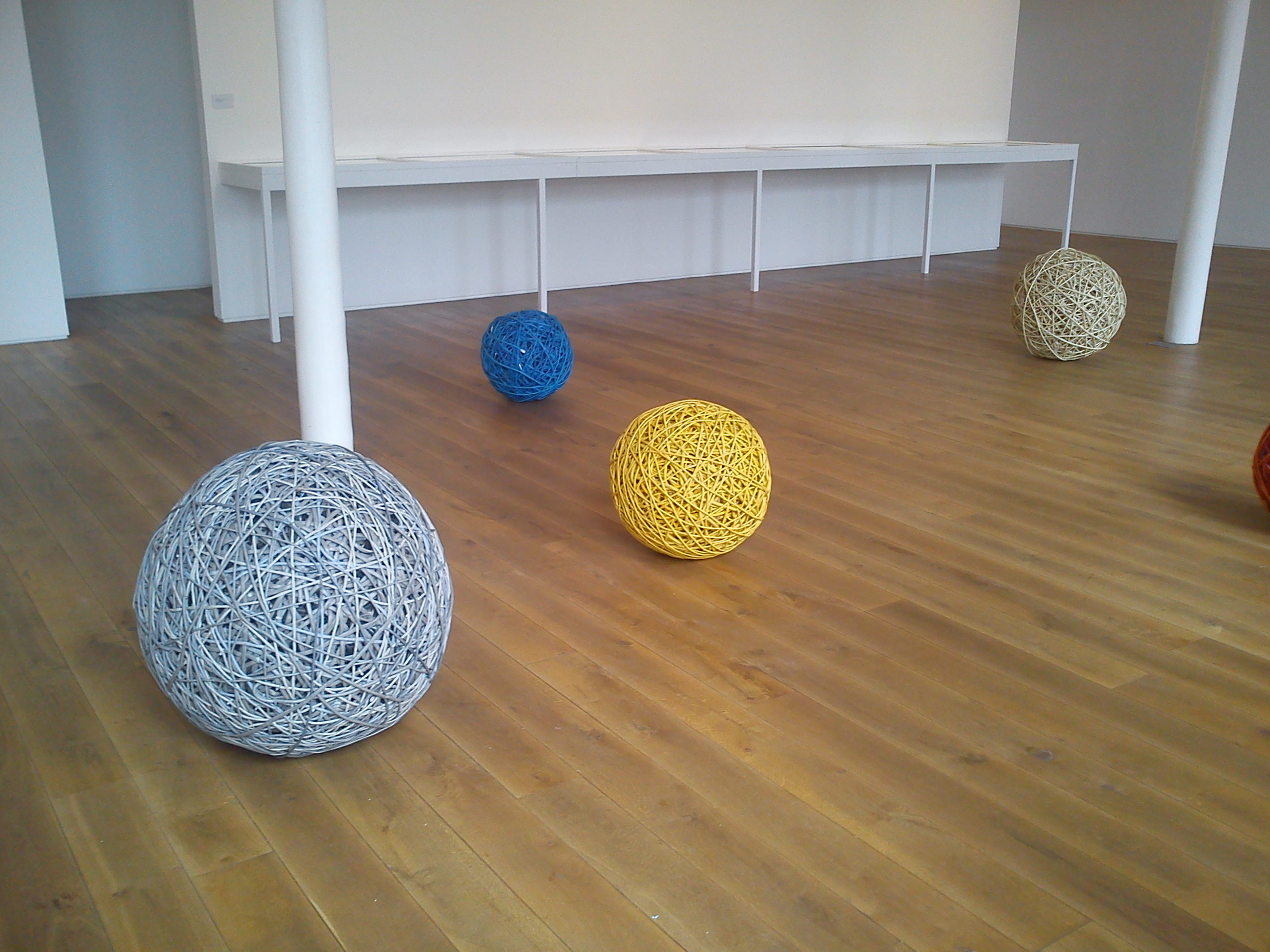

Open Academy Ulaanbaatar

Jay Koh and Chu Chu Yuan of the international Forum for InterMedia Art has recently announced Phase II of the Open Academy in Ulaanbaatar.
Open Academy Ulaanbaatar is an art and cultural resource development programme and phase 1 took place in 2008 – 09. Workshops will be conducted from late May to July, followed by projects led by local participants that will take place till early October.
There will be 4 projects organised around the following categories:
- Project involving cross-sectoral collaboration amongst Ulaanbaatar residents, with ideas grown and negotiated between collaborators
- Project that emphasises practical execution of arts and cultural management knowledge gained from OAU
- Project that explores local historical and culturally relevant themes, to connect the past with present through practices, narratives, networks and/or structures
- Project on urban/rural ecology, to explore durational creative engagements with the ecology of communities whose livelihood depends on the land.
The workshops are open to all residents in Ulaanbaatar and all projects are led by local participants and selected through an open call process by a local panel. Workshop facilitators for Phase 2 are Chu Yuan, Jay Koh, Defne Aryas, Burka Arikan and Richard Kamler.
Open Academy has been carried out in Hanoi, Hue, Mandalay and Yangon since 2003 by international Forum for InterMedia Art (iFIMA). Open Academy Ulaanbaatar is supported by Prince Claus Fund from The Netherlands. enquiry: ifima@gmx.net
Ai Weiwei


Ai Weiwei is only the most recent of a significant number of Chinese Dissident imprisoned or controlled. Late last year Lui Xiaobo was awarded the Nobel Peace Prize although unable to collect it because he continues to be imprisoned. Wikipedia provides a list of names.

Sometimes it takes a little while
or, How has Scotland changed?
AHM‘s second State of Play Symposium (2 April 2011) was a very different affair from the first. Held in Edinburgh in the Hawthornden Lecture Theatre of the National Galleries of Scotland, it was comfortable, elegant, sophisticated and at the heart of the establishment.
In November when we first met at the invitation of AHM to discuss the state of play, it was in the lecture theatre at Gilmorehill in the University of Glasgow. It felt edgy, not least because the technical staff had just been handed redundancy notices, but also because it was a week before Westminster’s “budget of cuts.” There was talk of organising. Philip Schlesinger outlined the cultural policy context for the formation of Creative Scotland, describing clearly the increasing economism that has resulted in the arts being transformed into the creative industries, with all the entailed lack of criticality. Peter McCaughey told everyone to join the Scottish Artists Union (and this still applies).
For the second event AHM had invited ex-pat Scots to speak. The event started with a virtually broadcast quality presentation by Neal Ascherson on the history of the Scots overseas. He focused on the Scots in the Baltics, Poland in particular, and how that forms part of a wider European history, developing themes he explored in Stone Voices: The search for Scotland. Rather than list all the excellent speakers, and it was a powerhouse of a day in terms of the line-up of speakers (see AHM blog for videos), I want to reflect on why the question and answer sessions never seemed to get into a groove.
The underlying recurring story was of extremely talented, successful and interesting artists graduating from Scottish art schools in the 70s and high-tailing it out of Scotland as quickly as possible. I am sure that the word stultifying was used. The fact that it took until the early 80s for Scotland to decriminalise same-sex relationships was also mentioned. Whilst we might look back on the period as one of radical actions (Demarco, Beuys, Hamilton Finlay, APG), the reality for young artists was an oppressive environment where according to one speaker it took years to un-learn the house style of Edinburgh College of Art’s Painting Department. There was almost no contemporary art (apart from the Scottish Arts Council’s Gallery), and very few artist-led or run spaces (in Edinburgh there were The New 57 Gallery and the Printmakers).
And now? Artist-led spaces abound and contemporary art is everywhere. The major cultural institutions have bought into contemporary art big time: it’s projects in schools, strategies in healthcare, instrumental to regeneration projects. So contemporary visual arts are out there, visible and challenging.
Probably a quarter of the audience were from other parts of the world (myself included) choosing to live and work in Scotland because Scotland is now an interesting place to be, and whilst globalisation has made mobility something taken for granted and artists are always coming and going, it is still a decision, sometimes made for love rather than professional returns, to be in Scotland rather than London, LA, Sydney, New York, Berlin or anywhere else.
So the audience for the AHM event, who are choosing to live and work in Scotland now, were faced with people who all left ages ago and made their lives (very successfully) elsewhere: difficult to have that conversation.
But as a way to focus the ‘state of play’, to make it clear that ‘now’ is not the same as ‘before’, and to prepare us to think about the future when we meet again in September in Dundee for the third and final event, AHM placed this symposium right on the mark. Verdict: troubling and requiring thought.
The questions that should have been asked are:
To the speakers: “If you were young again and here now would you still leave and if not, why not?”
To the audience: “How do we work out what’s really important and how do we fight for it?”
If the visual arts in Scotland are vital, alive, vibrant, then what makes them vital and how do we tell that story? Perhaps the story starts,
“In the 70s the best and brightest talent felt compelled to leave Scotland for other parts of the world. It’s striking the extent to which that situation has changed. Now people from other parts of the world choose to make Scotland the base for their practices. The most talented Scottish artists stay in Scotland and work internationally. We need to build on this transformation.”
AHM remind us to “Work as if you live in the early days of a better society.” It seems to me that at this Symposium they demonstrated one of the ways in which we do live in the early days of a better society.
The University of Local Knowledge
Suzanne Lacy speaks (Thursday April 28, 7-9 pm, at LACE – Los Angeles Contemporary Exhibitions – 6522 Hollywood Blvd, Los Angeles 90028) on her recent project in Bristol, England entitled The University of Local Knowledge, its process of engaging with over 300 Knowle West residents, and screens a selection of video “texts” in this first presentation in Los Angeles.
Founded during the great depression in the early 1930’s, Knowle West is a small community in the southwestern English city of Bristol. Residents were relocated from run-down council estates (housing projects) to Knowle West to work in surrounding tobacco and bag factories. Eighty years later these factories have been redeveloped into urban lofts, but nearby Knowle West residents face unemployment, stereotyping, and limited access to higher education.
Lacy worked with two art organizations in Bristol-the Arnolfini Gallery and the community-based Knowle West Media Center to produce an art project that brings together three spheres of knowledge: the arts, the university (University of Bristol), and Knowle West Residents.
Knowle West Media Center staff and artists worked with Lacy to “map” Knowle West by recording 1,000 video pieces, called “texts” in this project, ranging from 30 seconds to 4 minutes each. Through extensive discourse with community residents, these texts were assembled into categories, or “courses” on a website to portray the “University” through the eyes of its residents. The site features “courses” on rabbit hunting (animal husbandry), raising children as a teen mom (adolescent psychology), growing organic vegetables (agriculture studies) and how to maintain classic cars (mechanical engineering).
The University of Local Knowledge was funded in part by the Department of Cultural Affairs for the City of Los Angeles, The Arnolfini Gallery, and the Knowle West Media Centre.
Postcards to Japan
Express your support to the people of north east Japan by sending original A5 art work postcards.
After the major earthquake and tsunami in north east Japan on 11th March 2011 power supplies, land lines, mobile phone networks and internet access went down, making it extremely hard to contact family and friends to find out if they were safe.
The post office were quickly up and running again and in many cases the first news that loved ones were safe was by postcard.
Inspired by the wonderful impact postcards can have, we would like to invite artists and poets to send tangible messages of support to communities affected by the devastation by making A5 size original artwork or poetry postcards and posting them to:
“POSTCARDS TO JAPAN”
Ukishima Net,
Iwate, Iwate, Iwate,
028-4423,
Japan
We will collate all the postcards received into an exhibition to tour venues in north east Japan. There is no deadline, but if we have as many cards as possible by the end of May we can start putting on exhibitions. We also hope to publish a catalogue of the postcards received. Any profit made from the sale of catalogues would be donated to recovery projects in north east Japan.
Please look out for updates on http://www.ukishima.net If you have any questions please e-mail info@ukishima.net
Scottish Artists Union Hustings
This event organised by the Scottish Artists Union took place at the Lighthouse in Glasgow. Some information can be found here.
What Art have I seen
Cedric Price, The Lighthouse;
Hidden Gardens;
Ulla von Brandenburg, The Common Guild,
Jeremy Millar, CCA
With some of ASN1 (and my mother for the first two)
What Art have I seen?
Dirt: The Filthy Reality of Everyday Life
at the Wellcome Institute
with Liz Petrovitch
What Art have I seen?
Blueprint for a Bogey, Gallery of Modern Art, Glasgow
Followed by Chris Dooks’ talk on play as a creative strategy
Body Narratives / Cast from Life
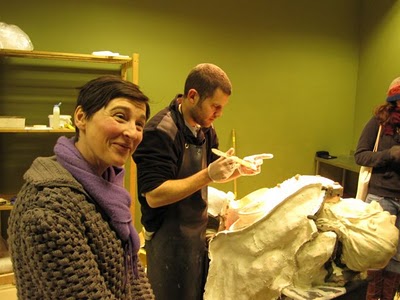
Thursday 10th March I attended an anatomy lecture at Glasgow Sculpture Studios. As part of Christine Borland’s Cast from Life residency and exhibition, she had invited Quentin Fogg, a member of staff of Glasgow University’s Anatomy Department, to lecture. He gave a fascinating introduction and history of the development of Anatomy from a visual perspective, focusing on the evolution of drawing and representation.
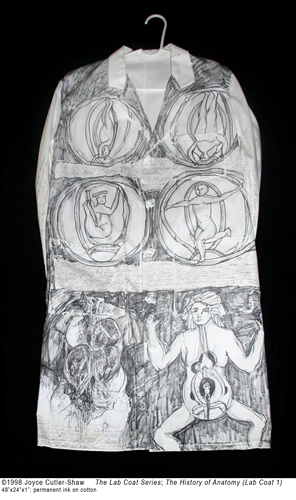
Joyce Cutler-Shaw has just announced her exhibition ‘Body Narratives‘ at the New York University Health Sciences Library. Like Borland, directly tackling the assumption that everything about anatomy is already known, Cutler-Shaw is opening up the issue of representation, realism and the body.
Common Perspectives event
Common Perspectives are organising a lecture, discussion and film screening at the Pearce Institute in Govan Saturday.
1.30pm – 3.30pm
Sat 19th March 2011
Free Admission
Guest Speaker:
Ailsa McKay, Professor of Economics, Glasgow Caledonian University
Screening & Discussing:
Sylvain Froidevaux
“Onesimus Paradox and the Basic Income as A New Economy Alternative”
Slavoj Zizek at the RSA
“First As Tragedy, Then as Farce: The economic crisis and the end of global capitalism”
Making a Difference –
“Tae Sail On Them Is No Their Fate – Stories from the Fight Against Poverty in Scotland”
Part of the 2011 Glasgow Reshuffle…
The Pearce Institute
840 860 Govan Road
Govan
Glasgow
G51 3UU
0141 445 6007
0141 440 1937
What Art have I seen?

John Cage, Variations No. 43, 1987 From a series of 44 smoke paper monotypes with branding, Crownpoint Press
Every Day is a Good Day: The Visual Art of John Cage at the Hunterian Art Gallery, Glasgow.


leave a comment