What art have I seen? Eliasson and Dion
Olafur Eliasson at Geffen MOCA – lots of playing with light and reflection.
Mark Dion at La Brea Tar Pits – imagining paleo archaeology of LA.
What art have I seen? Helen and Newton Harrison California Work – ‘Future Gardens’ at Mandeville Art Gallery

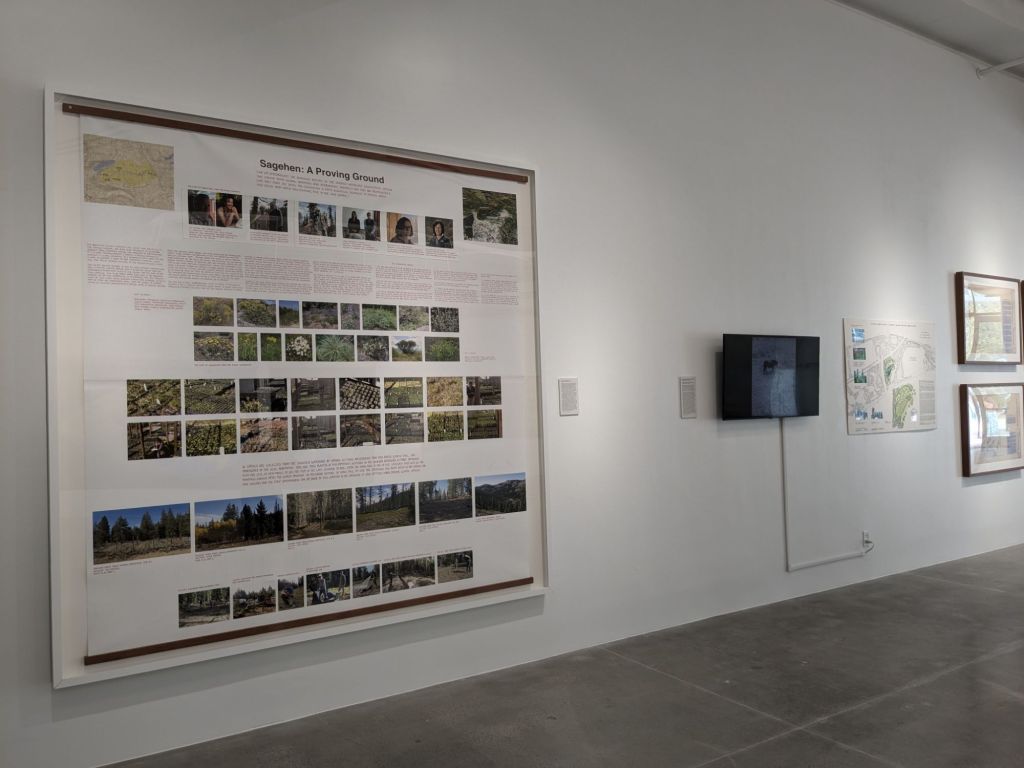


The original Future Gardens proposal along with sketches 1996
Documentation of Sagehen A Proving Ground 2011 and of the Future Garden for the California Coast at the UC Santa Cruz Arboretum 2016
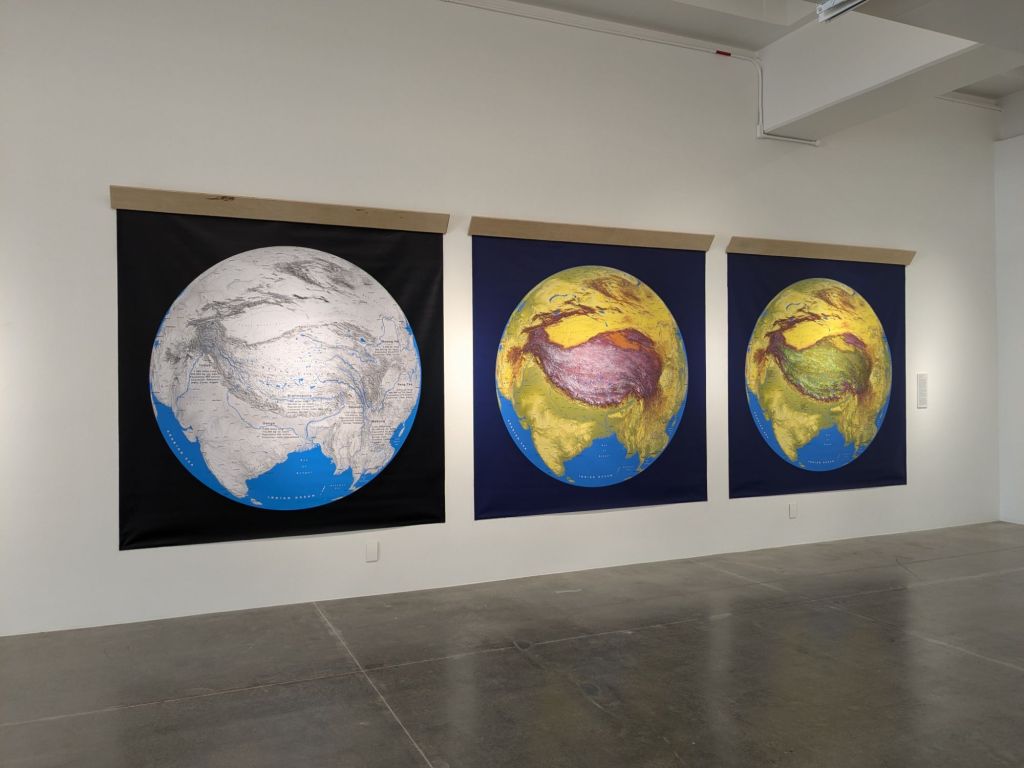
Tibet is the High Ground 1993
What art have I seen?’Helen and Newton Harrison California Work – ‘Saving the West’ at San Diego Central Library
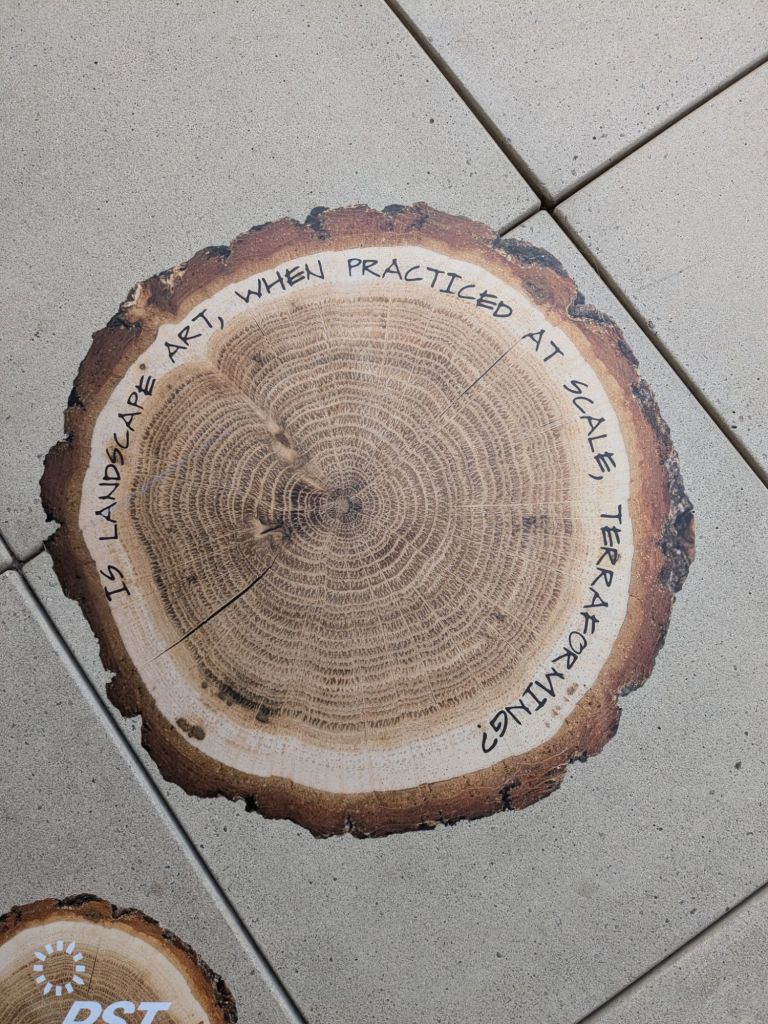

What art have I seen? ‘Portable Orchard’ and ‘Time Landscape’
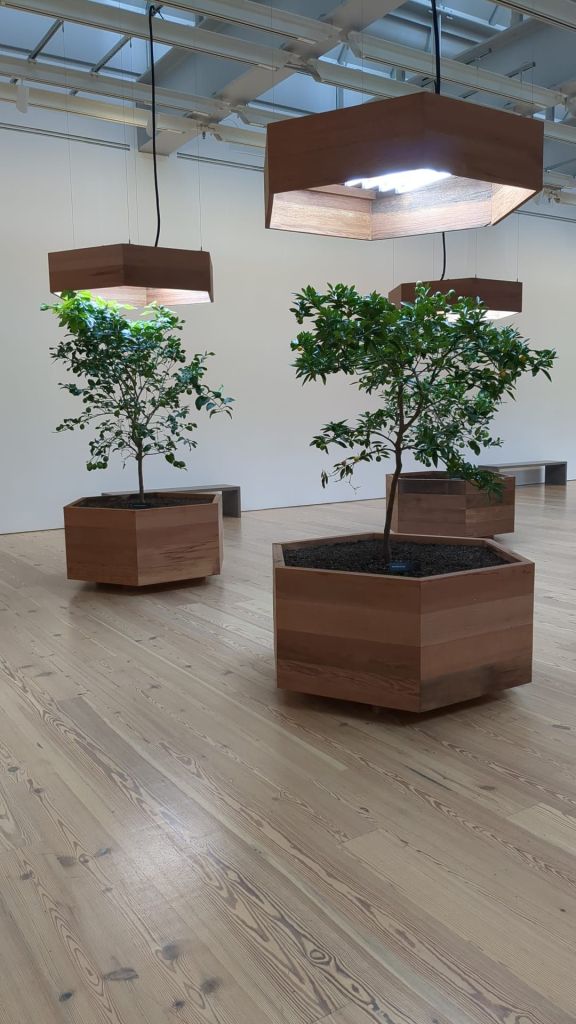
Credited to Newton Harrison at the time, but the 1972 work of Helen and Newton Harrison Survival Piece #V: Portable Orchard is now part of the Whitney Museum of American Art’s collection and is being re-performed. Tatiana Sizonenko (curator of ‘Helen and Newton Harrison: California Work‘ as part of PST in San Diego) uses ‘re-performed rather than re-constructed.
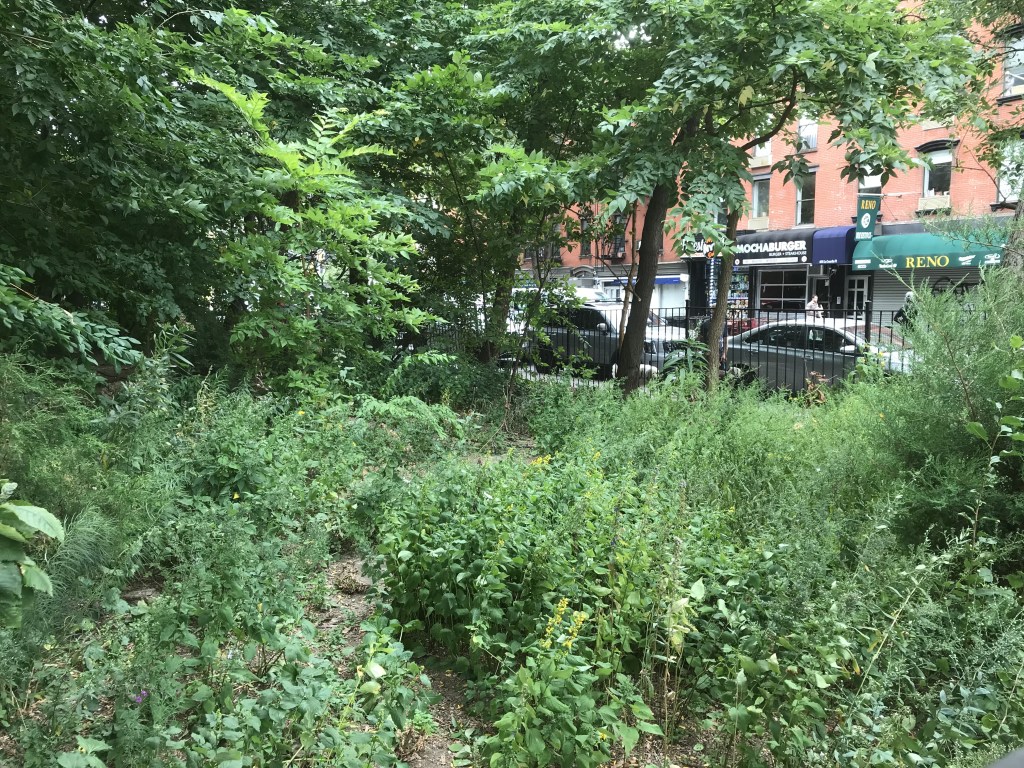
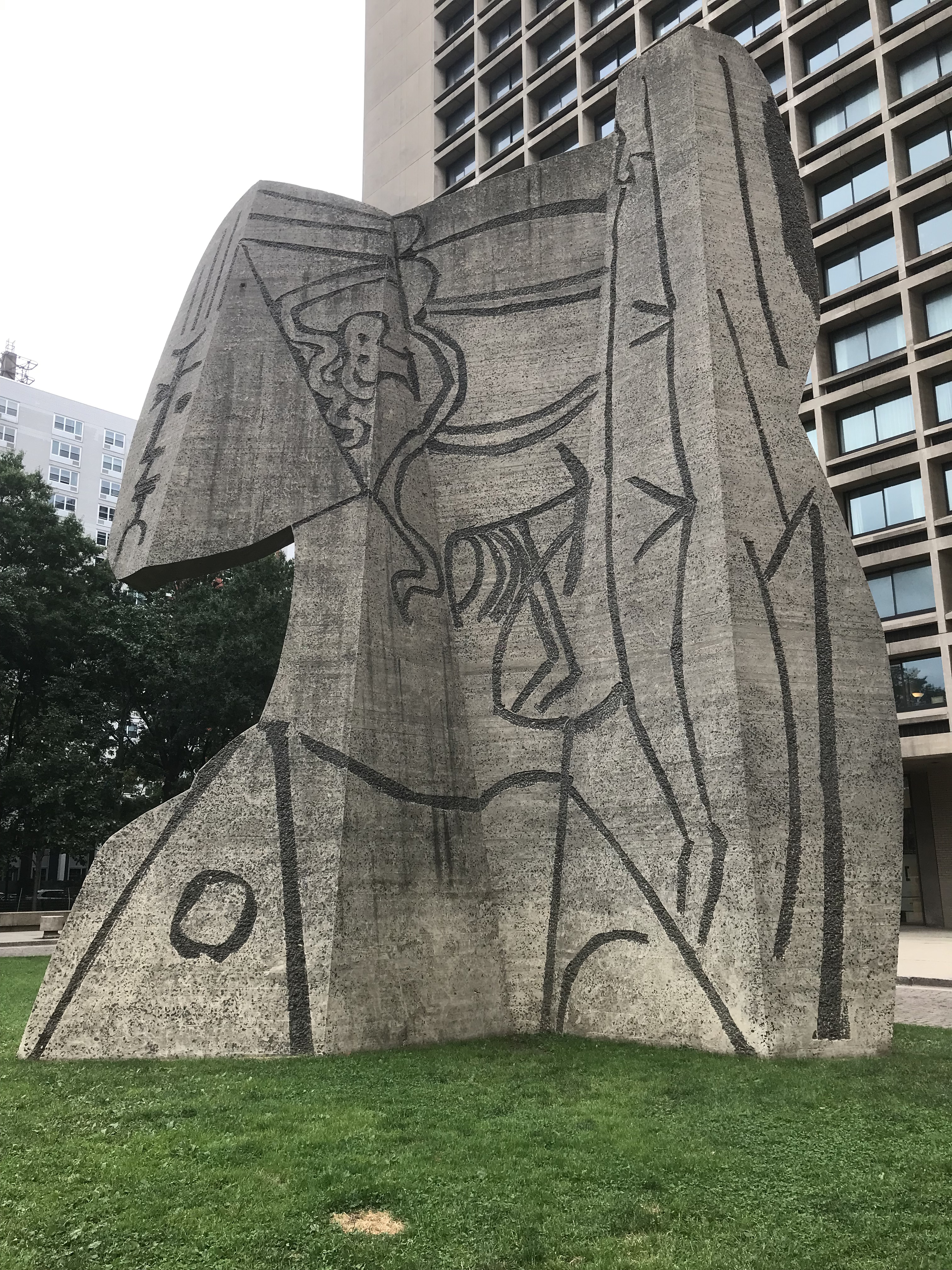
Downtown in Greenwich Village there is Alan Sonfist’s Time Landscape, a monument to the erased pre-colonial ecosystem of the island of Mannahatta, conceived in 1965 and realised in 1978. Now adjacent is an area of city gardens (or allotments), and a very large Picasso.
What art have I seen? Scottish Mission Book Depot Keta
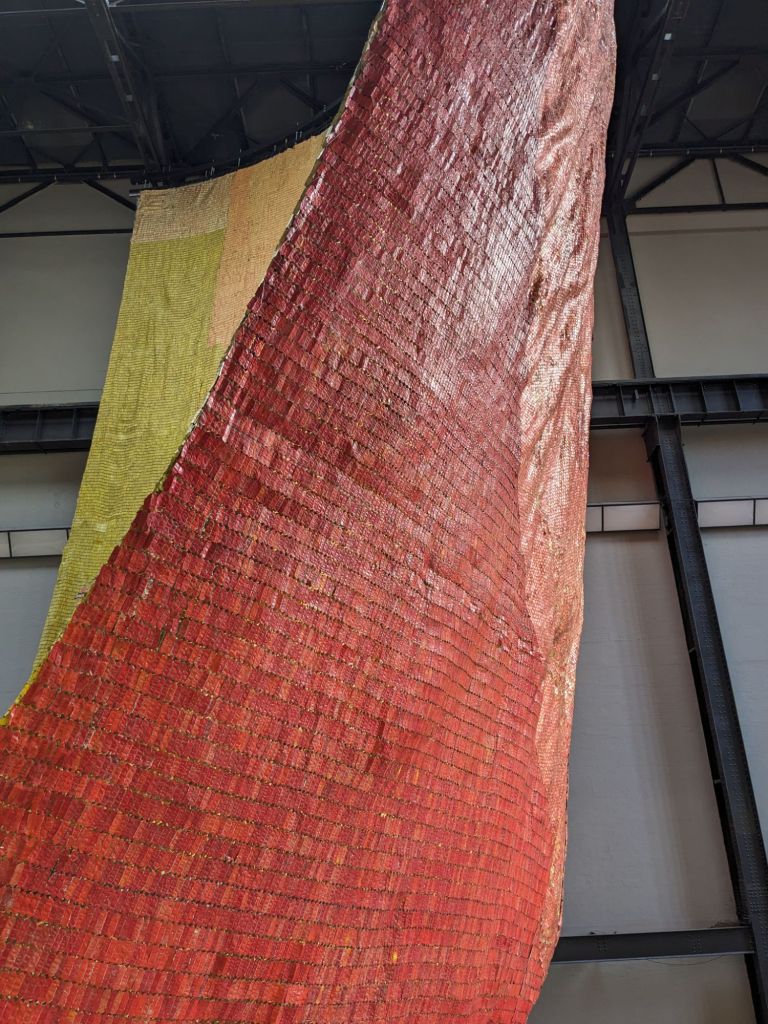
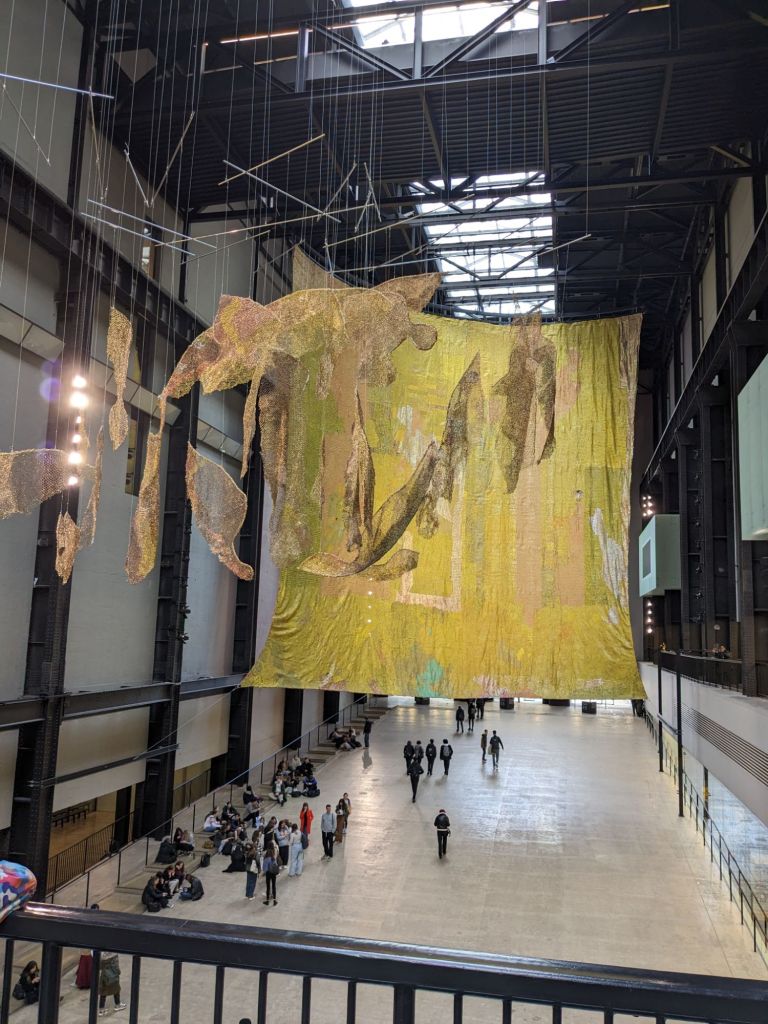
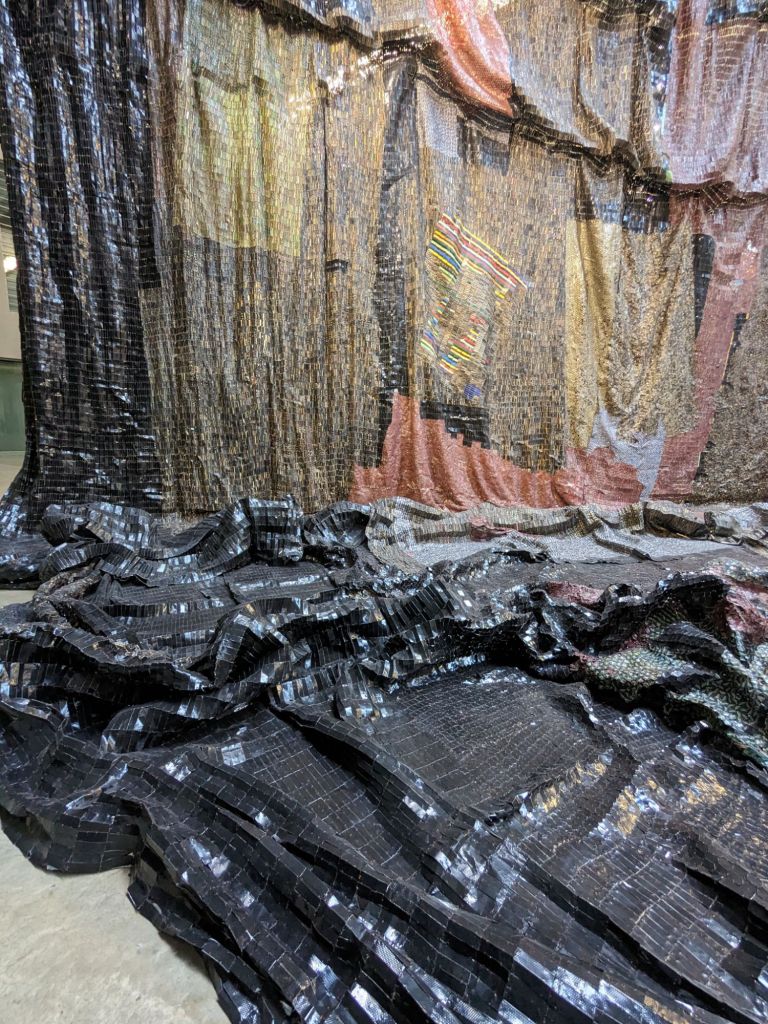
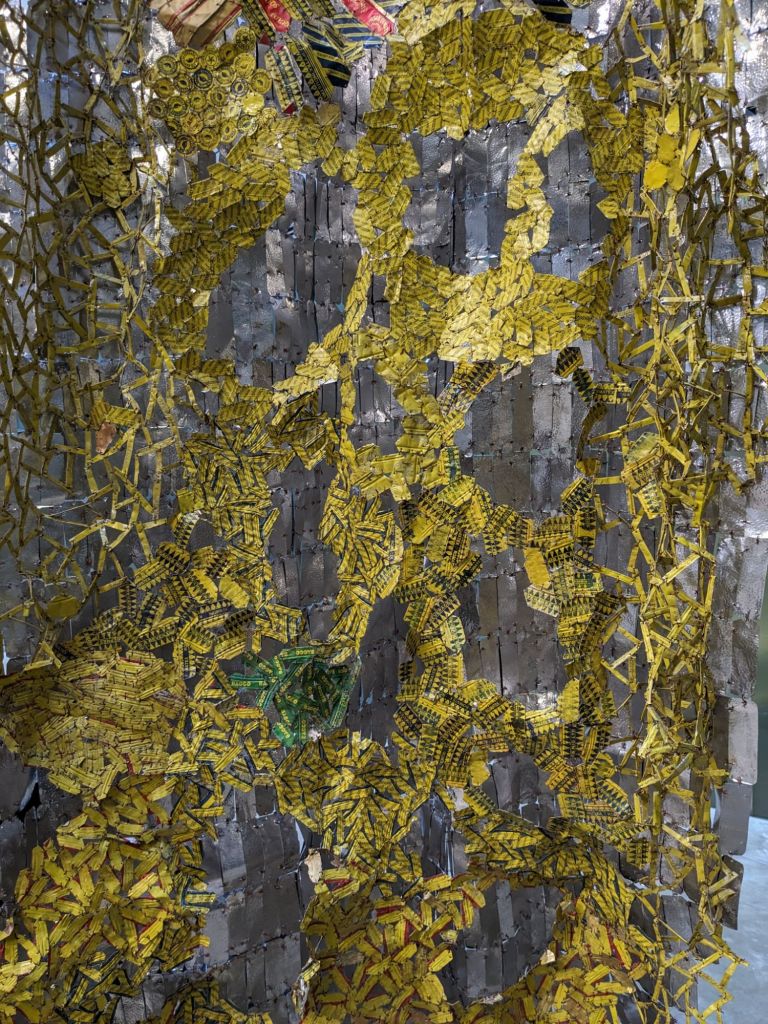
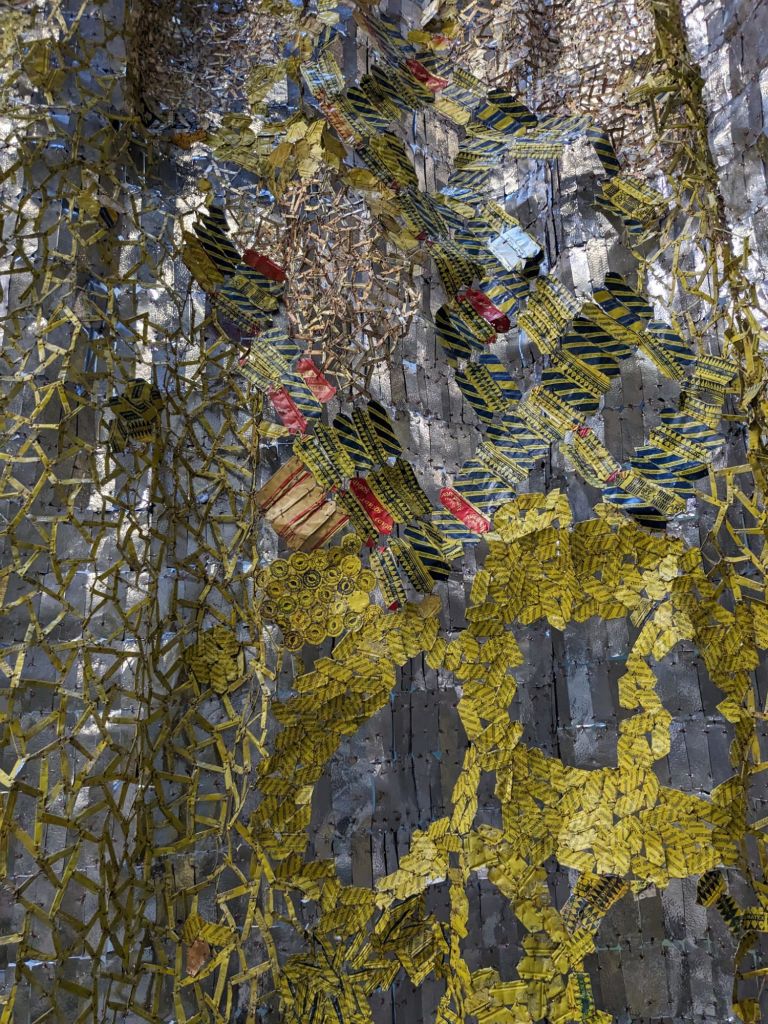
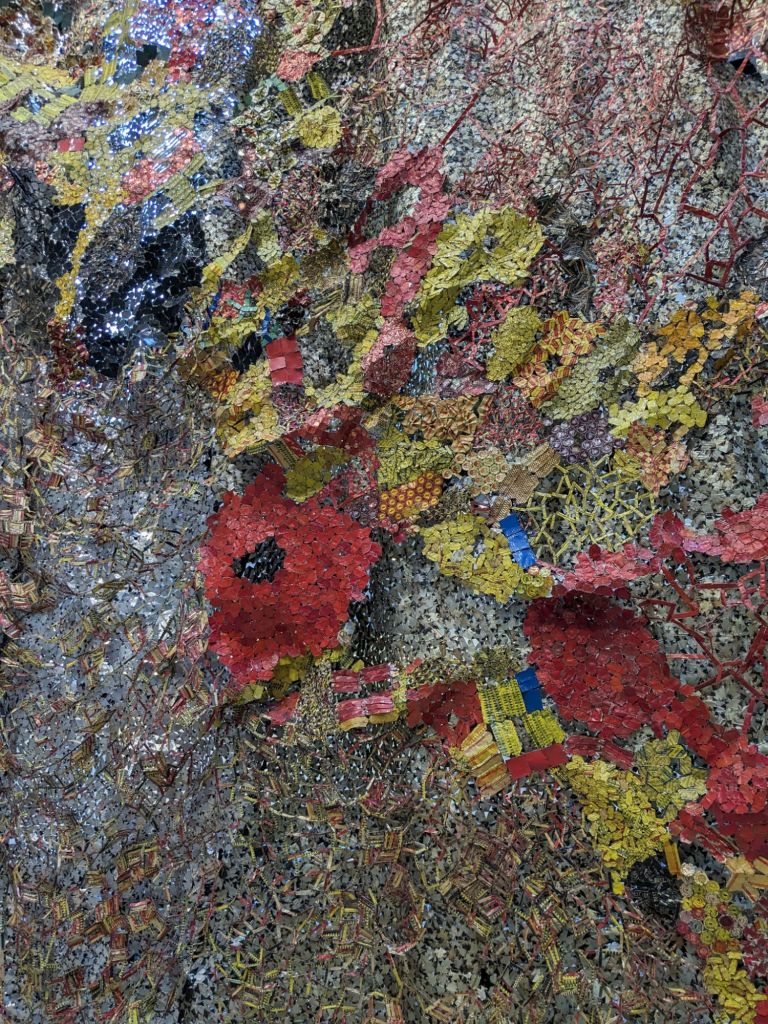
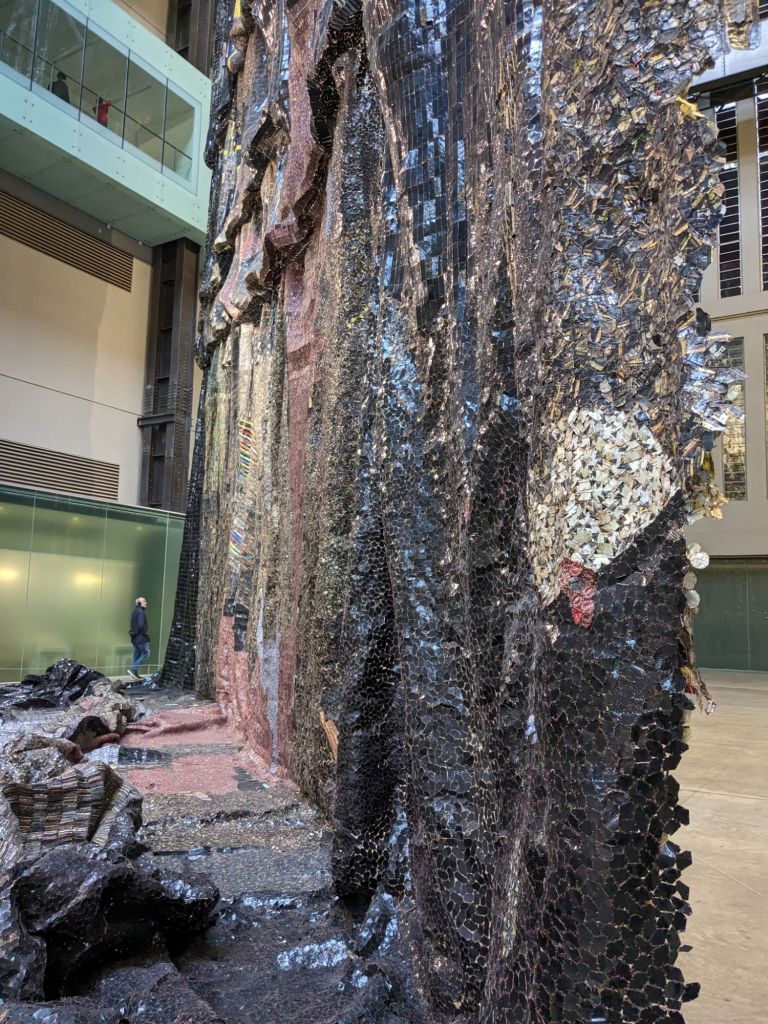
El Anatsui at the Talbot Rice.

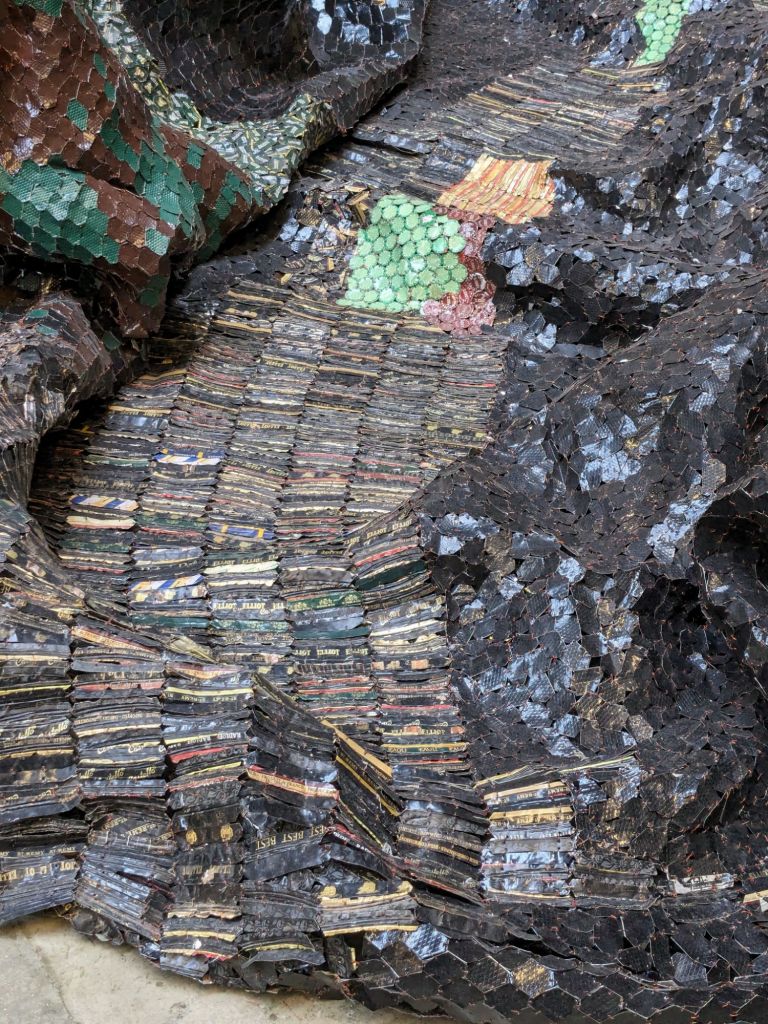
Rivetting exhibition of works including the familiar ‘drapes’ of flattened waste from bottled drinks, as well as works in wood and in print.

The willingness to explore the marks made by small children, the draping of traditional fabric, etc all using waste materials is provocative and inspiring. This exhibition reveals so much more than the Tate Turbine Hall installation, as amazing as that was.
What art have I seen? Women in Revolt
Scottish National Gallery of Modern Art
All the inter relationships with work/domestic labor, sexualisation, violence, racialisation, socialism, Mrs Thatcher, etc. Lots of really interesting works I hadn’t seen before. Lots of provocative activist approaches. Important inclusion of examples of zones and magazines, of postal works and of all the Workshops
The first panel highlights the wider social context including women’s rights or lack of them in marriage, equal pay or not, racialised discrimination, and the decriminalisation of gay male relationships in 1967. Problem is I’m at the exhibition in Edinburgh and in Scotland the law didn’t change for men over 21 until 1981. Not good. One of the key threads in feminist and queer theorising is inequalities and some are manifest in geographies. Curators should have caught that.
What art have I seen? Peter Kennard
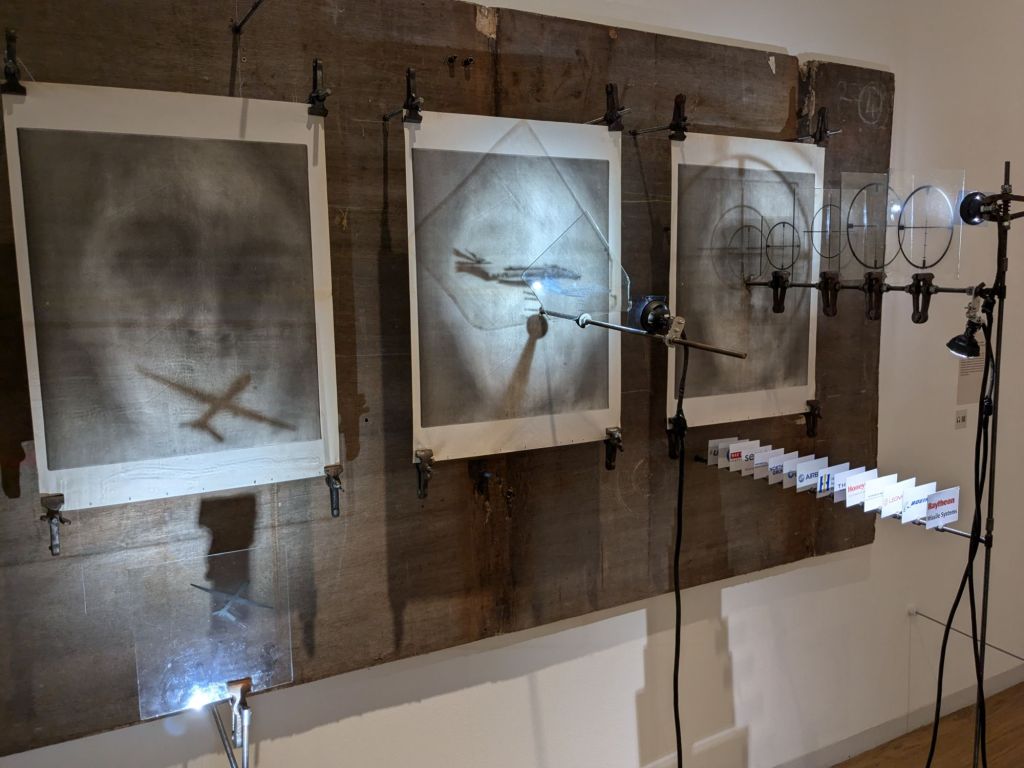

Archive of Dissent at Whitechapel. We agreed that some more of the context, of Greenham Common for instance, could have been good. Somehow everything being ‘the work’ misses the point of collage maybe? If collage is the recomposition of reality, should the exhibition be only the collages when they become historical?
What art have I seen? Francis Alys
At the Barbican. Collected work on play, so often in places of conflict. All the videos are here.
The sound of play in the gallery was almost overwhelming walking in but became very comfortable.
The history of play told on the balcony railing deserved to be more prominent – not ideal reading position and images were too small to appreciate details.
What art have I seen? Judy Chicago Revelations
At the Serpentine. Major figure obvs, central to feminist arts, charted a course touching on many essential themes Inc divinity, environment (early smoke works, trees, then climate in a pretty trite way). Having recently seen Yoko Ono and her piece about mother’s, parallel ask the public for views about a world where women are in charge…
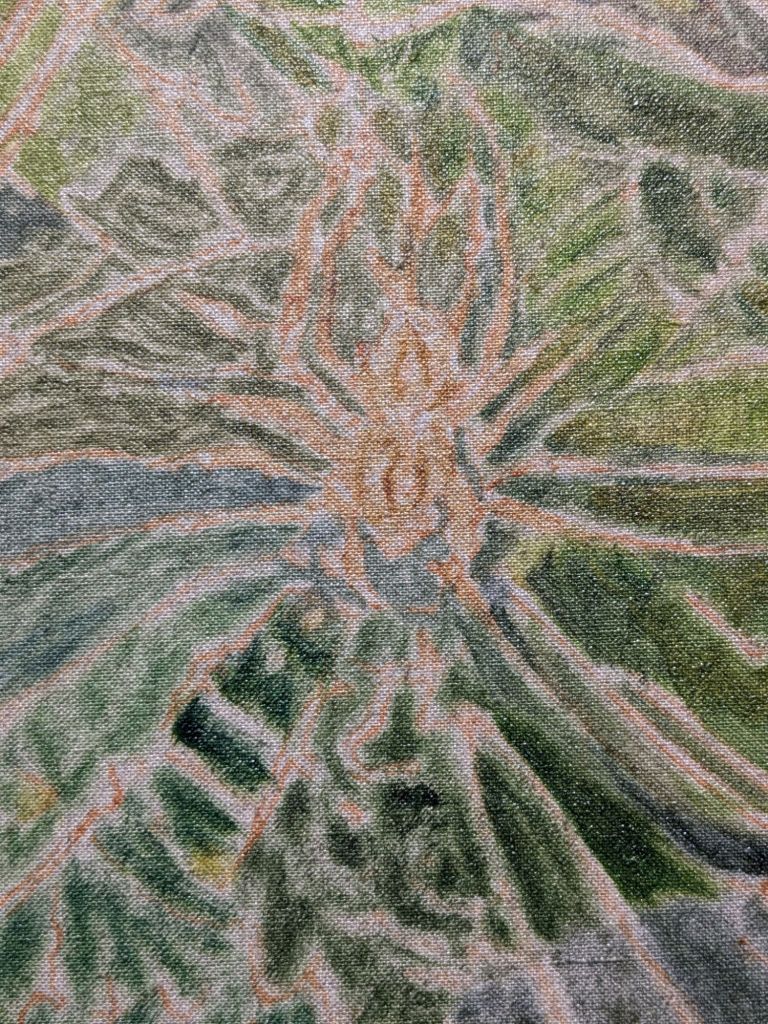
‘Thinking with the Harrisons’ coming in September from Leuven University Press

Thinking with the Harrisons: Re-imagining the Arts in the Global Environment Crisis
Anne Douglas and I worked with Helen and Newton Harrison (the Harrisons), first on Greenhouse Britain: Losing Ground, Gaining Wisdom and more recently with Newton for On the Deep Wealth of this Nation, Scotland. We have also written about their work in articles and chapters. This new book focuses on their early works, the Survival Pieces and The Lagoon Cycle in particular, to understand how they translated a conceptual commitment ‘to do no work that did not attend to the wellbeing of the web of life’ into the place-based ecology focused practice they became known for. We chart the contradictions that emerge in the Survival Pieces and how they lead to the story in The Lagoon Cycle. Our foil in all of this, thanks to Anne’s careful reading, is the process philosophy of Alfred North Whitehead and his more recent interpreter Isabelle Stengers. Stengers gifts us the approach of ‘thinking with’ along with some key questions which we use to understand the Harrisons’ journey.
What is the role of the arts in the global environmental crisis?
Helen Mayer Harrison and Newton Harrison, known as ‘the Harrisons’, dedicated five decades to exploring and demonstrating a new approach to artistic practice, centred on “doing no work that does not attend to the wellbeing of the web of life.” Their collaborative practice pioneered a way of drawing together art and ecology. They closely observed, often with irony and humour, how human intervention disrupts the dynamics of life as a web of interrelationships. The authors of this book ‘think with’ the Harrisons, critically tracing their poetics as a reimaging and reconfiguring of the arts in response to the unfolding planetary crisis. They draw parallels between the artists’ poetics and rethinking in the philosophy of science, particularly drawing on the work of Isabelle Stengers.
Thinking with the Harrisons is for anyone concerned with the implications of ecological concerns as a reimagining of public life, including the interaction of art and science. Throughout their joint practice, the Harrisons sought to engage policy makers, governments, ecologists, artists, and inhabitants of specific places, sensitizing us to the crises that emerge from grounded experiences of place and time.
This publication is GPRC-labeled (Guaranteed Peer-Reviewed Content).

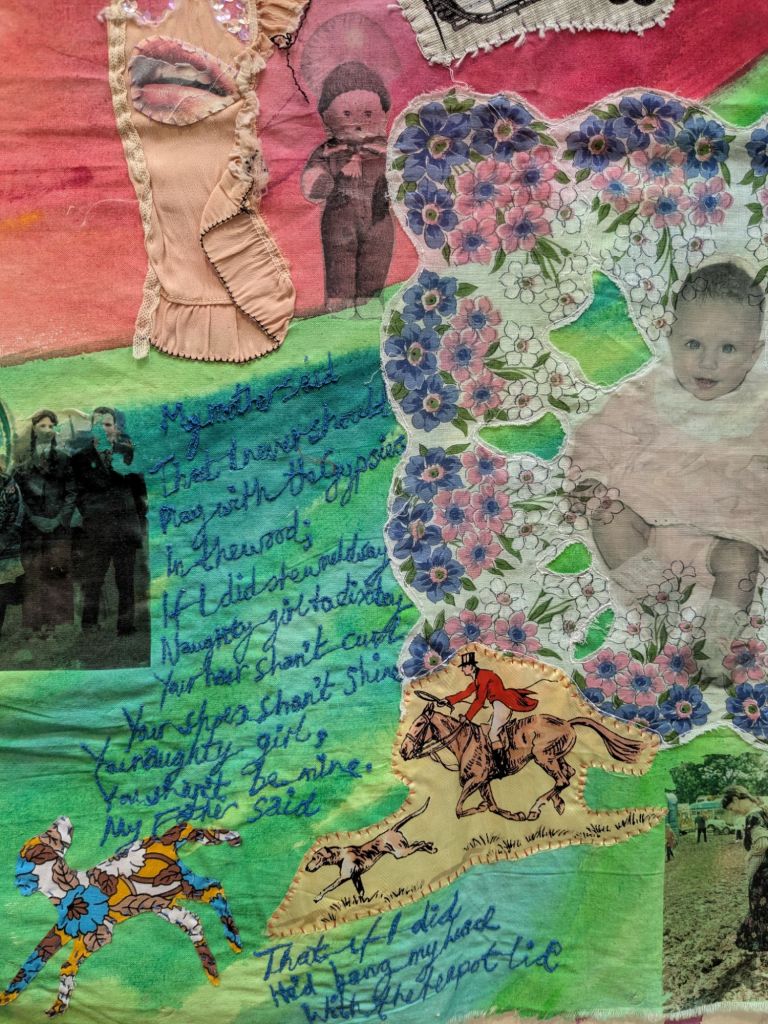
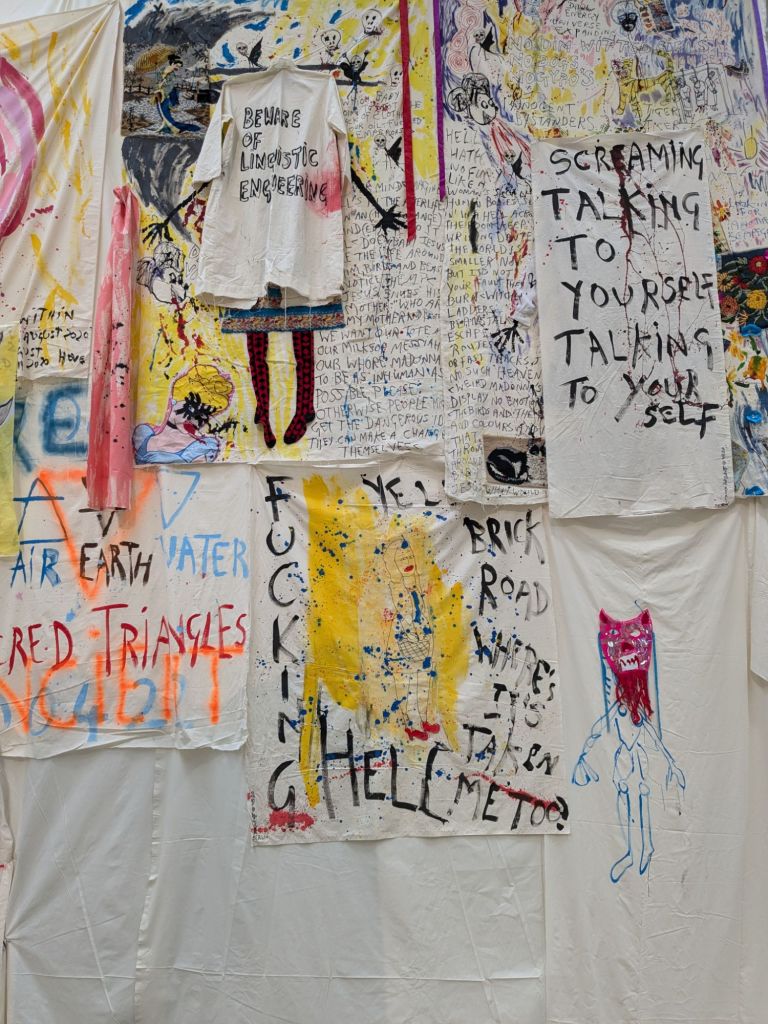

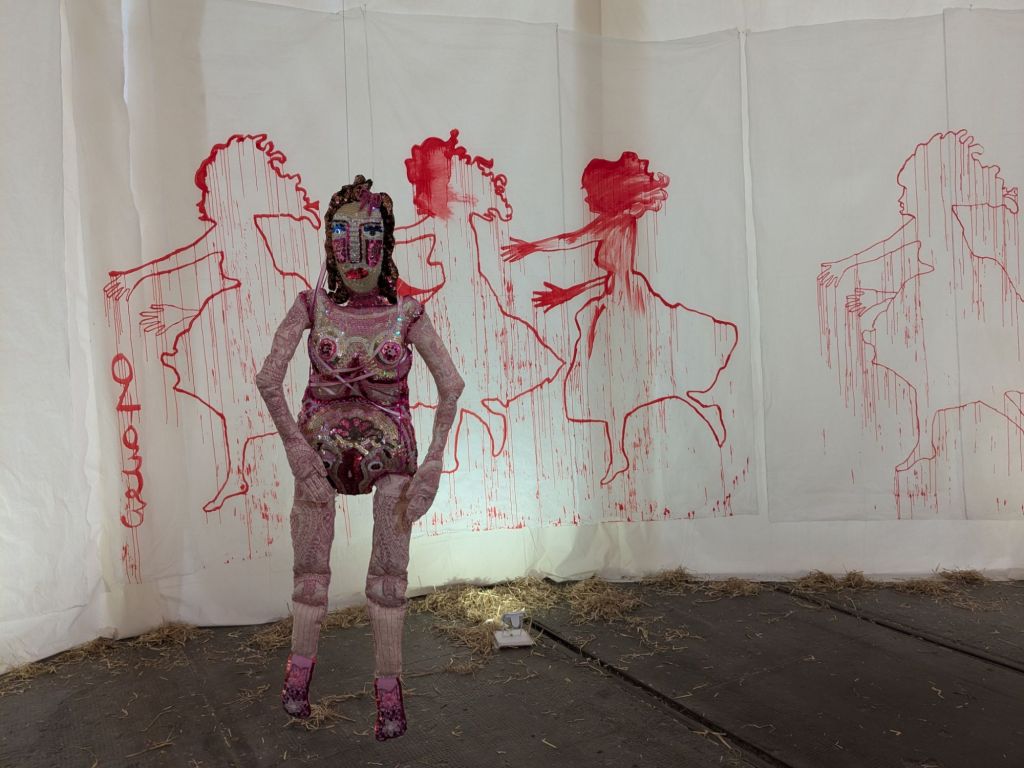
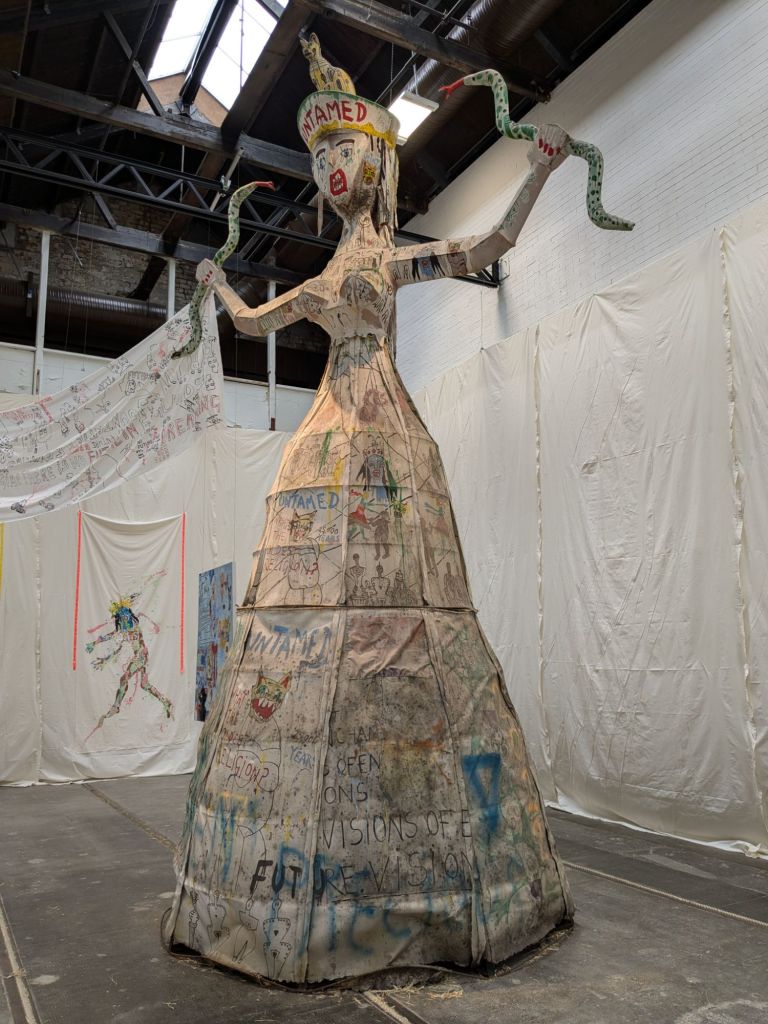
What art have I seen? We Come from Fire and Return to Fire
Otobong Nkanga at the Lisson Gallery.
A whole cosmology, a different set of relations between above and below…
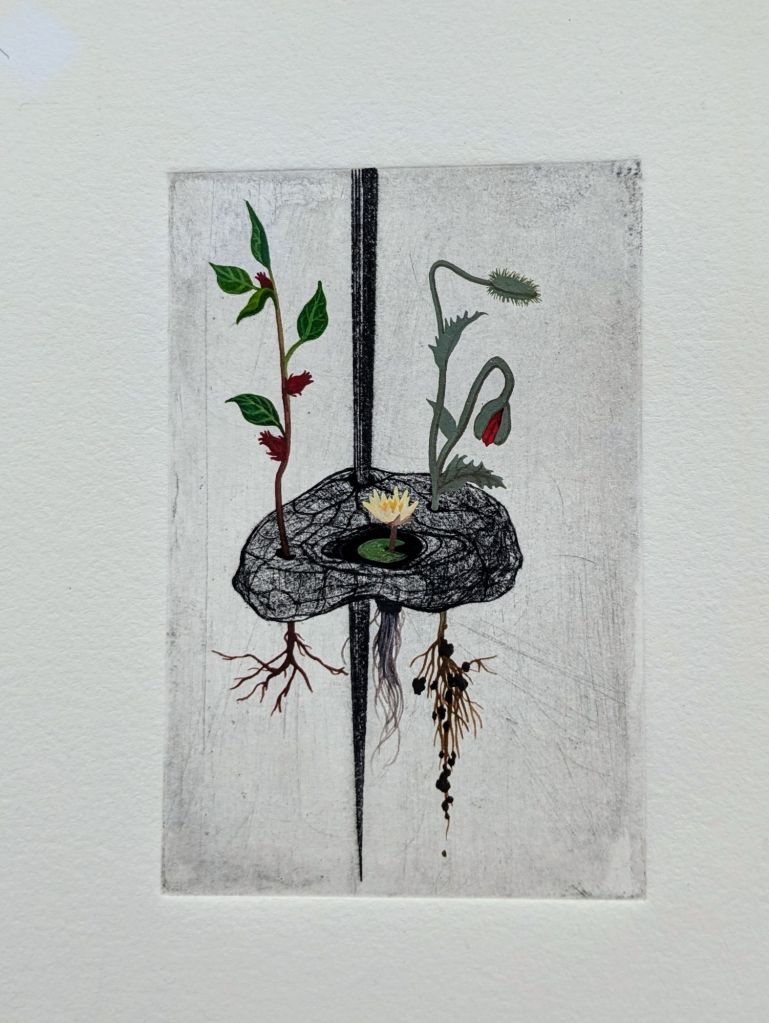
The image above seems like a précis of the whole exhibition.
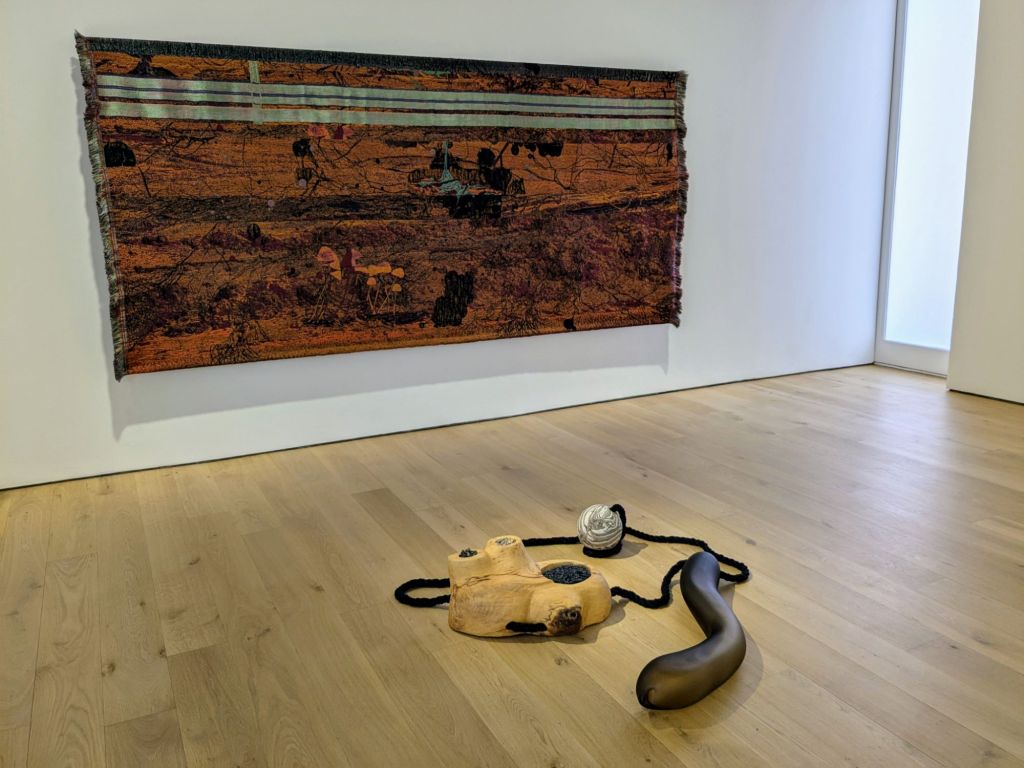
The tapestry reminds me of Alexis Rockman.
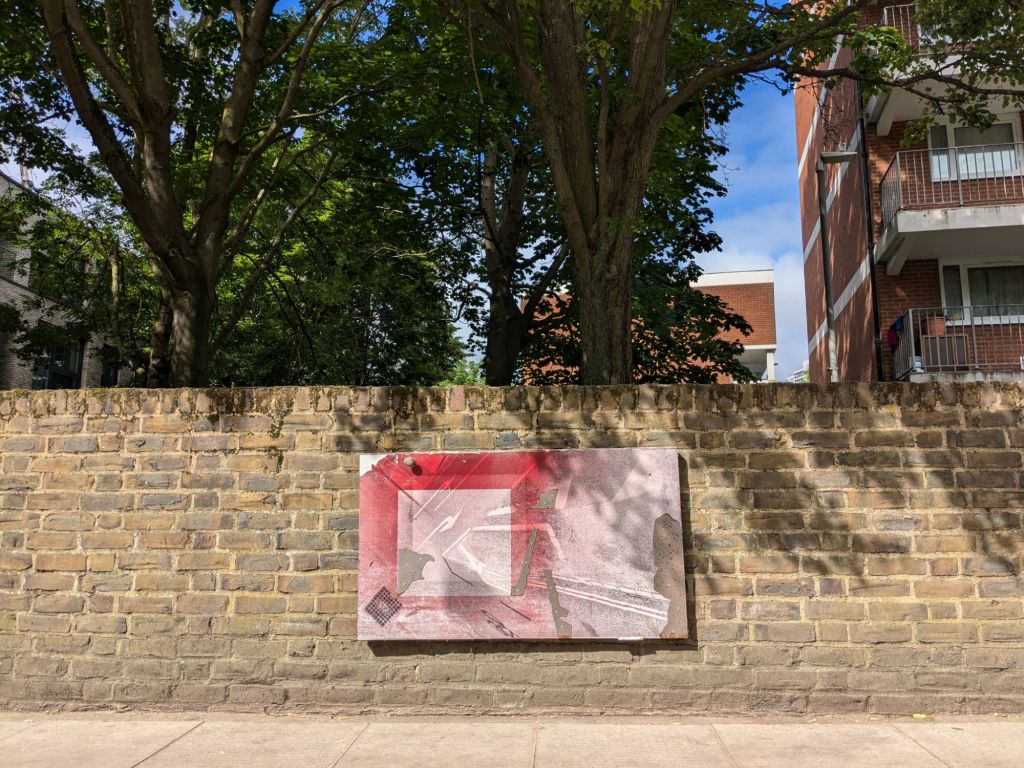
What art have I seen? Under the skin of the ocean, the thing urges us up wild

Chattel House
Dimensions variable
Alberta Whittle’s installations at Mount Stuart on the Isle of Bute, with works indoors and this space – a hybrid Bothy/Chattel House on the edge of the lawn.
What art have I seen? Britta Marakatt-Labba. Moving the Needle
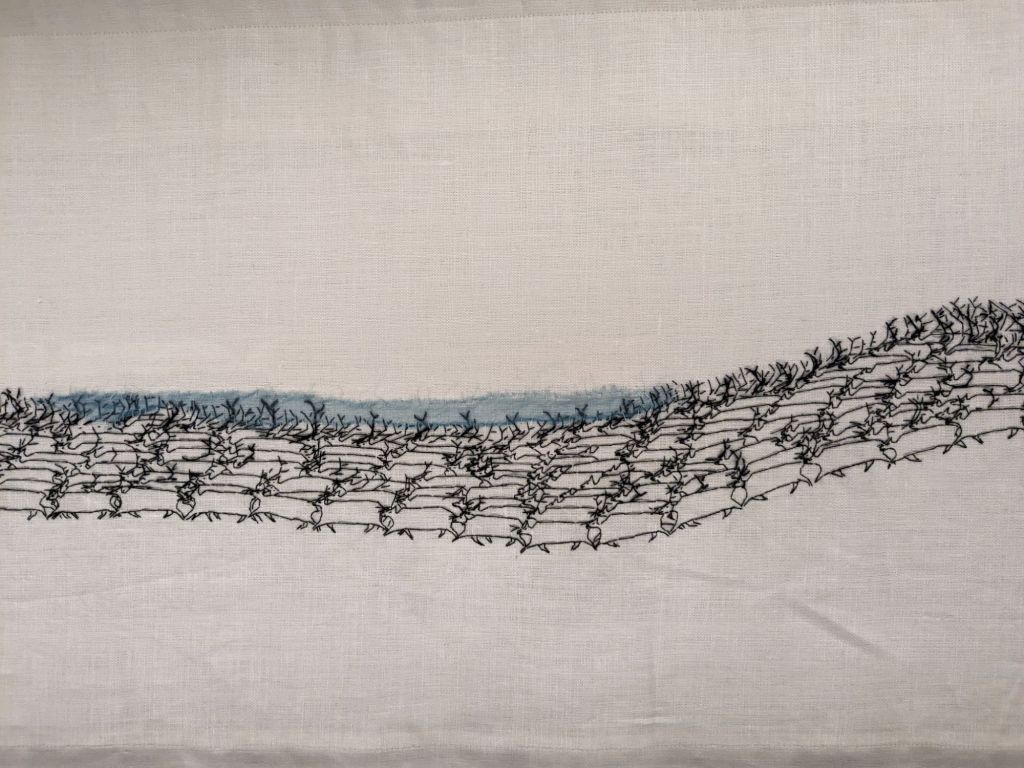
Exhibition of Sami artist activist Britta Marakatt-Labba. The review in Kunstkritikk is well worth reading and you’ll understand why I went after an already full day of art!
What art have I seen? Future Library


What art have I seen? Louise Bourgeois

“Hands feature in many works by Bourgeois, symbolising dependency and support. Here, she has traced around her own and those of her studio assistant, Jerry Gorovoy, to create a portrait of their working relationship and their friendship.’
The fact that there are not more that three hands in any image is a practical reality of the process, but also metaphorically resonant of art itself.
What art have I seen? Trembling Museum and Silent Archive

Two ambitious exhibitions which basically challenge territories and disciplines.
Trembling Museum at the Hunterian aiming to unsettled the ethnography collection of Glasgow University by bringing it under the glaze of Eduard Glissant and into relation with contemporary practices.
The most interesting thing was the idea of threadyness, that the emergence of jazz and blues and hip-hop are all grounded in partial memories of cultures in parts of Africa where people were transported from into slavery. Something really powerful about that cultural continuity, potential becoming something new but still also connected.
Silent Archive at Royal Botanic Gardens Edinburgh brought a number of artists into relation with aspects of archives, both of specimens and collections but also of for example endangered species. Works were grouped around issues, the palm cut down to enable the restoration of the Palm House, endangered species, species grown industrially and the industrial production processes.
Both exhibitions were perhaps not only across practices and disciplines, but maybe deep mapping, exploring power relations, ‘archives’ in the Foucault sense of “the fundamental formations that determine what is seeable and sayable as history.”
Interestingly both were problematic in their associated interpretation. Trembling Museum had a reading room, but the narratives of individual objects tended to fall back into their conventional disciplinary forms. So items from the ethnography collection were still accompanied by ethnographic texts.
So curious that having taken Glissant as a guide, none of his concepts, particularly opacity, were employed. At the object level everything reverted to clarity and specificity. As noted above some actual ‘interpretation’ or allusive storytelling was evident (thready connections), but the powerful metaphor of volcanic trembling didn’t result in the promised confusion of ethnography and contemporary art, let alone a confusion related to life, a full working out of blurring (Kaprow) as a form of opacity (Glissant). It was Gill, my otherr half, who pointed this out.
At RBGE Gill overheard a lot of frustration at the interpretation too, though in this case because it wasn’t adjacent to works – curatorial keeping space for the work meant hunting for the interpretation. That in turn was only lists of creator, title, date, material, lender. All text was accessible via QR codes. There is maybe more work to think through the digital physical relation.
What art have I seen? Yoko Ono and Yinka Shonibare
Yoko Ono at the Tate: lots of open participatory imagination focused works… plus her and John Lennon in bed talking about Peace

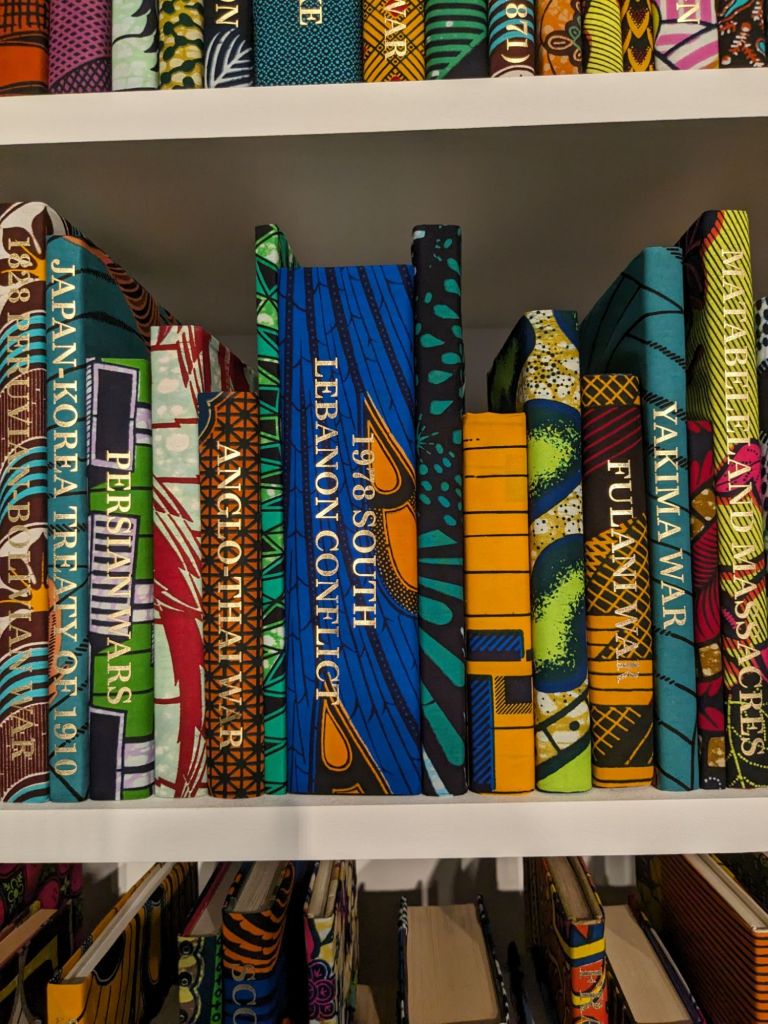
And Yinka Shonibare at the Serpentine remaking famous figures and buildings of power in British history with textile patterns which are ubiquitous in West Africa but come through Indonesia…
newLEAVES network
The newLEAVES network has been established with funding from the Royal Society of Edinburgh to support arts and cultural production in connection with woodland creation. We are planting more woods and forests – how can we have more arts and culture associated with this? We have created a Padlet to support the project.

What art have I seen? Fourth Plinth proposals including Ruth Ewan’s ‘Believe in Discontent’
Love the image of the cat with its hackles up, the reference to the suffragists, the whole thing …

Take a moment to vote for radicalism



What art have I seen? Frank Auerbach – The Charcoal Heads
Two rooms of the most compelling charcoal drawing. What if you keep working on a charcoal drawing for a week or a year? There is a comment about the improvisation only coming at the end, adding a stoke or two of vivid pink or blue to something monochrome.
It seems trite to say there is an unstintingness to this work. If you are looking for experiments in medium or form, or the notion of craft, the tedious act… see recent review from Washington Post, thank you Tim Collins… This is those things. It isn’t an exhibition about ‘now’, the anthropocene, and it isn’t elevating an overlooked group. It isn’t ecological or social but it is creating a world in common.
R.I.P. Pope.L
Every time came across the work I was always compelled by it.
https://www.theguardian.com/artanddesign/2024/jan/15/pope-l-obituary
What art have I seen? Re/Sisters: A Lens on Gender and Ecology
Overwhelming, moving, shocking, humorous and irreverent. Last hours of the exhibition (16.30 on the last day). So much I didn’t know as well as many I did but hadn’t seen other than in books.
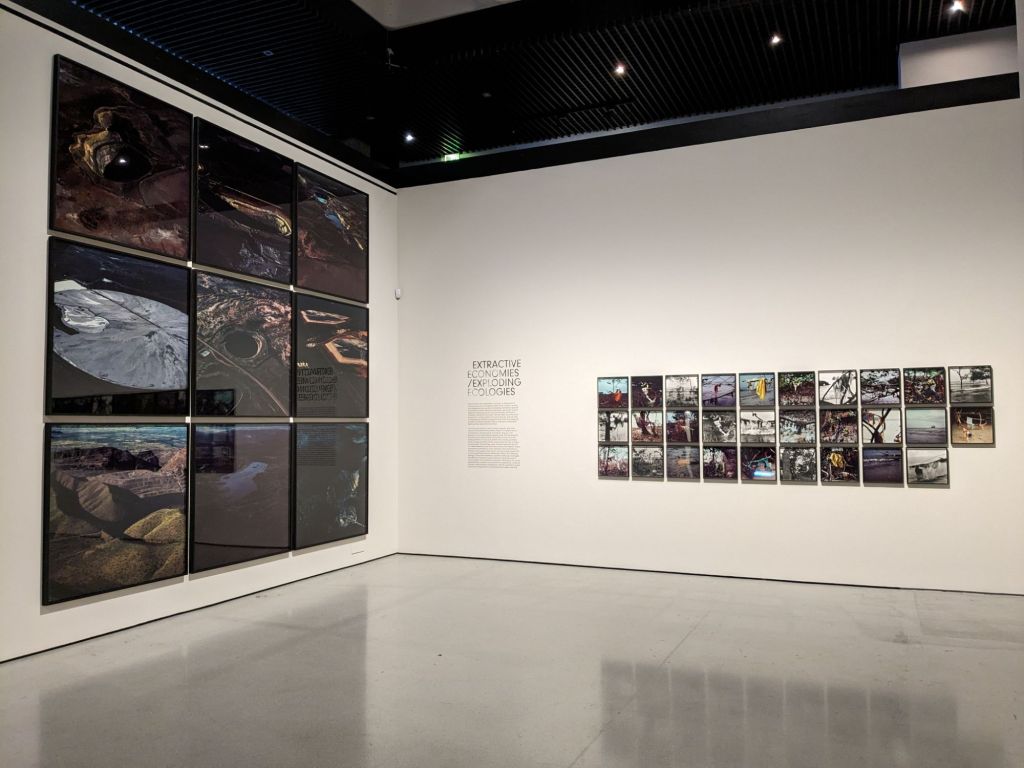
That being said a very significant proportion of this is documentation of one sort of another – documentation to record site specific performance (eg Ukeles and Shaffer) or documentation to enable or make us see real life exclusions (eg Godwin), or activism such as anti-nuclear protests, and resistance to mineral extraction. Some work did documentation in other ways such as using existing media (eg Bethônico’ use of newspaper documentation of mud slides),
The entrance juxtaposition (above) of Simryn Gill’s work, on the one hand smaller images of plastic bags stuck in vegetation after water levels recede or on the other larger images of open cast mining sites in Australia, kind of sets the stage.
There are multiple explorations of being other or dissolving – Aguilar, Corrine, Hammer, Huggins, Mendieta, Miracles, Neo Naturists, Shaffer, Urya, Woodman (and others).
There are long term explorations of multiple dimensions of reality in huge places (eg Chloe Dewe Matthews’ ‘Caspian: The Elements’).
Not all the work is activist, some is simply sensuous and vivid such as Carolina Caycedi’s ‘Multiple Clitoris’ (below) made from kaleidoscoped images of a river.

What’s missing though?
The ecosexuals…
Anything living…
The manifestos…
The ‘public artists’…
Whilst the New Naturists and others are doing something along these lines, Beth Stephens and Annie Sprinkle amongst others are reimagining Earth as lover and their various ‘marriage ceremonies’ would have added a distinct dimension.
And along those lines there is literally no living material in the exhibit… I know the Barbican can do it .. they had the Harrisons’ Full Farm in ‘Radical Nature’. What about Jackie Brookner’s work which might have brought water from the roof into the gallery and purifies it flowing over a mossy tongue – look it up, it’s great!
I didn’t see Mierle Laderman Ukeles’ Manifesto of Maintenance Art which is a foundational document in this field, not any of Agnes Denes’ Manifestoes. And I bet there are many others, the inclusion of which would have also troubled the curatorial authority. Which raises a thought about how conventional the display is – largely framed works arranged nicely with neat labels. What if the Manifestoes had been printed on the walls behind or adjacent to the works? Layering up meaning…?
Finally the ‘public artists’, though that is too neat a category for Betsy Damon and the Keepers of the Waters or Aviva Rahmani and her Trigger Point Theory or Bonnie Ora Sherk and ‘The Farm’ or Patricia Johansson, or Jody Pinto, or ffs Loraine Leeson and her project with the Old Geezers just up the road on the River Lea creating renewable energy…
The review in the New York Times highlights many of these concerns, concluding with questions for the institution around how it engages with what the works in the show are raising and drawing attention to…
Great exhibition, really glad I saw it, definitely buying the book…
audiences and… pt10
Joe Biden tried to reassure the country that day. “The scenes of chaos at the Capitol do not reflect a true America, do not represent who we are.”
More directly Representative Nancy Mace said “This is not who we are,”
“That is not who we are,” the first lady assured the graduates [at a commencement address in early 2016]. “That is not what this country stands for, no.”
When political elites insisted “We’re better than this!”—a close cousin of “This is not who we are”—many Trump disciples heard “We’re better than them.”
These are all quotes from Mark Leibovitch’s article in this month’s The Atlantic, an issue in which pretty much every other article of the 40 page section entitled If Trump Wins focuses on the likely outcomes for democracy and justice.
This article highlights the real reason and driver of support for populist demagogues. ‘We’ is a dangerous word especially when it excludes people.
What art have I seen? Metabolic Studio
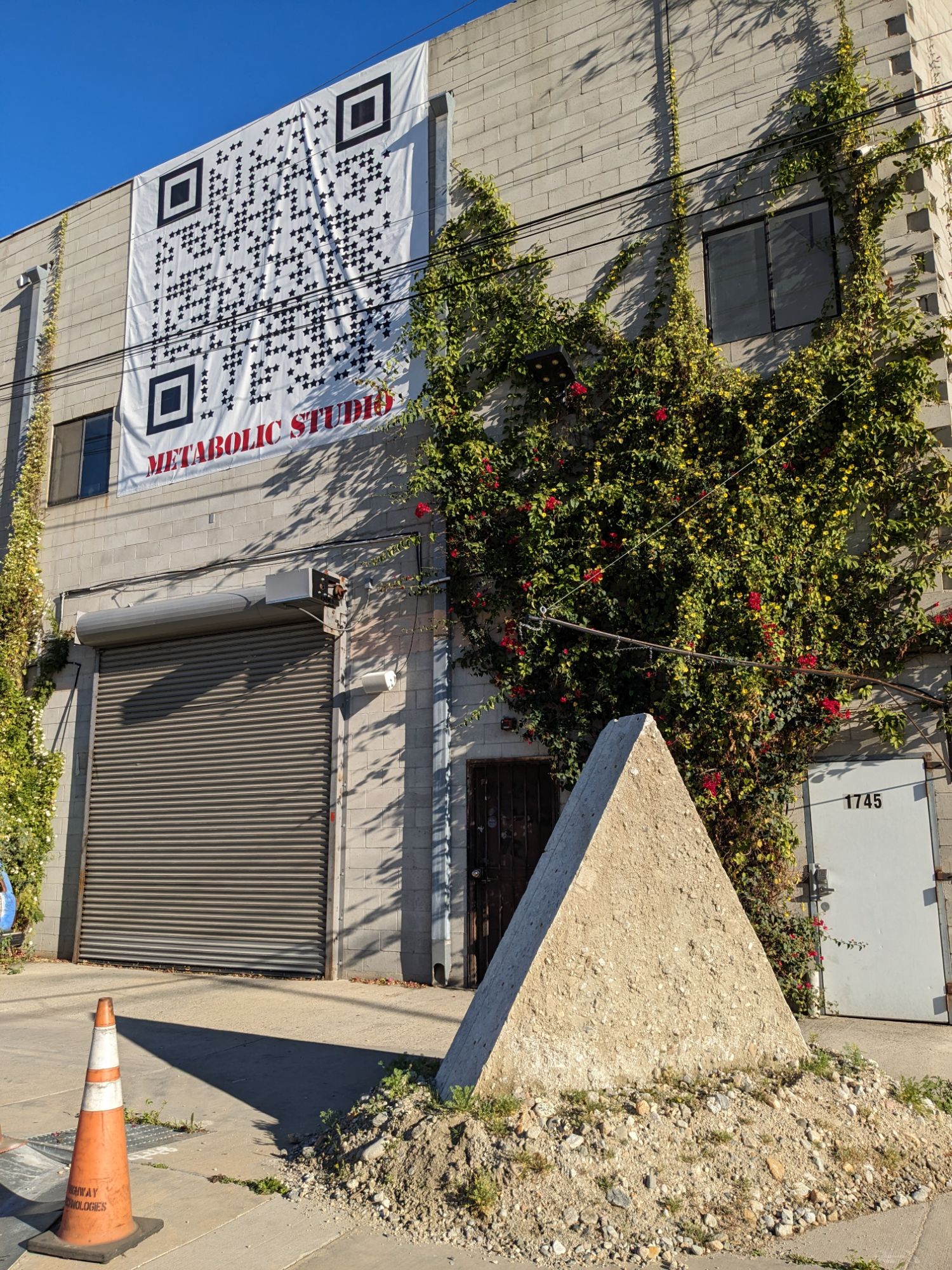
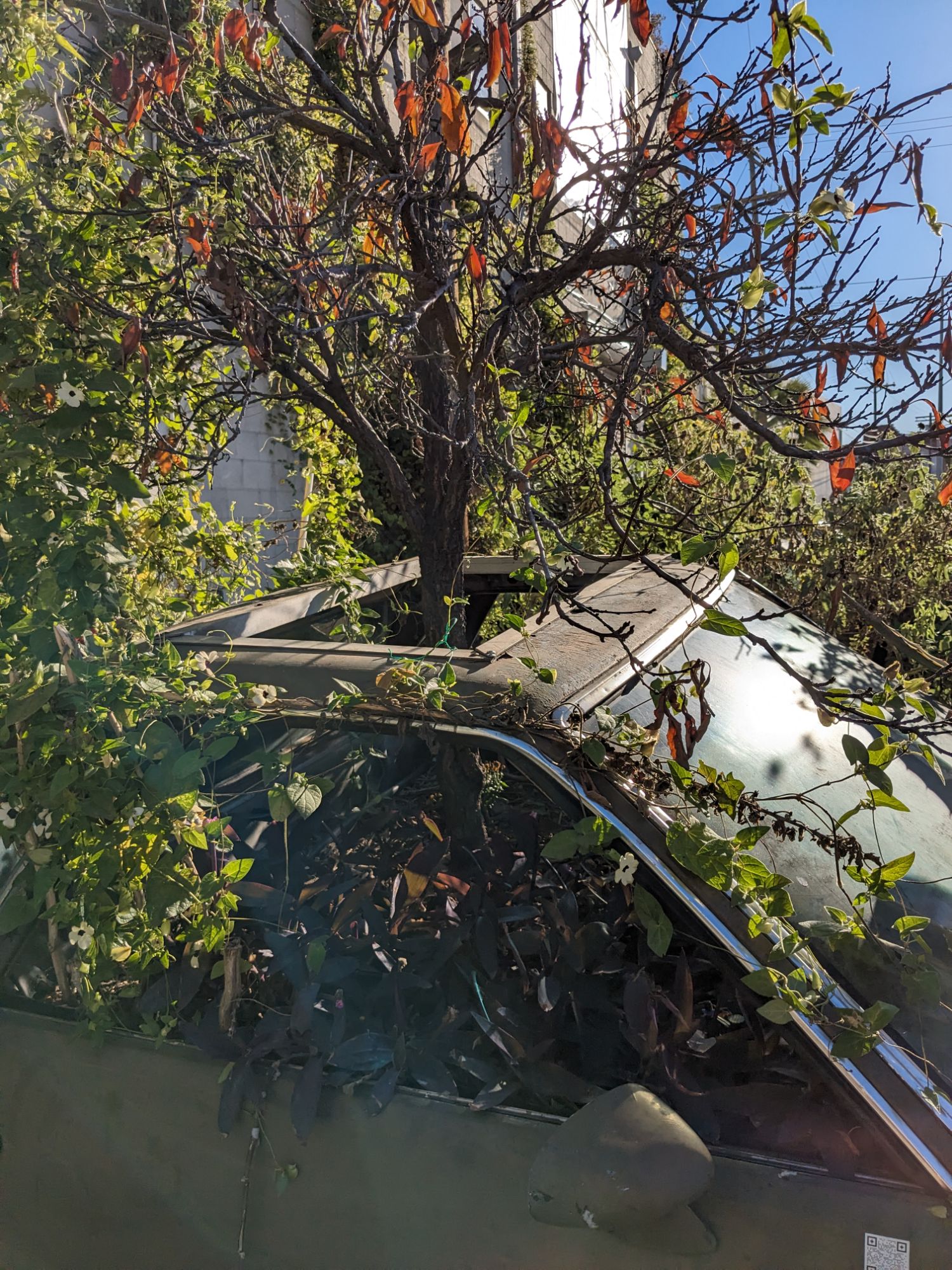
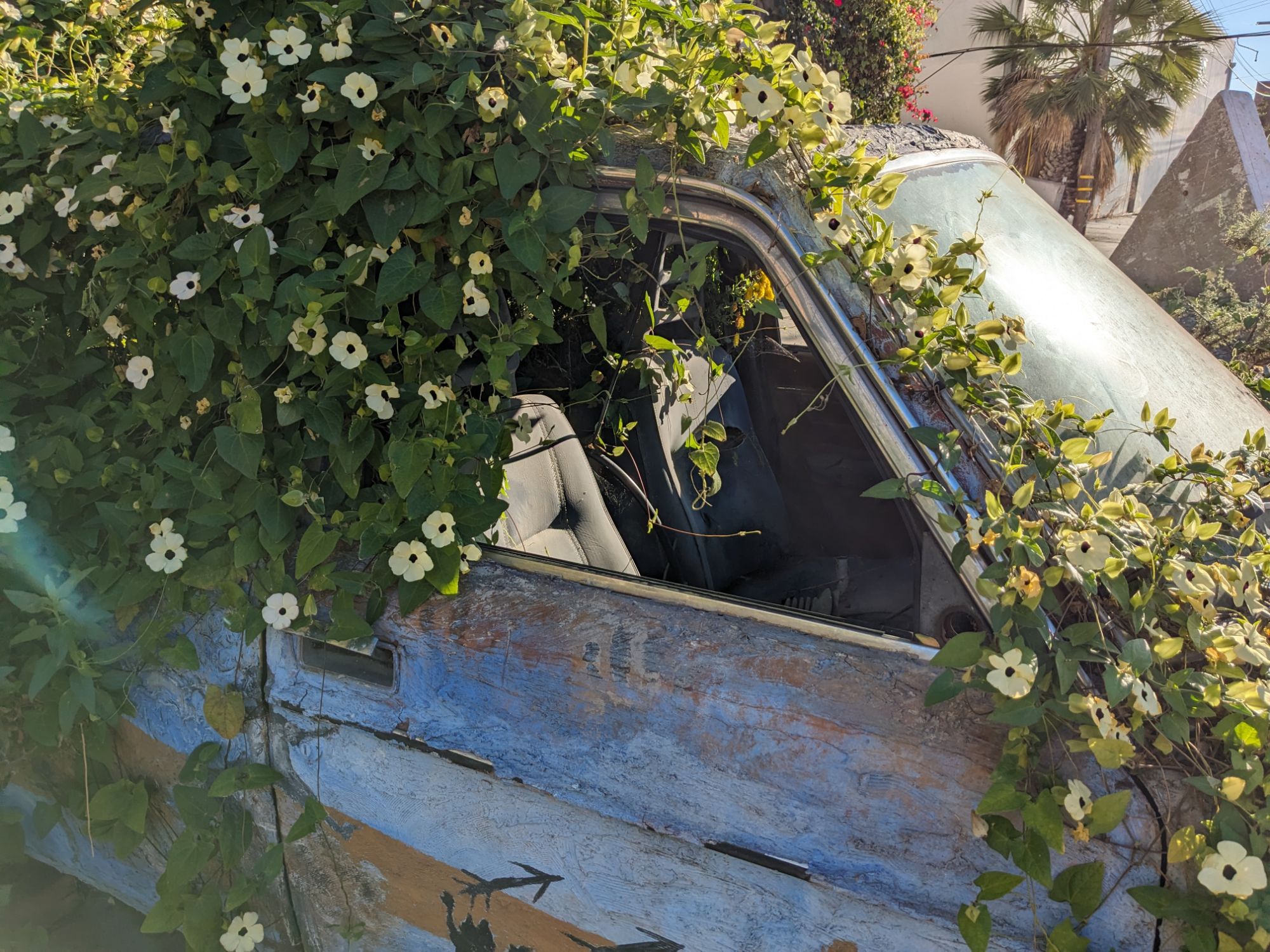
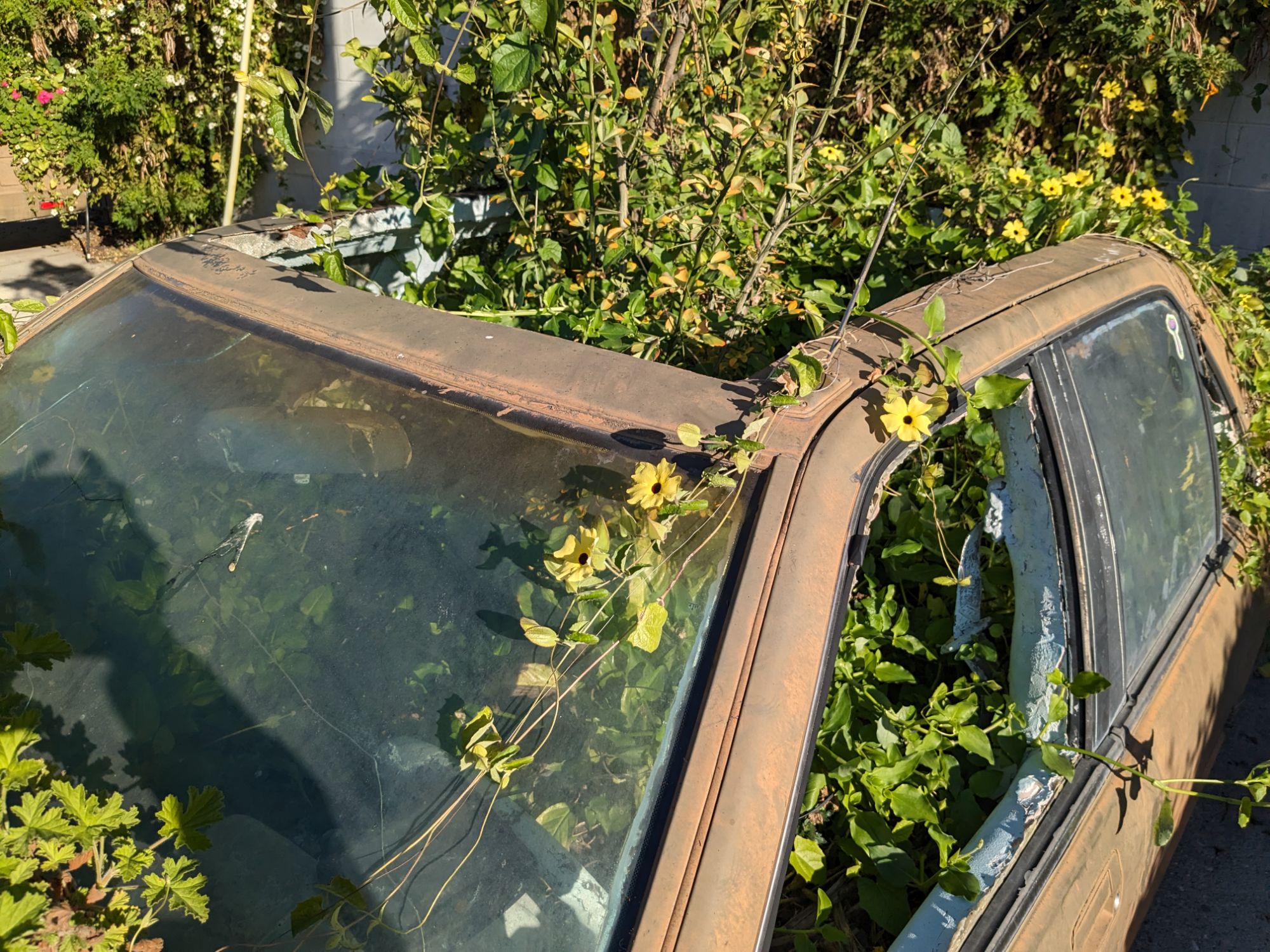
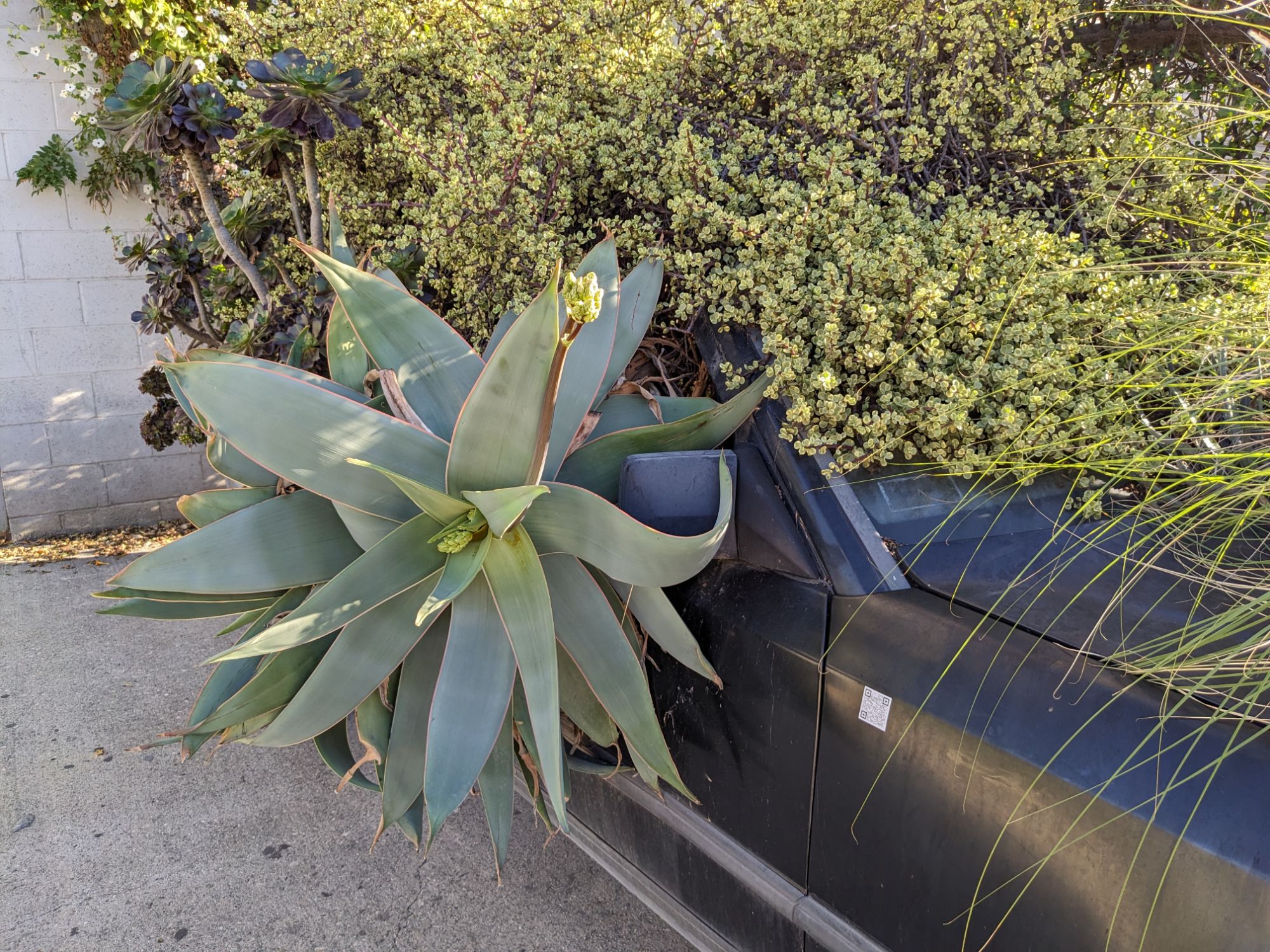
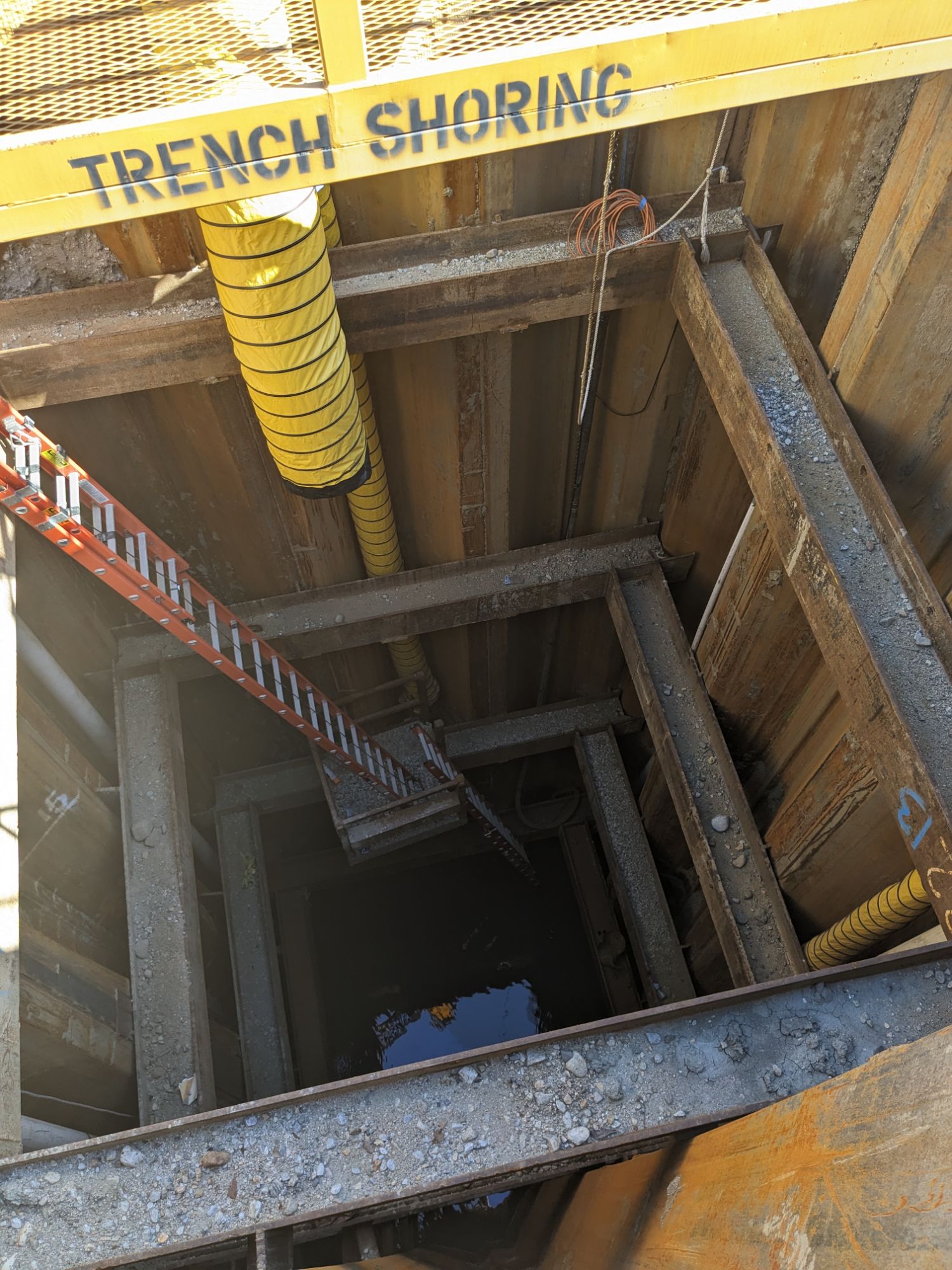

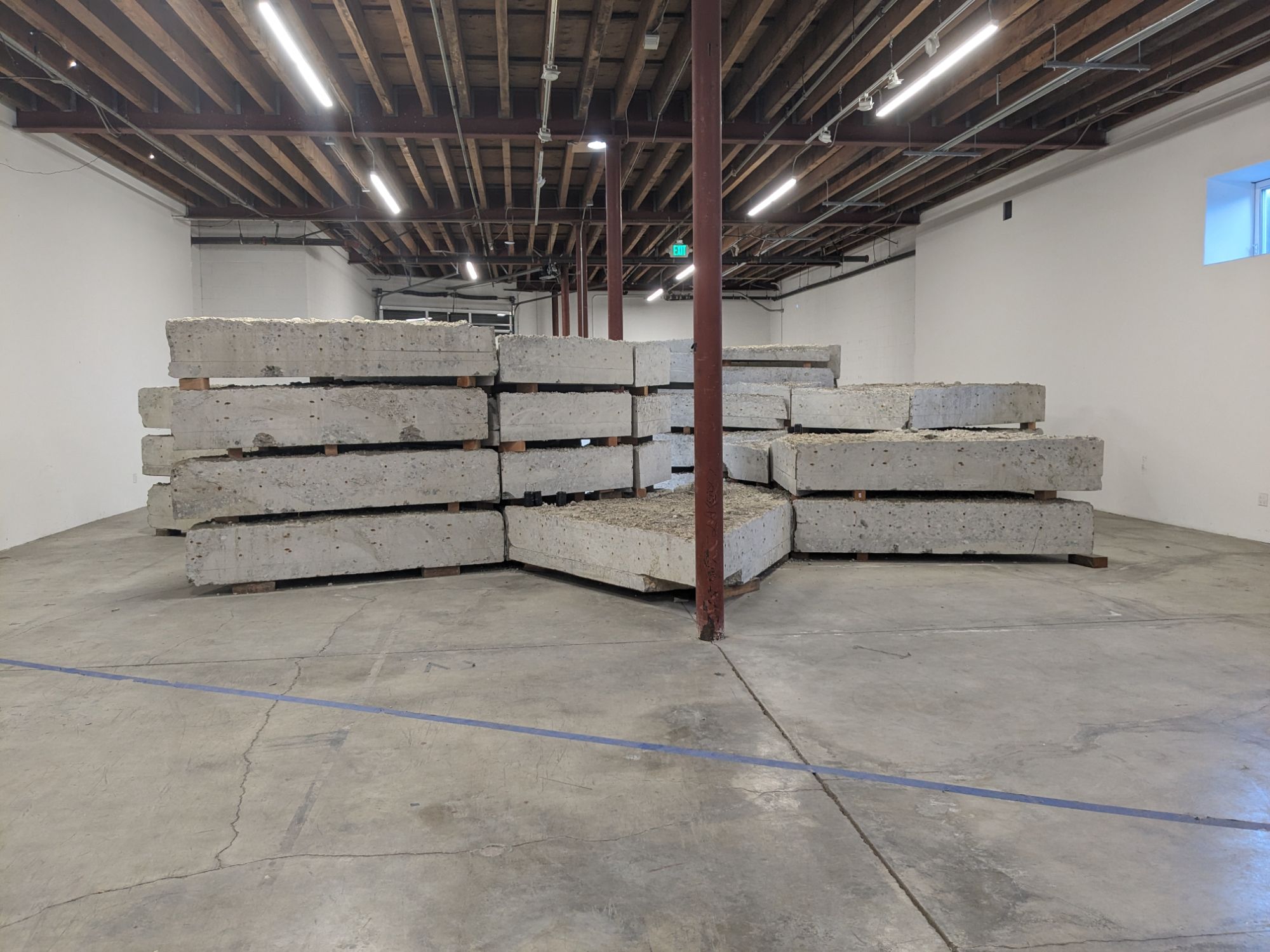
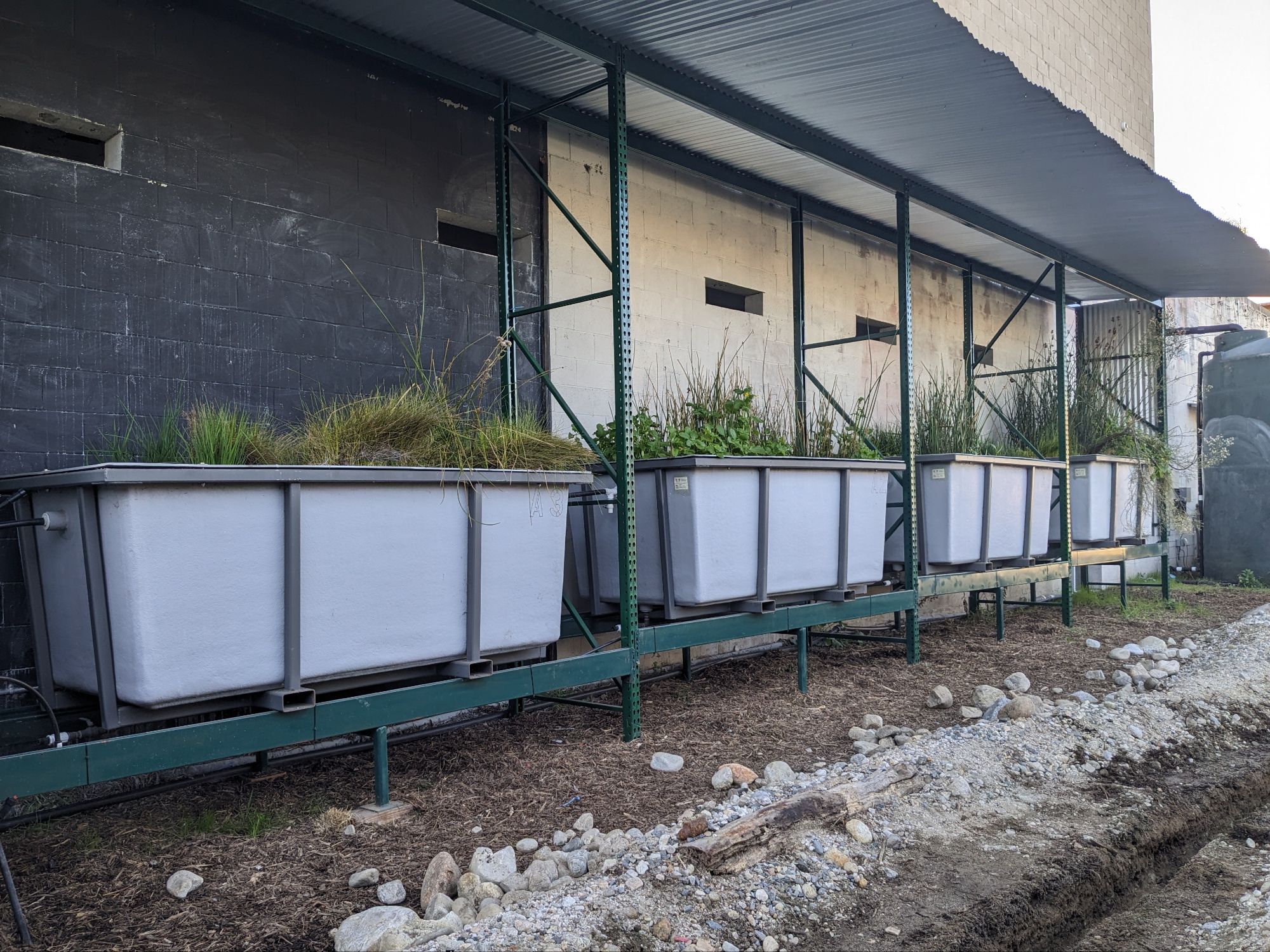
Metabolic Studio today – all waste becomes something new: cars become gardens, sections of the bed of the LA River become sculptures, the water in the LA River becomes a well for watering a park, soli from the digging of the well reveals new life, a manmade wetland cleans rainwater coming off the roof of the Studios… Genuine regenerative thinking…
What art have I seen? Eleanor Antin’s 100 Boots
Museum of Contemporary Art, La Jolla
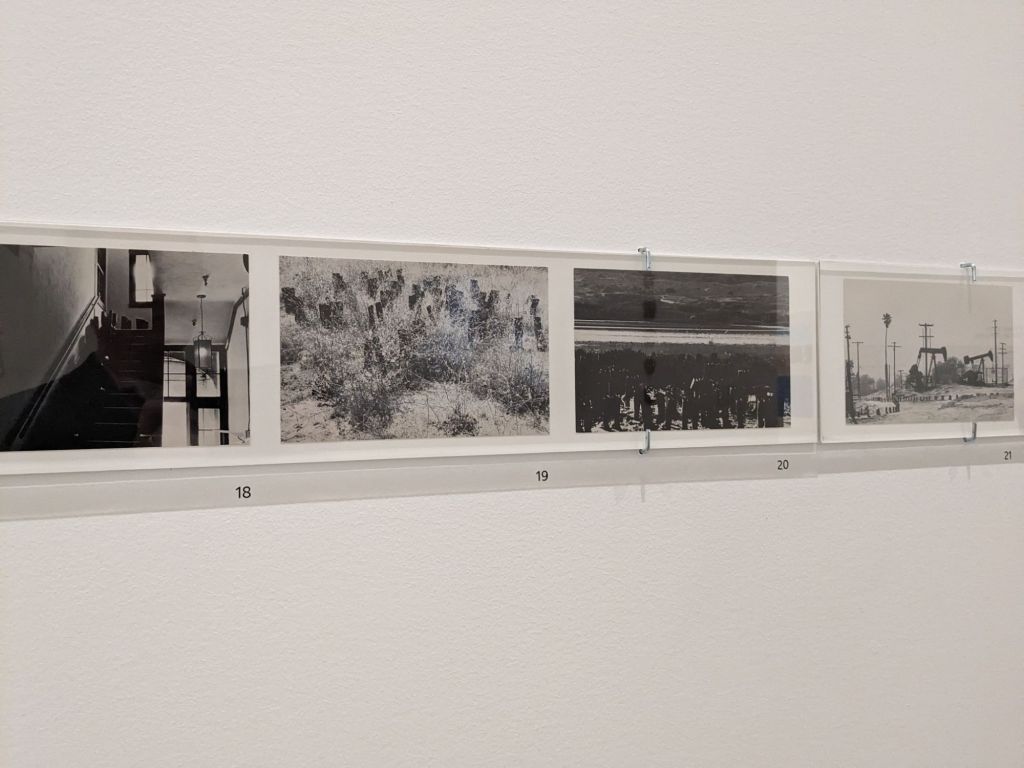
What art have I seen? Ellsworth Kelly photographs
‘Shape, Ground, Shadow’ at the Santa Barbara Museum of Art
What art have I seen? LACMA
‘Woven Histories: Textiles and Modern Abstraction‘. Such an interesting genealogy from Albers, Hoch et al through to Rosemarie Trockel.
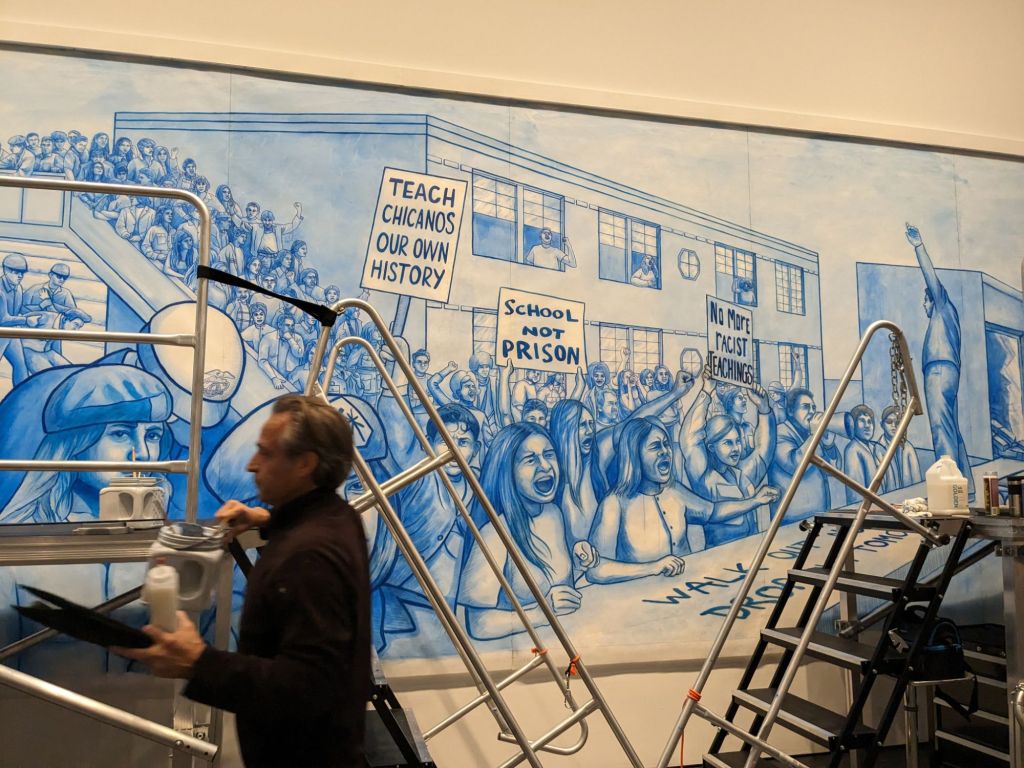
Judy Baca extending the The Great Wall – museum becomes Muralist’s studio
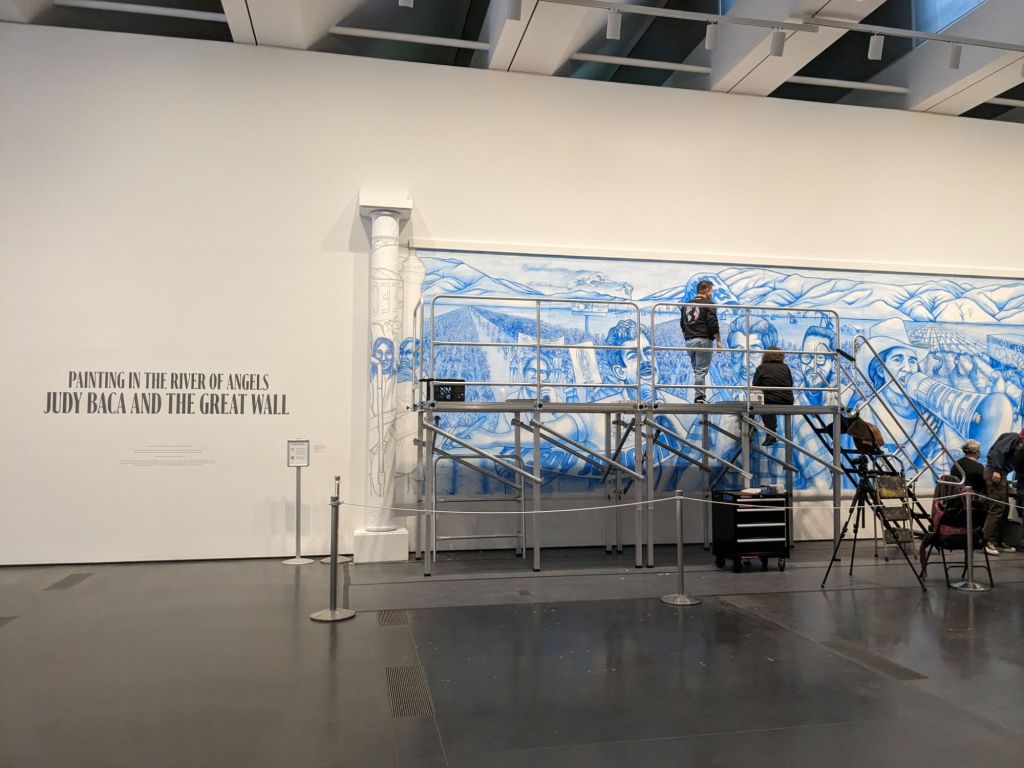
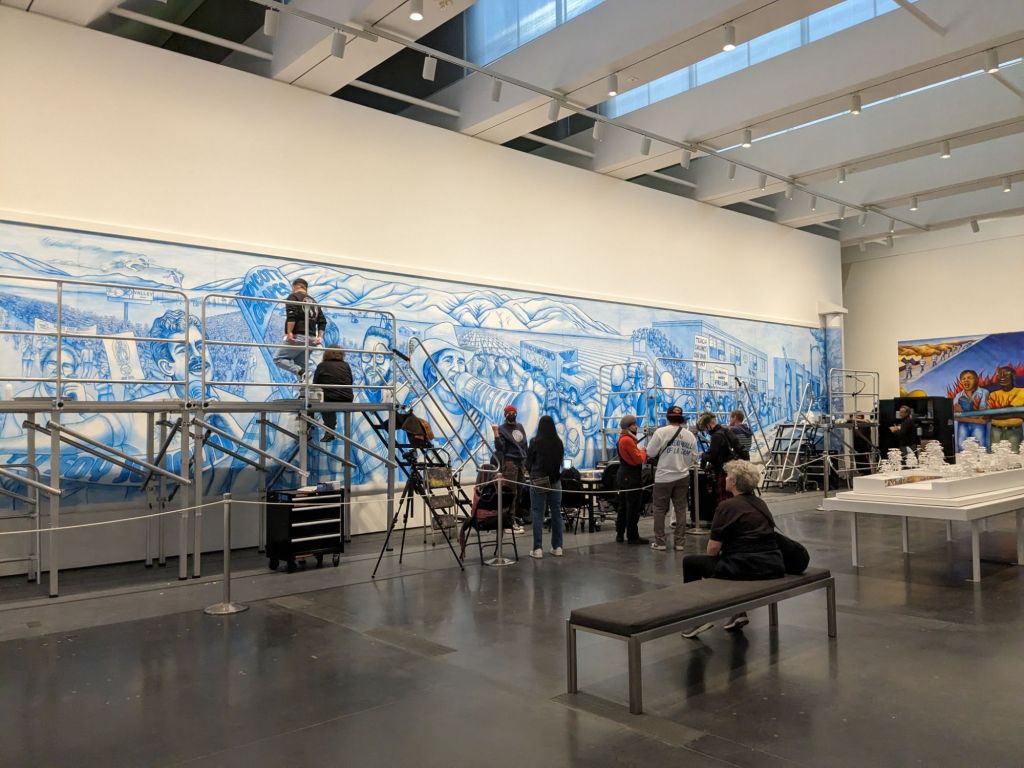

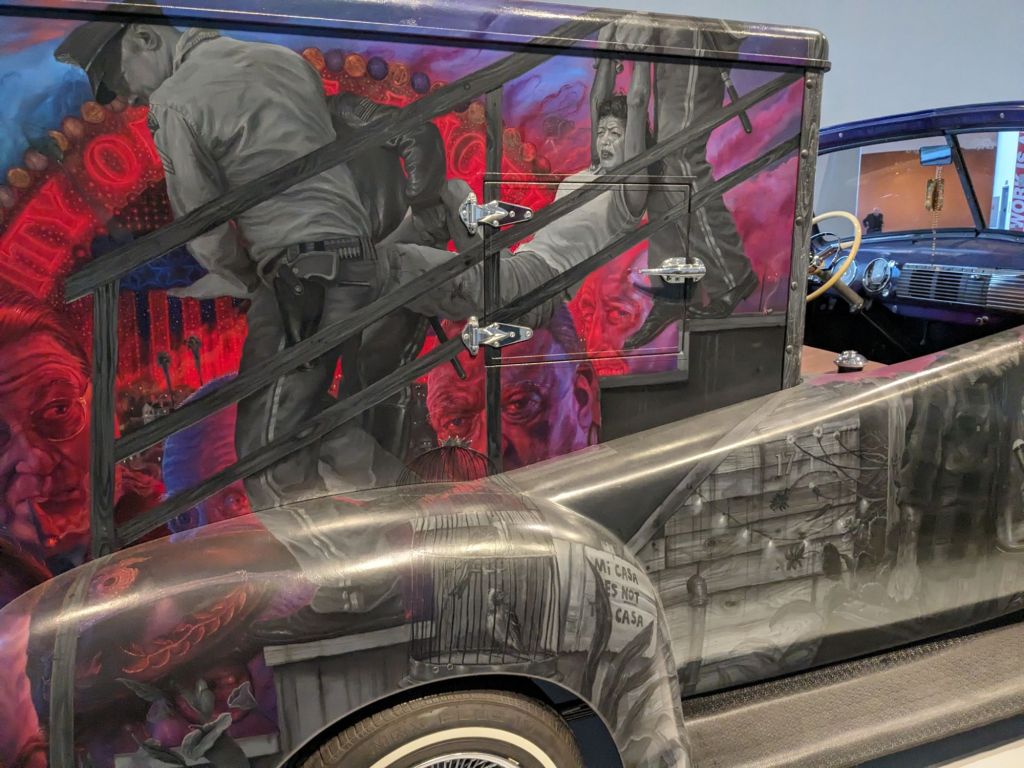
‘Vincent Valdez and Ry Cooder: El Chavez Ravine‘ brilliant indictment of land grab, gentrification as we’d call it now.
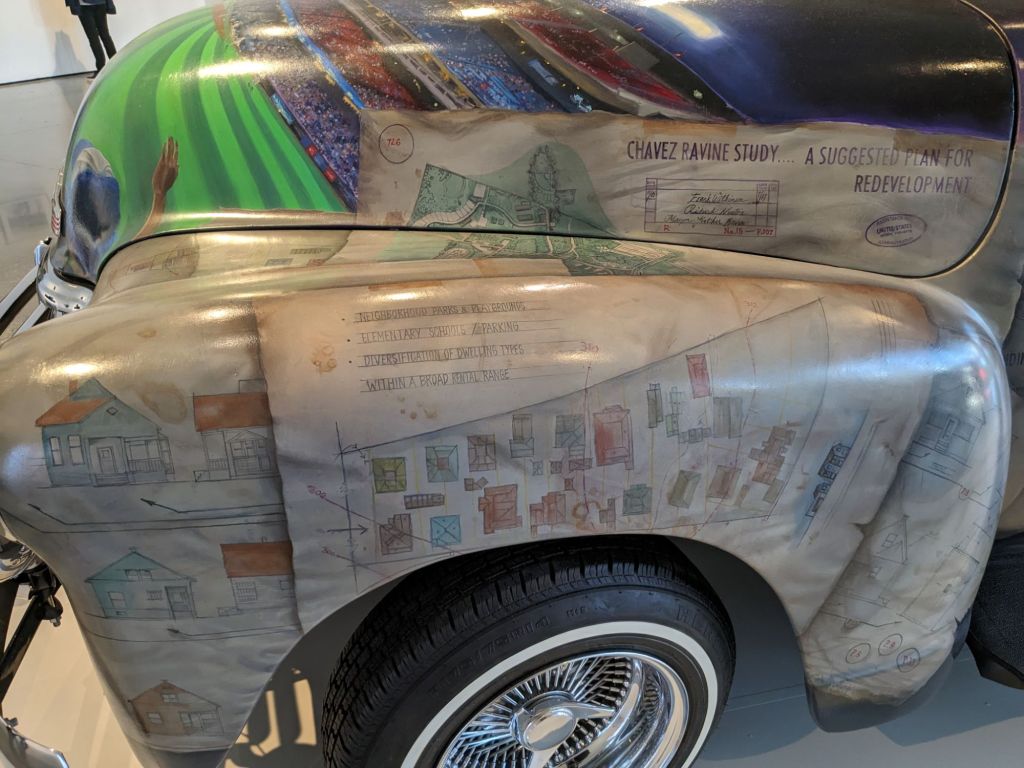
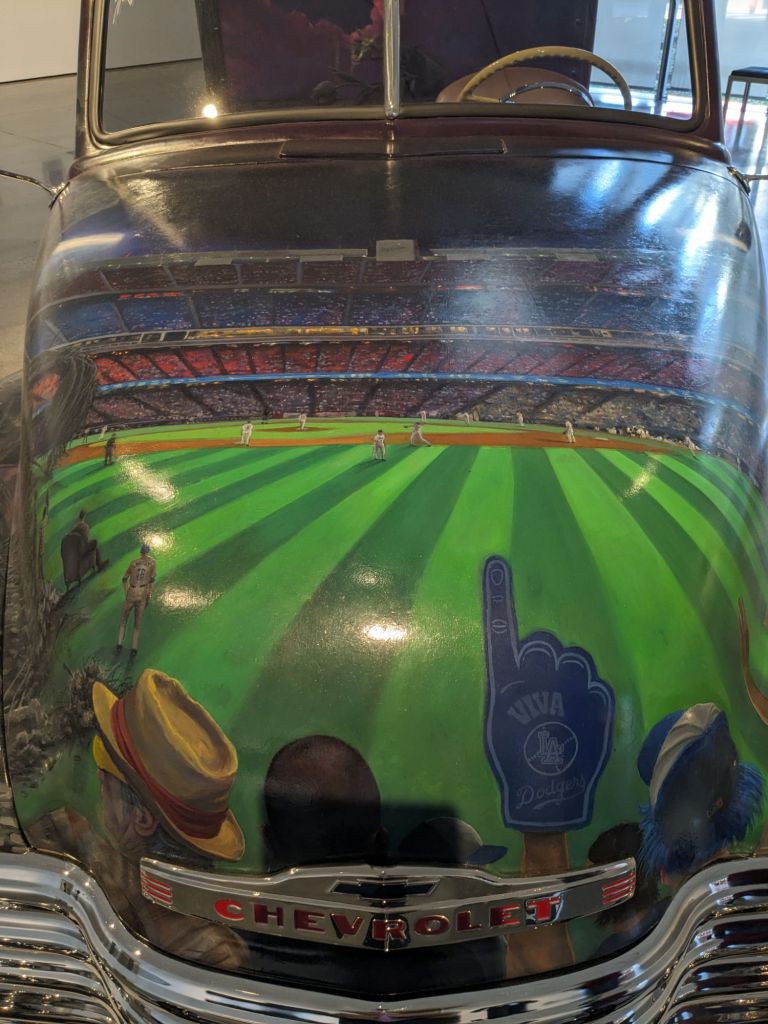
And before all that the La Brea Tar Pits
What art have I seen? The Getty Center
Anselm Kiefer says something like great Art of every age is equally good. The Getty is quite a good place to test that proposition. But you also have to pay attention to what makes it possible to assemble this collection and house it in these buildings on this site overlooking LA.
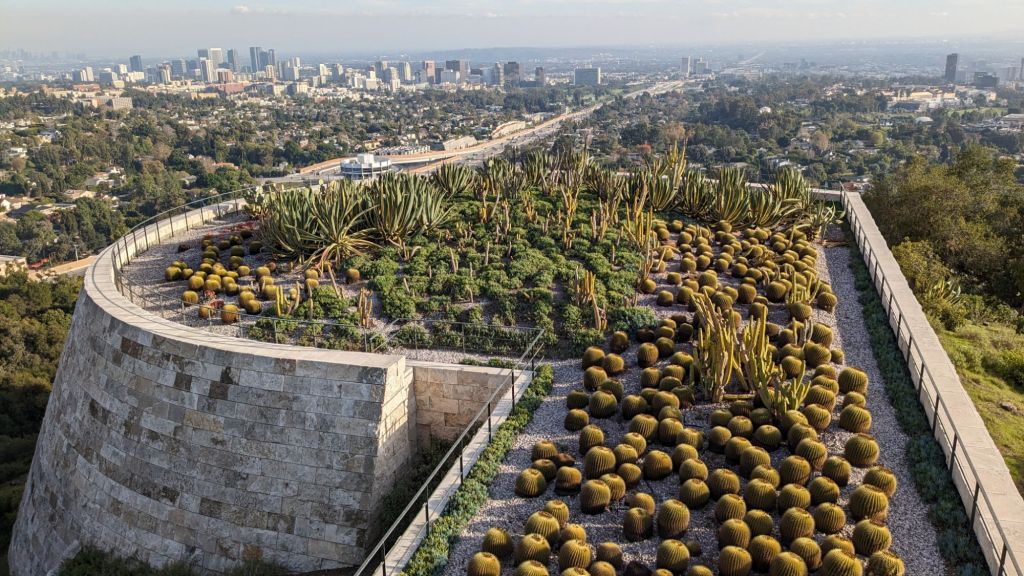
The William Blake Visionary exhibition was interesting. Like the Harrisons he used text and image together and he was also prophetic, concerned with the issues of his day and what future one might imagine.
Mercedes Dorame’s installation ‘Looking Back‘ in the foyer proposes a reversal of view, from Catalina Island and the Tongva towards LA.
‘Alfredo Boulton Looking at Venezuela‘ was beautifully researched and presented.
What art have I seen? Made in L.A. Acts of Living

All the right words in the various texts (and also ‘hybridity’). And yet the presentation of the works in the gallery couldn’t be more conventional…
Clearly the artists are in better, and stranger, and frankly worse ways, engaging with complex lived reality but the exhibition design and curation is like every other big group show. Actually the work in the last British Art Show was marginally more provocatively presented…
The Hammer’s periodic look at what’s going on https://hammer.ucla.edu/exhibitions/2023/made-la-2023-acts-living
Citing the Watts Towers as a metaphor for the exhibition, the Intro panel goes on to say “…art is an endeavour that is transformed by those who inherit encounter, steward, reinterpret and continue it.” I don’t really see how this is true of this exhibition or any of the works in particular…
What art have I seen? Tulare

Pleasure to visit the office of the Center for Land Use Interpretation and see their current investigation into the industrial agriscape of Tulare in California’s Central Valley, flooded in 2023.
What art have I seen? Wenders’ film Anselm
At Glasgow Film Theatre.
Wenders’ ‘Anselm’ is a very good equivalent of an exhibition catalogue for Kiefer’s installation in the Doge’s Palace, Venice 2022. All the background, the development through two versions of a younger Kiefer.
‘Anselm’ is more biographical than Sophie Fiennes’ ‘Over Your Cities Grass Will Grow’. That film as I remember it is more focused on the Studio at Barjac (discussed here Aesthetics of Uncivilisation). Wenders’ is more interested in what it is to be German.
‘Anselm’ discusses the relationship with Nazism and Heidegger (spoiler Wenders’ seems to think Heidegger was silent on Nazism, which he wasn’t, but Kiefer’s work, in particular a book featuring Heidegger’s brain succumbing to cancer, is totally clear… the last pages are all black…).
The question of what you would do as a German in 1930 or 1939 was left hanging. Putting on your Dad’s uniform and going places acting it out salutes is reopening the wound.
What art have I seen? Helmut Lemke
How do you respond to clear felling of plantation forestry where you live?
You can hear the silence, just the whirring of machines.
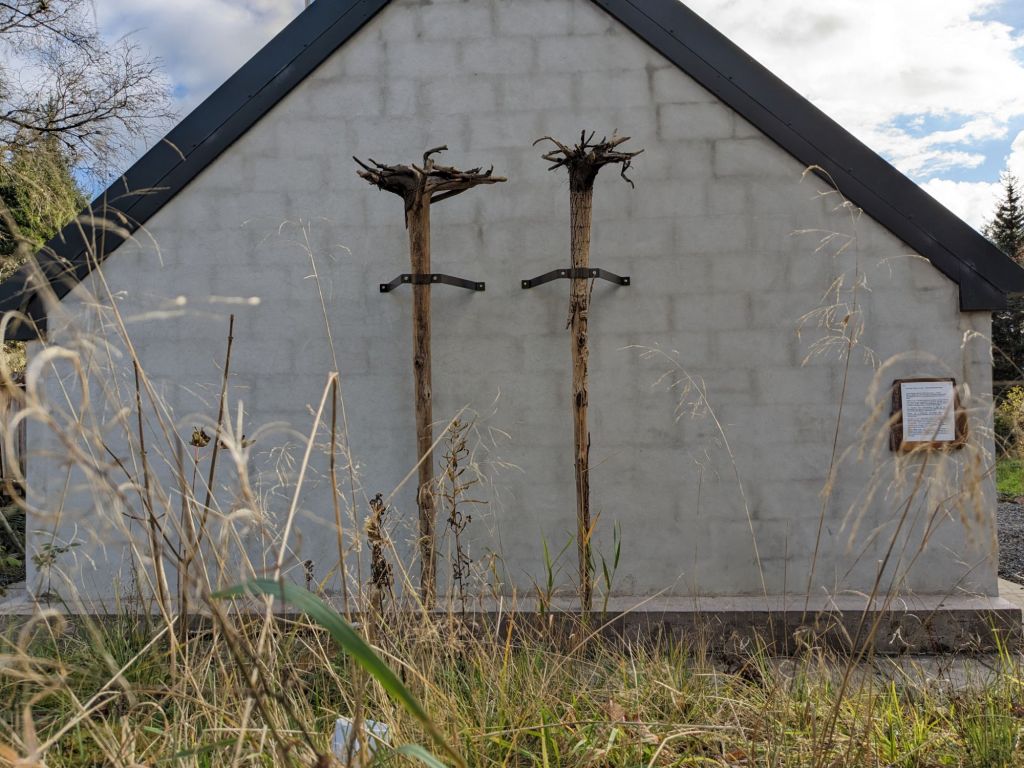
Outside on the wall of the Byre is another artist’s work, somewhat relevant
What art have I seen? Alasdair Taylor
Very grateful to Malcolm Dickson for reminding me to go to the Alasdair Taylor retrospective on my doorstep at the Maclaurin. Fascinating body of work – I particularly liked the collages incorporating text – but came away feeling deep sympathy for Annalise his wife who brought up kids in a house with no electricity right under Hunterston Nuclear Power Station and died of cancer aged 54…
What art have I seen? Never a Joiner

Andy Cranston’s exhibition at the Ingleby in Edinburgh. I could stare into this pool all day.

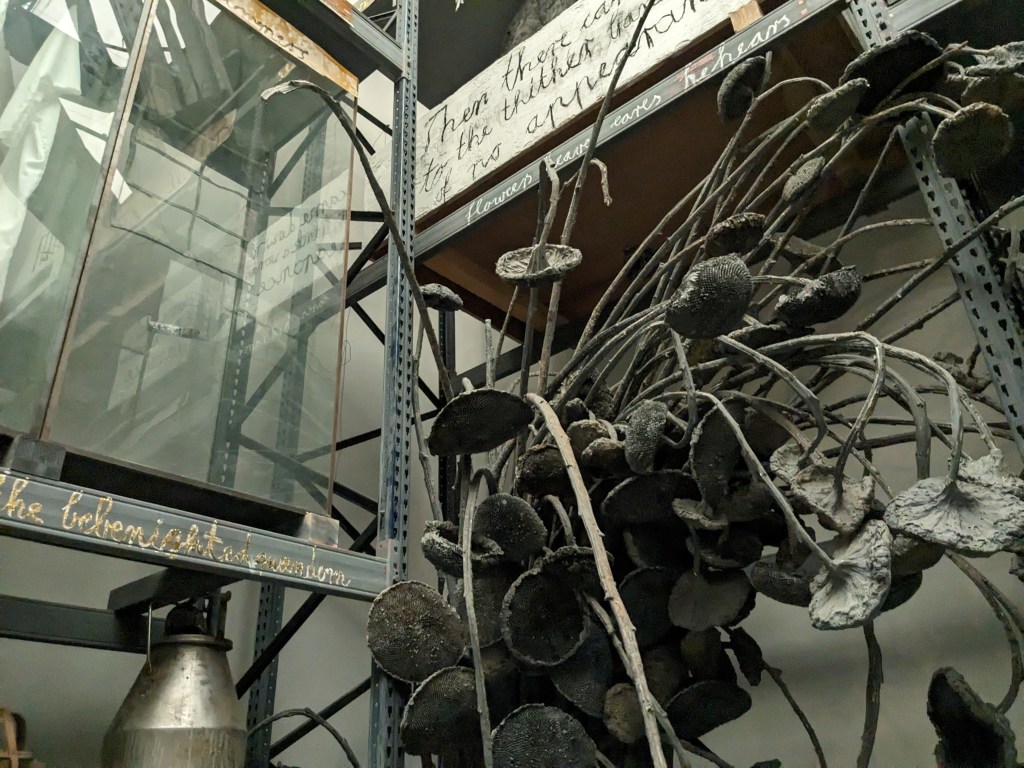
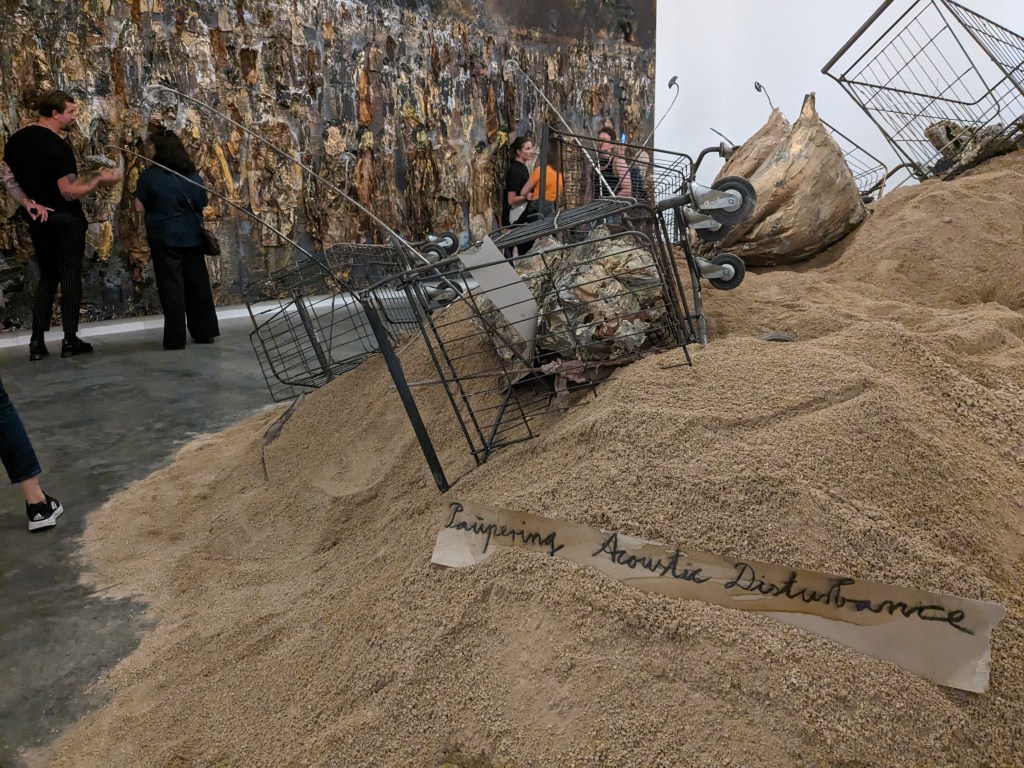
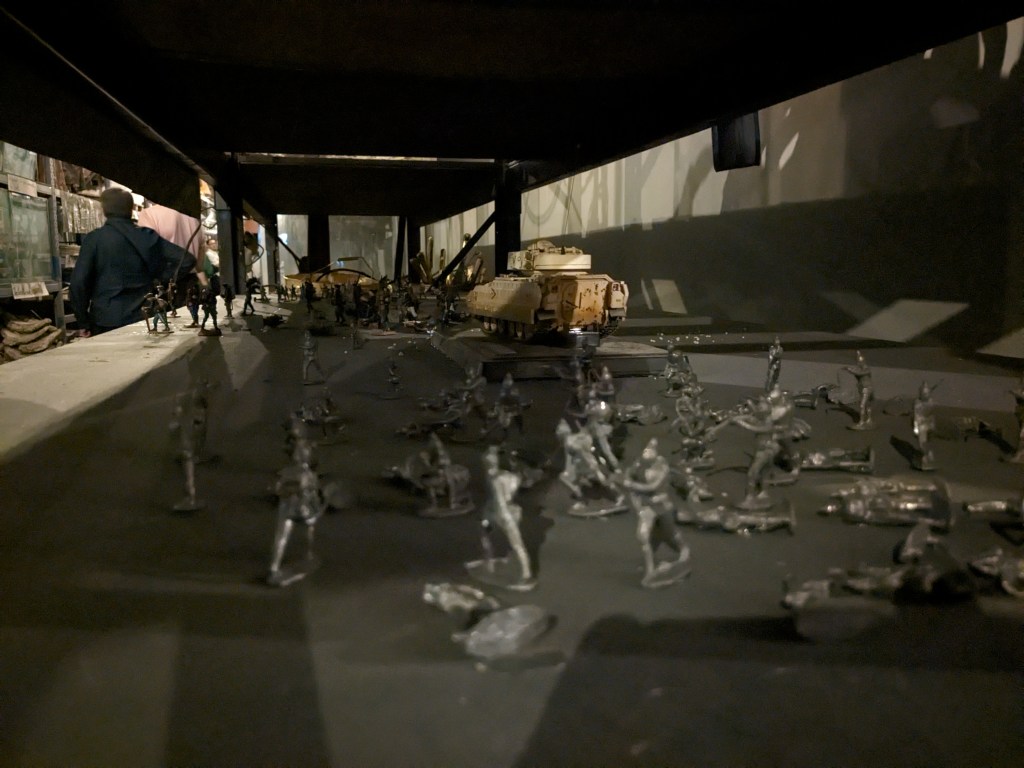
What art have I seen? Hung Liu
Two rooms in SFMOMA. Brilliant. Greeted by a revolutionary soldier, a cut out painting of the artist herself. Made, as with many of her works, from an old photograph in this case taken during the Cultural Revolution. But the revolution is what she does with the gun as it protrudes from behind her back. It becomes a sliver of a Money painting of the sun over the Thames.

There are large paintings, some three dimensional, but the multiple small paintings are in some ways the more radical part. The caption says every day she would travel to the edges of the City and paint. It makes a wall of practice. It was a form of resistance against the requirement for socialist realism. See ‘My Secret Freedom’ at Hung Liu.
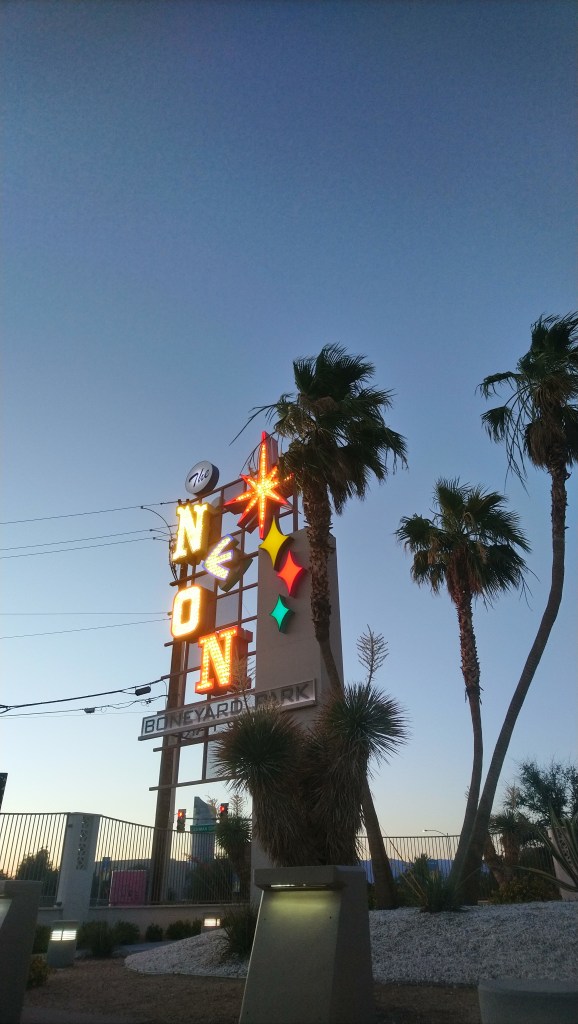
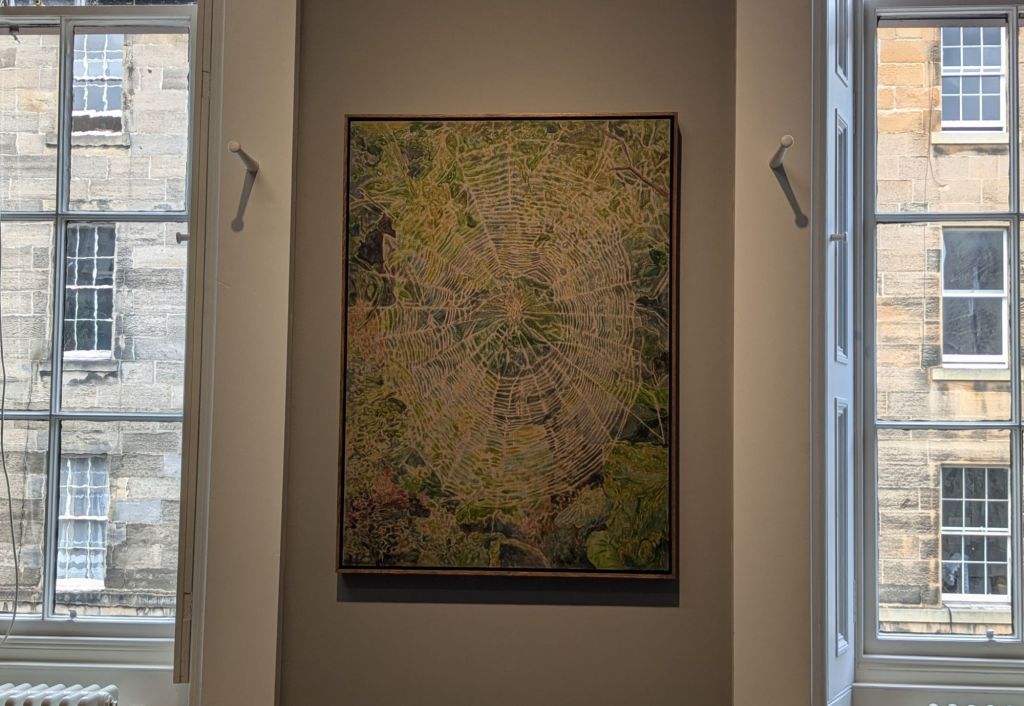
What art have I seen? Tomás Saraceno In Collaboration: Web(s) of Life
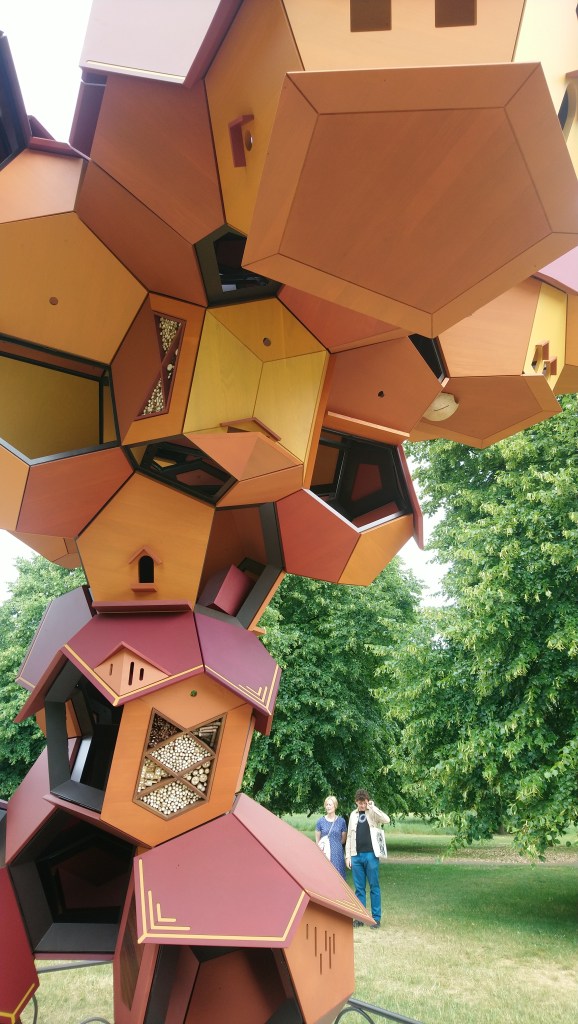
Three groups of work:
Cloud Cities: Species of Spaces and Other Pieces the outdoor sculpture above features homes for 23(?) species. This has a second indoor element including a play room for kids that adults can’t enter.
Indoors, a film installation about Extractivism and the green economy which is focused around the Manifesto for an Ecosocial Energy Transition from the People of the South (which will be read aloud to you if you hop on one of the stationary bikes outside and peddle).
And the other inside element is arachnophilia, an installation comprising various webs created in Berlin by spiders who live with and in the Saraceno studios. No spiders travelled to the UK, just vitrines of webs.
When I first saw the Cloud Cities I thought ‘here we go’ but by the end I was completely absorbed by the intelligence and aesthetic of this exhibition. It speaks to exchange and the importance of understanding the ecosystems of which we are part. My conclusion on the Cloud Cities is that they are like a circle in geometry, wholly different from any circle in real life. The Cloud Cities are like a 3d catalogue, a sort of habitat or IKEA display of all the forms of inhabitation we could include to enable a multi-species coexistence.
Also saw the Alchemy show at Thaddeus Ropac and the Sarah Sze installation The Waiting Room at Peckham Rye.
What art have I seen? London Design Biennial
Comments made to friends in a group chat when asked what we were doing in London
So we’re in the London Design Biennial which is gougingly expensive to get into and not all that…
Hoping for really good examples of design thinking but actually either over-explaining on lots of text boards or mostly showy without substance.
Polish display on how to recycle window units for Ukraine was on point.
Taiwan display was really a political promo for Taiwan, small, large, clever, diverse, etc.
The USA display juxtaposed photos of national parks with vr renditions from pokemon (?) They made a book, claiming it’s the first of its kind, which you could look at thru your phone. The National Park image would then appear as the other one and vice versa… My explanation has lost interest in itself… 😂 🤣 😂
What art have I seen? Raw Material

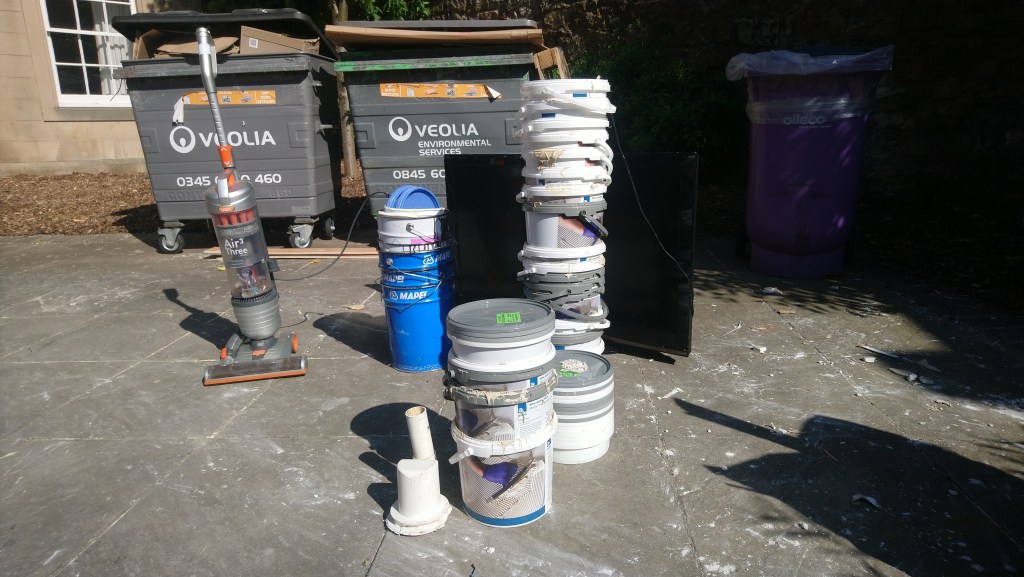
Kerry Morrison’s Open Studio as part of Spring Fling in the Byre at Corriedoo.
Anne Basley and Lewis Robertson were with Kerry Morrison talking to visitors about art and peatland restoration. All three work for the Critchton Carbon Centre’s Peatland Action project. They are all involved in practical work which needs both art and science. You’d have difficulty being sure which of them is the ‘artist’ and which is the ‘scientist’. The love of peatlands and the importance of making them matter, as well as making them healthy, means there is a common purpose. It’s brilliant to see such mutual solidarity and willingness to stand together in the context of collaborative practice.
Up until perhaps 20 years ago peatlands were considered wastelands, valueless unless drained and made productive, usually for forestry. There is no landscape the perceived value of which has changed so rapidly. Now we are spending very large sums of money on removing drainage and restoring peatlands. We are taking out forestry planted on peatlands. Kerry and her colleagues even have a ‘Spruce Plucker’ championships. Sitka spruce ‘self sets’. It may be commercially valuable and highly regarded by foresters, but for peatland restorers it is a dangerous invasive.

The peat core which is in the upper space of the Byre is sitting on paper quietly creating an image of itself as the water is absorbed by the paper and then evaporates leaving an ‘image’ very much like a vertical section cut through peatland as was done when peat was cut for heating fuel.
In the main Byre space is the large wall work I’ve become part of in the image above. It’s another ‘section’, this time of an erosion gully in a peat landscape.
There are samples of water from different sites and outside there are two demonstrations. A lot of this focuses on aspects of levels of organic carbon in water resulting from erosion.

We look in art for things that move us and the small self-set Sitka in its bed of sphagnum moss, an invasive alien to some and a productive crop to others is striking and kind of sad – whether you subscribe to the ‘right tree in the right place’ this is clearly a young tree in the wrong place. One of the other things art can do is engage with contradictions in provocative ways. The complexities of inherited cultural values (peatland as ‘wet desert’); new scientific research, being done as all conservation is, in the midst of crisis; and art as exploring ways of knowing and being (not just as communication).
There were lots of ways in which the human-peatland dynamics were present, contradictions sharply drawn, and matter made to matter. In retrospect the living otherness maybe could have been more in focus? I still focused on the single sitka self set rather than the moss it was in. Martin Avila in Designing for Interdependence talks about some fish and a fungus and points out that in exploring interdependence we still need to think about whether we are going to create conditions which are propitious for the fish or the fungus affecting the fish… It is harder to imagine caring for the fungus at the expense of the fish… and trees and much loved and easily anthropomorphised…
What art have I seen? Merz

I’ve never seen Kurt Schwitters’ intact MerzBarn on the Cylinders Estate in the Lake District. The wall on which Schwitters was working had been removed before I was born. I’ve been to a couple of events at the empty Barn and memorial to Artists considered degenerate by the Nazis, organised by Ian Hunter (who sadly died earlier this year,)and Celia Larner. I saw the reconstruction of the Barn in the courtyard of the Royal Academy in London and I’ve seen the ‘artwork’ installed in the Hatton Gallery in Newcastle.
At MoMA, Sanquhar, in a former butchery, I saw the MerzBarn when Schwitters was working on it. Dave Rushton’s models are stunning and this is particularly shocking in a way. You are sitting on a chair looking into a largish shoebox shaped object through a slot and you are transported – I meant genuinely transported.
Thanks to Simon Beeson, we were there and also experienced Florian Kaplick’s performative lecture on Schwitters, a Dadaist performance by the local youth theatre, a collaborative rendition of ‘Kaa Gee Dee’ by Florian and the Youth Theatre, and a collage of a piece writing of Schwitter’s called ‘Kreig’ with Beethoven’s ‘Moonlight Sonata’ performed by Florian at the piano and singing. The whole event was compered by Daniel Lehan and masterminded by Dave Ruston. Dave’s brother Phil says he doesn’t understand Conceptual Art. His wife Kathy was clearly enjoying herself. Alan who was at Art School with Dave had just installed a stunning piece of Merz Stained Glass for Dave.
The next question is which of the following two images was I standing in, and which is actually a model in the image?
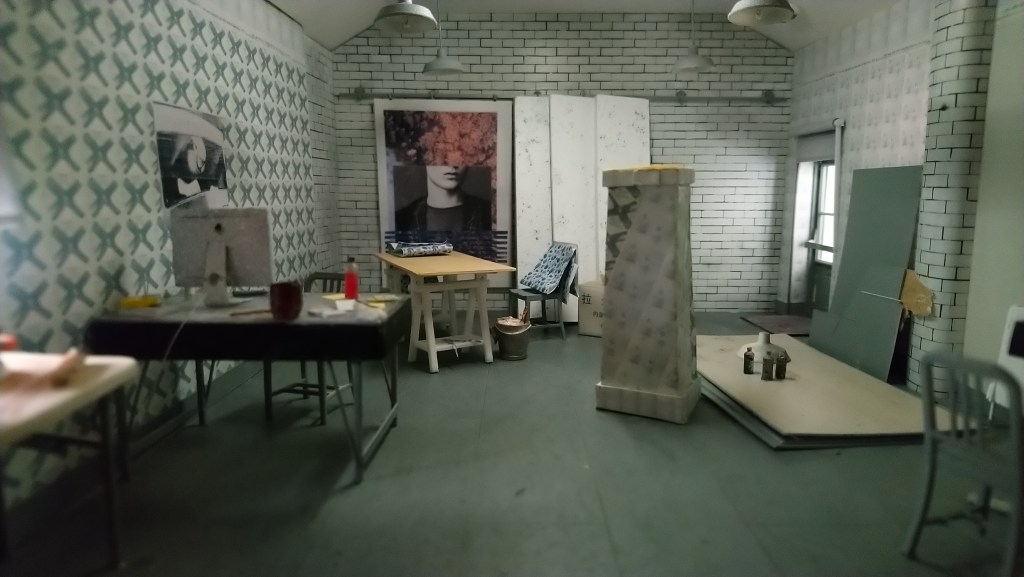
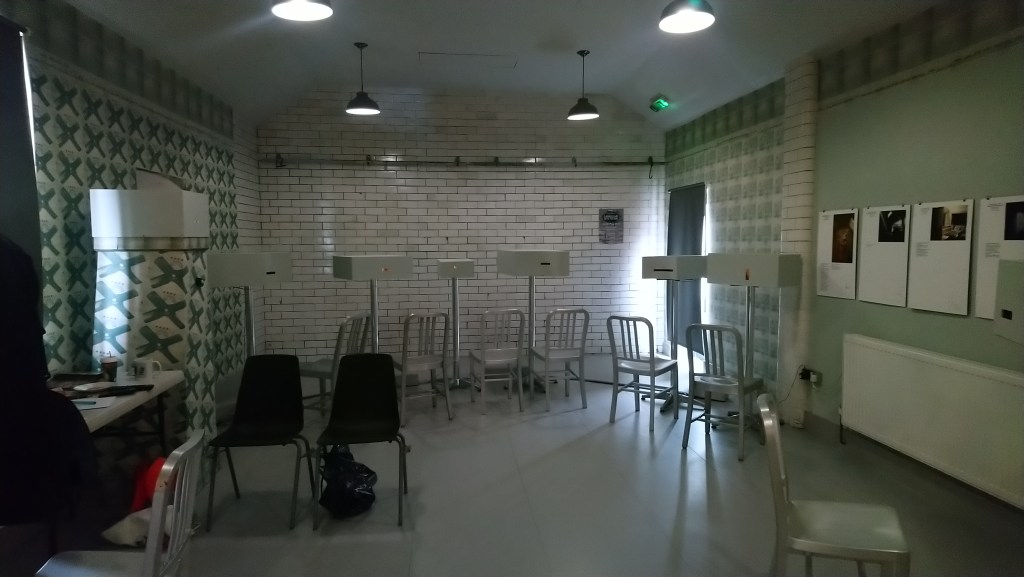
Dave Rushton’s work has a level of recursiveness which is so intelligently and humorously executed it is a joy. You have to ask ‘What is a model for what?’ and ‘Where is the reality experienced?’
There is also the question of value. Dave’s perhaps masterwork (though the whole Merz project in Sanquhar might be the work) is installed in the meat fridge. It is an installation of Conceptual Art, by Art & Language in a gallery in Pripyat accidentally preserved by the Chernobyl Nuclear disaster which means that the work is preserved and unable to become a commodity.


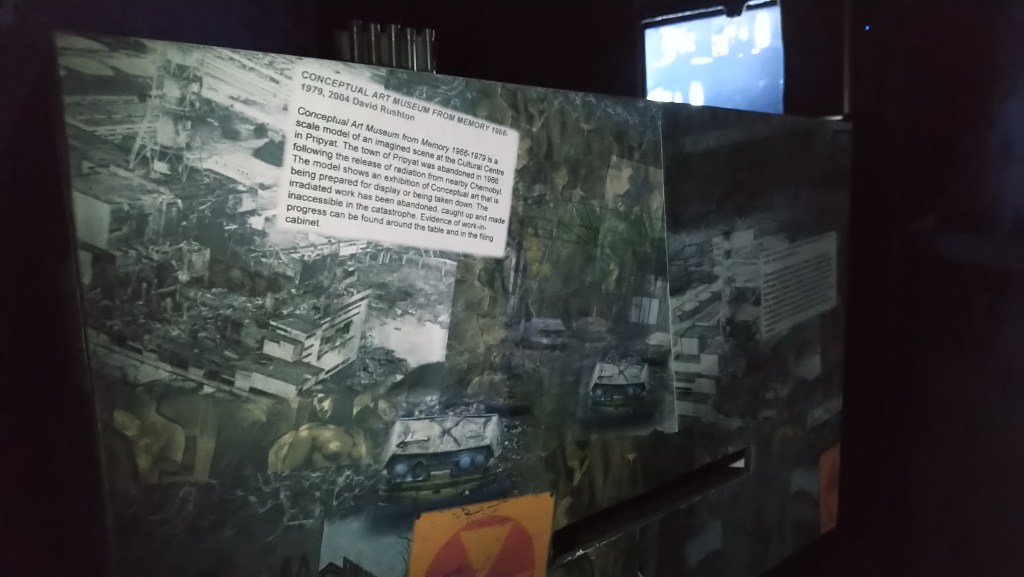
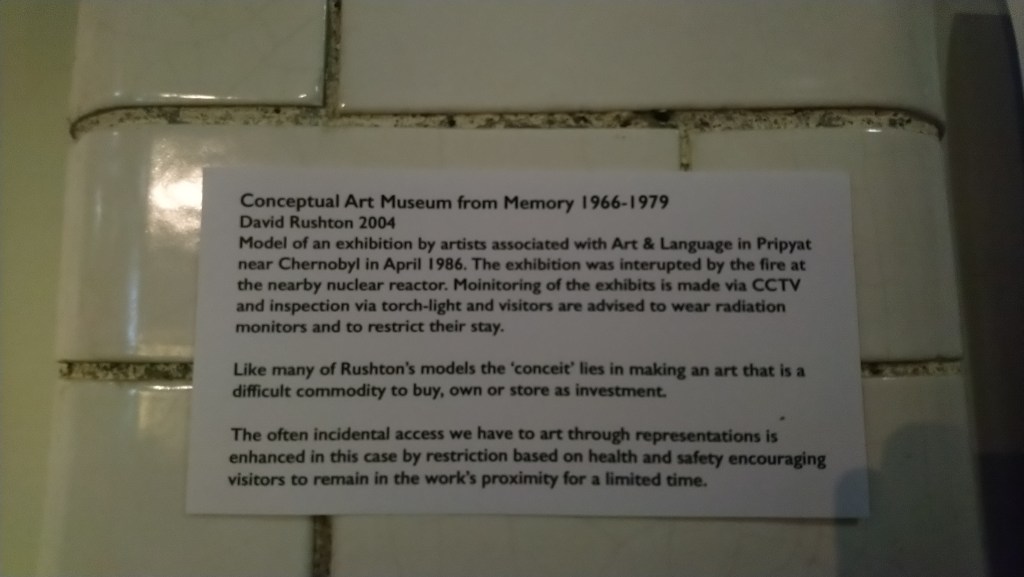
Merz is alive, kicking and recursive in Sanquhar. It is providing a positive feedback loop for cultural development whilst providing a negative feedback loop against simplification and value extraction.
What art have I seen? The Love of Print
The Love of Print: 50 Years of Glasgow Print Studio at Roselle House Gallery.
Piero Gilardi RIP
Obituary here. Saw his work at Nottingham Contemporary in 2013 and at MAXXI in Rome in 2017.
The exhibition Pre-Ecological Visions at Parco Arte Viviente (which he also established) is a key reference point for thinking beyond the US UK history of ecological art.
What art have I seen? Talented New Scots
Pop-up exhibition at Gallery Sometimes in Largs featuring Mark Bigelow, Guillaume Fraboulet, Rene Johansen, Hannah Mackintosh and Olha Yolkina.

 CHRIS FREMANTLE
leave a comment