Old to New in Hospitals: Echoes of Grace

Marlene Creates, Echoes of Grace (detail), 2001
Marlene Creates, the Canadian artist poet known for her deep exploration of the human relation to place, undertook a project demonstrating ways to connect an old hospital with a new one, in particular focusing on staff and their experience of change. The image above is one of a series of panels comprising images, found text (graffiti written on the walls by the staff during the last days they worked there) as well as more formal text. View the project on MARLENE CREATES website.
What art have I seen? Transmissions
Transmissions is an exhibition of work produced from the ASCUS micro-residency at the Centre for Immunity Infection and Evolution in the University of Edinburgh. Works by Mark Doyle, Anne Milne, and Jo Hodges & Robbie Coleman.
Comes back to the question provoked by Matthew Dalziel’s presentation at the North Light Arts Conference in 2014. He reminded us of the question “Who speaks for the wolves?” This prompts the question for our culture “Who speaks for MRSA (or Malaria or SARS)?” This exhibition begins to address that question.
Edward Snowden meets Arundhati Roy and John Cusack: ‘He was small and lithe, like a house cat’ | Life and style | The Guardian
Countries, imperialism, war, surveillance, landscape and failure
http://www.theguardian.com/lifeandstyle/2015/nov/28/conversation-edward-snowden-arundhati-roy-john-cusack-interview
Should be read whilst also reading Gerry Loose’ An Oakwoods Almanac
What art have I seen? Devils in the Making
Devils in the Making, Gallery of Modern Art, Glasgow
Cultural leadership and the place of the artist
Really excited to be working on a new phase of artists and leadership

 On The Edge has secured a new £100,000 international project to develop professional engagement with its research into artistic and cultural leadership at Gray’s School of Art. Establishing new relationships with the Clore Leadership Programme, Creative Scotland and ENCATC (the European network of cultural management and cultural policy education), the work will generate events and discussions with the cultural sector in London, Edinburgh and Brussels. New publications will be produced and the project aims to inform new developments in cultural leadership training, theory and practice.
The year-long initiative is funded by the Arts & Humanities Research Council (AHRC) with further support from the three partners. It builds on the longstanding ‘Artist as Leader’ research as well as Jonathan Price’s Ph.D research into ‘Discourses of Cultural Leadership’ (2012-2015). Price will co-ordinate the new project while Professor Anne Douglas and Chris Fremantle, the co-authors of the Artist as Leader report, will…
View original post 368 more words
Remember Nature
Julia Peyton Jones and Hans Ulrich Obrist at the Serpentine wrote to ask us to participate and circulate this invitation.
We Invite you to Remember Nature by creating your own event, action, performance intervention or artwork, on social media, in a gallery, a college campus, in the street…
Institutions: Register your interest to recieve specially designed posters to support your event, giving details of name, email and postal address before Fri 23rd Oct.
Individuals: Register your interest to participate in this event
All we ask is that you send us evidence of your contribution however small – for example, you might create photos, films, or other documentary evidence. Once you have run your event please use the WeTransfer service to send us your digital artifacts. Send them to:
remembernaturemetzger@gmail.com
Just copy and paste the above email address into WeTransfer. Send us your evidence before 30 November 2015.
Example of event for Remember Nature at your campus
Gustav Metzger co-curated the programme of last years’ Serpentine Marathon titled Extinction: Visions of the Future on 18th and 19th Oct 2014. During this time his work, Mass Media: Today and Yesterday was livestreamed from Herbert Read Gallery into the Serpentine Gallery throughout the course of the Marathon. Fine Art students from University for the Creative Arts created a media wall from newspapers for 18 hours over two days. Students were fully immersed in this work, scouring newspapers, silently cutting out key texts relating to extinction, working in pairs for 2 hour blocks. This exhibition was curated by Andrea Gregson, Senior Lecturer in Fine Art, at UCA Farnham.
Continue reading How to get involved
For more on extinction it’s worth checking out the previous post on Thom Van Dooren’s work.
What art have I seen: Jimmie Durham
Jimmie Durham’s Various Items and Complaints at the Serpentine Gallery – humourous, light touch, playing between the natural and the man-made. Parasol show last year was more critical of society.
http://www.serpentinegalleries.org/exhibitions-events/jimmie-durham-various-items-and-complaints
Collective Futures Final Report — #COFUTURES
#CoFutures Report is a really valuable source on Collectives across art, design and craft in Scotland – used design thinking methods, residents, events and tools to understand character, issues and challenges as well as values and structures.
http://www.collectivefutures.net/blog/2015/2/12/collective-futures-final-report
Failure h3333333k
Turning technological error/breakdown into architectural animation https://wwwwwwwwwwwwwwwwwwwwww.bitnik.org/h3333333k/
What art have I seen? Cy Twombly

Cy Twombly at the new Gagosian as well as the Polaroid works at Davies Str. Understand why he’s in amongst the Abstract Expressionists though the ‘blotting paper’ works are also quite conceptual in their way. They feel like Judd’s technical drawings shown at Talbot Rice a few years ago, adjuncts to the ‘real’ work. But compared to the works in Houston these have a much harder edge.
http://www.gagosian.com/exhibitions/cy-twombly–october-10-2015
What art have I seen? Escher and Avery
M.C.Escher exhibition at the Dean Gallery. Charles Avery at the Ingleby.
What art have I seen? KennardPhillips and Holoturian
KennardPhillipps (Peter Kennard and Cat Phillipps) Here Comes Everybody at Stills is immediately angry: angry about Shell drilling in the arctic, angry about George Osborne, angry about media manipulation.
Ariel Guzik’s work Holoturian in Trinity Apse courtesy of Arts Catalyst, is a slow steampunk meditation on the parallel lives of cetaceans.
What art have I seen? Crawick Multiverse
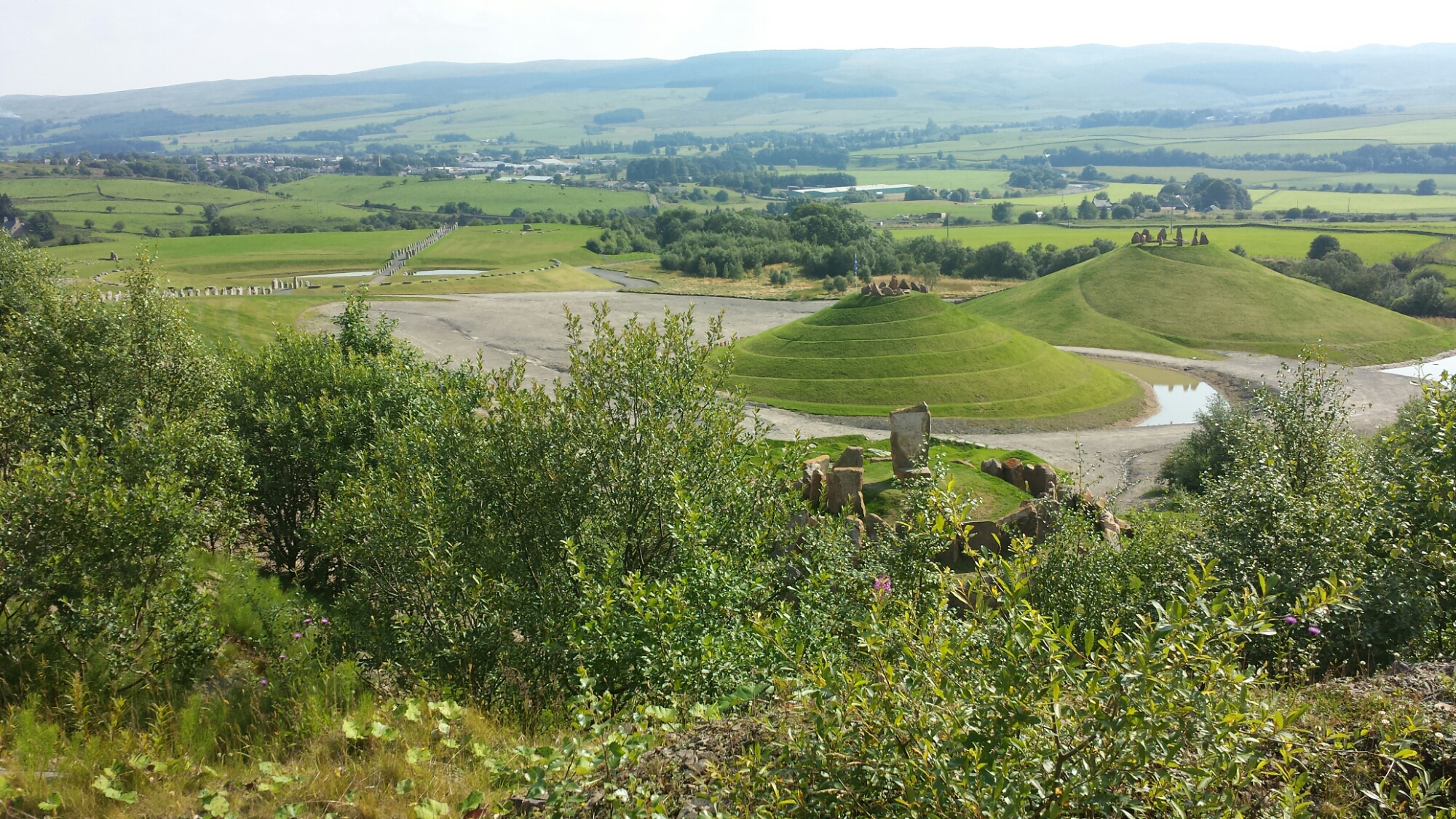
This was an opencast coal pit up until a couple of years ago. I do wonder what members of the Society for Ecological Restoration meeting in Manchester next week would make of it?
Help Place of Origin
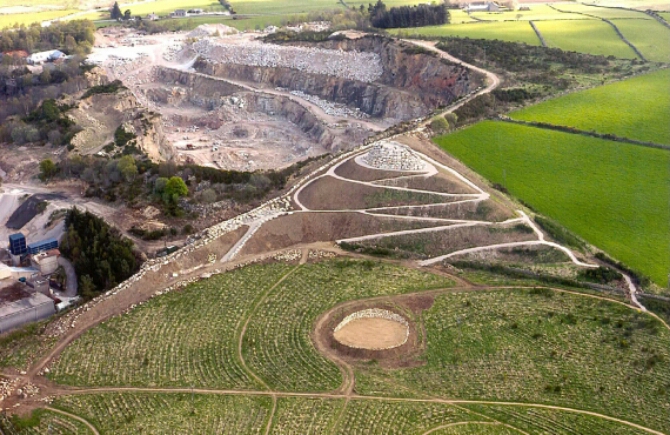
We need your help. Kemnay Community Councillor David Evans just contacted me about a proposal to further surround Place of Origin with housing. Some of you will know that when I was Director of the Scottish Sculpture Workshop we worked with three artists John Maine RA, Glen Onwin RSA and Brad Goldberg (Texas) to create a landscape and viewpoint at Kemnay Quarry called Place of Origin. John Maine framed it as making landscape as art.
So Place of Origin as an artwork made out of 100,000 tonnes of quarry waste and about 7000 trees mirroring Bennachie in the way the Japanese gardens mirrored the wider landscape is all about views. When you are standing at the top you have views for 360 degrees with the quarry in front of you and Aberdeenshire’s beautiful countryside around with Bennachie in the distance. The artists also thought hard about how the landscape and viewpoint would look in the context of Kemnay village.
Anyway there is a proposal from a volume house builder for 49 new houses on greenfield immediately adjacent to the artwork. At present as you ascent the viewpoint you rise above all the housing on Fyfe Park, but this stuff will be on higher ground and will immediately be in your face.
The developer tried to get the housing into the Local Development Plan a couple of years ago and it was refused so they appealed – the Scottish Government’s Reporter commented as follows, “The site is on rising ground and any development would be elevated above the existing housing adjacent to the A933. When viewed from the approach to Kemnay from the east, particularly from the B993, a development on site H1 would seriously intrude on the view of the ‘Place of Origin’. Furthermore, the development would seriously detract from views southwards from the ‘Place of Origin’ viewpoint. Consequently, it is considered that site H1 should not be allocated for housing.”
We are so grateful that Kemnay Community Council are strenuously objecting and they have noted a number of reasons including impacts on the school, the medical centre, the traffic and the stormwater drainage as well as the impact on the artwork. I hope that you will take the time to go online and make a comment. I think frankly you can pretty much reiterate the comments of the Scottish Government Reporter and note that the artwork won both an Aberdeenshire Council Planning Award, as well as a national Saltire Award. You might also make a general reference to Aberdeenshire Council’s various policies on Landscape and in particular the value of place-making.
If you can take the time to object I would appreciate it a lot as would the people in Kemnay who look after Place of Origin. The link, email address and postal address for objections are all on the web page.
What art have I seen? Paramus

PARAMUS. Exhibition by Javier Vidal Aguilera
Javier Vidal Aguilera’s Paramus at The Lighthouse in Glasgow, a development on his MFA Art Space and Nature Degree show
http://www.thelighthouse.co.uk/visit/exhibition/paramus.-exhibition-by-javier-vidal-aguilera
What art have I seen? Spiral Jetty
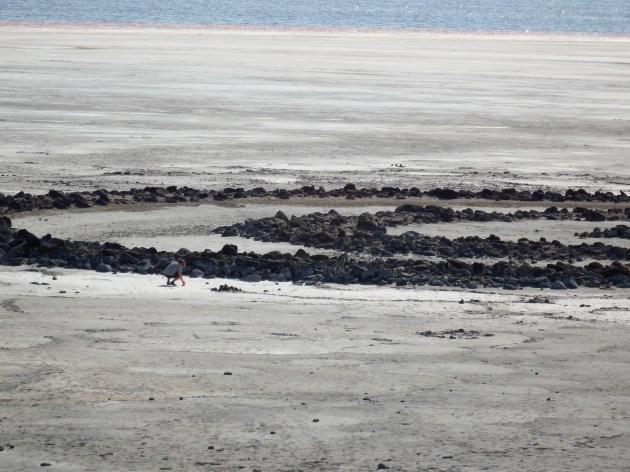
Spiral Jetty – photo Jake Fremantle
To visit Spiral Jetty you have to pass through the Golden Spike National Historic Site, created in 1957 to mark the point where the east coast and west coast railways met in 1869. It now comprises 2,700 acres of scrubland, but not Spiral Jetty – you clearly pass through ranches to get to the Jetty – the signs saying anyone leaving the road is trespassing are pretty clear.
Imagining Spiral Jetty, February 2008 https://chris.fremantle.org/2008/02/05/robert-smithsons-spiral-jetty-threatened/
November, 2009. Smithson, Aldiss and Earthworks https://chris.fremantle.org/writing/earthworks-brian-aldiss/
What art have I seen? Roden Crater
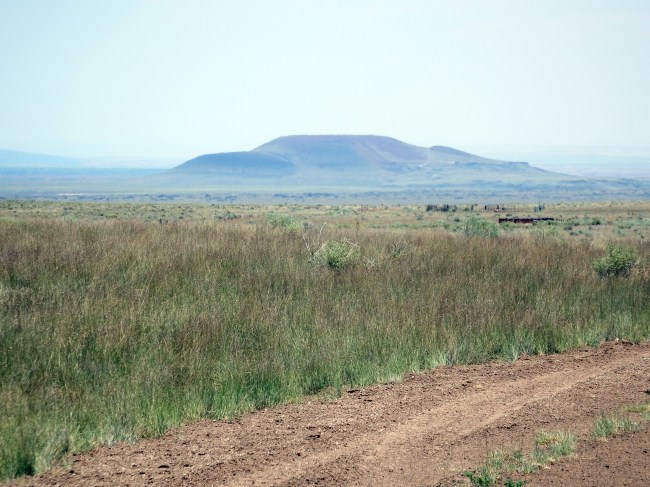
Roden Crater seen from near Leuppe
For more read https://chris.fremantle.org/2004/02/07/james-turrell/
Unveiled: The art which will help and heal in new hospital | Herald Scotland
Nice piece Unveiled: The art which will help and heal in new hospital | Herald Scotland by Helen Puttick, Health Correspondent, in the Herald about the Therapeutic Design and Arts Strategy for NHS Greater Glasgow and Clyde’s new South Glasgow University Hospital and Royal Hospital for Sick Children. I’ve been responsible for responsible for the overall programme, working with Ginkgo Projects, since 2010 (this might sound like a long time, but bear in mind the NHS Capital Planning team have been working on it for 10 years).
Experience Based Design in healthcare
Some resources that the NHS provide to support Experience Based Design:
Case Studies: The ebd approach case studies – NHS Institute for Innovation and Improvement.
Tools: Resources for ebd – NHS Institute for Innovation and Improvement includes consent forms as well as templates.
Yes, Everyone Can Be Stupid for a Minute – NYTimes.com
This Corner Office interview with a silicon valley tech CEO has stayed with me for a long time. Basically he reckons everyone says something stupid in a meeting occasionally and this guy has a rule that you can say – That thing I just said was stupid. Let’s move on. Otherwise politics kicks in, people defend their positions, etc. He’s also good on teams. Worth having a look at some of the other Corner Office interviews too.
http://mobile.nytimes.com/2011/05/08/business/08corner.html?referrer=
What art have I seen? Richard Diebenkorn and Conrad Shawcross
Richard Diebenkorn at the RA and Conrad Shawcross’ installation in the courtyard.
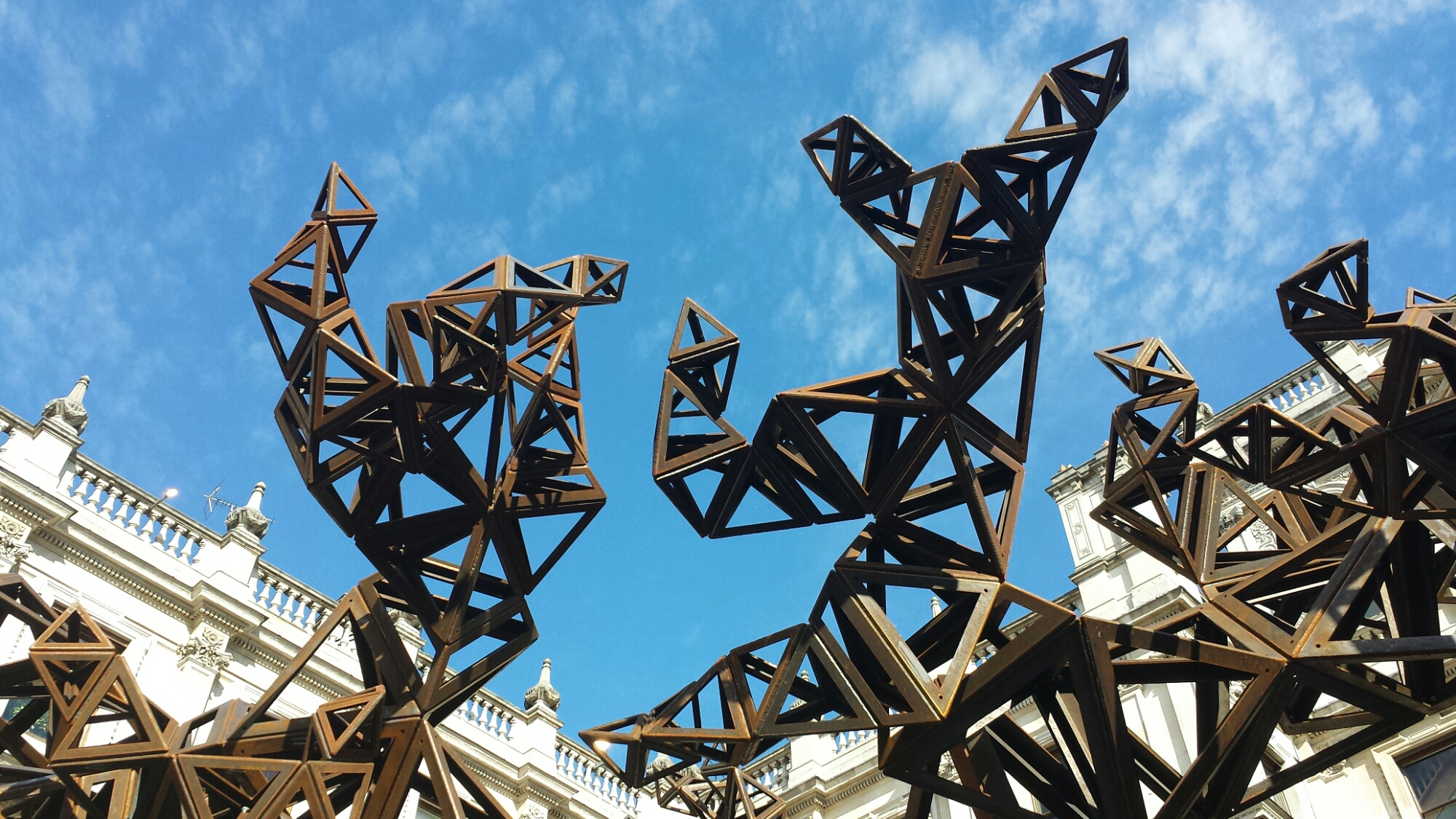
What art have I seen? Ben Woodeson

Ben Woodeson‘ exhibition Obstacle at Berloni has all the things you’d expect – thing that make you feel the work not just see it, things that imply imminent danger. The basement gallery is bathed in a hellish light but there’s a Tom and Jerry mousetrap dimension promising exploding neon, shatter glass and escaping poisonous gas. Woodeson’s homage to Carl Andre gives you a shock. His precarious glass pieces hint at Latham’s God is Great. What is really good about this work is the way your body is sensitised as your mind is stimulated and your curiosity (does that really balance?) is peeked.
imagivation – drewwylie.net
Andrew Ormston recently blogged on the two types of innovation and the need for a theory of innovation that is more than just positivistic is very provocative. It resonates with Elizabeth Hallam and Tim Ingold’s observation that innovation can only be identified in retrospect, and that in the ‘now’ we are actually improvising. It also resonates with the work of Helen Mayer Harrison and Newton Harrison, who for 50 years have been making works about places. They say,
We hold that every place is telling the story of its own becoming, which is another way of saying that it is continually creating its own history and we join that conversation of place.
All of this requires at least a concept of ‘responsible innovation’ if not a much deeper discussion of the stories we want to tell of our futures. Andrew’s blog is here: imagivation – drewwylie.net.
What art have I seen? Ian McNicol
Ian McNicol is featured artist at Glasgow Print Studio at the moment
What art have I seen? Gary Fabian Miller
Garry Fabian Miller’s exhibition at the Dovecot in Edinburgh comprises photographic works, tapestries and rugs both of his own design and also belonging to Winifred Nicholson as well as some of her paintings which have inspired Fabian Miller. Beautifully composed and judged.
Light Flight: New Work by Penny Clare
Penny Clare’s new exhibition is here www.actionforme.org.uk/light-flight Chris Dooks introduced me to the work of Penny Clare a while ago and its great to see more of her work. Anyone with a special interest in health and well-being should check out her story.
Moving Image Season: Clyde Reflections, from art-science team Hurrel and Brennan, 28 May – 5 July 2015
Very much looking forward to chairing the discussion on 13 June…

 ‘Still from video: Hurrel & Brennan (from underwater footage by Howard Wood)’ courtesy and © the artists
There are a host of brilliant events and openings happening this month in GoMA, including the next installment of the Moving Image Season, Gallery 1. Clyde Reflections, an audio-video installation by the collaborative art/science team artist Stephen Hurrel and social ecologist Ruth Brennan, was selected by the curatorial team as beautiful and thought provoking work to continue the programme in the main gallery. It also relates to ongoing conversations that the gallery has been having about climate change, Glasgow and the visual arts while hosting Early Warning Signs, by Ellie Harrison and for Glasgow Green Year 2015.
“We are delighted that Clyde Reflections has found a temporary home at GoMA as part of the upcoming Moving Image Season. Our approach to producing this film was to interview a diverse range…
View original post 514 more words
‘On truth, doubts, and pain: The significance of ideas of objectivity’ a contribution by Daniel Goldberg – Centre for Medical Humanities
Although this article comes from the Medical Humanities and is tagged for arts & health, it has a wider resonance raising issues around the role of imaging in determining what is real and what is not, what is causal and what is not. Broadly the piece argues that pain is a useful area of research for understanding how ideas of objectivity have emerged. The author argues that, “…the history of objectivity literally is a history of scientific imaging…” and “…profound changes in ideas of truth and knowledge are coextensive with profound changes in ideas of medicine and medical practice.”
What art have I seen? Danish Diaspora Scotland
At Roselle House Galleries including work by Nickolai Globe who also has work installed in the new South Glasgow University Hospital
Write, Erase, Do It Over: On Failure, Risk and Writing Outside Yourself
Toni Morrison interviewd about failure. She has a very clinical approach to it. It needs excised. Its about discipline. Its nothing to do with fear.
http://www.americantheatre.org/2015/03/10/write-erase-do-it-over-on-failure-risk-and-writing-outside-yourself/
Terry Pratchett RIP
In about 1990/91 I was knocked off my bike and spent 3 weeks in St Thomas’. My brother brought me a paperback of Weird Sisters. I laughed so much. Mind you I was on morphine based painkillers.
On the importance of being negative | Science | The Guardian
I don’t understand the detail of the science, but as highlighted in this piece, the increased tendency to publish failed experiments as a result of the growth in the number of open access journals is important.
As the author of the article says of the paper, ‘It is not destined to be highly-cited because, as the last line of the summary on page one makes clear, the results are negative: “in no case were specific protease–substrate interactions observed.” ‘ So not only were they not able to generate the interactions they had hoped to be able to generate, they also don’t expect the paper to be widely cited – acknowledging failure in this case opens up another form of failure.
On the importance of being negative | Science | The Guardian.
Failure, Diebenkorn
Diebenkorn was more troubled by easy perfection: he wanted his paintings to resolve problems but not so thoroughly that they seemed pat or pretty, the marks of struggle erased. The more restructios he could create for himself, the freer he could be in improvising his way to a solution. But it also mattered to him that his errors lingered on as the repentance marks of pentimenti, the term for when an artist has second thoughts, redoing part of a painting, but leaving traces of what has gone before. In Diebenkorn’s work, these regions, which he called “crudities”, can be vast, ghost tracts of colour imperfectly repressed, or alternatively small spatters and splodges, accidents that opened up a new road to “rightness”.
Olivia Laing, Lovely imperfection, The Guardian, Saturday 28 February 2015.
What art have I seen? Drawing at RSA
Scottish Drawing exhibition at the RSA in Edinburgh – a few thoughts on what was unexpected, familiar, unfamiliar, obsessibe, a reminder, revealing, evocative, relational, quiet, surprising, severe, known and unknown, small.
Unexpected
Most Marion Smith
Next Will Maclean
But also Glen Onwin one unexpectedly direct Galena; one intriguingly complex – The unchanging and the changing; and one I think I knew about – Flow of Near Solids (A proposal)
Familiar from recent encounters David Blyth.
Unfamiliar Alfons Bytautus, Lorna McIntosh.
Obsessive Charles Stiven.
Reminder James Castle.
Revealing Joe Fan, particularly Spring Time Chaos.
Evocative Annie Cattrell Sustain, Sustain I and II
Relationships between for instance Frances Pelly’s PI, a concertina of drawings of a sleeping dog and CameronWebster’s visual narrative of house from sketch to completion.
Quiet works including Andy Cranston and Anne Douglas
Surprising Leon Morrocco. Vibrant, engaging, challenging the chromophobia of drawing.
Severe Arthur Watson
Known Frances Walker and Doug Cocker and unknown Fiona Dean.
The smallest revealing the most – Andy Stenhouse’s Tone Poem : Tone Dee (Harbour).
Missing Donald Urquhart,
The Question of Light: Tilda Swinton’s speech at the Rothko Chapel | Connerhabib’s Blog
Having been to the Rothko Chapel and having lived in Scotland for more than thirty years and spending the best (and worst) of that working with artists, this resonates… the older I get, the more I realise, “both this and that are true at once…”
http://connerhabib.wordpress.com/2015/01/27/the-question-of-light-tilda-swintons-speech-at-the-mark-rothko-chapel/
What art have I seen? Joseph Kosuth
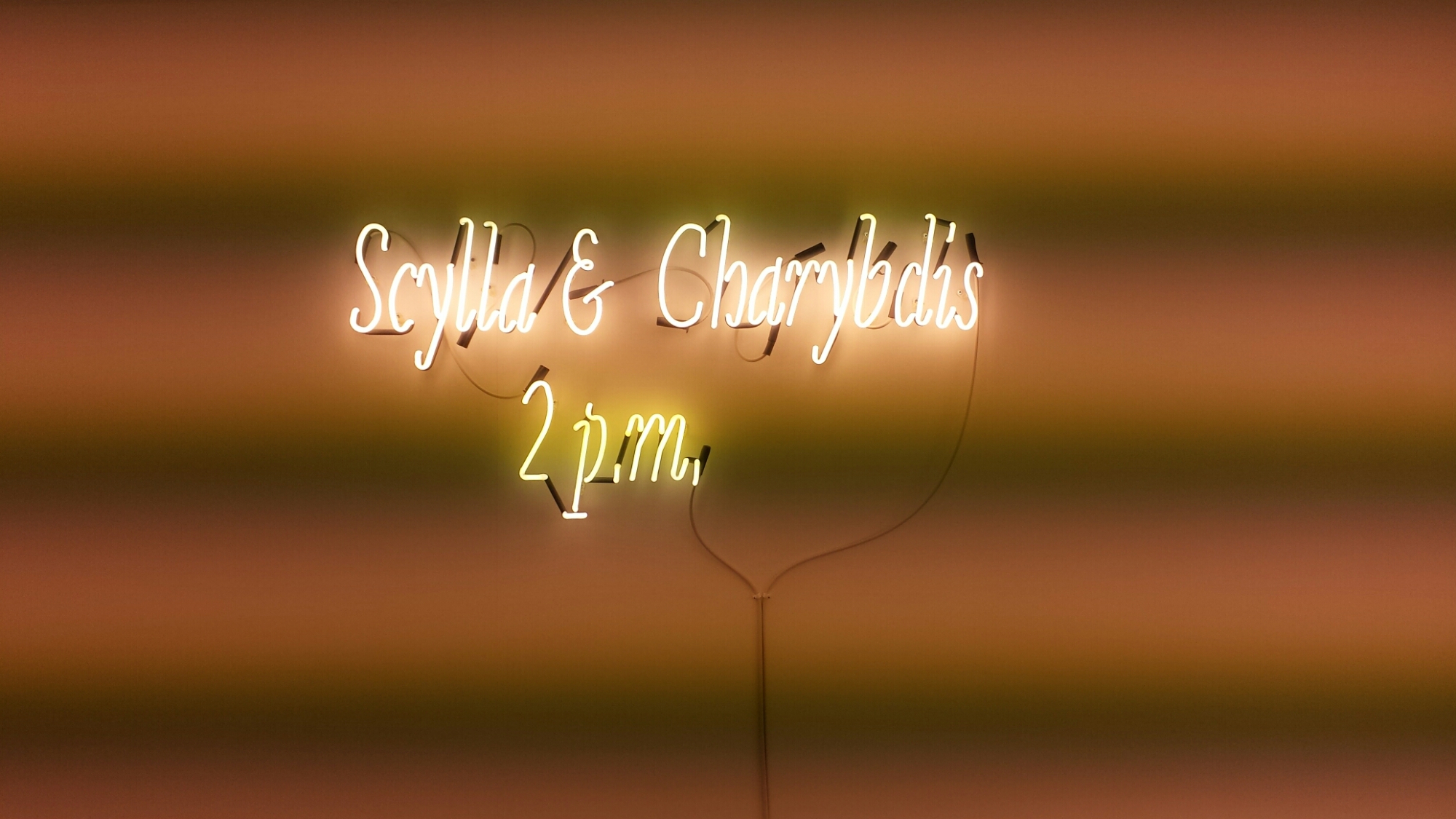
Joseph Kosuth’s neon works installed Spruth Magers. The banding on the photo is I assume a frequency related to the neon/camera interaction. This work in the basement made the Greek myths into daily appointments. Upstairs the neon treatment of Freud’s proofs of the galleys was one of a sequence of manifestations of others’ works including artists (including Judd and Calvin and Hobbes), theorists (including Adorno) and scientists (including Darwin).
What art have I seen? Adventures of the Black Square

Whitechapel Gallery’s first class exhibition, Adventures of the Black Square. They take us for a very interesting walk following the black square in the 20th Century art, dance, design, architecture and craft. Particularly appreciated juxtaposition with David Batchelor’s Monochrome – 500 white quadrilaterals he’s found on his travels (and in the corner one screen showing the black ones).
What art have I seen? Rights of Nature
Not enough time between conference presentations to properly appreciate this very significant exhibition.
What art have I seen? Mike Nelson
Eighty Circles through Canada (the last possessions of an Orcadian mountain man), Mike Nelson’ show at Tramway in Glasgow. As an homage and as an exhibition it’s just right – very well judged. The two sides of the wall – one a sequence of slides of landscapes which you realise all feature a ring of stones, the remains of a camping fire; the other the remains of a life, some tubes of paint, some climbing equipment, a photo album, some clothes, old books, tapes of classical music, gridded out detritus. Melancholy even without the back story. But also somewhat humourous – you see rings of stones by rivers, in forests, burbling streams and with majestic mountains in the distance, and then you see one with a big rig going past – not all walks are in pristine wilderness.
What art have I seen? Maclaurin Festival
The whole of the Maclaurin Collection is on show at the moment including early 20th C British artists influenced by Futurism, St Ives School, every notable Scottish artist from the second half of the Century, the Bestiary, and really good work by Nash, Deacon, Hamilton Finlay and Maclean. Interspersed are works purchased from the Maclaurin Schools Competition. Well worth checking out. Not sure the recent acquisitions stand up well. Hopefully seeing the whole collection together will inspire the Trustees to be more careful and ambitious in their future purchases and perhaps learn from the founding curator and used exhbition offers and residencies to facilitate acquisitions.
artinscotland.tv ‘s piece on the show with Mike Bailey
What art have I seen? Horst
Horst at the V&A – would have liked to see some of his marked up photos next to the retouched published images. Also interesting to see that both Horst and one of his models spent time in the Louvre studying poses. But you can also see what the Street Photographers were reacting against – fashion photography as the ultimate constructed image.
What art have I seen? Post Pop
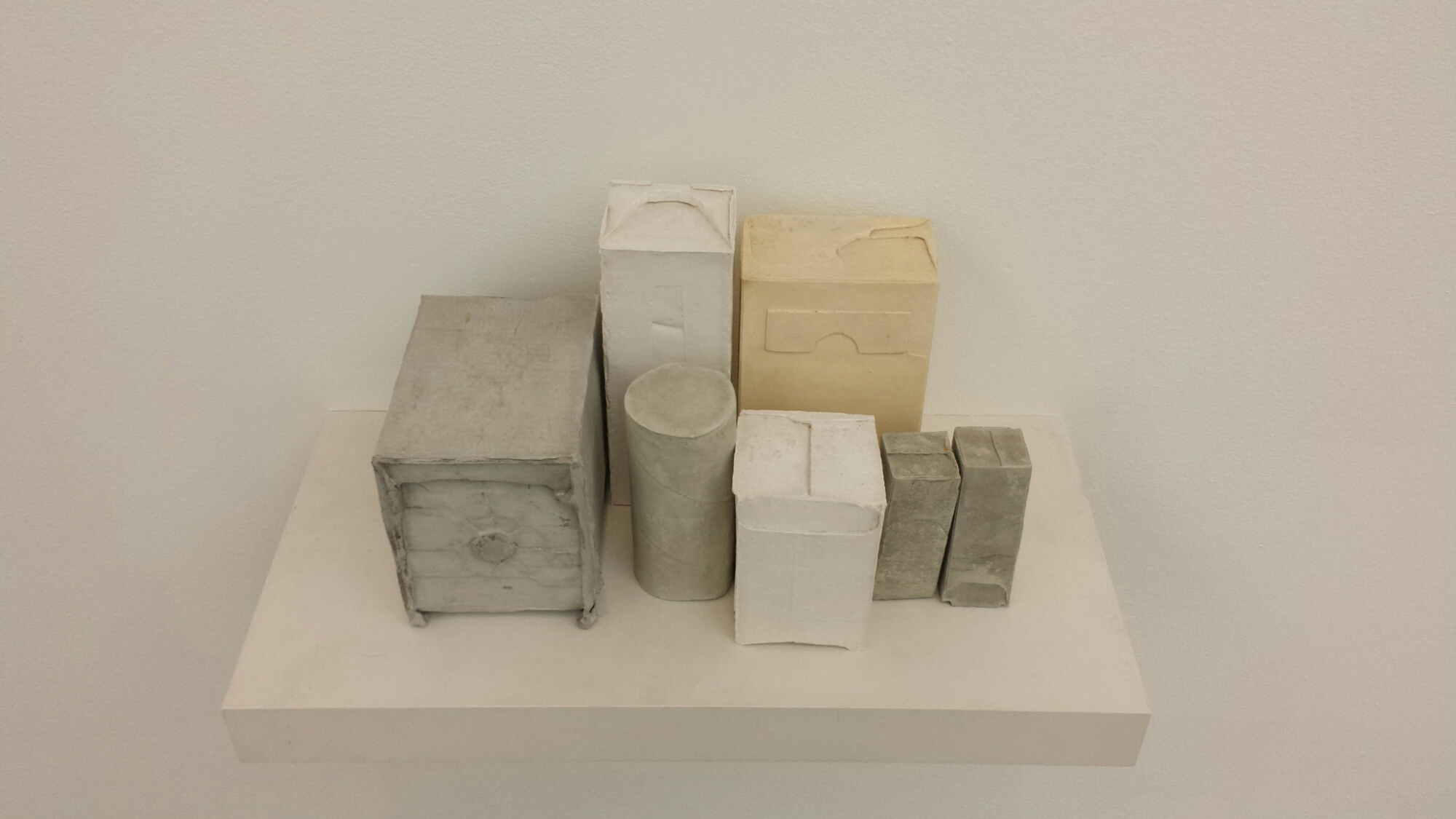
Rachel Whiteread homage to Gorgio Morandi in the Post Pop: East Meets West at the Saatchi Gallery.
Leicester leads new approach to maternity bereavement services
Clear articulation of the design requirements and challenges of user consultation in dealing with dignity from this project in Leicester. Similar issues in New South Glasgow Hospitals’ Dignified Spaces project – you can see creative consultation process and initial design thinking here.
What art have I seen? David Blyth
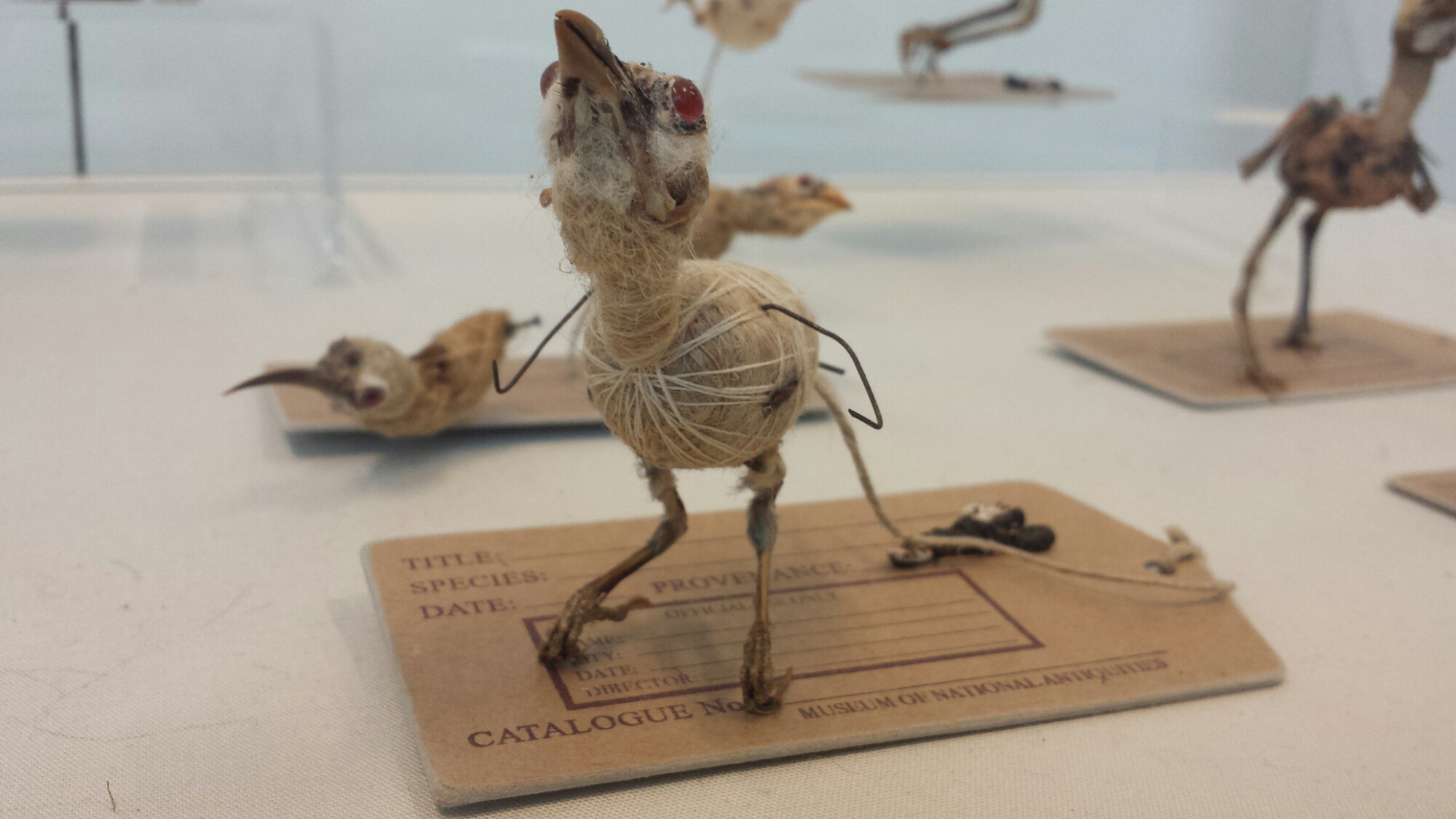
David Blyth’s astounding exhibition at RGU. Exploring and exploding taxidermy. Stories of Cyril the Squirrel and the Blyth’s Fitch Ranch in Manitoba in the 30s and 40s. Years of stripping back stories.
What art have I seen? Mark Neville
Mark Neville’s London/ Pittsburgh at
Alan Cristea.
Recent work by this Pulitzer nominated artist photographer exploring two juxtapositions of social inequality – one in London and the other in Pittsburgh (Braddock/Sewickley).
Mark said, “I had viewed both London and Pittsburgh through a prism mixed with Charles Dickens and Norman Rockwell. Sometimes the bringing together of two bodies of work made in different locations can generate new insights and reflections upon social divisions in each.”
What art have I seen? Schiele and Johns
The Courtauld has two fascinating exhibitions – Egon Schiele The Radical Nude and Jasper Johns Regrets. This analysis of the Johns exhibition from its showing at MoMA in New York is worth reading.
Ten thoughts from Johnny Galley
Read Johnny Galley’s blog on the seminar at Talbot Rice. I’ve posted on Tim Rollins and the K.O.S. before and was privileged to be at this event. I also use Tim Ingold and Elizabeth Hallam’s observation about innovation and improvisation.

 Tim Rollins and KOS, New York, late eighties
In August 2012, Tim Rollins and KOS arrived in Edinburgh in advance of the opening of their exhibition, The Black Spot, at the Talbot Rice Gallery. In partnership with the gallery, Artworks Scotland organised a day’s seminar for practicing artists and educators, which sought to explore ‘what was there to learn from Tim’s long practice?’ By gathering written responses of the seminar from five practicing artists and educators, we have sought to collate multiple responses that may be of transference to other educators working in the field:
The following are some ten thoughts, responding to the artists’ reviews, of what artists’ might take from Tim Rollins’ practice.
1. Charisma
There is no doubt that Tim has presence. Attendees talked of being ‘intoxicated’ by Tim’s presentation, and by his style of presentation. Holding a room, being confident, being a performer…
View original post 1,568 more words
What art have I seen? Uwe Stoneman at Tent

Will you miss the seabirds when they are gone? Uwe Stoneman works for the RSPB and is also an artist. This group of work uses a documentary approach as a means to speak about something where the level of care makes any other approach to difficult.
You Can Contribute

The art of writing is the art of discovering what you believe.
Gustave Flaubert

The Ayrshire Health and Arts Blog will record and provide a place to discuss the new developments in the community and mental health facility that’s being built in Irvine and we’re excited to have the chance to tell this important story. We will be covering:
- key milestones in the construction process
- interesting developments and opportunities in arts and health/arts for health and wellbeing / social inclusion, locally, throughout Scotland and internationally
- hosting guest blogs that show the value and relevance of the arts in mental health and the health-care environment (or other related environments).
The guest blogs, so far contributed by John Fulton (Art Therapist/Principal Art Psychotherapist in South Ayrshire Psychological Services) and Donald Urquhart (one of the Arts Co-ordinators on the project), will be written by artists, mental health practitioners, architects and the community and we’d…
View original post 279 more words

 CHRIS FREMANTLE
leave a comment