What art have I seen? Drawing at RSA
Scottish Drawing exhibition at the RSA in Edinburgh – a few thoughts on what was unexpected, familiar, unfamiliar, obsessibe, a reminder, revealing, evocative, relational, quiet, surprising, severe, known and unknown, small.
Unexpected
Most Marion Smith
Next Will Maclean
But also Glen Onwin one unexpectedly direct Galena; one intriguingly complex – The unchanging and the changing; and one I think I knew about – Flow of Near Solids (A proposal)
Familiar from recent encounters David Blyth.
Unfamiliar Alfons Bytautus, Lorna McIntosh.
Obsessive Charles Stiven.
Reminder James Castle.
Revealing Joe Fan, particularly Spring Time Chaos.
Evocative Annie Cattrell Sustain, Sustain I and II
Relationships between for instance Frances Pelly’s PI, a concertina of drawings of a sleeping dog and CameronWebster’s visual narrative of house from sketch to completion.
Quiet works including Andy Cranston and Anne Douglas
Surprising Leon Morrocco. Vibrant, engaging, challenging the chromophobia of drawing.
Severe Arthur Watson
Known Frances Walker and Doug Cocker and unknown Fiona Dean.
The smallest revealing the most – Andy Stenhouse’s Tone Poem : Tone Dee (Harbour).
Missing Donald Urquhart,
The Question of Light: Tilda Swinton’s speech at the Rothko Chapel | Connerhabib’s Blog
Having been to the Rothko Chapel and having lived in Scotland for more than thirty years and spending the best (and worst) of that working with artists, this resonates… the older I get, the more I realise, “both this and that are true at once…”
http://connerhabib.wordpress.com/2015/01/27/the-question-of-light-tilda-swintons-speech-at-the-mark-rothko-chapel/
What art have I seen? Joseph Kosuth
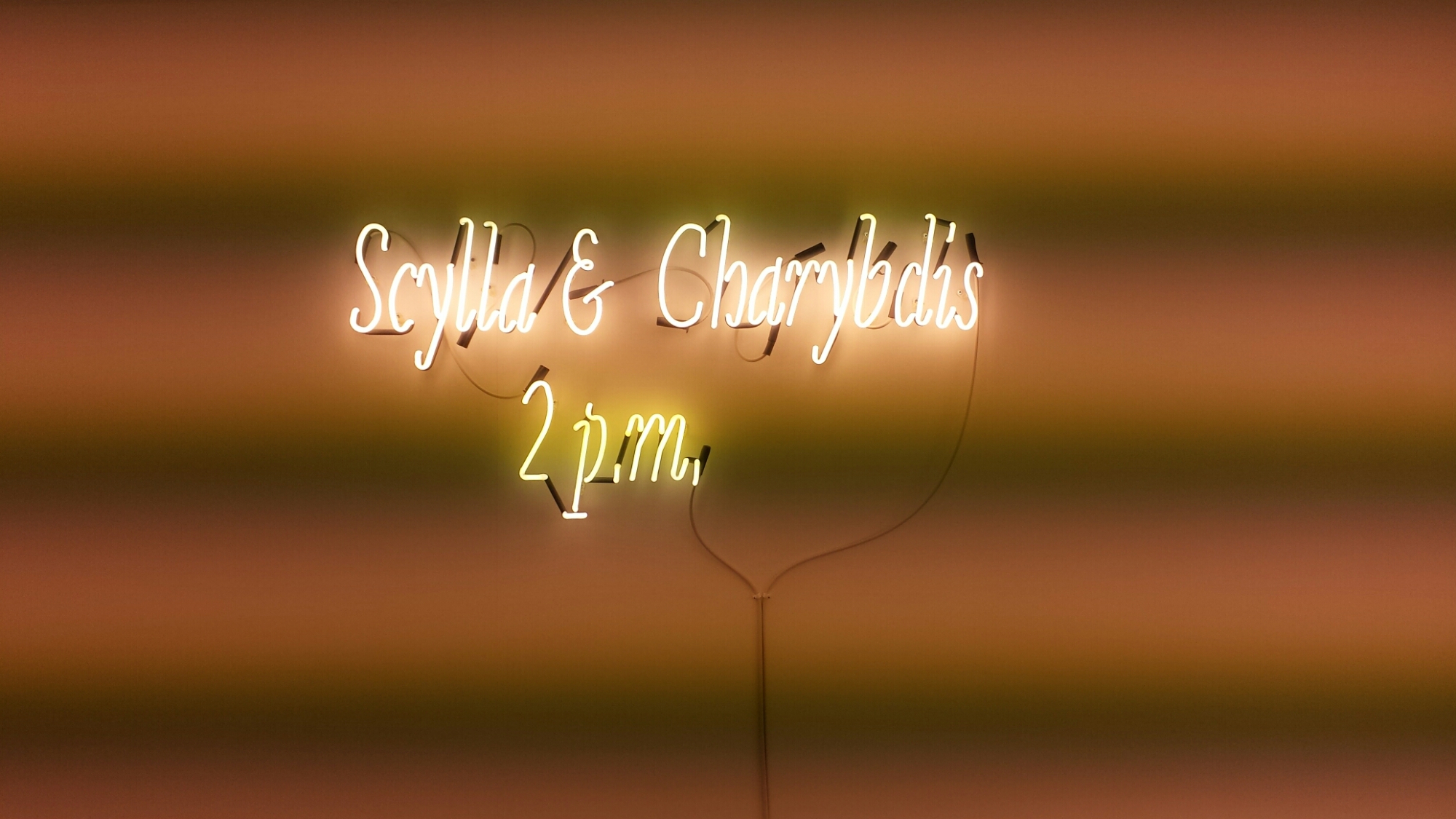
Joseph Kosuth’s neon works installed Spruth Magers. The banding on the photo is I assume a frequency related to the neon/camera interaction. This work in the basement made the Greek myths into daily appointments. Upstairs the neon treatment of Freud’s proofs of the galleys was one of a sequence of manifestations of others’ works including artists (including Judd and Calvin and Hobbes), theorists (including Adorno) and scientists (including Darwin).
What art have I seen? Adventures of the Black Square

Whitechapel Gallery’s first class exhibition, Adventures of the Black Square. They take us for a very interesting walk following the black square in the 20th Century art, dance, design, architecture and craft. Particularly appreciated juxtaposition with David Batchelor’s Monochrome – 500 white quadrilaterals he’s found on his travels (and in the corner one screen showing the black ones).
What art have I seen? David Blyth
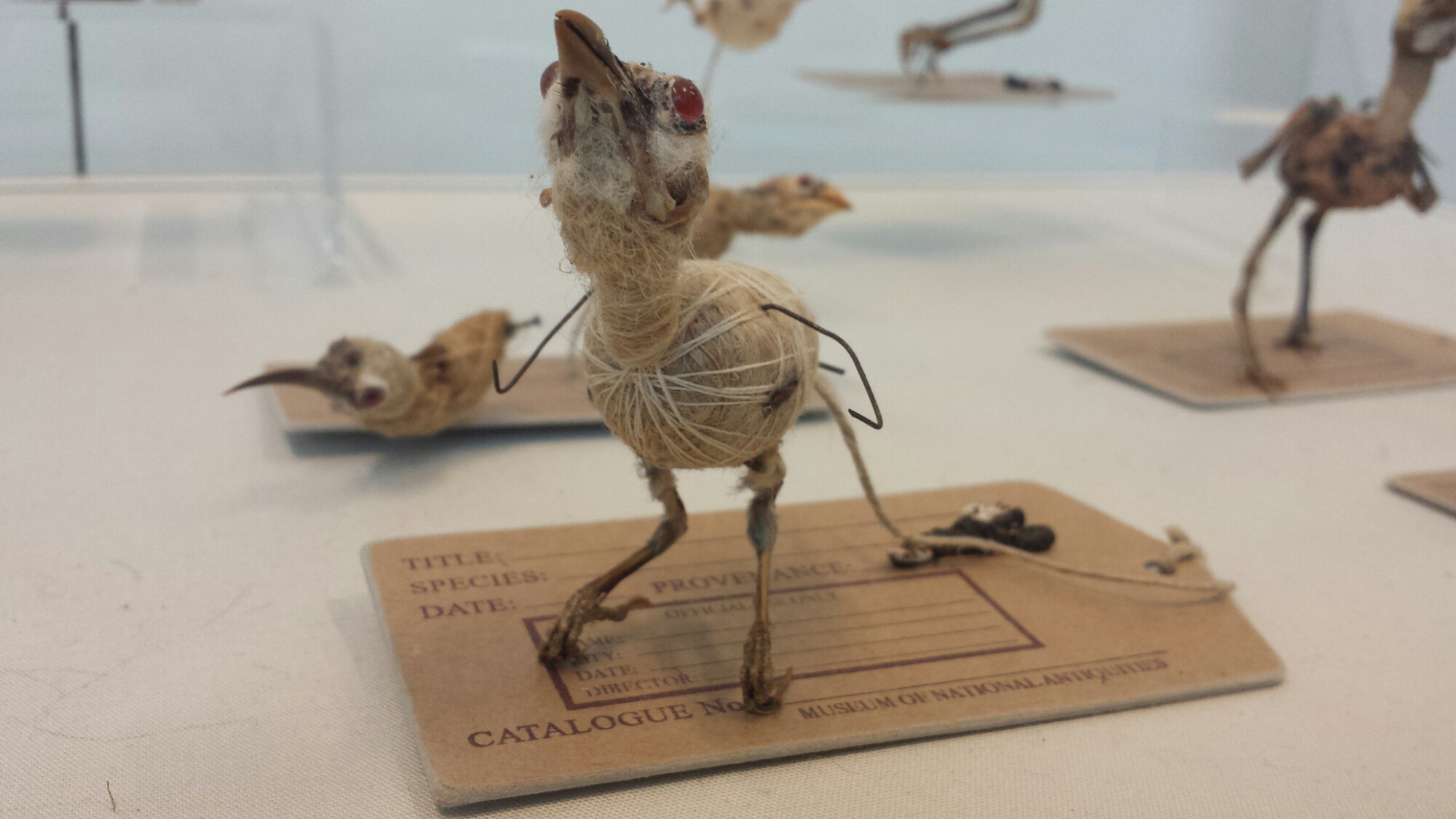
David Blyth’s astounding exhibition at RGU. Exploring and exploding taxidermy. Stories of Cyril the Squirrel and the Blyth’s Fitch Ranch in Manitoba in the 30s and 40s. Years of stripping back stories.
Ten thoughts from Johnny Galley
Read Johnny Galley’s blog on the seminar at Talbot Rice. I’ve posted on Tim Rollins and the K.O.S. before and was privileged to be at this event. I also use Tim Ingold and Elizabeth Hallam’s observation about innovation and improvisation.

 Tim Rollins and KOS, New York, late eighties
In August 2012, Tim Rollins and KOS arrived in Edinburgh in advance of the opening of their exhibition, The Black Spot, at the Talbot Rice Gallery. In partnership with the gallery, Artworks Scotland organised a day’s seminar for practicing artists and educators, which sought to explore ‘what was there to learn from Tim’s long practice?’ By gathering written responses of the seminar from five practicing artists and educators, we have sought to collate multiple responses that may be of transference to other educators working in the field:
The following are some ten thoughts, responding to the artists’ reviews, of what artists’ might take from Tim Rollins’ practice.
1. Charisma
There is no doubt that Tim has presence. Attendees talked of being ‘intoxicated’ by Tim’s presentation, and by his style of presentation. Holding a room, being confident, being a performer…
View original post 1,568 more words
You Can Contribute

The art of writing is the art of discovering what you believe.
Gustave Flaubert

The Ayrshire Health and Arts Blog will record and provide a place to discuss the new developments in the community and mental health facility that’s being built in Irvine and we’re excited to have the chance to tell this important story. We will be covering:
- key milestones in the construction process
- interesting developments and opportunities in arts and health/arts for health and wellbeing / social inclusion, locally, throughout Scotland and internationally
- hosting guest blogs that show the value and relevance of the arts in mental health and the health-care environment (or other related environments).
The guest blogs, so far contributed by John Fulton (Art Therapist/Principal Art Psychotherapist in South Ayrshire Psychological Services) and Donald Urquhart (one of the Arts Co-ordinators on the project), will be written by artists, mental health practitioners, architects and the community and we’d…
View original post 279 more words
Tempting Failure
Check out @an_artnews’s Tweet: https://twitter.com/an_artnews/status/526811922512216066?s=09
What art have I seen? from Pushkin Museum
A Literary Landscape in Russian Art at the Robert Burns Birthplace Museum in Alloway. A selection of prints and drawings by students (who have done residencies at the Pushkin Museum perhaps a little like Hospitalfield?). Quality classical drawing and printmaking skills on display from early 20th Century to present day.
Energy Cities and Cultural Development

 Walk Among The Worlds by Maximo Gomez. Photo: Alain Sojourner http://alainsojourner.com/nuit-blanche-toronto-2014-walk-among-the-worlds/
We’ve never been to a conference on the cultural and creative industries at a University that didn’t have someone providing a theoretical critique of the subject. On 1st October Robert Gordon University and the City of Aberdeen co-hosted an event which drew on the experiences of other energy capitals to understand cultural and creative industries development. Pacem critique, this was a morning full of insight into the sorts of strategies, policies and actions that make a difference to cities and see the arts thrive as part of their communities. It benefited from specific experience of being a European Capital of Culture (something Aberdeen aspires to) and it was a good renewal of the process of building a culture and arts development agenda for Aberdeen.
The subtitle was ‘Global Energy Cities and Cultural Illumination’ but the real point is that…
View original post 1,922 more words
What art have I seen? Losq, Bechers and The Nakeds
Nemora at the Fine Art Society, Juliette Losq’ black and white ink and watercolour scenes of post apocalyptic greenworld overwhelming our cities. These paintings extend space through devices such as infiltrating a fireplace or surrounding a grandfather clock and also replacing its face. For all those attempts to question the frame and break out of the container (like the plantlife evoked in those overlooked and unplanned spaces behond retail parks) it was the framed work Scumsucker (2011) which resonated the most reminding me of the space in which John Wallace’s Cinema Sark was exhibited a year ago during the first Environmental Art Festival Scotland: the undercroft of the M6 as it crossed the river Sark defining the border between England and Scotland.
Bernd und Hilla Becher at Spruth Magers. I wonder who decided on the composition of the groups of 9 images in particular? Was it the Bechers? The groupings are very subtle.
The Nakeds at the Drawing Room. Ought to have been inspiring and provoking in the way their Abstract Drawing exhibition was. Perhaps the failure is exemplified by a success. One of the standout pieces is Fiona Banner’s block of red text on a page (a print from Arsewoman in Wonderland I think). The text is a verbal description of a woman in a porn film. The description creates a clear sense of the artist’s eye travelling over and exploring the image (presumably frozen on a screen). It’s deeply personal and distinctive. It’s in no way salacious – quite the opposite – it wouldn’t make it into a volume of erotica. But the rest was in danger of sameness failing to extend vigorously into enough different spaces of drawing the human body. The are too many pieces that feel like sketches off the studio floor – the two small pieces by Beuys feel like that, though the Warhol drawings are revealing. But there are none of Gormley’s drawings using his own semen or any Duchampian work made with naked bodies and paint. Egon Schiele is at the heart of the thinking, but in a way he dominates the aesthetic too much and the conception not enough. The aim of the exhibition, to explore the space between the nude and porn, is really interesting but the curation doesn’t really stretch it enough. Schiele obviously made work for distribution as porn, so did Turner. I wonder who else did as well?
The Scot who burned down the White House

 Burning of the White House by British forces, 1814
The Scots have had had a remarkable impact on American history. Less well-known is the Scot who burned down the White House and inadvertently helped inspire the American national anthem, a “mad, romantic, money-getting” Cochrane.
View original post 833 more words
What art have I seen? Carl Andre

Dan Flavin Institute. Photo Chris Fremantle
Currently at the Dan Flavin Institute in Bridgehampton you can see an exhibition of cards and letters that Carl Andre sent to Sol LeWitt (press release here).
It’s pretty clear that they must have shared a sense of humour as well as an aesthetic.
There is on sequence of instructions for painting landscape (a card divided into a grid of six boxes -three by two – in each box is the name of one colour paired with the names of one of six other colours. Down the side of the card is written the word foliage). Following the instructions should lead to works which might remind you of works by Joseph Albers.
There’s another set of 16 cards each, in sequence, with three lines of the biography of Spinoza pasted onto them.
There’s a set with different materials’ polar curves (something to do with algebra), again cut out of a University textbook. 
This pretty much demonstrates a number of LeWitt’s Sentences on Conceptual Art such as “Irrational thoughts should be followed absolutely and logically.” Sorry not to be here for part 2 in the winter featuring Andre’s poetry.
What art have I seen? New Parrish
The new Parrish Art Museum just outside Southampton, designed by Herzog and de Meuron (of Tate Modern fame), is at once a challenging and also quite subtle piece of architecture. It aspires to sit in the landscape like the epitome of an agricultural building: larger maybe, more overtly using the materials of agricultural architecture such as sterling board and exposed concrete. It’s very different from the quiet neoclassicism of the old Parrish. Sitting on a basically rectangular plot next to Route 27, the relationship to landscape dodges the otherwise generic retail architecture that prevails along every highway in the US. On the other hand the relationship of the car parks, oak trees and swales at the back of the building is good, and the quality of wildflower meadow also successfully differentiates this space from commercial, municipal and domestic lawns. Fritz Haeg and the Harrisons would be pleased to see this, and perhaps it will slowly change the wider landscape.
Inside the overhanging roof creates a quality of light recogniseable from the best architecture in places with such strong summer sun.
The spaces suit Maya Lin and Denis Oppenheim, both with works installed this summer. Maya Lin’s explorations of aspects of landscape at different scales are compelling, whilst Oppenheim’s proposals for splash buildings are fun and funky, but keep your attention.
The building doesn’t seem to serve traditional painting quite so well. It is perhaps too austere for William Merritt Chase’s works on show.
It’s quite an achievement for a small town (albeit with access to considerable wealth) to have produced a space which will be considered alongside the best small art museums in the world. But with great wealth comes great responsibility and it would be interesting to hear how this institution engages with all those who are excluded. It looks like it might have good environmental credentials, but it needs good social ones beyond the conventional work with schools – where’s the residency with the hispanic migrant working community that services the domestic and gardening needs of the Hamptons, or works with isolated older people in the winter?
Arts and Health discussions in August
There are two opportunities in Edinburgh in August to hear artists talking about working in healthcare (I’m going to be moderating the second of them). Both will touch on mental health contexts, but the second event will particularly focus on them.
Art and the Healing Environment
Sunday August 17th 1.30 – 2.30. Princes Room, Bonhams. Free entry.
The session will be Chaired by Dr. Donnie Ross, an ex-hospital consultant and medical director, and ex-chairman of Grampian Hospitals Art Trust, who also describes himself as a shed-builder, writer and artist – and who writes:
‘….the NHS is about healing but the elements of wholeness, compassion and creativity have been squeezed out by technology, rationality and hard economics …… there should be an intellectual and emotional dimension to hospital art projects which extends beyond the acknowledged essential and valuable putting of nice pictures on walls ….. to give the movement longevity & durability in the face of changing political and economic circumstances.’
Speakers:
Jan-Bert van den Berg – Director of Artlink, Edinburgh
Trevor Jones – Director of Art in Healthcare
Alexander Hamilton – Lead commissioned artist for Dignified Spaces at th New South Glasgow Hospitals
Robin Williams – Gallery manager at Edinburgh’s The Gallery on the Corner
Ian Rawnsley – Artist and exhibitor in this year’s show
and
Artist as Healer: The relationship between art and the health service
Summerhall Festival 2014
21st August 18.00
Free
How can art contribute to our health? What part can it play in the clinical process? What are the issues for artists and producers working in healthcare contexts?
Join Artist Maria McCavana, Producer Chris Fremantle and Dr Lindsey MacLeod, Consultant Clinical Psychologist specialising in Child and Adolescent Mental Health, as they discuss the role that artists can play in the creation of modern healthcare environments and the impact these can have on the patients that use them.
—
I’d also recommend the other UZArts discussion which will focus on Human Rights,
Artist as Activist: The relationship between art and social change
Summerhall Festival 2014
22nd August 2014 18.00
Free
UZ Arts Director and Director of Sura Medura Artist Residency centre, Neil Butler in conversation with Sri Lankan artist and human rights activist Chandraqupta Thenuwara about his life and work. A leading peace activist before, during and after the Sri Lankan civil war, Thenu worked with Neil Butler on the 2007 concert ‘Sing for Peace’, which brought together prominent Tamil, Sinhalese, Burgher and Muslim singers to share the same stage. Thenu has continued his work as a human rights activist in post-war Sri Lanka, maintaining a constant critique of the Sri Lankan war and its aftermath. Thenu will be visiting the UK as UZ Arts Artist in Residence in Glasgow, living and working in the city throughout August and September
What art have I seen? Last To Win
Went to Laboratorio on West Nile Street for coffee and art. So appropriate for the Commonwealth, Last To Win brings some memorabilia from Italy to Scotland relevant to this specific moment. Apparently in the late forties the Italians had a special black jersey for the rider who came last in each stage of the national cycle race. Just to further explore the good humoured stereotype I can imagine that Chris Biddlecombe must have spent quite a long evening drinking grappa in the bar in Genoa where these treasures normally reside. I can see the owner behind the bar grizzled and smiling, wide as he is tall, telling Chris about the various objects on the walls, and then slowly being charmed into the into the idea of lending them to Scotland as a reminder of trans European connections and the joy of losing.
What art have I seen? Radical Geommetry
Radical Geommetry at the Royal Academy is pretty quiet on a Saturday afternoon. I came because I’m interested in Carlos Cruz-Diez and his use of colour and optical effects (but the largest piece is in a room where you can’t stand back far enough to appreciate it). Anyway the reviews have tended to be concerned in whether South American abstraction was derivative or an interesting thing in itself. If this is derivative then what becomes of Jim Lambie when you are looking at Otero’s Colourhythm 38 of 1958?
But that might be unfair because Soto’s maquette for a mural (1952-53) probably became something like the piece of cast concrete public art outside Charing Cross Station in Glasgow – very dated. Could and should that sort of work be revitalised in the way Alex Frost has with mosaic (another 70s public art classic)? Yet the concerns of these artists (abstraction, interaction) remain relevant today, the aesthetic largely retains its power and South America has gone on contributing to ideas of what art can be (eg Ala Plastica, Grupo Etcetera).
What art have I seen? Alison Watt
Alison Watt at Perth Museum and Art Gallery. The two rooms contain works from art school (Glasgow in the 80s) to 2014. The most recent piece has an almost photographic tonality and gloss to it. The interpretation is good, drawing out the renaissance (Titian), neoclassical (Ingres) and modern (Fontana) reference points.
Vote ZA! Another Slovenian perspective

A guest post by Donald Urquhart
In May 1991 I was painting in my studio in Glasgow when there was a knock at the door. It was Andrew Nairn of the Third Eye Centre (later the CCA) with an invitation to an opportunity he was the UK selector for. Would I go to Yugoslavia in October for four weeks to join a colony of international artists making art on the Adriatic, all expenses paid?
Not the toughest decision to make, so before long I was put in contact with the organiser, Matjaz Gruden. I found out the area I was going to was the northwest bit of Yugoslavia called Slovenia. I fully admit to having had only a basic knowledge of Yugoslavia at the time; Tito, Dynamo Zagreb, and that was about it.
In a bit of basic research I found out a wee bit more about Slovenia, through which…
View original post 1,247 more words
London LASER 04 programme announced

London LASER 04
Tuesday 17 June 2014
6.30 – 9.00pm (registration from 6pm)
University of Westminster, Fyvie Hall, 309 Regent Street, London W1B 2UW
The fourth London LASER for 2014 hosts Rob La Frenais in conversation with Los Ferronautas, Cristina Miranda de Almeida on the Internet of Things, and Chris Freemantle on art and science collaborations in medicine and ecology.
The event is free but booking is essential: londonlaser04.eventbrite.co.uk
Los Ferronautas (Ivan Puig and Andres Padilla Domene) will be in discussion with Rob La Frenais, curator, about their project SEFT-1 Abandoned Railways Exploration Probe: Modern Ruins 1:220. Between 2006 and 2011, the artists travelled across Mexico and Ecuador in the SEFT-1 (Sonda de Exploración Ferroviaria Tripulada or Manned Railway Exploration Probe) exploring Mexico’s abandoned railways: http://www.seft1.com. This iconic railway infrastructure now lies in ruins, much of it abandoned due to the privatisation of the railway system in 1995, when many…
View original post 409 more words
What art have I seen?
Deutsche Borse Prize at the Photoprapher’s Gallery particularly Jochen Lempert exploring pattern and complexity but also Richard Mosse making landscape military.
WRITING ROOT & CLAW: A WEEKEND WORKSHOP
Em Strang asked us to highlight a Weekend Workshop of creative writing, discussion and walking in October in Cumbria. Check it out – you’ll be in good hands.
A response to ‘Are dialogic and relational aesthetics relevant to all participatory and co-creative practitioners?’

This excellent piece (Chris Fremantle’s blog 6.1.2014) frames the debate on participation and co-creation in art and design as a priviledging of process (over product) and social concerns (over artistic concerns). This presupposes in some way a radical break with what has gone before that might have particular relevance at this point in time to design, architecture and new media.
There is without question a perceived ‘Social Turn’ in art (Lind 2005/6, Bishop 2006/12, Jackson 2011) and this is frequently articulated as a concern with process and the social (Bishop 2004). However, to play devil’s advocate for a moment (as Claire Bishop herself suggests in 2012), how are these concerns not true of all art and any time? Have artists not always situated their practices within the social? In what sense is this set of concerns a new endeavour, a turn in direction from what went before?
View original post 997 more words
More Good Now: A Working Manifesto for Artist-Producers
Excellent manifesto for all of us however we work

I’m an artist who also works as a producer. I set up and still help run the spoken word organisation Inky Fingers, and I co-direct the live art series ANATOMY. The idea of artists leading artistic production – artists organising nights, festivals, buildings – seems to be taking off at the moment. At the last Buzzcut Festival (an artist-led festival), the organisers worked with the Live Art Development Agency to organise a day blether on artist-led projects around the UK. There was excitement and community and possibility. This is wonderful.
At the same time, there’s a lot of discussion happening about the issue of artists working for free, artists struggling to get paid, artists getting exploited by venues. A lot of the response has been about how artists can work together and by themselves to improve their treatment by producers and venues – like here and
View original post 2,531 more words
Are dialogic and relational aesthetics relevant to all participatory and co-creative practitioners?
Artists understand the potential of an aesthetics of process and the social. But does this mean anything to the designers, architects, programmers and others who work with participation and co-creativity? Further thoughts on the Practising Equality paper published in the Participations Journal.
One of the questions we asked in the conclusions of the Practising Equality paper (2013), looking across art, design, architecture and new media at practices of co-creativity and participation, is whether the development of thinking about the aesthetics of participation in art has relevance to design, architecture and new media?
The emergence of a debate around the aesthetics of process and the social in art is one of the important developments of the past 25 years. Whether we are talking about Bourriaud’s ‘relational aesthetics’ discussing participatory work in galleries, or Kester’s attention to ‘dialogic aesthetics’ in situated practices, or Bishop’s interest in the perversity of participation, all are concerned with an aesthetics of process and social relations.
Suzanne Lacy, who is both the subject of one of Kester’s case studies and also a contributor to the discourse herself, draws attention to Allan Kaprow’s concerns. Kaprow’s practice is fundamentally participatory and…
View original post 1,179 more words
Art is not a zero-sum game
Francois Matarasso offers an excellent articulation of the importance of art as “a way of knowing unlike others” and of the passion associated with that. He goes on to make an important point – other ways of knowing are also distinctive and equally valuable, “I believe that art is a way of knowing unlike others, but that doesn’t make it more important than the others.” His conclusion seemed to me to highlight something fundamental to collaboration and working with other ways of knowing, which we sometimes call ‘interdisciplinarity’. He says “To value one kind of experience, one glimpse beyond the selfish and material, does not require a rejection of all others. Life is not a zero-sum game. The heart is capacious.” When he says “The heart is capacious” he implies the critical thing, which is that to collaborate or work across disciplines requires acknowledging that the other way of knowing that you are engaging with is equally valid, and moreover, that you need to make space in your heart as well as your mind to love the other way of knowing as well. This is so evident in the practices of artists working in social and ecological contexts. It is absolutely obvious when you think about it that Helen Mayer Harrison and Newton Harrison for instance love and value the ways of knowing of ecological scientists.
Another World Is Possible – What about an Anonymous Istanbul Biennial?
Anonymity is perhaps the best resistance to the market, and the most provocative challenge to artists.

via Ahmet Ögüt
I never performed for the media. I tried to reach people. It was not acting. It was not some media muppet show. That is a cynical interpration of history. *
Abbie Hoffman* After his act at New York Stock Exchange, hurling/throwing one-dollar bill at the brokers.
On May 25, 2013, just before the beginning of the Gezi Park protests in Istanbul, I co-signed a letter by more than 100 arts and cultural practitioners that invited the Istanbul Foundation for Culture and Arts (IKSV) and 13th Istanbul Biennial curatorial team to change their authoritarian reflex and judgmental attitude to the protest staged on March 10th at a Biennial-sponsored event and to rethink the proposed structure of the 13th Istanbul Biennial.
Although I could argue in support of several concerns that were pointed out in the letter, one reason alone was enough to sign it: It was…
View original post 828 more words
What art have I seen?
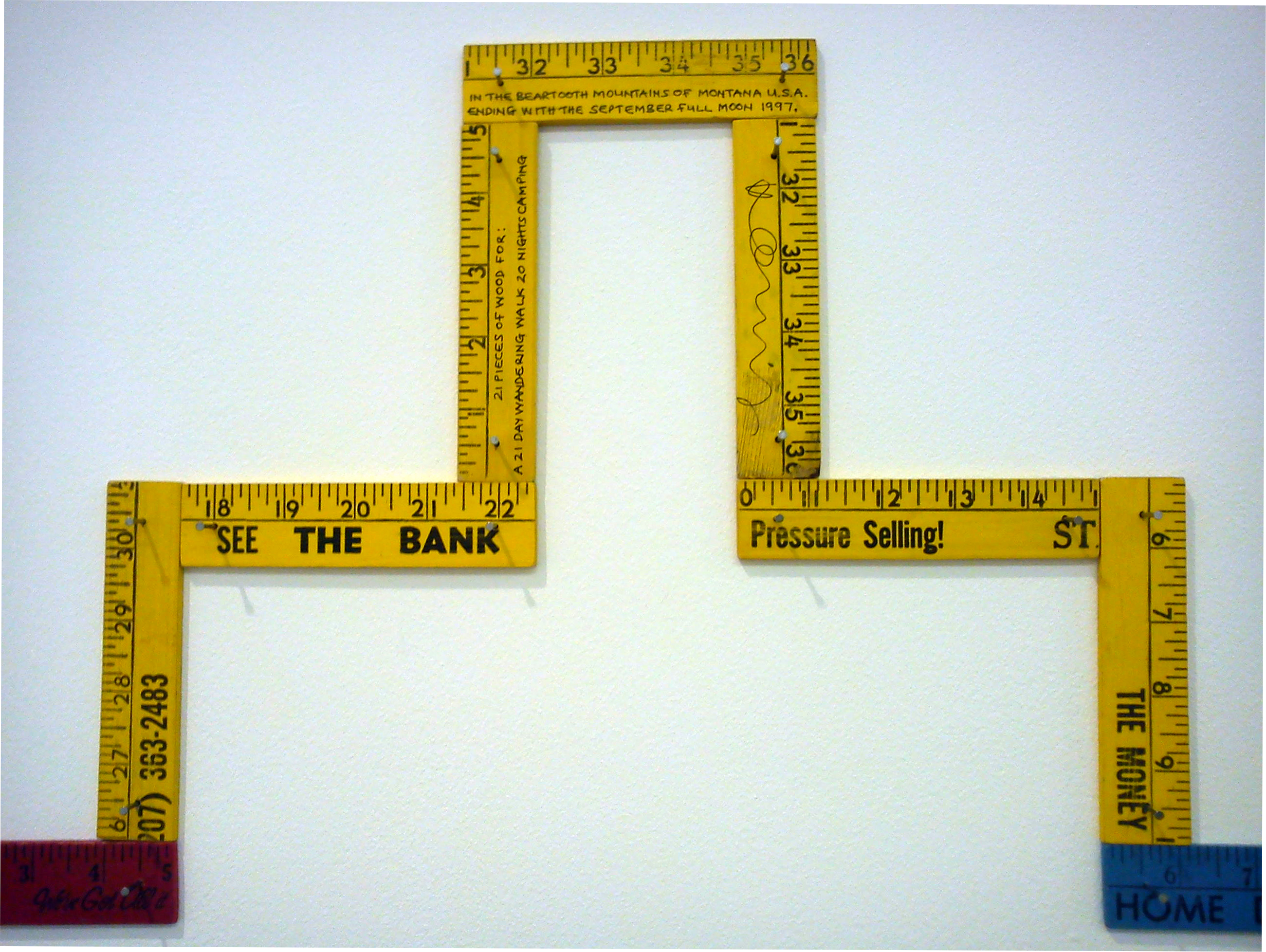
Photo Chris Fremantle
Hamish Fulton at Maureen Paley.
and I think Fulton has a good sense of humour.
Launching Greens Continuous Cover Forest policy at Irish Forestry Show

Main points of the Irish Green Party Forestry policy (2013-16):
- To promote a graduated adoption to Close to Nature-Continuous Cover permanent forestry silvicultural systems and management (without clear felling), thus (i) ultimately creating permanent biodiverse forests containing trees of all ages, (ii) providing a more sustainable flow of products once the system is in place and (iii) maintaining the “capital” of mature and diverse forests to resist the threat and risks associated with climate change, such as new pests and diseases.
- The planting of 10,000 ha (preferably 15,000 ha– double what was planted in 2011) trees per annum until 2035, of which broadleaves should be well over the 38% planted in 2010. 15,000 ha would give 490 direct sustainable jobs per year, plus downstream employment, mostly in rural areas. (This would still leave Ireland with well below the European average of 43% forestry cover.)
- The retention of hedgerows and…
View original post 654 more words
What art have I seen?
David Batchelor at the Fruitmarket and Ian Hamilton Finlay at Ingleby Gallery with ECA Art, Space and Nature
What art have I seen?
Reposted from www.publicartscotland.com
It’s common place to see elements of exhibitions spilling out of galleries (so-called off-site projects, and don’t get me started on that terminology). But artists who work in public sometimes spill into galleries (although documentation of sited work doesn’t always make for good exhibitions).
Culture Hijack, curated by Peter McCaughey of GSA, and Ben Parry, PhD candidate at UWS, takes on this most slippery subject extremely well. The artists in this show are pranksters and activists from across the world (including Japan, India, the US, Canada and a fair bit of Europe).
These artists take on the city, the streets, regeneration, consumerism, bureaucracy, capitalism, neo-liberalism: politics. They’re at home in a pedagogical space concerned with urbanism and inhabitation. And it’s therefore very apt that it’s in the Architecture Association and also all over the city. The issues raised are the issues that embroil architects and planners as much as cultural theorists and artists.

Photo: Ben Parry, 2013, temporary intervention Bedford Square, London, for Culture Hijack Exhibition
And the exhibition points the spotlight at the blurred, constantly moving, shape of these practices. Right outside on Bedford Square there’s an installation by Tatzu Nishi that has the formal elegance of sculpture and sometimes turns into the absurdity of a good happening. He captures the circularity of the building industry: tearing down and piling up.
Inside, in an installation that borrows it’s language from outdoor exhibitions and temporary conferences, are a lot of videos, one of the best being by Tushar Joag, who spoke at the CCA in Glasgow last week. In his piece a bunch of wide-boy London window cleaners join Tushar (in hisUnicell Public Works Cell boiler suit) to perform the cleaning of the Olympic landscape. A bunch of trained performance artists could not have got into the spirit of ‘cleaning’ the vistas of the east end with more energy and sense of the dance of life.
Video: Tushar Joag collaborating with Gaze a Glaze.
In another space, created by scaffolding tubing and banner fabric, a solitary figure on a handcar travels the train tracks of a German city (Matthias Wermke & Mischa Leinkauf’ In Between). It’s a beautiful moment of living on the edge, not angry, not ironic, just playful.
On the same day at the Barbican was the official launch of the evaluation report on the Cultural Olympiad, saying that some 43 million people had experienced this four year cultural programme leading up to the Games and that it had succeeded in raising Britain from 5th to 4th on the list of nations as desirable brands.
As the international-sporting-event-with-cultural-programme bandwagon moves on towards Glasgow we need to make sure that we question it, poke fun at it and make sure it doesn’t bulldoze anything that really matters (like a community or an allotment).
Culture Hijack is at the Architectural Association, Bedford Square, London and around the city 26 April – 25 May 2013
Chris Fremantle
Review of The Time Is Now: Public Art of the Sustainable City
There is no question that energy generation impacts on landscape, both urban and rural. It always has. The current re-engineering of systems towards renewable energy is, on one level, not different. Wind turbines are just one example around which there is a very polarised debate. As a result there has been considerable work done in Scotland on the visual as well as environmental impact. Sophisticated modelling of proposed installations in landscape contexts has become a normal part of public consultation processes. There is now for instance a mobile virtual landscape theatre, developed by The James Hutton Institute. Behind the issues of visual and environmental impact there is a significant public policy commitment in Scotland. This public policy commitment drives funding and decision-making to deliver on the targets. It is intended to shape or focus the…
View original post 1,307 more words

In recent years there has been a great deal of interest amongst health researchers in the role of social stigma in affecting health. Social stigma can be articulated as a majority view that works to spoil the identity of others on the basis of a discriminating characteristic such as race, gender or class. The social stigma associated with some minority groups has been shown to have health salience in terms of providing an obstacle to gaining access health care, housing provision, welfare, employment and other underlying factors affecting health. Groups that have been the subjects of research include disabled, homeless and itinerant populations and this body of work has revealed the multitude of interpersonal and institutional factors linking discrimination with health. Stigma has also been adopted as a deliberate strategy in health promotion initiatives, most notably in tobacco control with recent work beginning to question whether the denormalisation and stigmatisation…
View original post 595 more words
What art have I seen?

Donald Urquhart and Gerry Loose Orchard at the Scottish Poetry Library
Making Policy Public – MAS CONTEXT

Vendor Power, Copyright Kevin Noble for CUP
The Center for Urban Pedagogy‘s Making Policy Public series is a standout project engaging marginalised interest groups with designers and communities. MAS Context provides and overview of the series here. Its a good description, though it doesn’t offer a critical commentary.

‘It is a wet afternoon in Glasgow, May 2062. The temperature is barely six degrees above freezing, the Clyde has burst its banks as is now customary for this time of year, and is lapping about the entrance to the old Central Station, now the R. D. Laing Cultural Exploratorium. The upper floors are a museum, the ground level a hydroponic research gardens. The red iron-rich waters lapping around the station’s baroque entrance have become one of the sights of the city.
The rain is incessant, but Glasgow is buoyant. The GI (how old-fashioned the acronym sounds now – as if ‘international’ still means something) has just opened, now well into its sixth decade. Its legendary founder, and now honorary President has just made an appearance at the show’s opening in a climate controlled inflatable. At 95, she is remarkably sprightly, and makes a point of attending each opening in…
View original post 767 more words
Ayr Converses Walk


Ayr Converses Walk, a set by www.dooks.org on Flickr.
Chris Dooks, Morag Deyes, Rob Close, Lianne Hackett and I were taken for a walk around the Ayr by Kevin Bell (Surveyor at J&E Shepherd). These are some images Chris Dooks took, particularly in the vicinity of Plot 9.
What art have I seen?
Michelangelo Pistoletto’s Lavoro at the Simon Lee Gallery

and John Burningham: an illustrated journey at the Fleming Collection.
Body Narratives / Cast from Life
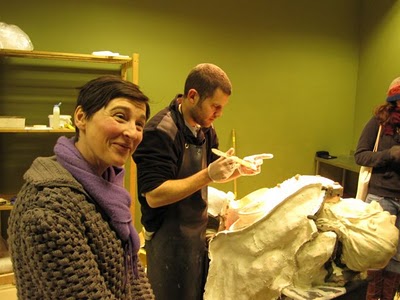
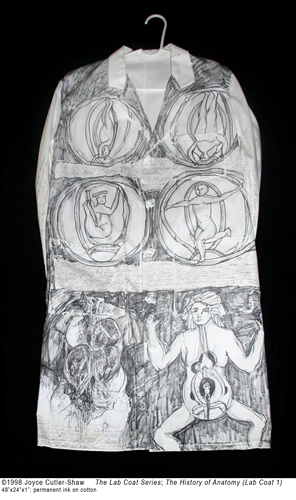
Thursday 10th March I attended an anatomy lecture at Glasgow Sculpture Studios. As part of Christine Borland’s Cast from Life residency and exhibition, she had invited Quentin Fogg, a member of staff of Glasgow University’s Anatomy Department, to lecture. He gave a fascinating introduction and history of the development of Anatomy from a visual perspective, focusing on the evolution of drawing and representation.
Joyce Cutler-Shaw has just announced her exhibition ‘Body Narratives‘ at the New York University Health Sciences Library. Like Borland, directly tackling the assumption that everything about anatomy is already known, Cutler-Shaw is opening up the issue of representation, realism and the body.
Ayr to Zennor
Talk entitled Soil 2.0 addressing context, and various projects I gave at the BOSarts Seminar, part of This Weekend.
What art have I seen?
Art Sites in Riverhead. I noticed a sign saying art + architecture. It’s a gallery with an outdoor sculpture space that also seems to be involved in local green developments. The building looks like it used to be a light industrial unit and is really well converted, both the building and the landscape.
I’d have liked to see the exhibition Called to Action, curated by Lillian Ball, on Restoration projects.
Outdoors there was an interesting mix of large scale sculptures – some made of very permanent materials (steel)

and others clearly very temporary tent structures.
 The relationship of the tents to the ground, the way they protected an area of grass and weeds, was interesting.
There was a small patch of plants with a sign indicating that this was based on work done by Cornell University Extension programme: Weeds and Your Garden.
Google will eat itself
Can we really be sure that the master’s tools will never dismantle the master’s house?
Greenhouse Britain: Losing Ground, Gaining Wisdom
Greenhouse Britain: (2006-2008). I had the pleasure and honour to work with Helen Mayer Harrison, Newton Harrison and David Haley, . The project developed new thinking about the impact of climate change on the island of Britain.
Producing and Project Managing > Greenhouse Britain: Losing Ground, Gaining Wisdom
Sol LeWitt
born September 9, 1928; died April 8, 2007
Sol Lewitt at MassMOCA until 2033

 CHRIS FREMANTLE
leave a comment