What art have I seen?

Bishops Court quilt, Unknown, 1690-1700. Museum no. T.201-1984
Quilts 1700-2010 at the Victoria and Albert.
What art have I seen?

(s˘m-po’ze-m) sculpture, music, performance by Sarah Tripp, Ruth Barker, Martine Myrup, Kathryn Elkin in the Jeffrey Library at the Mitchell during the Glasgow International.
What art have I seen?
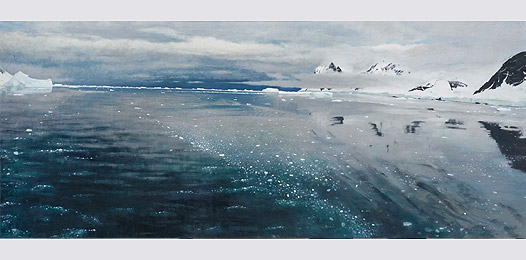
Frances Walker’s Place Observed in Solitude at Aberdeen Art Gallery.
What Art have I seen?
Three American Artists at Glasgow Print Studio in the new Trongate 103, Glasgow
What Art have I seen?
The End of the Line: Attitudes in Drawing
A Hayward touring show seen at the Fruitmarket Gallery in Edinburgh. Naoyuki Tsuji’s animations using charcoal, leaving the trace of each previous frame, were stunning. Wonderful, magical and fantastical episodes. Fernando Bryce’s work forms a catalogue created from newspapers, maps and photos drawing attention to colonialism in Africa and Europe. David Haines’ works were frankly scary groups of boys, the recurring theme of trainers and voilence. But there was something quite strange in the selection: whilst drawing is something done for many different purposes, frequently not art (e.g. engineering, architecture, anthropology, archaeology) none of this work was anything other than art. There was no aspect which blurred any boundaries between art and any other purpose for drawing.
Inspace – first exhibition in the new partnership between New Media Scotland and the Informatics Department at Edinburgh University. Went having seen the video of the Perpetual Storytelling Apparatus, I was more interested in the One project.
Cybernetics (human machine interfaces)
The Perpetual Storytelling Apparatus is a work by Julius von Bismark and Benjamin Maus. It explores the possibilities of drawing as copying, as semantic, as mechanical, as technical, as legal, as durational, etc..
What art/science have I seen?
Ex- at the Zoology Museum, Glasgow University.
First, you have to go and find this gem of a museum in Glasgow University, proper old-fashioned place, not over-interpreted (though not quite sure about the size of containers for the live snakes).
This exhibition is the result of a field trip to Payamino in the Ecuadorian part of the Amazon Rainforest by a group of zoology students accompanied by Kate Foster, environmental artist, and Martin Muir, a photographer. The students were documenting and recording bird and amphibian biodiversity as well as learning about the life, culture and change.
The exhibition includes work by the students as well as Foster and Muir. The students have presented photography and drawing.
Foster’s sketchbooks seem to capture some sense of interconnectedness. Few of the drawings set out to isolate and analyse a single ‘thing’ in a ‘scientific way’. Rather they explore relations, interactions and situations. A small sketch at the back of one book of a ‘luggage jam.’ Tyre marks on the runway. Most pages have text in amongst drawing. Across two pages she has drawn a stream of ants some carrying cut pieces of leaf and others returning for more. The quality of drawing: suggesting movement by lightness of touch, suggesting pattern, suggesting context without providing one.
One of the students raises the issue of value. They are documenting and recording biodiversity under threat from oil extraction, soya farming, etc. What is the value of the biodiversity? And is it measured in monetary terms? This was crystallised for me recently when, on the radio, I heard a spokesperson for Natural England discussing the economic importance of bees. They said bees were worth £200 million to the UK economy. The next item on the news was about the commitment of £4 billion to some aspect of the financial crisis.
We say that we can’t put a price on life, but we are only talking about ourselves. We don’t understand that we can’t put a price on ecosystems, or on biodiversity. NGOs try and get us to make donations by showing us pictures of ‘charismatic mega fauna,’ but, and its horrible to say, the loss of polar bears or tigers will have a limited effect on ecosystems (as I understand it), where worms, bats, ants, small birds and especially bees have dynamic and exchange based roles. Our image of hierarchical food chains makes the big animals look like the most important, but if you begin to think about the other operations taking place at the ‘lower levels’ then your perspective changes.
The student was asking what to do: one answer is to think about what connects Scotland and Ecuador, now economically, and also in the past colonially. Bring forward the connections, make them visible. Make us aware of, not distant jungle lushness, but the ways our lifestyle in Scotland is implicated in the changes taking place there.
C words at the Arnolfini
Nina Möntmann’s essay for the e-flux journal, (Under)Privileged Spaces: On Martha Rosler’s “If You Lived Here…” is a useful analysis which could almost be written about the C Words show at the Arnolfini. Many of the same issues are raised.
This essay was commissioned on the occasion of “If You Lived Here Still…: An Archive Project by Martha Rosler,” an exhibition of the archives of If You Lived Here… running from August 28 to October 31, 2009, at e-flux in New York.
The essay sets out the context of homelessness in New York in the 80s and 90s (for which we could substitute our own circumstances of climate change in the first decade of the 21st Century). It is precisely the market, as unquestioned driver, which is challenged by both exhibitions.
It discusses the role of the institution, then the Dia and now the Arnolfini, and the decisions leading to this form of work being programmed, concluding by linking this work to wider discussions of ‘institutional critique’ or ‘new institutionalism’.
If You Lived Here… was, like C Words, initiated by an artist/artist group, and drew in work by a number of other artists, through a cluster of linked elements. The character of documentary art raises questions about the role of art in public life, the reference to things that have, or are, taking place outside the gallery, and the questions that need to be raised about presence and absence, about knowledge and the senses.
One of the precursors to If You Lived Here… is evidently Joseph Beuys’ Free International University at Documenta 6 in 1977. In each of these cases, from Honeypump in the Workplace, through the Reading Room as Asylum Seeker’s home, to PLATFORM’s tent/boat/quadricycle, each seek to make the pedagogical space also a visceral, somatic space. Each of these works disrupts the artworld production/exhibition/distribution structure.
“Art that can not shape society and therefore also can not penetrate the heart questions of society, [and] in the end influence the question of capital, is no art.” Joseph Beuys, 1985
Of course the question of time plays a role, and we must be careful not to fall into a narrative structure that values avant gardism, making Beuys the greatest because he is the earliest, and PLATFORM an afterthought, as if it took 30 years for an idea to travel from Kassel, via New York, to Bristol. Furthermore, whilst Möntmann’s essay provides an effective ‘art history’ of a work, it also leaves many questions hanging, such as the inability of members of the ‘artworld’ attending events during If You Lived Here… to do other than sit silently.
What art have I seen?
C Words: carbon, climate, capital, culture, How did you get here and where are we going?
Arnolfini, Bristol
The collaborative practice PLATFORM articulate their work as research, campaigning, education and art. As a result of their long-term project Unravelling the Carbon Web (2000-) PLATFORM have been quoted in the financial and environmental sections of newspapers on subjects including hydrocarbon legislation in Iraq, and Shell’s role in the execution of Ken Saro-Wiwa. At the same time their opera And While London Burns… (2007) was widely reviewed and they are currently the subject (perhaps) of a major retrospective at the Arnolfini.
But this is not a solo show. PLATFORM have, in microcosm, demonstrated the Movement of Movements: simultaneously inhabiting the Arnolfini (at their invitation) are Ackroyd & Harvey, African Writers Abroad, Hollington & Kyprianou with Spinwatch, the Institute for the Art & Practice of Dissent at Home, the Laboratory of Insurrectionary Imagination, the Trapese Collective, and Virtual Migrants. Plus Amelia’s Magazine, Art Not Oil, Carbon Trade Watch, The Corner House, Feral Trade, FERN, Greenpeace, Live Art Development Agency, new economics foundation & Clare Patey, Sustrans – Art & the Travelling Landscape, Ultimate Holding Company and others. In parallel Ursula Biemann’s Black Sea Files, Peter Fend and Barbara Steveni are also exhibiting.
The PLATFORM aspect touches on several key points in 25 years of work – the walls have been lined with recycled timber and this frames a tent, a boat, a quadicycle, an image of a strategy game on a burning world stage, and a discussion. There are a lot of words in the Arnolfini at the moment, but this is an exhibition, not just a pile of documentation. This is activism brought into the gallery, but it is as animated as activism. There are events going on regularly, and between the many different contributors and the team of co-realizers, I don’t think you can just walk into the gallery, walk around and say “Seen it” without someone engaging you. It fights against being objectified, whilst still acknowledging the need for something aesthetic to engage with.
At the Friday afternoon Critical Tea Party there was an interesting discussion about combative art. Is this exhibition trying to tell you what to think? Is it propaganda for a leftist agenda? It certainly wants to say: you are complicit in all of this. Do you the world to be like this? Just because you are comfortable, is it ok that everything goes to hell and damnation? Is this what you call justice?
Underlying PLATFORM’s work is a deep understanding of radical educational theory. Yes, shock tactics are applied, but to the end of making each of us think for ourselves. Propaganda is about one truth, and there isn’t one truth here. Here there is one question: what future?
But we can also ask the question “Where is the art?” For me, I can’t answer this by saying that the installation of the boat, with the chairs placed next to it like a bow wave, is the art, though that has formal aesthetic elegance (and I do like a bit of formal aesthetic elegance). Of course the art has been taking place in public over the past 25 years, and this is a gallery. The danger is that all you can put in the gallery is the evidence of something that happened somewhere else. So, for me, it is important that what is in the gallery is something which is present, here and now.
And is this a PLATFORM show? Or a group show? Are PLATFORM curators? Is their work the most important?

And what about the education, research and campaigning? To discount them from the aesthetic of the practice is to fail to understand its roots in the work of Joseph Beuys. His idea of social sculpture is central here.
Or to put it another way, Hal Foster says that there is a fault line travelling through the term ‘art history’ because he says that art is judged on its own terms, not, as with history, enmeshed in the world. If we accept that art is only judged on its own terms (some strange connoisseur’s estimation of PLATFORM vs Beuys vs Kaprow vs APG) then we dismiss the world. Whereas PLATFORM want us to understand that life can be art and art life.
So we are left with more questions, but they are in sharp focus.
What art have I seen?
Fleming Collection exhibition from Scottish National Portrait Gallery.
What Art have I seen?
Ed Ruscha, On The Road: An Artist Book of the Classic Novel by Jack Kerouac, Gagosian Gallery, Davies Street, London


Beautiful. Needs careful reading to see the relationship between the images and the text. More info at Yummy Ink.
Did also see Glenn Brown.
What art have I seen?

Ed Ruscha at the Hayward. I was sorry that none of the early photo/book works, nor some of the experimental works were included. The paintings are great, but it reads as a one trick show. There is so much more to Ruscha.
What art have I seen?
Robert Stone’s Polka Fever at the Pump House Gallery, Battersea Park
Ayr to Zennor
Talk entitled Soil 2.0 addressing context, and various projects I gave at the BOSarts Seminar, part of This Weekend.
Reading
Forest Tunes, The Library, 1995-2008 by Shai Zakai
Can remember when I was reading this. Think it was 9 months ago when I was trying to persuade Rozelle Maclaurin to show this important work. Located as they are in parkland, it seemed to me an interesting and worthwhile exhibition around which a stimulating series of events could have been organised, a sort of arborischool, with speakers like Richard Mabey, David Haley and Thomas Pakenham, as well as local rangers, academics from Auchincruive, etc.
I think its at the Centre for Contemporary Art and the Natural World this autumn.
What Art have I seen?
RAQS Media Collective at the Frith Street Gallery in Golden Square
The gallery as a trading floor for evoking human experience. A series of clocks correlated with places (New York, Lagos, Johannesburg, Kuala Lumpur, etc.), the faces modified by changing the numerals for emotions (epiphany, anxiety, duty, guilt, indifference, awe, fatigue, nostalgia, ecstasy, fear, panic, remorse). So the ‘time’ in Kabul: the hour is between panic and remorse and the minute at anxiety. In amongst the real locations are some imagined ones, Macondo (the town in Marquez fictions), Shangri La, etc.) Here the clocks go backwards.
In the middle of the room circling (on four screens) around a pillar is a face, still in the context of a global emotional roller-coaster. The sounds are an inscrutable background.
Anne Douglas, some time ago, introduced me to the Rasas, an aesthetic structure of emotional expressions (love, mirth, sorrow, anger, energy, terror, disgust, astonishment) for theatre in traditional Indian culture.
What Art have I seen?

Imaging the Forest at the British Museum
Dinabandhu Mahapatra’s Trees of Orissa. A painting on silk representing all the trees of the region of Orissa. Some are very much icons, others are more representational. This work, made in the early 1980s, was as I understood it part of a response by a particular patron to the loss of traditional crafts. It is a response to the 12th Century poem, the Gitagovinda, which tells the story of Krishna and Radha. The forest is a place where the social rules are more relaxed and Krishna can carry on with his favourite female cowherds.
Radical Nature at the Barbican
Radical Nature: Art and Architecture for a Changing Planet 1969-2009 is an important exhibition. Much has been written about it in the papers and on the Eco Art Network. It is a really valuable opportunity to see seminal works by a range of artists and architects. I hadn’t seen Beuys’ Honey Pump, nor the film of Ukeles‘ Touch Sanitation, nor Smithson‘s film Spiral Jetty, nor any of the Harrisons’ Survival Series (1970-1973).
But I finally worked out the essence of my problem with the exhibition. The title frames ‘art and architecture’ and there are works by both artists and architects included in the exhibition. The artists and architects included, particularly the works from the 60s and 70s are radical, there’s no question about that. But the real radicalism of some of the artists and architects is in the scale of their work, and in the exhibition this is only really conveyed in the Center for Land Use Interpretation work The Trans-Alaska Pipeline. Even the film of Touch Sanitation doesn’t convey the eleven month performance of shaking 8,500 sanitation workers’ hands and saying to each of them “Thank you for keeping New York City alive.” The exhibition feels like its driven by a curatorial focus on artwork as object, rather than artwork as question or consideration of context.
The real shared territory between artists and architects is in thinking at scale about boundary, organisation, information, energy, metaphor, systems and people; not the superficial similarity of objects.
Think about Hans Haacke’s Shapolsky et al., Manhattan Real Estate Holdings, a Real Time Social System, as of May 1, 1971, shown at the Tate’s exhibition Open Systems: Rethinking Art c.1970 a couple of years ago where he focused on the ownership of tenaments in New York by one family through a network of businesses. This would have been as relevant an introduction to social ecological concerns.

Think about the Harrisons’ work Peninsula Europe (2001-2003)which presented the European peninsula as single entity considering the role of the high ground in the supply of fresh water to the population.

Think about Tim Collins and Reiko Goto’s work 3 Rivers 2nd Nature (2000-2005) which involved the strategic planning of the whole Pittsburgh river system area. Goto and Collins “addressed the meaning, form, and function of public space and nature in Allegheny County, PA.” They developed the Living River Principles which were used as a tool for lobbying public officials. They worked with a team of volunteers to develop monitoring systems documenting land use, geology, botany and water quality.
Or PLATFORM’s work Unravelling the Carbon Web (2000 ongoing) which asks us to understand the social and environmental consequences of oil through multiple iterative works drawing attention to the oil industry and its associated networks to Universities, Government and other corporates, working with inhabitants, NGOs and Unions along BP’s Baku-Tbilisi-Ceyhan pipeline, and in Iraq. The purpose of this work is social and ecological justice, but it is also to relate this distant business to the lives of people living in London and the UK.
Or even Peter Fend, one of the most interesting artists, whose work with the Ocean Earth Development Corporation actively seeks to challenge the relationship between art and business by developing approaches to ecological problems through the means at the disposal of artists – colour theory, conceptual synthesis and the use of emerging tools such as satellites.
All of these works:
- Are of a scale which touch on or encompasses whole political, social and ecological systems.
- Involve communication between artists, scientists, politicians and inhabitants (i.e. in multiple and complex ways, rather than from singularly from artist to audience).
- Foreground the connections between living and non-living structures, such that the work is relevant to our daily lives, rather than objects for aesthetic contemplation.
- Blur the idea of the artist, raising the question “is it art?” because the work and the artist are also economist, environmental scientist, planner, etc..
- Raise the question, “Who made the work?” breaks down the idea of the artist as individual, because the work is made through the input of a range of people.
- Embody diversity of description (something very problematic in museum contexts).
- Embody and make relevant all phases of the life-cycle of the art.
Whilst much of the work in the exhibition is also characterised by the above points, it has not been chosen to emphasise these points. Rather it has been chosen because it meets a different set of criteria, criteria of objectness. Thus there are at least five works that involve plants in the gallery – Helen Mayer Harrison and Newton Harrison’s Farm, Hans Haacke’s Grass Grows, Simon Starling’s boat for Rhododendrons, Henrik Håkansson, Fallen Forest, 2006. But the differences between these works, between ironic comment and practical application is lost. The Harrisons’ work is of a practical character “What can we do in these circumstances?” where Starling’s work has an ironic purpose, raising questions about nativeness and protection. Haacke’s work Grass Grows is a work that demonstrates the Manifesto he wrote in 1965,
…make something which experiences, reacts to its environment, changes, is nonstable…
…make something indeterminate, that always looks different, the shape of which cannot be predicted precisely…
…make something that cannot “perform” without the assistance of its environment…
…make something sensitive to light and temperature changes, that is subject to air currents and depends, in its functioning, on the forces of gravity…
…make something the spectator handles, an object to be played with and thus animated…
…make something that lives in time and makes the “spectator” experience time…
…articulate something natural…
Hans Haacke, Cologne, January 1965 republished in Art in the Land. A Critical Anthology of Environmental Art, ed. by Alan Sonfist, (New York: Dutton, 1983
The off-site project in Dalston, which I wrote about earlier, is a more interesting work than some in the exhibition, precisely because it was not curated, but rather made.
What Art have I seen?
Timo Jokela: Northern Traces: 1999-2009
Collins Gallery, Glasgow
Pecha Kucha: 6 mins 20 secs
If you start with the sentence “My practice is focused by place,” then the next sentence that logical follows is “I’ve been working in … Ireland, Palestine, Siberia.” Whereas if you start with the sentence “My practice is focused by context,” then the next logical sentence can be any one of a very large number of things… [more]
This text and the associated slides were presented at the Pecha Kucha held at the RSA in Edinburgh.
What art have I seen?
Don’t go and think about Dalston Mill as a whacky eco retro art project. Think of it as architects working very hard to imagine a future for us all. And bear in mind that they are sleeping in this structure, above the bar cafe, next to the seminar room and adjacent to the toilets.
The bus dropped me on Dalston Lane and I towed my wheelie suitcase over the uneven pavement. Leaving Liverpool Street and the skyscrapers we’d passed through Little Nigeria on Shoreditch High Street. I’d seen the main Radical Nature exhibition at the Barbican a few weeks ago, and Dan Gretton had said this “off-site” project was really worth seeing. I’d caught a glimpse of the mural you are meant to look out for and seen a black painted wooden wall with words hand painted in white saying Dalston Mill, but it looked closed. So thinking that there was another entrance I walked through a yard, caught sight of a scrubby patch of wheat, went through an opening in a builders temporary fence and wandered around. It was 2pm and a few people were casually doing stuff. One guy in a t-shirt and shorts was sweeping up fag butts whilst smoking.
Going to Nils Norman and Michael Cataloi’s University of Trash at the Sculpture Center, my mother’s comment “I saw this in the 70s” is still firmly with me. She’s got a point.
And the answer may lie in the blurb about the show Into The Open currently in Philadelphia. This was the official US representation at the 2008 Venice Bienniale of Architecture. The sixteen groups represented are at the cutting edge of thinking about the urban, the landscape, the recycled and the social. I immediately recognise Center for Land Use Interpretation, Center for Urban Pedagogy, Project Row Houses and Rural Studio as landmark initiatives. I have a collection of CLUI and CUP materials, the book Rural Studio produced on my shelves and I’ve been to Project Row Houses.
The blurb goes:
“Critics noted the exhibition’s unusually sober assessment of the challenges America faces, as well as the inspired attempts by grassroots architects to mitigate these conflicts.”
But I do have a problem, and it was hell of an easy to walk in look around and walk out – to do the artworld strut – and say “seen that”. I did end up talking to the guy clearing up the fag butts and he turned out to be one of the architects. I nearly voluntarily got roped into making dough, and I really should have (no strutting making dough) but in the end they were just getting organised and I was heading for a train. Vidokle does address this so directly and effectively: The Martha Rosler Library as well as the Video Store and the Night School are all about stopping (or tripping) the strut. And I wish the University of Trash and Dalston Mill had, in addition to the events programme, something which when you walk in off the street, sucked you into ‘the sober assessment of the challenges,’ whatever time of day it was.
Because in reality, these architects and artists have created a structure which is lightweight, adaptable, portable, generates energy, supports social activities, addresses questions of food and land use, and therefore embodies some very serious issues. And I loved the scarecrows with milk containers for heads. And I hope that as they take it all to pieces and move on, that they clean up the site, including the archaeological trash from the periphery, which has clearly been there longer than the three weeks of this exercise, and leave the site better than they found it, whether they have left us wiser or not.
Eco-thinking?
Paul Kingsnorth in the Guardian 1 August 2009
Technology and hubris. What is the role of technology in solving the huge challenges that face the world (i.e. all the species living on the planet earth)? Watching the Center for Land Use Interpretation’s slide show of the Trans Alaskan Pipeline in the Radical Nature Show at the Barbican, I was struck by the scale and sophistication of our engineering (technological) capacities. I came away feeling that it was not optional. Yes, I might use the car less, walk more, fly less, use the train more, recycle more, reuse more, eat more vegetables and less meat, grow more potatoes. I might also be political working on projects which raise environmental issues, join the green party, read the latest thinking on green issues. But the idea that we, as unspecialised animals, don’t use technology to solve our problems, is impossible. Kingsnorth rightly highlights the real problem about the application of existing assumptions to the new challenges: they are not ‘wind farms’ they are ‘ wind power stations.’ But pride is a great driver of human development, technological as much as philosophical. How do we apply our technological imaginations and skills with modesty and humility and a respect for all the other lifeforms on the planet?
What Art?

The unacceptable face of Britain
Aesthetic of European stag party culture
Blue Cowboys out of Newcastle rebranded to maximise market penetration take Gdansk by storm
Find them on youtube under the name StudioSzkic
Explore Polish bars
Tree climbing, table Squennis, arm wrestling,
begging bankers
Sexercise disco on a streetcorner in NY in PLish
Who is mixing the beats? They should be on iTunes as well.
What Art have I seen?
Garden and Cosmos: The Royal Painting from Jodhpur at the British Museum
Poor. Old. Tired. Horse. at the ICA
Radical Nature at the Barbican
What Art have I seen?
The University of Trash at the Scultpure Center
Art space become alternative pedagogical space. Quote “I saw enough of this sort of thing in the 70s.”
So are we revisiting the 70s? If so, why? And what is the difference between now and the 70s?
What art have I seen?
Socrates Sculpture Park, Long Island City.
What sticks in the mind?
Fifty bums raised in the air: yoga in the Park.
A giant doilly suspended in the trees
(Jennifer Cecere, Mom, 2009)
Looking across to Manhattan’s volume.
A series of physical challenges modelled on an exercise assault course
(Risa Puno, The Big Apple Showdown Spectacular, 2009)
A carnival wagon with artefacts displayed
(Dana Sherwood and The Black Forrest Fancies, The Ladies Society of Alchemical Agriculture, 2009)
A black barn of jig-sawed patterns
(Bernard Williams, Socrates Ply- Teck Barn, 2009)
A small garden, the most valuable space for urban-dwellers
(Jeanine Oleson, Retribution, 2009)
Socrates Sculpture Park reinvents itself as a cross-over public space between art and temporary amusement park. Away with formal sculptural concerns: roll up, roll up to the crazy summer Saturday on a field in the sun. Is it New York or is it somewhere in Kansas? Is it Little House On The Prairie or is it socially engaged practice? Even without the specific ‘dialogics’ intended to captivate the art audiences, Socrates is busy.
What art have I seen?
Art Sites in Riverhead. I noticed a sign saying art + architecture. It’s a gallery with an outdoor sculpture space that also seems to be involved in local green developments. The building looks like it used to be a light industrial unit and is really well converted, both the building and the landscape.
I’d have liked to see the exhibition Called to Action, curated by Lillian Ball, on Restoration projects.
Outdoors there was an interesting mix of large scale sculptures – some made of very permanent materials (steel)

and others clearly very temporary tent structures.
 The relationship of the tents to the ground, the way they protected an area of grass and weeds, was interesting.
There was a small patch of plants with a sign indicating that this was based on work done by Cornell University Extension programme: Weeds and Your Garden.
Sag Harbor Whaling Museum
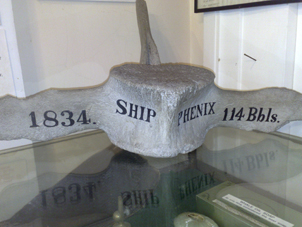
The Whaling Museum at Sag Harbour, Long Island, is a remarkable cabinet of curiosities. There isn’t a hierarchy and there isn’t a narrative or simple message. Located in the former Masonic Temple, a remarkable building originally built as a home, it contains a wide range of products of 18th and early 19th Century whaling industry as well as aspects of town history. From a cabinet of walking sticks with ivory handles, to memorials made of whale vertebrae, to the tools for carving up the carcases, all the ephemera of the industry is represented – and it’s not all scrimshaw. But in amongst this is also the stuff of seafaring: the medicine cases, the shackles for punishment and the ships logs. There are even Inuit artefacts collected by sailors, and a display indicating the relationship between the indigenous Americans, their own whaling, and the Europeans arriving on the Island. We are so used to the managed learning of museums, that this looks like an installation by Mark Dion. In fact the Museum should contact other museums to do with whaling and make a publication of whaling ephemera from different parts of the world – I found a list of museums connected with whaling at Whalecraft (there are a number in Scotland).
What art have I seen?
This Land is (Y)our Land at CCA, Glasgow
Walking with a pepper plant, free with the exhibition, but actually a specific responsibility, in the smur, going right left right left right left…
Sauchiehall Street
Pitt Street
Bath Street
Douglas Street
across Blytheswood Square Garden
West George Street
West Campbell Street
St Vincent’s Street
Wellington Street
Bothwell Street
Hope Street
into Central Station
I like the zig zag, knowing its not actually any shorter than straight down Sauchiehall and onto Hope, but the pattern is more interesting.
Is it psychogeography, a derive, or systems thinking?
Berne, Switzerland?
Working at the University of the Arts, Berne
Presenting The Artist as Leader and doing a workshop with 2nd Year Graphic Design students.
Two visits. In the first (27 May) I find:
“Calculation and work. Trial and error, first on paper, then as a model, then eventually as a prototype on a scale of one to one, that is the method of the practical scientist Renzo Piano and his people. The design process oscillates between tinkering and totalling, the simplest hand drawn sketches and the most high-tech computer drawings are used. The search party takes side turnings, longer routes, gets itself out of dead ends, but every step takes them closer to an as yet undefined goal. The detours are necessary – they ensure that no short circuits, no apparent short cuts, lead to a rash, un-thought-out result. Anyone who commits himself too soon, locks himself in. Piano’s people approach their task like a team of researchers on thin ice.” p.24 Benedikt Loderer, Monument in Fruchtland in Zentrum Paul Klee, Bern, Short Guide. Hatje Cantz, 2005.
Also Dream and Reality: Contemporary Art from the Near East. The curatorial concept is very strong comprising firstly, contemporary works; secondly, elements of material culture chosen from an anthropological collection; and thirdly, a selection of works by Paul Klee. But in practice, as an experience, its not very successful. It’s not that the Klee works aren’t relevant. It’s not that the anthropological works aren’t relevant. Some of the contemporary art is very good. But in this category there are too many video works. But let me tell you about the three really good pieces. Firstly The Walid Raad/Atlas Group work that seems to be called either Untitled 1982-2007 by Walid Raad, or We Decided to Let them Say “We Are Convinced” Twice by the Atlas Group. Secondly the series of carpets by xxx variously titled. When you first walk down the stairs you see a collection of four carpets which are not quite hung in the same way as for instance the carpets in the Burrell in Glasgow. Then you start to question what you are looking at and you realise that they are modified, reconstructed into new forms, subtley different from the normal. Finally, the chair. I thought it was simply a chair with a small booklet chained to it which might elucidate one of the videos. The book started with a short text which explained that in both Europe and in Cairo there are lots of plastic garden chairs, but where in Europe, when they break they are thrown out, in Cairo they are repaired. A sequence of approximately 20 images of various repaired plastic garden chairs followed. The text suggested that visitors to the exhibition should treat this chair very roughly because the museum had agreed to repair any broken chair in the same way that the Egyptians were repairing their chairs.
For me this work articulated the potential for the arts to highlight the infection of one culture by another culture, and the potential for that to work in both directions. Asking the museum exhibition, conservation and curatorial staff to firstly assume that a piece of plastic garden furniture is an important cultural object, and then to suggest that it should be repaired in a very explicit way, is just great. Asking the people visiting the exhibition to treat an artwork roughly (though sadly it was not showing any significant signs of wear and tear), is brilliant. Definitely a sort of Fluxus Score or an Allan Kaprow happening, read through a post-colonial distorting mirror.
Kunstmuseum Berne (28 May)
Tracey Emin (I missed it in Edinburgh, so it was great to see it in Berne).
“Do women have to be naked to get into the Met. Museum?” Guerrilla Girls 1989.
If women are going to be naked in the museum then Emin tells us something about her experience of being a woman.
Walking through the gallery away from a video about being in a band, suddenly I heard screaming, screaming that hit me in the solar plexus. My immediate reaction was that someone in the next gallery was in deep, deep anguish. The pop music and the screaming.
In the sequence of polaroid or photobooth works it seems that Emin is saying “If you are going to look at my body, then you are going to see it as I see it, feel it as I feel it.”
There is a display of small images of early, post art school work that Emin destroyed. The pictures are presented like a collection of family photos. You can see that she has been deeply influenced by Edvard Munch. Someone also mentioned Egon Schiele. There is a work which reminds me strongly of Louise Bourgeois.
Conclusion: it’s a game of consequences – the statement is ‘if’ ‘then.’
Kunsthalle Berne (29 May) Zhang Enli
Second visit to the Zentrum Paul Klee (30 May)
Paul Klee: Carpet of Memory
It didn’t feel like an historical exhibition. It was overwhelming, both in the beauty of the images and in the variety of tactics of the visual. It’s not just a lot of squiggles. The one image which was apparently simply a series of dabs of colour on a dark surface was infact a broadly applied impasto, overlayered with watercolour, and the dark colour was used to heighten the shapes of the watercolour dabs.
Conclusion: he asks which tactic will I apply here?
The sculpture park behind the Zentrum – five works – twisted and beaten coreten steel and cast bronze.
What art have I seen?
Celebration of Art – 30 years of the Maclaurin
Maclaurin Galleries, Ayr
Originally posted 3 April 2006
What art have I seen?
‘Bungalow Blitz’ and ‘Ant Farm’ at The Lighthouse in Glasgow
Originally posted 20 March 2006
What art have I seen?
Simon Faithfull at Stills and Fred Sandback at The Fruitmarket
Originally posted 18th March 2006
What art have I seen?
John Latham at Tate Britain and Ugo Rondinone at the Whitechapel
Originally posted 18 February 2006
What art have I seen?
Richard Demarco’s Strategy Gets Art at the Scottish National Gallery of Modern Art
Originally posted 1 February 2006
What art have I seen?
Thoughts on Altermodern
Our icons
Our detritus
Our living spaces remade exactly as they are
Our failed utopias
new ways of seeing old images (Spartacus Chetwynd’s baroque p#rn)
Experiencing experiencing culture (recording reading a book)
Activism aestheticised
Every sort of involvement from discussions with the curator becoming art to volunteers performing songs
Heroes with young turks
Suicide
The impossibility of nature (Ackerman and Coates)
Reproduction – what does it mean? (the singing faces and the Simon Starling)
What art have I seen?
Yorkshire Sculpture Park – collecting Alec Finlay’s circle poems, part of his letterboxing project – visiting James Turrell’s skyspace in the deer shelter.
What art/reading?
The Martha Rosler Library (and Anton Vidokle‘s talk) at Stills, Edinburgh.

Vidokle, founder of e-flux and Producer (?) of the Martha Rosler Library as an e-flux project, explained the origin of the circulation of the Library. Vidokle described being in Texas, visiting Marfa, seeing Donald Judd’s library (below) of some 10,000 volumes, and not being allowed to pick one off the shelves because everything has to be kept exactly the way Judd had it – a ‘permanent installation’ in his terminology. So Vidokle is talking to Rosler about another project and relates this story. She offers Vidokle her library as a public resource. Vidokle gets excited about the idea. The Martha Rosler Library opens in the e-flux storefront in New York. Stills, Edinburgh, is the last venue, the seventh stop, in what has become the circulation of the Library.

Vidokle referred to the difficulty in thinking about authorship in relation to the Library. It is curated by the venue – obtaining shelves, setting them out, accessorising; it is his idea and he thinks its art; it is Rosler’s Library and she doesn’t think its art; and of course each of the books is authored in the literary sense. We enter a dialectic between form and content. It certainly offers the possibility of a Borgesian treatise, but I think something else is also going on.
Vidokle located his recent projects (unitednationsplaza, Night School, Pawnshop, etc and his involvement in the cancelled Manifesta) in creating an ephemeral/transitory and mobile/ circulating space for attention. He understands contemporary art as constantly drifting into the spectacle whilst striving to ferment political/social change. He noted the underlying current of social change in art going back over 150 years – he referenced Manet and Courbet inheriting the radicalism of the French Revolution. The aesthetic is increasingly a powerful force, whist participation in the political is weakening – Vidokle is concerned with art that can operate differently.
The Martha Rosler Library evidences the importance of politics to some contemporary artists – you will find distinct slabs of literature on marxism, women’s issues, theory, philosophy, architecture, radical history, and so on. But more to the point it would appear that Martha Rosler is an artist who understands reading, thinking, informing, research, theory, intellectualism, radicalism, to be part of what it is to be an artist.

In fact I would go so far as to propose, and I think Vidokle hints at this with the title Martha Rosler Library, that this is like the Presidential Libraries, and in fact Artists’ Libraries should be recognised to be of equal importance and value to the life of nations. We certainly need to recognise the importance of the artist as ‘public intellectual’. To know why this is a bad idea you only have to look at the Artist Placement Group Archive recently bought by the Tate, and now functionally inaccessible. You need to register as a bona fide researcher; make a booking to use the Research Centre, and then you find that because this Archive isn’t catalogued you have to request specific items in advance – how can you request specific items in advance if the archive is uncatalogued? You have to know what you are asking for before you ask for it – the unexpected, the exploratory, the serendipitous is impossible.
But this Library, some 7000 books, is different and does something important, and maybe it does exactly what Vidokle set out to do. It is a spectacle but it draws you into spending time, paying attention and even having conversations. Vidokle has constructed an experience out of a couple of tons of matter, matter which is so fascinating that, more than gold or diamonds, it stops you in your tracks, draws you in, sits you down, and takes you into the heart of what really matters.
Deirdre McKenna and Kirsten Lloyd at Stills both commented on how long people were spending in the Gallery (far more than they would with photography exhibitions). Vidokle said that in Berlin there was a hard core of people who spent 3-4 hours every day in the Library for weeks. Now, of course all Librarians will tell you that people spend hours libraries – some of them old people keeping warm, some doing research, some just hiding. So people coming to the Martha Rosler Library get sucked in, pick up a book, sit down, start reading. Even if they pick up a sci-fi novel (and there is a shelf of them too) they are spending time in a cultural experience. And the same is true of a public library.
This is a particularly good library for those interested in contemporary art and the political – its probably better than most individuals have, and it may be better than most art schools have. Its very clear that it is an individual’s library and has that particular degree of focus. So the person spending time in the Martha Rosler Library might be radicalised. But I suspect most of the people visiting will be arts professionals (just as Vidokle acknowledged that the 50,000 subscribers to e-flux probably amount to a list of those seriously (professionally) involved in contemporary visual arts).
So if this Library does what other libraries do and keeps people for longer, and if it is a radical collection being looked at by people who are by and large au fait with a radical agenda, then why is it important?
Maybe its important precisely because it does exactly these things. Because the ‘event ‘ of the Library being in Edinburgh draws people concerned with contemporary art and social issues to spend time paying attention – reading and having conversations with colleagues, acquaintances and strangers you run into. And exactly why is this important?
I think it comes back to ‘elitism’. The more a group develops a common language, a shared set of ideas, an iterative discourse, a cliquish mentality, the more powerful it can become, the more likely it is to change the world, to take over, to mount a coup, to become a junta.
I spent two or three hours in the Library – I read two of Rosler’s book works, an essay by Lawrence Alloway on Feminism. I looked at a text on aesthetic education and on engaged artists in California. I talked to a guy from the Arts Council, Deirdre and Kirsten, Becky, Rachel and watched others. I met lots of people at Vidokle’s talk. It seems to me that art does not have to be something uniquely different: it can be something already well known, but do it with great attention. Why is this art, not just a library? Actually its a library made by an artist for other artists.

Notices on e-flux documenting the circulation of the Martha Rosler Library
Stills (Edinburgh), Site (Liverpool), Institut national d’histoire de l’art (Paris), unitednationsplaza (Berlin), Museum for Contemporary Art (Antwerp), Frankfurter Kunstverein, and at e-flux (New York)
Others thoughts:
Cluster Blog
Letterature di svolta
Artopia – John Perreault’s Art Diary
What art have I seen?
Slave City by the Atelier Van Lieshout and I Dig, I Look Down by Mithu Sen
What art have I seen?
Robert Morris at Monika Spruth Philomene Magers
I remember seeing work at the Fattoria di Celle that were quite like these, using encaustic. The felt Stars and Stripes surmounted by Eagles are deeply political. The work fit into rooms like altars in side chapels. The textures are a bit like ornate classical picture frames, but the textures are made of the remains of machinery and war, and the impressions of hands punching and ripping at the material.
What art have I seen?
What art have I seen?

Communication Suite at the Wolfson Medical Building, University of Glasgow
New site specific work by Christine Borland (who also curated the exhibition), Aileen Campbell, Alan Currall, Alastair McLennan, Kirsty Stansfield, and Clara Ursitti, complimented by work by Abramovitc/Ulay, Breda Beban, Mark Dion and Douglas Gordon.

 CHRIS FREMANTLE
leave a comment