Scotland vs The USA
Scotland vs The USA: Who has agency in public art?
Panel session at the ISC Sculpture Conference, Chicago.
Moderator: Chris Fremantle
Panelists: George Beasley, Mary Bates Neubauer, Jana Weldon
Presentations can be found on issuu.
Sensory Maps by Kate McLean
Sensory Mapping of Cities – a smell map of Glasgow is a must.
Glasgow’s smells are of movement, of reinvention, of rebuilding, of regeneration. A city of renewal. Researched with contributions from author Michael Meighan (author of “Glasgow Smells” and “Glasgow Smells Better”) as well as commuters, residents, workers, tourists, the Glasgow City council. To be displayed and sniffed at the Glasgow Science Centre from September 2012.
It’s worth exploring the website – City of the Eternal Itinerant, Sensory Map of the Barras, Glasgow and the smelliest block in NYC this summer.
First people (not cars)
Yesterday evening at the annual Patrick Geddes Commemorative Lecture the audience was charmed into seeing the world a different way and recognising our own failures in the process. The lecture was given by Jan Gehl, an internationally acknowledged champion of urban quality focused on and driven by people and their well-being (rather than cars or egos).
In fact his critique of architects represented them as people who looked at the world from 3 kilometres up and dropped buildings into skylines. His counter was that the skyline was not as important as the way that the building meets the ground. In the analysis he offered us of Edinburgh, the topography and skyline are excellent, but the point where you move the human eye level you see the disaster.
His critique of traffic engineers was equally damning. In his analysis the past 50 years have been dominated by the motor car at the expense of everyone and everything else. In 2012 we need to make prioritising the car in public as unacceptable as smoking – that’s the level of challenge in effect Gehl was suggesting.
So much is true and in so many ways self evident, but the full ramifications of the analysis are wider and more comprehensive than you might think. For instance, having a Department of Walking, Cycling and Transport? Having the driver press the button at the junction to get permission to cross, rather than the pedestrian? Having newspaper articles about bicycle congestion and demands for wider bicycle lanes?
What was a shame was that there were only a couple of artists in the room (lots of architects and obviously a majority of urban planners), but I didn’t see people who really ought to have been there – no-one from the VeloCity programme for Glasgow, no-one from Ayr Renaissance, and I didn’t recognise anyone from the health sector.
There was a really interesting question at the end. The individual noted that Gehl had not used the word design once in his presentation. The questioner contrasted this with the Scottish Government’s consultation on a new Policy on Architecture and Place-making. Gehl basically said that he did two things. He (and his practice) worked on “programmes and Strategies” and these set the tasks for the designers. He (particularly in his academic life) worked on the in depth understanding of people and their experiences in public spaces. These two obviously complement each other, but in essence he is ‘bracketing’ the designers – by evaluating (and that was his word) what works and what doesn’t, and then inscribing it into Programmes and Strategies, he is driving the design agenda.
For me this demonstrated an important articulation of the value of operating between the academic and the practice, as well as everything else he said. It all seems so obvious when Gehl says it, but then you look around.
Maybe his books should be mandatory reading not only on urban planning programmes?
W.A.G.E. – 7pm on 18 September, Glasgow

W.A.G.E. (Working Artists for the Greater Economy) are speaking at a public meeting at The Art School (New Vic) 468 Sauchiehall Street, Glasgow, at 7pm on 18 September on their ‘exhibition fees’ campaign.
There will be an introduction by Charlotte Prodger and Corin Sworn and an open discussion.
This event has been organised by Transmission and the Scottish Artists Union.
Circulate the poster WAGE event 180912
What art have I seen?
Socrates Sculpture Park: last visit was in 2009. This time the summer is taken up by Civic Action: A Vision for Long Island City, a show jointly put together with the Noguchi Museum. Civic Action includes projects by Mary Miss, Natalie Jeremijenko and xClinic, Rirkrit Tiravanija and George Trakas.
Quite a line up.
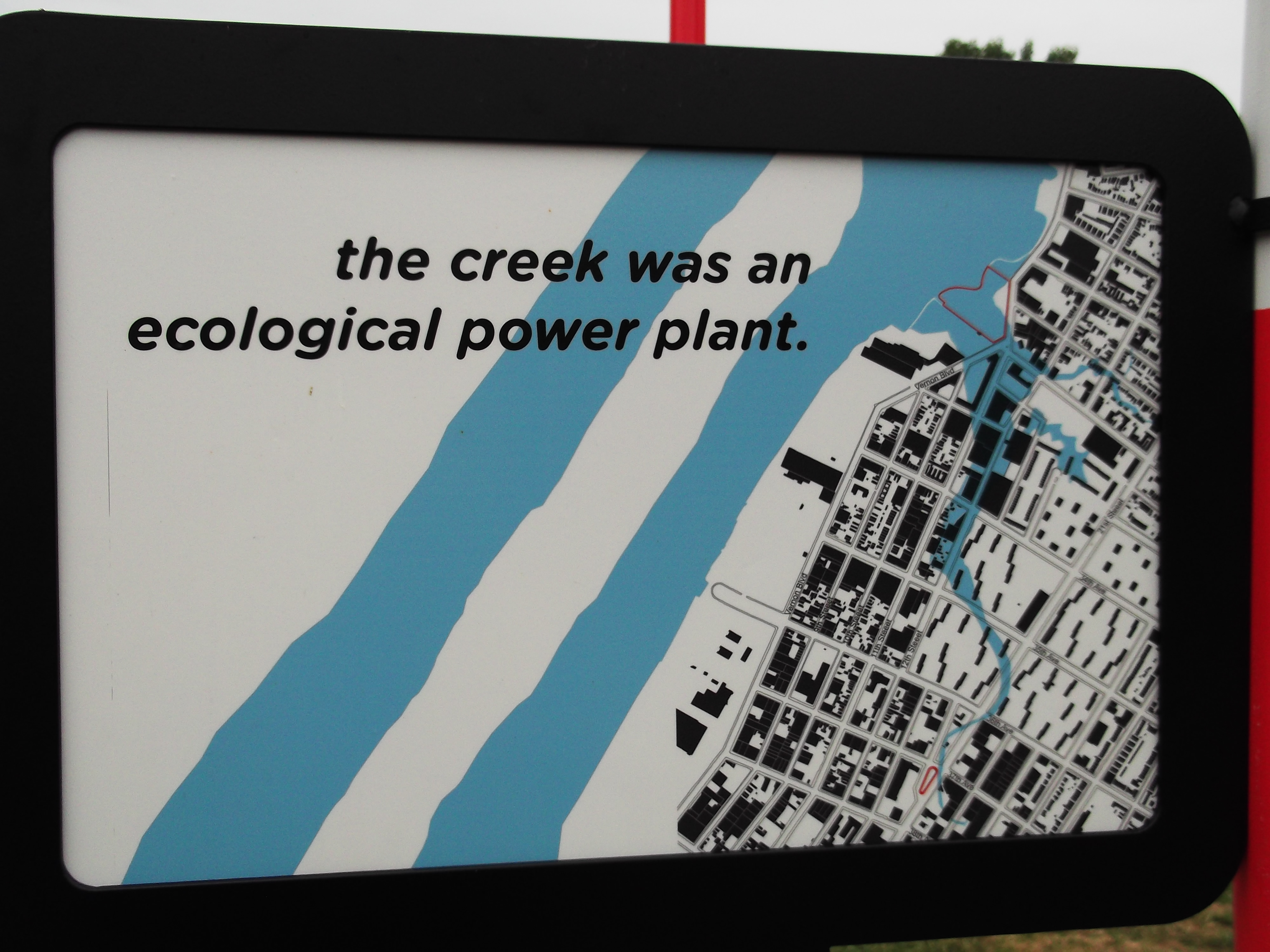
Civic Action, Photo Chris Fremantle
Various experiments in thinking about site, place, economy, conviviality and ecology. The projects started with discussions and seminars at the Noguchi Museum and have resulted in prototypes in Socrates.
Civic Action Curator, Amy Smith-Stewart states:
The exhibition at Socrates shows us what the neighborhood once was and what it could be. It asks questions. Why can’t the community reclaim its scenic riverfront? How can the cultural activity of the Park extend out beyond its immediate surroundings? Why does the ecology around us matter? And how can this place become an innovative district for artists, scientists and urban planners and how can the area improve the quality of life for New Yorkers?
What is Socrates: if a sculpture park is normally like a museum (ie looking after stuff), then Socrates is more like a contemporary art gallery (showing new ideas and installations) mixed with some aspects of a workshop (bringing communities into contact with artists). And its also a public park being used for walking, practising the trumpet and sitting in the sun.
The curatorial approach has also evolved. In the past it was perhaps more like a sculpture park as museum – some works installed for long periods, stand alone objects to be admired.
A publication for Civic Action would be good.
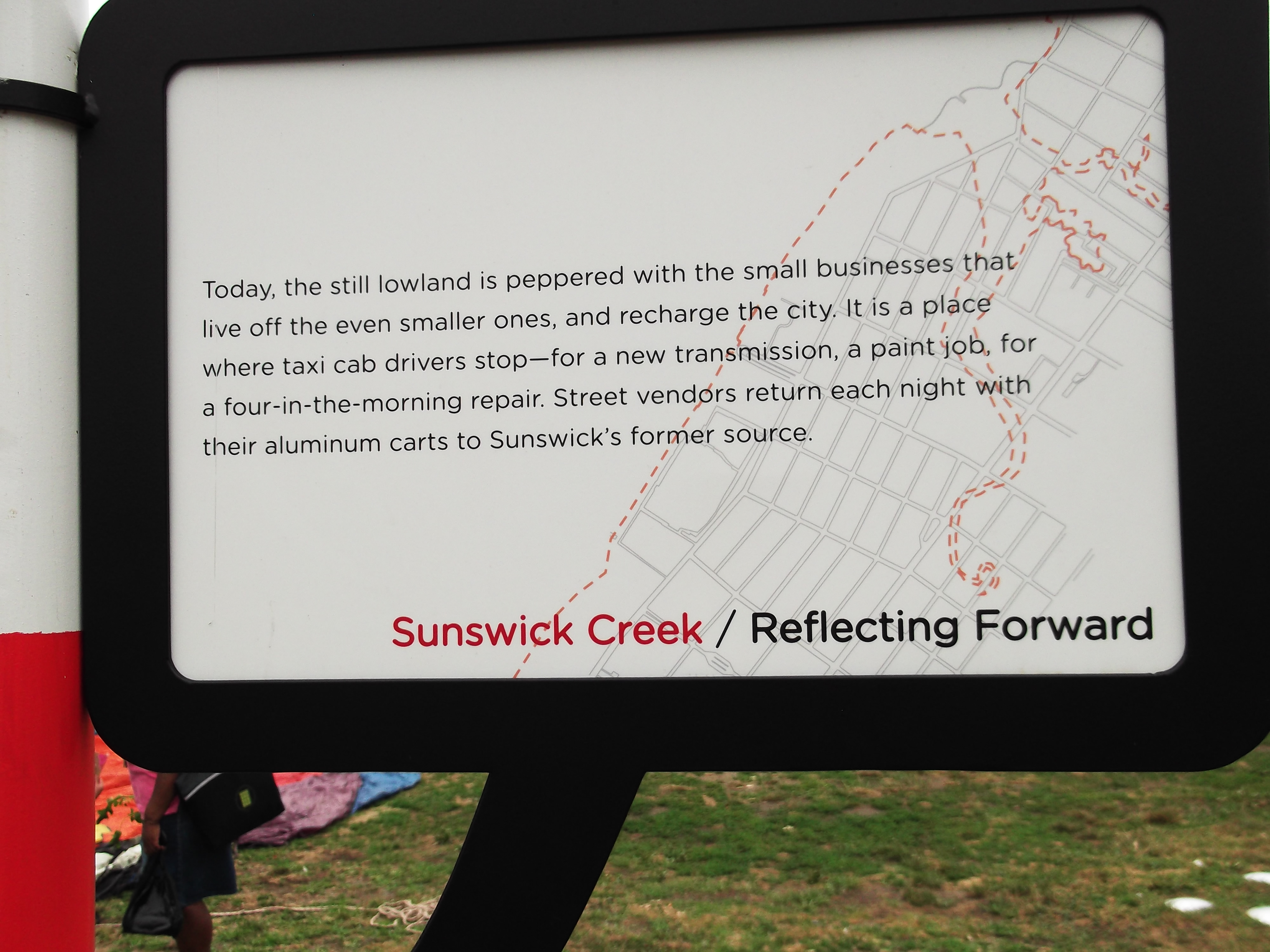
Civic Action, 2012, Photo Chris Fremantle
Making Policy Public – MAS CONTEXT

Vendor Power, Copyright Kevin Noble for CUP
The Center for Urban Pedagogy‘s Making Policy Public series is a standout project engaging marginalised interest groups with designers and communities. MAS Context provides and overview of the series here. Its a good description, though it doesn’t offer a critical commentary.
Thoughts on Sculpture in the Landscape
“Your head can be everywhere, but your feet have to be some place.” Peter Berg
The sculptures at Glenkiln outside Dumfries (several Moores, an Epstein and a Rodin) can be found because they exist on maps, even the AA Road Atlas. They are located on the side of a glen overlooking a reservoir because of the initiative of an individual – a patron and owner of a Scottish estate.
Is sculpture in the landscape anachronistic?
It’s not high on the agenda for public art development. That agenda, taken in no particular order, would probably include: interdisciplinarity, duration, design teams, publics, commons vs privatisation, spaces for dissent. It would be rooted in the APG rubric “context is half the work”. It might be driven by social or environmental concern.
I’m sorry I’m not able to attend the symposium Sculpture in the Landscape at Scottish Sculpture Workshop in August. The symposium proposes to address and define new concepts for outdoor public sculpture collections, focusing on the existing Lumsden Sculpture Walk. The brief for the Symposium is as follows:
SSW founder Fred Bushe, RSA OBE, established the Lumsden Sculpture Walk in 1985 in partnership with the local council. It was to provide a showcase for the work carried out by SSW artists, integrate SSW with the village of Lumsden, and become an arts destination and cultural site. Moving on three decades, SSW would like to address the current state of the site and the artworks, and look into ways of rejuvenating the walk for future generations. In doing so, we feel it is pertinent to explore contemporary critical thinking regarding public art, and consider how outdoor sculpture collections can become dynamic and relevant in the 21st century.
Item one on the Agenda: The construction of the public and private realms, the revealing of difference, the imagining of spectacle. These are all deeply underpinned by the complexity of modern overdeveloped societies and the greater complexity of ecological systems on which we are reliant. It’s creating work “within a ‘mesh’ of social, political and phenomenal relations” (TJ Demos). Interdisciplinarity is not sexy and desirable – it’s the necessary response to complexity. It’s the necessary relinquishing of ego when faced with innumerable unnameable interwoven challenges – think of the Flow Chart of the Declaration of Occupy Wall Street, and the adoption of anonymity, not just for personal safety, but also to foreground issues over personalities. In The Guide to This World & Nearer Ones (2009), Creative Time’s temporary public art project on New York’s Governors Island, Nils Norman is quoted as saying,
“I’ve been looking at the history of bohemian artist movements to find a possible place of dissention. Is Bohemia still a place where artists can experiment and develop strategies outside the mainstream? The normalising effect of the market makes this now almost completely impossible, and Bohemia has been instrumentalised by people who make direct links to ‘creatives,’ bohemian lifestyles and a new class of urban entrepreneurs through city regeneration. Where can alternatives be developed? Where is it possible to drop out and develop new languages and codes.”
Item two: Geometry. Numbers, algebra and other truths, which by their essential nature appear to stand outside time, provide a false sense of certainty in a world which is in a state of constant change. The use of geometry in architecture and art makes the world we construct for ourselves seem to have something to do with the unchanging ideal, whereas our lived experience is caught between on the one hand organised growth and on the other entropy. The architects’ angle (Libeskind) or curve (Gehry) may be generated in digital space and realised through CAD driven routers and saws, but in 50 or 100 years the angle and curve will have changed in response to the environment. Duration, maintenance, care – these are perhaps the more interesting challenges. Merle Laderman Ukeles’ Manifesto for Maintenance Art written in 1967 remains a provocation. In response to a recent Workshop on time, it seemed to me that artists involved in work in public have developed strong skills around spatial strategies and critiques, but the discussion of time is less nuanced – the time of the project, exhibition, residency is dominant. Hamish Fulton’s work NO TALKING FOR SEVEN DAYS is a challenge I’ve stared at for 10 years.
Item three: Training requirements. Firstly teamwork. If the question is interdisciplinarity then we need training. Who are ‘we’? We are in particular visual and applied artists. We are better networked, better collaborators, and have more social capital than we did in 1985, let alone in 1958. But we still arrive in a place (meeting/site) and think “What (from my sketchbook/back pocket) will I do here?” We might no longer think “Which piece of work in my studio can I plop down here?” We might now think “What is this place about and which of my tactics will engage with this place in the most interesting way?” How does our training equip us to fully engage within teams and with inhabitants (human and other)? Do we speak each others’ languages? Can the artists communicate effectively with the (landscape) architects? Do the architects understand collaboration? Can the hierarchies of professional status be set aside?
Item four: Who pays? Pre-enclosure, pre-agricultural improvements, common land provided subsistence for the majority of the population. Subsistence meant collecting firewood, grazing beasts and fowl, harvesting leaves, fungi, roots and fruits. The question of commons and enclosure (for which we can read privatisation) is as sharp now as it was then. It is sharp in Scotland because of the 2003 Land Reform Act (and a new tranche of funding for community land purchases has just been announced). It is sharp in Lumsden because when you stand in the village the hills around are owned by just three estates. It’s also sharp because the new territory that we have discovered in the past 15 years, the territory of the digital, is also moving quickly from being one characterised by commons to one characterised by enclosure. Your personality is being enclosed and value extracted from it by Facebook. As someone recently said to me, Graphic Designers spend their time paying for and learning to use the next new iteration of software from Adobe and Apple. The development of Creative Commons licensing, Open Source software (OpenOffice, WordPress, VideoLAN, Mozilla‘s suite, etc) are all more than just free – they represent the ‘subsistence economy’ of the digital era.
So to the most important part of the agenda, open to the floor: how does a footpath along the side of a road, interrupted by a Primary School, enable anything useful to be developed in response to these issues?
Thoughts on VeloCity
PAR+RS will be covering VeloCity, starting with this piece. VeloCity is an ambitious programme for Glasgow’s public realm leading up to the Commonwealth Games, 2014, and looking beyond. Glasgow has used key events (Garden Festival, 1988; European City of Culture, 1990; City of Architecture and Design, 1999.
Work in Progress

Public Art Scotland ‘Work in Progress’ installed in The Lighthouse, Glasgow, for the Scottish Government’s International Summit on Architecture and Place, May 2012 (Photo: Chris Fremantle)
What art have I seen?
George Wyllie: A Life Less Ordinary, Collins Gallery, University of Strathclyde.

Designated Drivers
In relation to the current campaign against censorship and in particular the proposed SOPA & PIPA bills its worth considering Temporary Services‘ project Designated Drivers (link to pdf), in which they asked twenty artists and groups to “each put up to 4GB of their archives, research, films, videos, software, images, etc on USB drives” – the visitors to the exhibition were “invited to copy everything!”
Co-Producing PAR+RS

Creative Scotland has just formally announced that I have, along with Trigger (Suzy Glass and Angie Bual www.triggerstuff.co.uk) been appointed as Co-Producers for PAR+RS www.publicartscotland.com, Creative Scotland’s public art development project.
So I’ve got a provocative question to start the ball rolling, is public art a subset of visual arts or is it everything across all artforms that takes place outside the temples of art?
Creative Scotland’s press release is here.
What art have I seen? AHM State of Play
Ruth Ewan’s Brank & Heckle at Dundee Contemporary Arts.
There for the AHM State of Play symposium. Ross Sinclair’s rant by audio/powerpoint was very refreshing, Jean Urquhart MSP deserved a standing ovation and perhaps hit the nail on the head. The Manifestos were really good, especially Tara Beall’s.
Once again, and precisely because there was no policy agenda being promoted, one must think hard to understand the point. Most conferences are organised by bureaucracies seeking to promulgate their policy initiatives and secure adoption by practitioners. Conferences organised by practitioners tend to complicate and agitate.
So what were AHM attempting to complicate and agitate? The simple answer might be in Jean Urquhart MSP’s talk which ended with an invitation or a challenge for the artists to engage more directly with the political – get stuck in, get into the Parliament, get political, stop talking the talk and start walking the walk.
And this is probably true, although perhaps the ambition for AHM was more subtle and demonstrated through the one-minute manifestos. These were a platform for artists (in the broad sense) to articulate something, frankly anything, that they felt it was important to say. Over the three events, some were political, some humorous, some dadaist, some demonstrated their point through their form.
My manifesto was intended to set out what I think is important in doing what I do. I was glad to be able to be part of another two manifestos (in the end). I was part of Tim Collins Anthropocene Evolution Alliance and on the day I found myself being part of Tara Beall’s multivocal performance.
We all have stuff to say and we all believe that it matters.
What art have I seen?
Ingrid Calame at the Fruitmarket in Edinburgh
Martin Creed Work No. 1059, 2011
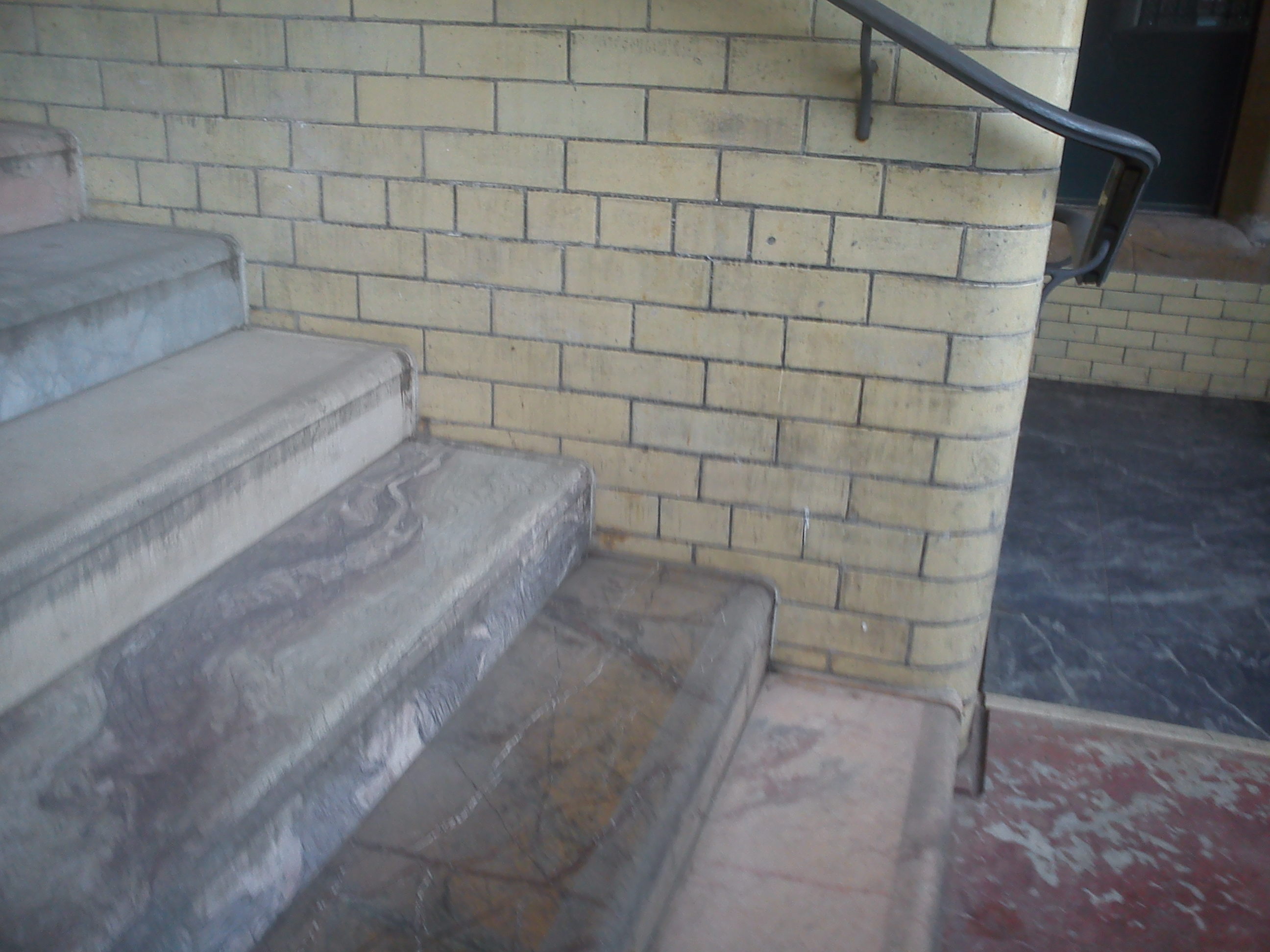
The Scotsman Steps, 2011, Photo: Chris Fremantle
Martin Creed Work No. 1059, 2011

10 Rooms: Artists Take Over

Do you recognise this building in Ayr?
Holmston House used to be the Social Work HQ in Ayr, and before that was a purpose built ‘poor house’. It’s up for sale, but is going to be used over the ‘Open Doors’ weekend 3/4 September for a creative intervention – as far as I understand there will be five rooms, one each for artists to hang work, and five rooms, one each for artists to make site-specific installations on the theme ‘Buildings in Ayrshire.’
This isn’t my project, but I did think (making a mental leap) of the Artists’ Rooms and wondered what if Gordon Matta Clark was doing a room? What if Joseph Beuys was doing a room? Michelangelo Pistoletto? Marina Abramovic? (I’ve linked to pictures of the specific works in my mind’s eye).
Please feel free to add your own suggestions/links…
Open Academy Ulaanbaatar

Jay Koh and Chu Chu Yuan of the international Forum for InterMedia Art has recently announced Phase II of the Open Academy in Ulaanbaatar.
Open Academy Ulaanbaatar is an art and cultural resource development programme and phase 1 took place in 2008 – 09. Workshops will be conducted from late May to July, followed by projects led by local participants that will take place till early October.
There will be 4 projects organised around the following categories:
- Project involving cross-sectoral collaboration amongst Ulaanbaatar residents, with ideas grown and negotiated between collaborators
- Project that emphasises practical execution of arts and cultural management knowledge gained from OAU
- Project that explores local historical and culturally relevant themes, to connect the past with present through practices, narratives, networks and/or structures
- Project on urban/rural ecology, to explore durational creative engagements with the ecology of communities whose livelihood depends on the land.
The workshops are open to all residents in Ulaanbaatar and all projects are led by local participants and selected through an open call process by a local panel. Workshop facilitators for Phase 2 are Chu Yuan, Jay Koh, Defne Aryas, Burka Arikan and Richard Kamler.
Open Academy has been carried out in Hanoi, Hue, Mandalay and Yangon since 2003 by international Forum for InterMedia Art (iFIMA). Open Academy Ulaanbaatar is supported by Prince Claus Fund from The Netherlands. enquiry: ifima@gmx.net
The University of Local Knowledge
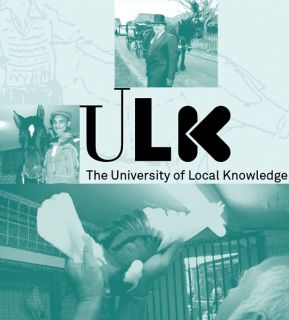
Suzanne Lacy speaks (Thursday April 28, 7-9 pm, at LACE – Los Angeles Contemporary Exhibitions – 6522 Hollywood Blvd, Los Angeles 90028) on her recent project in Bristol, England entitled The University of Local Knowledge, its process of engaging with over 300 Knowle West residents, and screens a selection of video “texts” in this first presentation in Los Angeles.
Founded during the great depression in the early 1930’s, Knowle West is a small community in the southwestern English city of Bristol. Residents were relocated from run-down council estates (housing projects) to Knowle West to work in surrounding tobacco and bag factories. Eighty years later these factories have been redeveloped into urban lofts, but nearby Knowle West residents face unemployment, stereotyping, and limited access to higher education.
Lacy worked with two art organizations in Bristol-the Arnolfini Gallery and the community-based Knowle West Media Center to produce an art project that brings together three spheres of knowledge: the arts, the university (University of Bristol), and Knowle West Residents.
Knowle West Media Center staff and artists worked with Lacy to “map” Knowle West by recording 1,000 video pieces, called “texts” in this project, ranging from 30 seconds to 4 minutes each. Through extensive discourse with community residents, these texts were assembled into categories, or “courses” on a website to portray the “University” through the eyes of its residents. The site features “courses” on rabbit hunting (animal husbandry), raising children as a teen mom (adolescent psychology), growing organic vegetables (agriculture studies) and how to maintain classic cars (mechanical engineering).
The University of Local Knowledge was funded in part by the Department of Cultural Affairs for the City of Los Angeles, The Arnolfini Gallery, and the Knowle West Media Centre.
Postcards to Japan
Express your support to the people of north east Japan by sending original A5 art work postcards.
After the major earthquake and tsunami in north east Japan on 11th March 2011 power supplies, land lines, mobile phone networks and internet access went down, making it extremely hard to contact family and friends to find out if they were safe.
The post office were quickly up and running again and in many cases the first news that loved ones were safe was by postcard.
Inspired by the wonderful impact postcards can have, we would like to invite artists and poets to send tangible messages of support to communities affected by the devastation by making A5 size original artwork or poetry postcards and posting them to:
“POSTCARDS TO JAPAN”
Ukishima Net,
Iwate, Iwate, Iwate,
028-4423,
Japan
We will collate all the postcards received into an exhibition to tour venues in north east Japan. There is no deadline, but if we have as many cards as possible by the end of May we can start putting on exhibitions. We also hope to publish a catalogue of the postcards received. Any profit made from the sale of catalogues would be donated to recovery projects in north east Japan.
Please look out for updates on http://www.ukishima.net If you have any questions please e-mail info@ukishima.net
Call for Hints and Tips on public art
Following on from the my last post, PAR+RS has announced the collaboration on the development of a short publication series entitled Hints and Tips: four books (one for artists, one for project managers, one for contractors, one for inhabitants) of hints and tips on public art. All contributions will be permanently recorded on the PAR+RS web site and an edited selection will form the printed editions.
Heaven for the opinionated, ambitious, vocal, frustrated, determined, elliptical… and subtle people working in public… I’m thinking about my numerous bugbears, rants and offers of unsolicited advice.
Go to Hints and Tips · Reflections · PAR+RS for a detailed brief.
Ruth Barker’s Big Questions, No Answers
Ruth Barker’s blog post Big Questions, No Answers on the PAR+RS website asks some very important questions which turn the question of skill and expertise. Taking off at a tangent, these questions are fundamentally to do with inter-disciplinarity, skill, competence and, as Ruth says, responsibility.
One of the sharpest critiques I’ve read draws on Psychology and applies Attachment Theory to recent trends within the arts and culture, i.e. if culture or the arts attaches itself to health to gain access to resources then it is forced to adopt the valuation methods used in health. (Gray, C., Local Government and the Arts. Local Government Studies. Jan 2002.)
The danger is of course that the arts have attached themselves to health, environment, education (primary, secondary, further, higher and informal), social work, youth justice, criminal justice, etc… each bringing its own formulation and methodology for valuation. Hence there is an under acknowledged process of specialisation particularly in the field of public art, where successful practitioners have indepth knowledge of very specific policy areas and are able to engage with managers, politicians and policy makers on their own terms.
I would cite for example Helen Mayer Harrison and Newton Harrison who can sit down with very senior environmental scientists, policy makers and politicians and engage in detailed discussion of watershed management strategies. If you take a look at their publication Peninsula Europe you will find an analysis of the financial value of reforesting the high ground of Europe in terms of the amount of clean water produced. This is only one example. There are many others: Suzanne Lacy talking about the issues around rape or teen pregnancy. In Scotland Jackie Donnachie has a relationship with medical researchers of this same quality, but I digress.
The question is whether in this process the artist also persuades these sectors that creative methods (of valuation) are relevant to them. Whose terms is success judged by?
“We are not very good at love.”
Fascinating programme on BBC Radio 4 yesterday (Mon 24th Jan) on the various factors making Glasgow one of the unhealthiest places to live. The programme discusses de-industrialisation (comparing with other parts of UK and Europe including Poland and Moravia), ghettoisation, genetics (not generally considered to be important), drink, drugs, violence (as the apparently default Glaswegian response) and Thatcherism as factors impacting on health. Conversely the programme considers the problems associated with infrastructure focused regeneration, culture and the question of hope. Drawing on expertise from the Glasgow Centre for Population Health and the Centre for Confidence and Well-Being (“We are not very good at love.”), this excellent programme discusses the impact of childhood experiences and dysfunctional upbringings amongst the key factors.
Robert Burns Public Art
Some of the many futures: I can report that on the 25th of January 2015 the STV Greatest Scot New Art Commission for Alloway, first announced in January 2011, is finally unveiled.
David Mach’s proposal, was for a 50ft high figure constructed out of small irregular pieces of metal leaning on the Auld Kirk ruin. Mach had trawled the internet for a year collecting images of people from Scotland and these faces had been printed onto the metal. It met with outrage when it was discovered that the figure was a nude female form entitled “Tam O’Shanter’s favourite Witch.”
Sandy Stoddart’s proposal was for a four-times life-size figure of Robert Burns in masonic robes. To be carved in granite, this work was to have cost more than the National Trust for Scotland’s entire deficit.
Claus Oldenburg collaged a modern hi-tech plough, rendered as a structure larger than the Brig O’Doon Hotel and called “John Barleycorn”, onto the landscape on the far side of the bridge.
Tracy Emin’s proposal, entitled “The Lass That Made The Bed To Me” was for a bed, sited in the gardens of the visitor centre, surrounded by whisky bottles and dirty clothes.
Fritz Haeg, although generally unknown in Scotland, drew on an experience as a young man visiting Burns Cottage. He had seen the representation of the market garden with plastic cows, chickens and cats. His ecoart proposal, “Tatties”, was to grub up all the gardens of the Burns Monument Park and establish allotments.
Jeremy Deller collected a large archive of Burns’ “tat”, primarily from the Burns Visitor Centre shop, and presented this as a cabinet of curiosities, the highlight of which was a taxonomy of decreasingly well executed representations of Robert Burns based on the portrait by Nasmyth.
Mark Dion’s proposal for a cabinet of curiosities entitled “To A Mouse,” used a taxidermists approach and incorporated every stuffed animal referred to in the collected works.
Charles Jencks proposed raising the existing Burns Monument on a large spiral landform taking up the whole area of the Monument Park and making the structure visible from Ayr Town centre.
Banksy proposed putting a traffic cone on top of the Monument.
George Wyllie’s 100,000 tonne container ship, named “Burns Line,” permanently moored at the mouth of the river Doon was to be inscribed with the words “Whatever mitigates the woes or increases the happiness of others, this is my criterion of goodness; and whatever injures society at large or any individual in it, this is my measure of iniquity.”
Suzanne Lacy’s approach was to involve as many young women in the South West of Scotland in a performance entitled “The Lads o’ Tarbolton, Cessnock Banks, the Highlands, Ballochmyle, Albany, Inverness, Ecclefechan and of the Country.”
Rachel Whiteread cast the inside of Burns Cottage and then demolished the building.
Yinka Shonibare proposed to dress all the statues of Burns around the world in brightly colour West African batik clothes for a day. As with his other works, all the heads were to be removed.
Anthony Gormley’s cast iron life sized nude figure entitled “A man’s a man for all that” was rejected as being self-serving.
With thanks to Murdo for the inspiring conversation.
Working Well: People and Spaces
The New South Glasgow Project received the go-ahead from the Scottish Government in December.
Astronomy picture of the day publishes image of Spiral Jetty

Robert Smithson's Spiral Jetty photographed in 2010
More public time?
Thanks to Alison Bell for drawing my attention to the following quote from Rebecca Solnit,
‘Landscape’s most crucial condition is considered to be space, but its deepest theme is time.’
See earlier post Public time?
The Turra coo
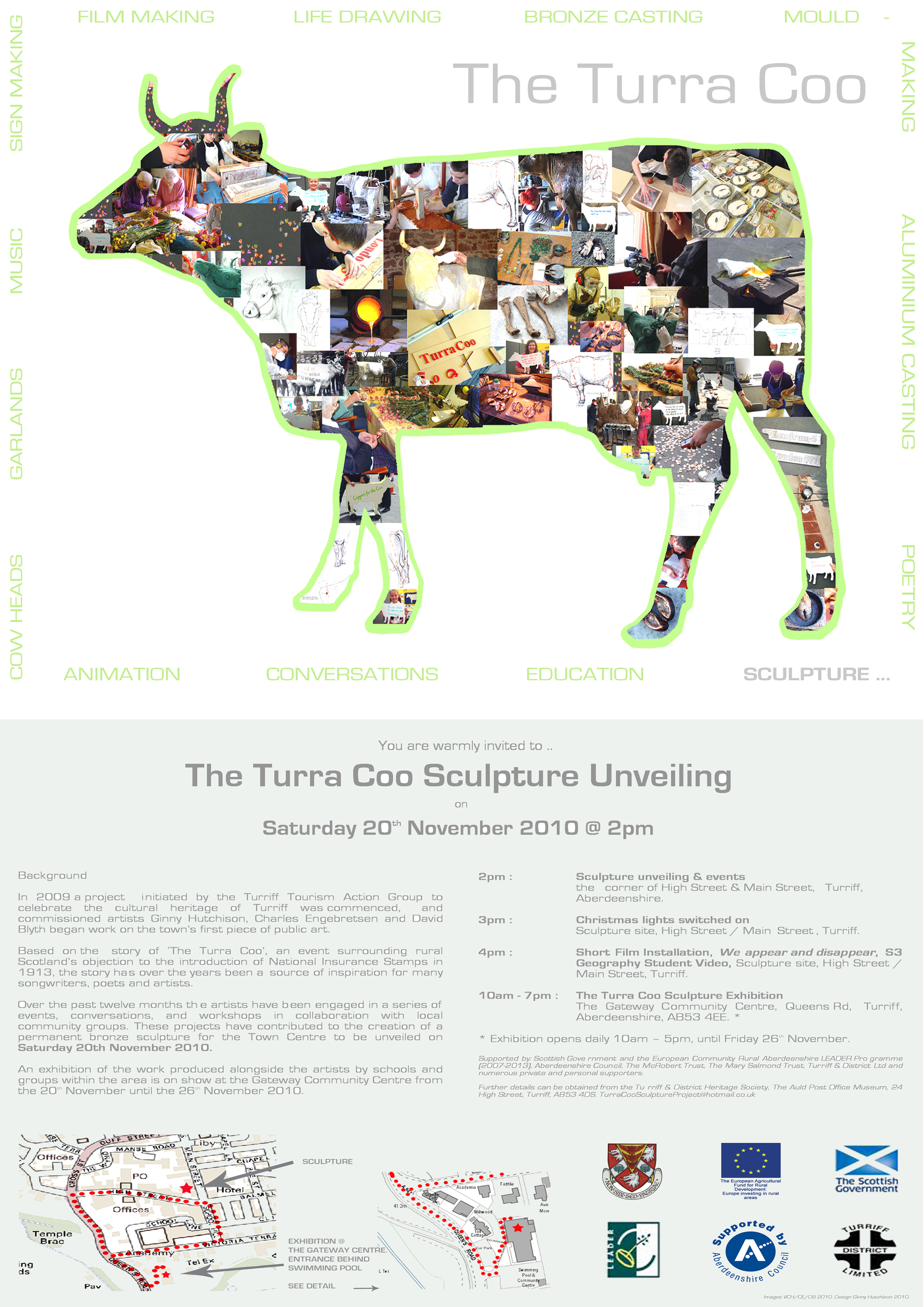 Those excellent artists Ginny Hutchison, David Blyth and Charles Engebretsen are finally unveiling their major new work, the Turra Coo. The original Turra Coo was the centre of a controversy about national insurance stamp. Slideshow on Radio Scotland.
Attending the SKOR conference in Amsterdam
Actors, Agents and Attendants: Speculations on the cultural organisations of civility
On The Structure
SKOR (the Dutch Foundation for Art and the Public Domain) set out to focus on the shift from a welfare state to a neo-liberal state, and the implications for care and civility (health and state responsibility). There were regular references to mega-changes, not only political. The construction of discourse through multiple channels was embodied in the scenography of the conference (designed by n.office architects) constructed as a podium or soapbox for statements, bleachers for discussion and a table for panels. The multiple channels extended out of the conference to commissioned works in the streets of Amsterdam and a film programme presented prior to the conference. It was also manifest in the preparatory seminars bringing together first politics and policy and then practice and research into focus.

Felix Meretis, the venue, is an independent European centre for art, culture and science and a national and international meeting place in Amsterdam.
The form of [a] poem is like the form of a new public sphere, like the structure of a new idea. Paulo Virno
On The Purpose
Superficially focused on the issues of arts and health, the underlying issues raised by the conference included:
- questioning “the role of art and its assumed ameliorative function,”
- exploring “care as a political and philosophical concept,”
- the ability for art to be critical when it is also implicated in gentrification and “consensualising the increasingly capitalised infrastructures of public care.”
“We can say that care forms the core of public art’s aesthetic assemblage: that public art has been invented to produce ameliorative caring, performances and objects within a landscape organised by a welfare state. So what happens when that landscape is radically withdrawn?”
Day 1 Fulya Erdemci, Director of SKOR, introduced the day which was chaired by Andrea Phillips.
Mark Fisher, a UK writer and philosopher, started his presentation by channelling the experience of precarious work: swipe cards to get into buildings; submitting bank details and forgetting which organisation you have done it for; logon details for different computer systems; emails from institutional administrators; occupational therapists talking about stress; psychiatrists prescribing drugs: the obverse of flexibility is contortionism. Living with the impact of the business ontology and epistemology (business models of being and thinking) that have been imposed on health, education and culture. The therapy culture which reflects everything back onto the individual and the family. He suggested that the flip side of ‘no such thing as society’ is ‘the big society’ based on ‘magical volunteerism.’ I asked about the requirement that all activity be valued as work (caring for instance needs to be transmuted into work for it to be valued by society). He suggested that there are two responses: refusal to participate or total adoption where everything is defined as work and accounted for financially. Underlying this is the need to extend the discussion of ‘externalities‘ from the environmental discourse into the wider social discourse. In other words to find ways to deal with those costs or benefits not ‘transmitted’ through price. One strand of environmental policy seeks to ensure that environmental impacts, not historically acknowledged in cost, enter into the financial systems through, for instance, carbon taxes. Is it useful to financialise the value of care any more than it is useful to financialise the value of bees? Where attributing financial value to the negative environmental impacts of human activity should enable the costs of remediation to be met, attributing financial value to positives such as elements of ecosystem services can produce absurdities. A good example was the news the day that Lehman Brothers collapsed with an impact measured in billions of dollars, that bees were worth some hundreds of millions to the economy.
Steven de Waal, a politician and social entrepreneur who argued (as I understood him) for the potential of the Dutch co-operatist system, where a significant part of the welfare state is delivered through private not-for-profit institutions, to adapt and engage with the neo-liberalisation of care by reducing the bureaucratic stranglehold and increasing citizen participation in their own care.
Alfredo Jaar, the art star speaker, in a conventional artists’ presentation, showed us a series of projects located in the ‘real world.’ NB his construction of his practice is split across the art world, real world, education – his distinction between the art world and the real world being about the audience expertise. He talked about the role of artists working in public space trying to create the cracks in spaces of consumption to draw out resistance. Although a clearly charming and skilled man, these projects were nailed by Ian Hunter as ‘the spectacle of empathy’.
[apposite quote of the day: USE AN UNACCEPTABLE COLOUR, Gavin Wade]
Edi Rama, the Mayor of Tirana in discussion with Fulya Erdemci, Director of SKOR. Rama is famous for being the man who painted Tirana. In a short film Rama talked about colour as ‘dresses’ or colour as ‘organs.’ He compared relationship of the Mayor to the electorate with the relationship of the artist to the audience. Rama talked about the role of beautification in changing a culture and re-engaging the population in civic society. His colour strategy was one of desperation on discovering himself in a kafkaesque town hall with no budget at all (no one was paying taxes). When asked by an EU official responsible for repairing a bridge (?) in Tirana, “What colour should I paint it?” Rama replied the orange of the Dutch football strip! This immediately set off a public discussion. Based only on the fact that it was actually generating a public discussion of civic space, Rama continued painting buildings and urban structures in vivid colours. He reported that they undertook a referendum. In the referendum they asked two questions: “Do you like it?” and “Should we continue?” He reported that something like 55% said they liked it but 75% said they should continue.
Anton Vidokle, artist, curator and founder of e-flux talked about his understanding of art, referencing the French Revolution and the use of the King’s art collection for public benefit. Talking about the emergence of Manet and Courbet forty years later, the first artists one would associate with a critical practice as might be understood in contemporary practice, he speculated on a connection with transmutation of the royal art collection into a public art collection. He went on to describe various e-flux projects. I’ve written about Vidokle, e-flux and in particular the Martha Rosler Library before, so I’ll move on.
Chto delat?, the Russian artists’ collective. Dimitry Vilensky challenged the core subject by arguing that care is maintenance of the status quo, and that care contradicts change. “Where is violence in this discussion?” He questioned the value of health, coming from one of the most unhealthy countries and reminded the audience of the misuse of ‘a healthy body is a healthy spirit’ by the fascists. Vilensky, in describing the ideological fight, drew out the relationship between the work of Chto delat? and the role of artists during the revolution, particularly highlighting Rodchenko’s design for a workers’ club reading room which Chto delat? have reused in exhibitions. He noted the strategy of creating pedagogical spaces using furniture, murals and newspapers. He asked “Where is the factory that we can seize?” and noted that there were no revolutionary masses outside the conference waving flags and supporting the important deliberations. He commented on the importance of not only taking over the means of production, but also inventing new means of production (such as Vidokle’s e-flux).
Gavin Wade performed part of freee‘s spoken word choir event currently taking place at Eastside Projects in Birmingham, an artist-led space he has been involved in setting up. Wade is known for amongst other works STRIKE and his involvement in the organisation Support Structure. When challenged about something he had said about art not being useful, he referenced the Artist Placement Group and the complexity of working within non-art organisations without becoming completely subsumed by their agendas. He also commented that although Eastside Projects is undoubtedly contributing to the gentrification of the area and generating increased wealth for the landlord, he said, “We are not the tailors of Utopia.” They use a billboard (the only non-commercial one in Birmingham) attached to the building. They produced a manual for Eastside Projects, making the operation of the organisation explicit.
Introducing Day 2 Fulya Erdemci reiterated the mega changes, e.g. welfare state to neo-liberalism, analogue to digital. She also commented on commissioners becoming customers with their own aesthetic preferences (perhaps suggesting some recent experiences where SKOR’s aesthetic authority has been questioned).
Beatriz Colomina‘s presentation on x-ray architecture took us on a cultural historical tour of the relationship between the body and architecture by way of renaissance anatomical/architectural drawing, section and dissection, and the emergence of x-ray and the international style (not synchronous, but not unrelated). Relating health to architecture she highlighted Le Corbusier‘s language and then demonstrated the relationship between sanatorium architecture and domestic spaces. Referencing Susan Sontag’s Illness as Metaphor Colomina talked discussed the reshaping of the city by illness, in particular TB. She explored the evolution of CAT scans into architectural practice manifest in the increasing aesthetic use of sections. One comment was that medicine is also the end of particular forms of architecture such as TB houses and leper colonies.
Hedy d’Ancona, politician, spoke about the influence of the built environment on wellbeing, the importance of the healing environment as a concept coming out of both healthcare and public housing.
Matthijs Bouw of One Architecture discussed the Jozef and Geertruiden Projects. He said “We love markets because they encourage dynamism, teams, diversity and flexibility. We hate markets because they promote atomisation, arbitrage and risk management. Asked by hospital management to finalise the layout for a housing development on a site being vacated due to relocation of services, Bouw questioned the economic model and with the support of the hospital management developed a new approach. On one site, Geertruidentuin, existing hospital buildings were regenerated as housing without the involvement of a developer. On the other nearby site, St. Jozf, the ‘allied services’ (midwives, physiotherapists, etc.) dislocated by the hospital moving to a new site, but not themselves moved in the process, became stakeholders in a new healthcare facility utilising the remodelled existing building. This important example involved questioning the ‘means of production’ (i.e. developer-led regeneration) through which more value (cash) was produced for the hospital and more value (dislocated services becoming stakeholders) was produced for the locality. Bouw also raised an interesting point about the client/commissioner because the daily reality is that these are project managers, risk managers, quantity surveyors and legal representatives rather than individuals carrying the vision.
AA Bronson channelled St Paul’s letter to the Galacians setting out his own cv and then making clear he was addressing not only those present, but also those many different absent peoples. He talked about art, death and healing. Whilst in many ways adhering to the conventional artists’ talk, it challenged fundamental ideas about boundaries and limits.
The story took us from the early years of General Idea (“Felix Partz, Jorge Zontal and AA Bronson of General Idea lived and worked together for 25 years. Partz and Zontal died in 1994.”), through the emergence of AIDS and its impact on their community, their work and their lives. Whilst AA Bronson did not describe in detail the process or experience of caring for his two friends and collaborators as they died, he did show us the works he made with them during that process, and he did allow us to understand how he has since woven together an art practice and a healing practice. The weaving together of life and art is a constant process: Felix Partz and Jorge Zontal are diagnose with AIDS so pills enter their lives and so the pills entered the work becoming sculptures and installations, as large as sofas and as light as clouds.
Describing life after their deaths, AA Bronson developed his experience of healing built up with his friends and collaborators and how this began to form a fundamental part of his life. He set out his healing practice as a thing in itself and in his art practice, creating therapy rooms in galleries, and seeing clients in them before and after gallery hours. He described more recent collaborative work with younger artists (School for Young Shamans) and the group work (Invocations for Queer Spirits). He talked about his role as a medium for individuals to speak to their own bodies.
Perhaps like Alastair McIntosh who, in Soil and Soul, addresses spirituality and environment without descending into new age waffle, so AA Bronson spoke about healing and art in a compelling and challenging way, straddling uncomfortable boundaries with a compelling presence and story.
Bik van der Pol‘s discussion of happiness started with a short anecdote about advice not to test your sense of humour on policemen in other countries, from which they developed an argument about cultural difference, but more importantly about happiness. Touching on the World Values Survey and on Laughter Yoga, they talked about using nitrous oxide as part of urban public health programmes.
The programme ended with Willem Geerlings discussion of the challenges for health. He is the Chair of the Board of the Medical Centre Haaglanden and pulled Susan Sontag’s Illness as Metaphor from his pocket.
Public time?
 Claire Docherty’s comments at the Mapping the Future (of public art in Scotland) event in Dundee yesterday were billed as a discussion of ‘public time’ and focused on the current state of public art. She seemed to be arguing around a need to move beyond a dichotomy of monumentalism or critical ephemeralism looking in particular at what she called public time. She described a number of projects which were iterative or cumulative or strategic, i.e. that, without monumentalism, tried to develop relationships with audiences and participants (the public?) over a period of time. She highlighted gardening and pavilion projects, slow food, conversation and referenced her own year long programme of One Day Sculpture across New Zealand. The obligatory Ranciere reference – participation does not equal critical legitimacy – was made.
But her comments remained looking around in the (public) art world. Whilst time and space are different dimensions of the same experience, the focus of public art, certainly in Miwon Kwon’s construction, has been an evolution of the understanding of space and the abilities of artists and designers to shape and reveal space.
“Yet despite the meanderings of the last 15 years we often continue to use such a search for resolution in lieu of admitting that there is a need to understand the relative value of work that deals with time as much as space.” (Proxemics, 2006, JRP Ringier, p.99)
Nothing is ever cut and dried, but when Liam Gillick raised the issue of shifting the focus from public space to public time, and I’m not sure if that’s where Docherty got the idea from, he prompted in my mind thoughts about the public experience of time, not artists’ construction of time.
Turn your thoughts to public time and approach that idea:
Waiting, waiting lists, waiting rooms, wasting
Travelling, delays, speed, dislocation,
Working, pressure, shifts, holidays, nightworkers, clickworkers, payday
Boredom, repetition, necessity, cuts, dole,
Queuing, waiting,
Shopping, retail therapy, footering
Beer o’clock
Timeless places, casinos without clocks or natural light, skara brae
Sleep disorders, postcode lotteries,
Today vs PM, rolling news,
“The geese from Siberia are three weeks earlier this year”
(the list is as long as the time invested in making it – half an hour yesterday, another five minutes today)
Time is a curious phenomenon. It is structured within society, historically by culturally determined cycles derived from the process of the planet’s angle and rotation around the star at the centre of our solar system. In Scotland, because of our Northerliness, the pattern of the seasons mean that our school holidays are different from England. We have different festivals (Michelmas has just passed, Lammas before that, and in the future Candlemas) with associated happenings, including food and drink. Marking time and the pattern of activity related to the seasons has slipped our minds’ because we shelter, light and heat our lives. Other cultures have a more present experience of seasonality, including for instance the Sami (image above). We rarely extend our timescale to even one cycle of seasons, let alone thinking beyond our own lifespan.
If there is value in drawing attention to scale, then it is equally important to draw attention to value. Time is money. Or rather there is a more complex relationship where social position is related to time and money. Just as money is unspecialised form of exchange (and humans are unspecialised animals) so time (as we organise it in Western society) is an unspecialised form of measurement enabling a little of one person’s time to be valued very highly and a lot of another person’s time to be bought extremely cheaply. In this way time is like space. Public art is complicit in the gentrification of space. Can public art not also be accused of being complicit in the gentrification of time?
Detailed summary of all three Mapping the Future events on PAR+RS website.
Postscript
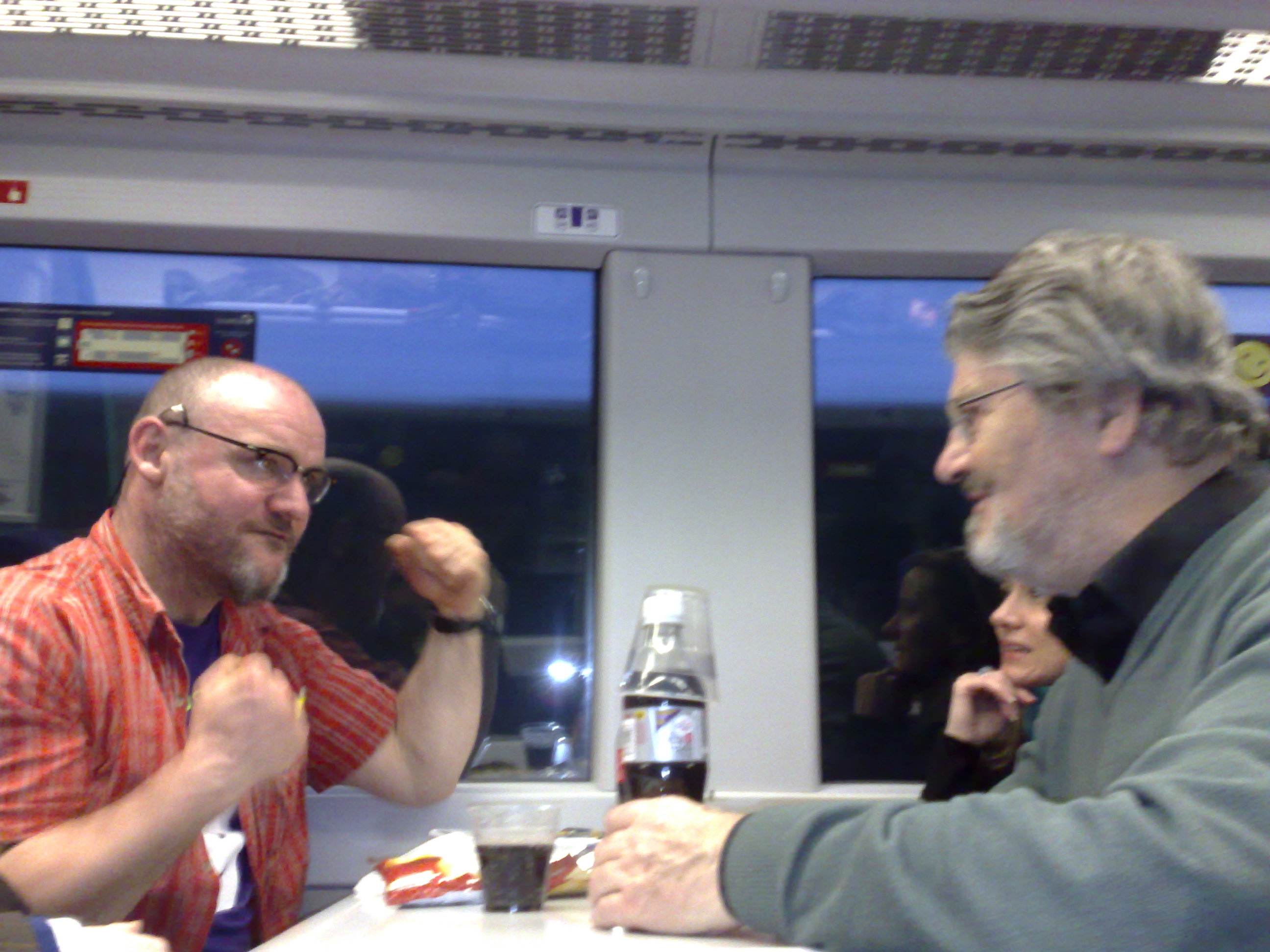
"I always knew you were wrong." Ross Sinclair and David Harding on the train returning from the seminar.
Art Work comes to Scotland
Temporary Services‘ project Art Work has raised important questions about the personal economy and practice of artists. On the back of one-off newspaper-format publication, distributed free throughout the US and internationally, Temporary Services have kick started a discussion about the ways that artists and creative people use alternative economies to once again challenge the idea of competition and the market dominance of culture. Temporary Services produce exhibitions, events, projects and publications. They say “The distinction between art practice and other creative human endeavors is irrelevant to us.”

The Scottish Artists Union has invited Brett Bloom, one of the founders of Temporary Services, currently based in Denmark, to speak at the SAU AGM (7.00pm 30 September 2010, Stills Gallery, Edinburgh) about Art Work. Follow up events are planned for November.
Center for Urban Pedagogy
Center for Urban Pedagogy (CUP) releases another three in the series of Making Policy Public posters. CUP, based in NY, make educational projects about places and how they change.
Barriers to Reentry. This poster takes a look at formerly incarcerated people and the difficulties they face when trying to reenter the workforce. It was produced through a collaboration with the Fortune Society and Sara McKay.
I Got Arrested! Now What? This poster breaks down the juvenile justice system comic-style. It was produced through a collaboration with the Center for Court Innovation, the Youth Justice Board, and Danica Novgorodoff.

Immigrants Beware! This poster explores the immigration consequences of criminal convictions and gives non-citizens knowledge and resources to fight the deportation process. It was produced through a collaboration with Families for Freedom and designers Lana Cavar and Tamara Maletic.
Composer in residence
John Browne is Composer in Residence at the Florence Nightingale School for Nursing & Midwifery. Interesting blog including ideas in development such as a songbook for nurses.
6th International Conference on Contemporary Cast Iron Art
“Come for the Fire Stay for the Art”
“Meet Melt Make”
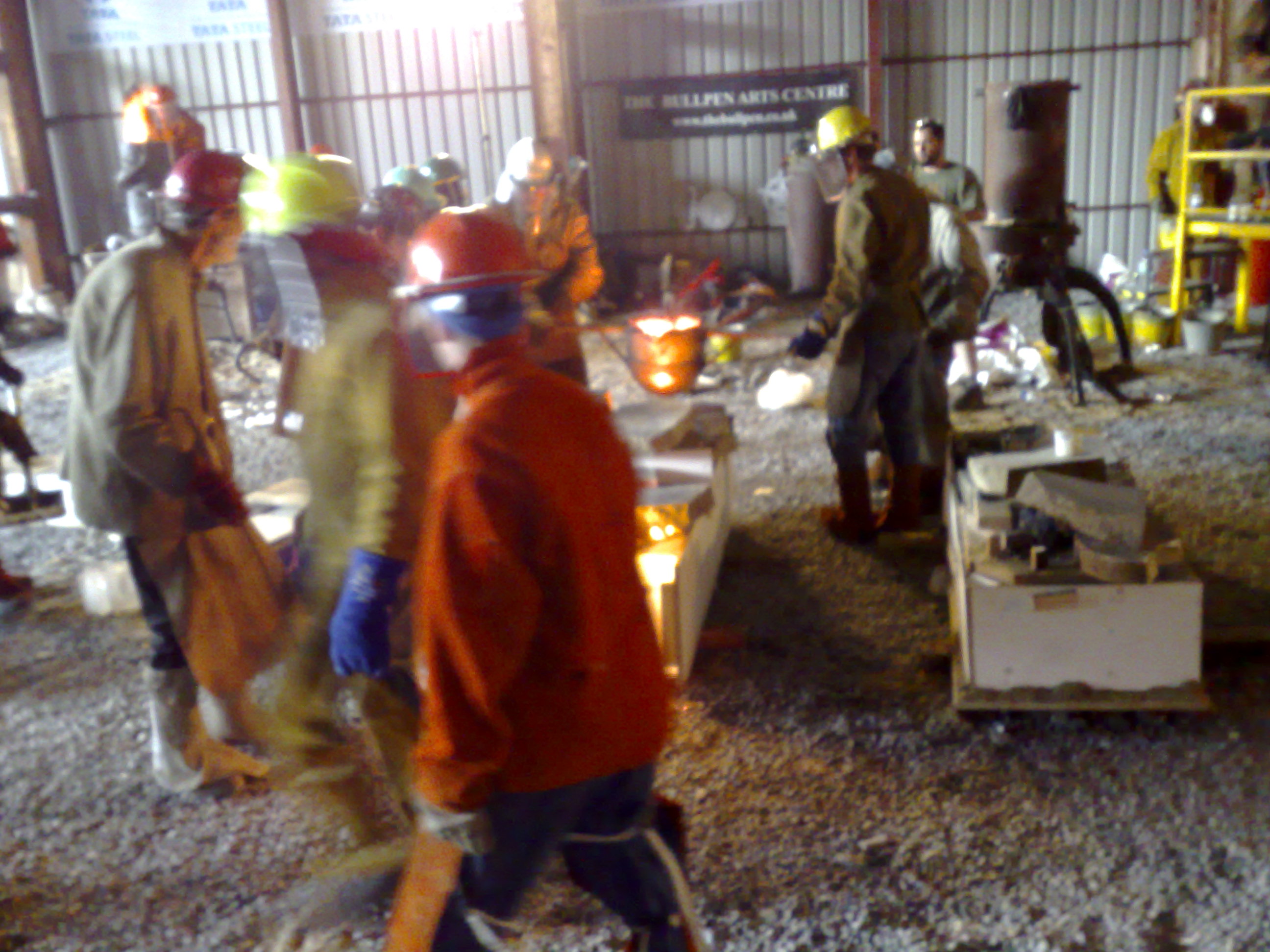
These are the strap lines on T-Shirts in July in Kidwelly, Camarthenshire: more than a hundred artists taking over an industrial museum to live and breath casting iron. Hard hats, leather aprons and jackets, work boots, gloves, face masks, lots of moulds being made and poured…[more]
New South Glasgow Hospitals Strategy Artists

New South Glasgow Hospitals
Ginkgo Projects is working for Brookfield Construction, in collaboration with NHS Greater Glasgow and Clyde, to develop and deliver an arts strategy for the new Acute and Children’s hospitals for South Glasgow. As part of the development of the strategy we wish to recruit two artists to work with us, between May and September, to explore and develop two interest strands based on the healing environment and waymarking / orientation.
Expressions of interest are invited from artists who are willing to collaborate with us and work to develop a grounded yet innovative strategy for the new hospitals.
Deadline for submissions: 5pm 19th April. Interview date: 27th April 2010
Project brief is available to download from here in PDF format.
Health, Nature and Art: the GROVE project at NHS Greater Glasgow and Clyde’s New Stobhill Hospital

New Stobhill Hospital Sanctuary, Photo: Laurie Clark
Invited paper as part of the Institute for Advanced Studies in the Humanities, University of Edinburgh, Theory in Practice programme:
“Health, Nature and Art: The Grove Project at NHS Greater Glasgow and Clyde’s New Stobhill Hospital”
2 March 2010.
Abstract:
This paper sets out the Art & Architecture collaboration resulting in the GROVE project for NHS Greater Glasgow & Clyde’s New Stobhill Hospital. This project, based on a strong conceptual framework, uses artworks as part of the construction of a environment where the experience nature plays an important role in healthcare. The paper discusses the practical aspects of this major new public art work and looks at the theoretical ideas of the artists, architects and NHS Arts & Health team.
The author, as part of NHSGGC’s Arts & Health team, has worked closely with Thomas A Clark, lead artist-poet; Reiach & Hall Architects; four other artists, and NHSGGC’s Capital and Commissioning Teams to deliver the project. The project was conceived and developed by Thomas A Clark and Reiach & Hall over a 6 year period prior to commissioning, and has been funded by Scottish Arts Council National Lottery Public Art Fund, NHSGGC Endowments, NHSGGC Staff Lottery, as well as a wide range of community groups. It forms one of a series of Arts & Health developments as part of NHSGGC’s Modernisation programme.
Language of Sculpture
Invited panellist, Language of Sculpture, International Sculpture Center Conference, London, April 9 2010.
Antony Gormley, Lucy Orta, and Peter Noever will headline the International Sculpture Center’s 22nd International Sculpture Conference, “What is Sculpture in the 21st Century?”, being held in London, UK, April 7-9.
This monumental event will explore topics including: The Languages of Sculpture; Public Perception and Investment; and The State of Education. In addition to the keynote speakers, conference highlights include an international roster of presenters, opening reception at Tate Modern, free admission to Henry Moore Exhibition at Tate Britain, daily ArtSlam sessions for attendees to show their work, workshop demonstrations at Chelsea College of Art & Design, and a gallery hop, as well as pre and post event optional activities.
Registration Deadline: March 16, 2010. Find more information and register online @ http://www.sculpture.org. Questions? Contact events@sculpture.org or USA 609.689-1051 x302.
Working in Public Seminars
Published on the PAR+RS Public Art Scotland website, an introduction to Working in Public (2007) by Prof Anne Douglas and Chris Fremantle. This includes links to essays written by Prof Douglas as well as Wallace Heim‘s evaluation of the project.
Reading
ARTWORK, a project by Chicago-based Temporary Services. Well worth getting a copy of this newspaper which challenges, documents, proposes and otherwise stimulates thought about alternative economies in the arts. With essays, personal stories and re-presentations of historical artworks, this is excellent food for thought, arising as it does out of the current climate which in the US is seeing the collapse of the art market, and in the UK a significant shrinking in public-sector investment in the arts, whether the government changes or not.
Reading
How not to Commission by Ray McKenzie on the PAR+RS web site.
Well articulated challenge to assumptions about public art, both against works which are simply corporate posturing, regeneration ‘place-making’, or artist’s ego, and also against the overblown claims of socially engaged art.
McKenzie makes use of Nicholas Bourriaud’s Relational Aesthetics, but I wish he had also taken into account Grant Kester’s work, a more nuanced and subtle argument. In the end the projects he discusses are compelling, and I am persuaded by his argument that the 19th Century monuments in our cities are not so far away from some contemporary public art, being focal points for community activism, celebration and memory.
An artist reports on COP15
Read Aviva Rahmani’s reflection on attending COP15 in Copenhagen. She sees hope, not in transnational engineering of negotiations, but in all the NGOs and projects seeking to make a difference on the ground. It strikes me that the increasing attention focused on the periphery, whether it’s Eigg or Tuvalu, might be indicating a very basic shift (see posts on Landworkers). The sharpness of the challenges faced in remote edge locations is matched by the imagination and energy brought to bear on them. What is interesting is the extent to which these examples, of crisis or initiative, become visible and in turn become benchmarks and potentially become models.
Bike Bloc and Environmental Crisis
Having been busy busy busy ticking off items on my to do list of project management, fundraising and research this morning, I decided to go and see if there were any pictures on Bike Bloc Blog “Put the fun between your legs” (I’m just dying to see these sculptures!) I followed a link and found the Great Indian Sale blog all about the crisis of environmental rights in India. I don’t know any more than you can see, but its interesting, and we might further extend our understanding out of a Euro-centric perspective.
Bike Bloc
Brian Holmes writes very well, and his piece Into Information on Productivist strategies suggesting informationist strategies is very provoking, but for sheer compelling, articulate, quality writing, read The Decade to Come. He ends with a link to the Bike Bloc video.
You can also hear something tantalising in the Guardian podcast from the Arnolfini where Bike Bloc is being tested.
What art have I seen?
I travelled up to Cairngorm Mountain for the official opening of the second phase of Arthur Watson’s Reading the Landscape.
There are many parts to this, developed in collaboration with a number of other artists.
The first phase works in the base station (images below), Drawing Dangerously, were installed some time ago. This is a series of images and texts created out of the mountain climbing culture. The huge screen prints were developed from photographs taken by Andy Rice, one of Watson’s collaborators. The words surrounding the images are the names of climbs. As climbers explore the rock face and discover a route, they give it a name, subsequent climbers discovering variations of the climb, in turn use variations of the name.

The image below introduces another dimension, collecting Scots and Gaelic words for snow. I have a small contribution to the first publication on Reading the Landscape and it focuses on this aspect.

The new works include several viewpoints and the Camera Obscura.
At the western end of the site a structure, designed by Watson and Will Maclean, has been built channelling a mountain stream through a platform and down three buttresses. Within the structure, poems and texts draw attention to the outlook. This is a development for Maclean from Cuimhneachain nan Gaisgeach (Commemoration of our Land Heroes) on Lewis.
Images of construction of viewpoints on CairnGorm Mountain’s Flickr Photostream
Nearer the base station, at the top of a set of steps from the carpark, is a seat built into the wall. Sit down and Stanley Robertson‘s voice comes out of two speakers built into the walls starts to tell you folktales. Robertson (1940-2009), certainly one of the foremost traveller storytellers of the North East of Scotland, and a longtime collaborator with Watson. This is an outdoor version of works that Watson made for Singing for Dead Singers.
In the mountain garden Fergus Purdie, architect, Lei Cox and Mel Woods, artists, have created a Camera Obscura.
This is a built structure sitting over and along a path. There is a small bay, something like a side chapel, which you enter through heavy curtains. Inside the landscape is laid out before you on a table, turning gently. Periodically you move in giant steps along cardinal lines to the sea. These latter steps are the art introduced by Cox and Woods, a series of videos taken at regular intervals of distance (12 steps to the sea in each direction) and time (going north is winter).

The rangers are already using this particular feature when the weather is bad and the school kids can’t do anything outside. Lay a piece of paper on the table, show the pupils all Cox and Woods images, let them choose one, and then they can collectively draw the image superimposed on the paper. Suddenly landscape drawing is both incredibly literal (the image is projected on the paper) but doesn’t come out looking literal – mark making takes precendence.
Images of construction of Camera Obscura on CairnGorm Mountain Flickr Photostream
It was great, eight years after my first journey’s to Cairngorm Mountain to meet Bob Kinnaird, to go back and see something so good. I suppose my job at the outset had been to suggest what might be possible, to help Bob see that something really interesting might emerge. I remember writing the application to Scottish Arts Council with the help of … and then being involved with the selection, which by then was being organised by Susan Christie, to whom I had handed the project when I left SSW.
Studio International on Arthur Watson
Previous post.
Trees
Jen Clarke’s PhD tentatively entitled Working between art and forestry in Scotland
Ayr to Zennor
Talk entitled Soil 2.0 addressing context, and various projects I gave at the BOSarts Seminar, part of This Weekend.
What Art?
Ginny Hutchison on Radio Scotland’s Highland Cafe talking about the Inverness Old Town Art Project. She described the movement of the sun through the town, from hitting the church at 8am to creating a geometric shape, a triangle, under a bridge at 11am.
Paying attention to the movement of the sun. Marking the shapes it makes on the urban landscape. Creating new shapes in gold leaf, capturing the sun.
Sculpture Parks and Gardens
International Directory of Sculpture Parks and Gardens
New resource developed out of Cameron Cartiere’s research. The section on Scotland includes Galloway Forest, Glenkilns, Jupiter Artland, Little Sparta and Tyrebagger. No reference to those that are gone, including Cramond and Glenshee.
The category Sculpture Parks and Gardens raises a few conceptual challenges and complexities. Because ‘public art’ is associated with regeneration and the creative city, it has gain far more bureaucratic currency and also funding. Is a group of work by a number of artists in the landscape a public art project or a sculpture park? Is a landscape made by artists a sculpture park?
So some other possible inclusions:
Place of Origin though I’d say its a park as sculpture rather than a sculpture park? see essay in writing.
Place of Origin
Kemnay
Aberdeenshire
Yet to be completed is Arthur Watson’s Reading the Landscape, a collaborative scheme developed with Will MacLean, Lei Cox, Stanley Robertson and others for CairnGorm Mountain. All the works are intended to contributing to a cultural understanding of the landscape as lived in and used.
CairnGorm Mountain Ltd,
Cairn Gorm Ski Area,
Aviemore
PH22 1RB
tel: +44 (0)1479 861261,
I was very pleased to see Glenkilns included, but I wondered why Charles Jencks and Maggie Keswick’s Gardens at Portrack House, Dumfries were not included? Best reference I can suggest is http://www.gardensofscotland.org/garden.aspx?id=c2a160c8-f9fc-4306-95d0-9c0300966100 It’s only open once a year for Scotland’s Gardens Scheme, usually first weekend in May.
Portrack House
Holywood
Dumfries
DG2 0RW
And you cannot leave out the Hidden Gardens behind the Tramway as a new and award winning ‘art garden.’ The Hidden Gardens are a project of NVA, and are a focus for intercultural dialogue and shared experiences. Very much driven by community focused activities in a brilliant space.
The Hidden Gardens
Tramway
25 Albert Drive
Glasgow G41 2PE
0141 433 2722
http://www.thehiddengardens.org.uk/
There is a group of works by Ronald Rae in the grounds of Roselle House/the Maclaurin Trust in Ayr. I understand that they were made as part of a Manpower Services project in 1979 http://www.ronaldrae.co.uk/
Roselle House Galleries
Roselle Park
Monument Road
Ayr KA7 4NQ
Finally the Scottish Sculpture Workshop in Aberdeenshire has a Sculpture Walk
Lumsden
Aberdeenshire
AB54 4JN
01464 861372
See also thoughts on Sculpture Parks after visiting Centre international d’art et du paysage de l’île de Vassivière.
Pecha Kucha: 6 mins 20 secs
If you start with the sentence “My practice is focused by place,” then the next sentence that logical follows is “I’ve been working in … Ireland, Palestine, Siberia.” Whereas if you start with the sentence “My practice is focused by context,” then the next logical sentence can be any one of a very large number of things… [more]
This text and the associated slides were presented at the Pecha Kucha held at the RSA in Edinburgh.

 CHRIS FREMANTLE
leave a comment