Oral Histories A-Z – Archives of American Art, Smithsonian Institution
Oral Histories A-Z – Archives of American Art, Smithsonian Institution.
Amazing resource of interviews with artists. I found Josef Albers and Hans Haacke, and have just pdf’d Suzanne Lacy for later reading.
Reading

Chinua Achebe‘s lecture on Nigeria, politics and the role of the artist at Cambridge University’s Centre for African Studies, reported in the Guardian:
“We have endured a terrible failure of leadership – not just individuals, but a whole class of potential leaders, from which I do not absolve myself. The role of the intellectual is difficult. We should live by what we preach and we should speak out. In that way we always seemed to be superior to our former western leaders. For them, writers and painters just had to write and paint and keep out of politics. Leadership in all its forms is a sacred trust in a democracy, almost like an anointed priesthood.” Guardian 13 Dec 2010
See also Ken Saro-Wiwa’s comment on the nature and purpose of art.
Astronomy picture of the day publishes image of Spiral Jetty

Robert Smithson's Spiral Jetty photographed in 2010
Student sit-ins at 20 UK Universities
The Slade Occupation is working with the Lab of Insurrectionary Imagination.
The email that came yesterday said,
They are planning 3 days of alternative education, art, activism and disobedience this weekend, from Friday night 3rd to Sunday 5th December. The Laboratory of Insurrectionary Imagination will be supporting this and we are calling on all art activists friends to take part in this act of creative rebellion against the cuts in the UK… Its going to be a great space for planning, discussing, plotting the next steps of what looks like a rising movement in this country, but one that needs our collective radical imaginations …. pass on and proliferate xx
you could either:
1) Propose a workshop/event/ talk/ performance/action/installation/ that you could contribute to the weekend ( a short description of it, what you need space and time wise etc )
2) Write a statement of support to the occupation – esp from international artists etc .. would be great
3) Just turn up with your body and rebel soul
please email your ideas to me at John@labofii.net and sladeoccupation@gmail.com
Some info on other sit-ins assembled by Martha Rosler (the US is excited by what’s going on in terms of resistance in the UK):
Cardiff – http://www.guardian.co.uk/cardiff/2010/nov/25/cardiff-students-occupation-lecture-theatre
Cambridge – http://www.defendeducation.co.uk/
Edinburgh – http://www.bbc.co.uk/news/education-11839216
Essex – http://www.facebook.com/pages/Essex-University-in-Occupation/158415970868102?ref=ts&v=wall
Leeds – http://occupiedleeds.wordpress.com/
http://leedsunioccupation.blogspot.com/2009/01/leeds-university-occupied.html
London South Bank – http://savesouthbank.wordpress.com/2010/11/24/statement-from-the-occupiers-at-london-south-bank-university/
Manchester – http://www.bbc.co.uk/news/uk-england-manchester-11836570
Newcastle – http://ncluniocc.blogspot.com/
Oxford – http://www.occupiedoxford.org
UCL – http://ucloccupation.wordpress.com/
Sheffield – http://www.indymedia.org.uk/en/2010/11/468742.html
Sussex – http://news.infoshop.org/article.php?story=20101119145151849
SladeSchool of Art : http://artsagainstcuts.wordpress.com/
see also http://www.reallyopenuniversity.org/
More public time?
Thanks to Alison Bell for drawing my attention to the following quote from Rebecca Solnit,
‘Landscape’s most crucial condition is considered to be space, but its deepest theme is time.’
See earlier post Public time?
Reading
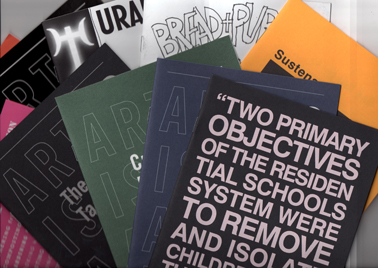
Artists & Activists Pamplets from Printed Matter
If you ask, Printed Matter will add the selection of Artists & Activists pamphlets in with an order. Including polemics by Fritz Haeg, The Center for Tactical Magic, Ultra-red, Cathy Busby, Raqs Media Collective, Critical Art Ensemble, amongst others, they addresses rights and responsibilities from the perspectives of the peripheries, and there is much to be learnt from the peripheries. And as Alasdair Gray says “Work as if you live in the early days of a better nation.”
Architectural Drawing Competition 2011
The Royal Glasgow Institute and the Norma Frame Foundation are calling for entries for an architectural drawing competition.
Anger at the neo-liberalisation of education and culture
What Art have I seen?
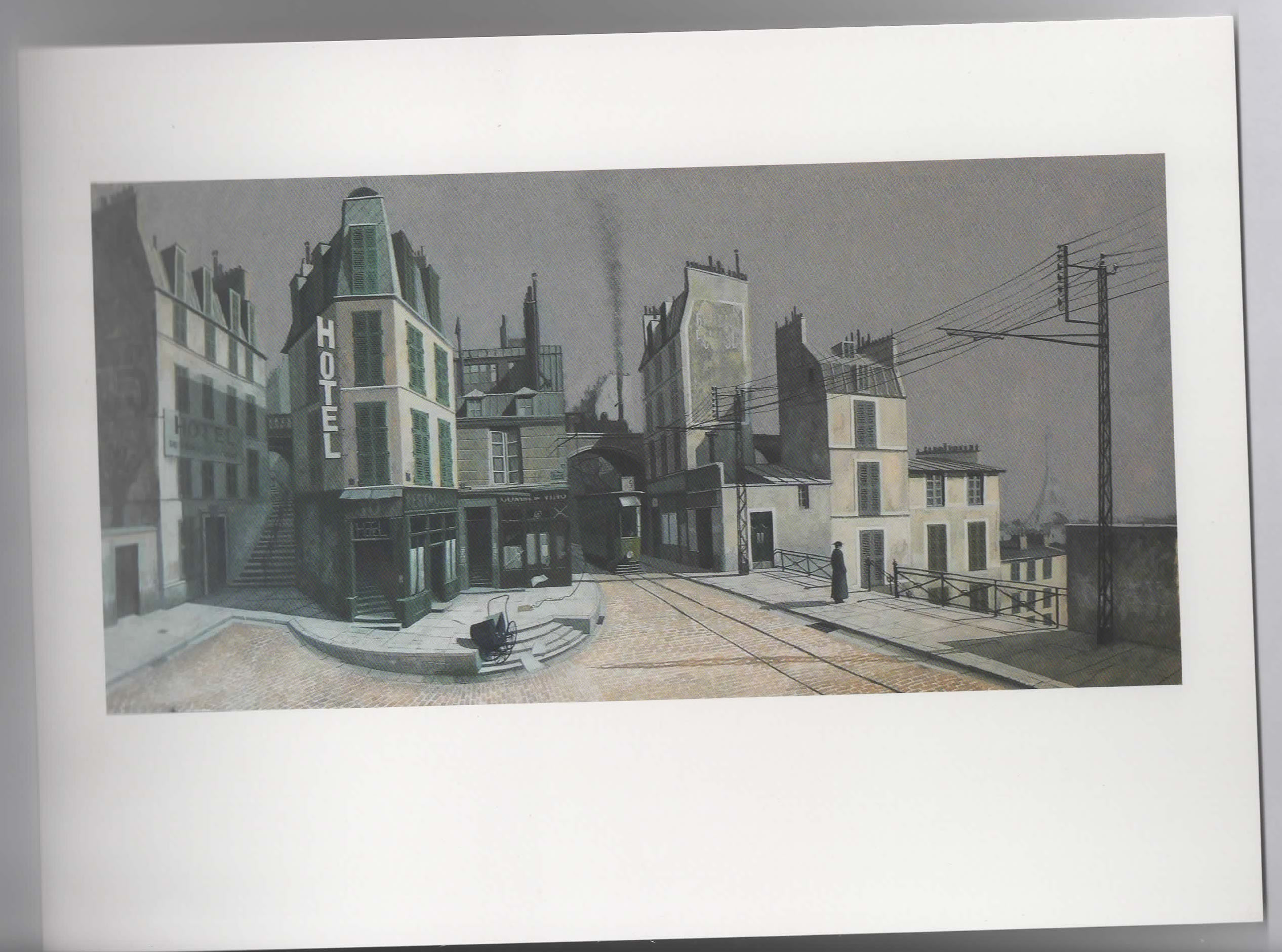
James McNaught at Ewan Mundy Fine Art. This scan of the invitation card does not do this work justice. Figurative art is not dead. Painting is not dead. This sequence of work, almost all concerning urban spaces, but also including two or three still lives, is completely compelling and utterly bewitching. The quality of surreal space (reminding me a little of De Chirico), the implicit narratives of revolution and religion, the still strangeness animated by gusts, were a joy, each more interesting than the last.
McNaught’s works, though labelled as watercolours, are not wishy washy or lightweight. The scenes remind me of various parts of Europe – the appearance of the Eiffel Tower in the distance suggests a working class suburb of Paris, but some of the architecture suggests Italy. The ships, trams and buildings suggest an unmodernised area. The relationship between key aspects of the foreground, the recurrent ‘Abbe’, the crows, the prams sometimes upset, and the papers caught in gusts all suggest a narrative of the imagination. The symbolism of the ‘abbe’ and the crow, in at least one image obvious transformed from one to the other, is perhaps in competition with the symbolism of the Eiffel Tower, the centennial monument to the French Revolution. I’d associate the papers, stacked on a pram or caught in gusts of wind in otherwise very still space, with another form of knowledge from the religious, perhaps with revolution, but communication is also broken – in a number of works the overhead telephone lines are broken. But my favourite was a work entitled ‘still life with all the objects fallen to the edge of the table’, or something like that – almost Juan Gris cubism.
What art have I seen?
Subodh Gupta: Take off your shoes and wash your hands
Artur Zmijewski: Democracies
Both at Tramway, Glasgow
The Turra coo
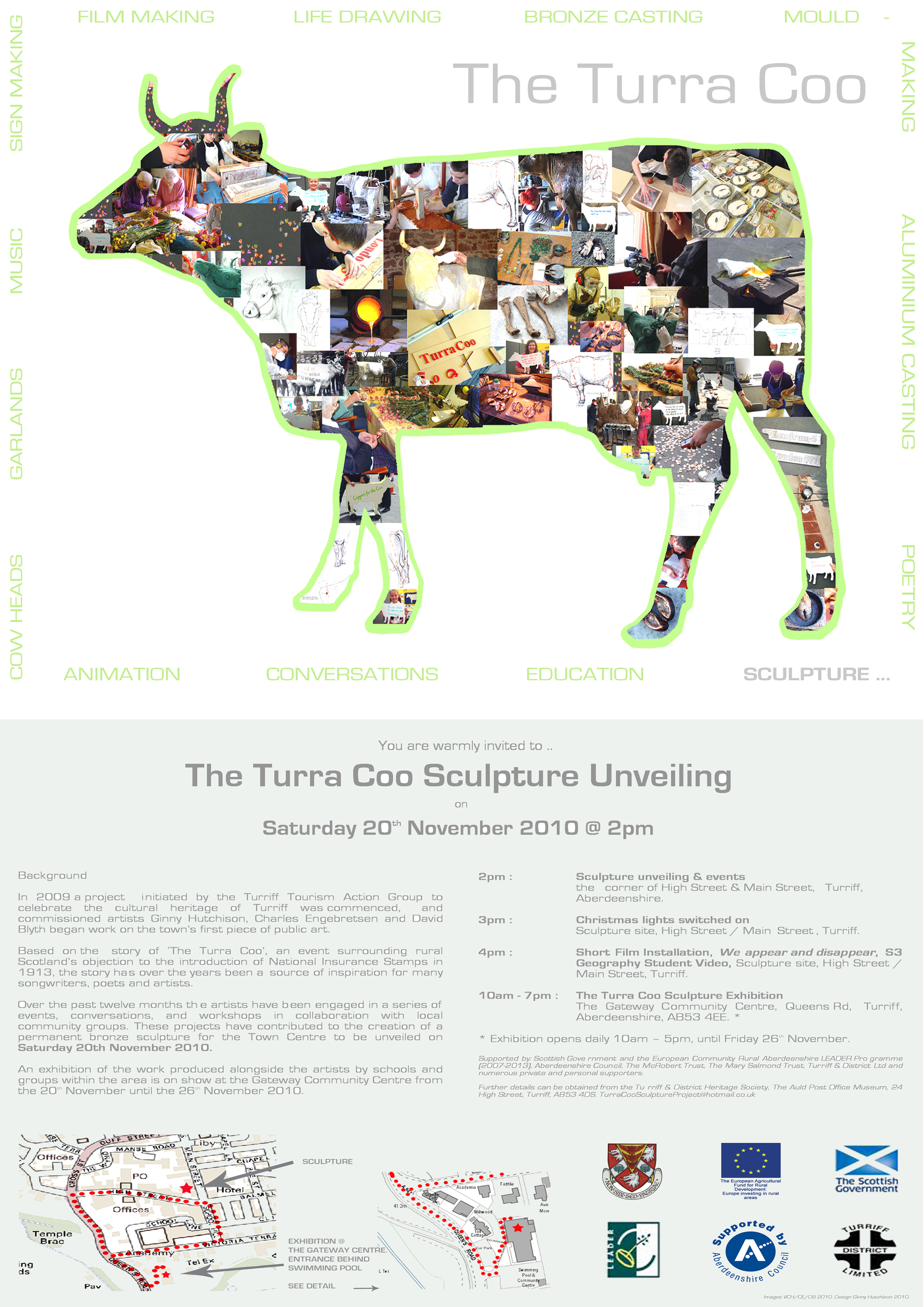 Those excellent artists Ginny Hutchison, David Blyth and Charles Engebretsen are finally unveiling their major new work, the Turra Coo. The original Turra Coo was the centre of a controversy about national insurance stamp. Slideshow on Radio Scotland.
Re: Fuelling ‘The Necessary Revolution’
Missions, Models, Money, the think-tank for the cultural sector, regularly produces interesting and provocative papers. The most recent Guide, entitled Fuelling ‘The Necessary Revolution’: Supporting best practice in collaborative working amongst creative practitioners and organisations – a guide for public and private funders addresses the subject of collaboration. This paper identifies a wide range of formats of collaboration and draws on the results of a two year programme of ‘action research’ involving six groups of organisations developing collaborations around a range of issues from marketing, to the management of spaces, from back office functions to programming.
Two other pieces of recent reading intersect with this.
Firstly, Bringing Humility to Leadership: Antecedents and consequences of leadership humility, by Morris, Brotheridge and Urbanski published in Human Relations 2005. This paper is one of a growing literature seeking to articulate alternatives to the conventional charismatic models of leadership, and was useful in our work on The Artist as Leader. The MMM Guide notes the importance of leadership within collaborations, but does not correlate important characteristics of leadership, as highlighted in this paper, with those of collaboration. The paper on humility, having tracked ideas of leadership through history, notes three key characteristics:
Self-awareness, or knowledge of ones strengths and weaknesses;
Openness, or being willing to learn from others;
Transcendence, or being aware of something greater than the self.
MMM’s Guide goes into some depth on the importance of organisational self-knowledge and the competencies, qualities and attributes required including, ‘seeing systems,’ ‘wanting to learn,’ ‘building a shared vision,’ ‘building a critical mass for change within an organisation,’ ‘developing mutual trust and respect,’ ‘managing across boundaries,’ communicating effectively and appropriately,’ ‘confronting issues and managing conflict,’ ‘adapting to changing circumstances,’ ‘valuing risk taking, tolerating failure.’ The correlation with the characteristics of leadership are quite clear. Just as the leader must want to learn so the organisation must build a culture that values learning amongst the staff and also as a whole.
What the MMM Guide doesn’t deal with, although it purports to be about creative practitioners, is the creative practitioner. Interestingly, collaboration between artists is taken as an ongoing and recurrent aspect of practice, but for the purposes of this paper the practitioner only exists as an undistinguished part of the organisation. In fact the relationship between the individual artist and the organisation is a particularly difficult area. Largely, the individual artist is at the behest of the organisation, competing for contracts and subject to management guidance. The Artist Placement Group‘s (APG) programme offers a structure for the artist to work with the non-arts organisation without becoming subsumed and instrumentalised. This is driven by the concept of the artist as ‘incidental person’ and the use of the ‘open brief’ responded to with the ‘feasibility study’, the need for a host and conditions of work parallel with staff (not only in terms of pay, but also expenses). APG remains an important example offering an as yet not fully absorbed model of working. MMM’s Guide explores the potential for organisational collaboration, but it does not fully address the question of human creativity, i.e. how cultural organisations fully engage with creative individuals. Given that within the cultural field there is now a real diversity of forms from artist-led galleries such as Transmission, temporary forms such as Vidokle’s unitednationsplaza and more permanent structures such as e-flux, through stable collaborative practices such as PLATFORM, one wonders if the lack of questioning of the forms of organisation isn’t a missed opportunity.
Secondly an important paper, Coase’s Penguin, or, Linux and ‘The Nature of the Firm’ by Yochai Benkler, published in the Yale Law Journal, 2002. Benkler discusses the emergence of ‘open source’ as a new means of production distinct from management and the market, the traditional organisers of production. Focusing on the characteristics of ‘open source’ projects such as Linux and Wikipedia that make them successful, Benkler teases out the distinctive characteristics of this form of collaboration. Whilst Claire Cooper focuses on management theory around collaboration, Benkler focuses on issues of movitation and its limits, and scale and its dynamics. Benkler’s paper argues that the forms of collaboration in the information and (digital) cultural sector are driven by human creativity, and it is the high value placed on human creativity within this territory that makes his paper particularly interesting.
The advantages of peer production are, then, improved identification and allocation of human creativity. These advantages appear to have become salient, because human creativity itself has become salient.
Benkler argues that the motivations for participation in ‘open source’ collaboration are social-psychological, rather than monetary, ranging from personal sense of worth through to indirect career benefits derived from positioning the individual to secure monetary rewards for services associated with the ‘open source’ product.
The argument around scale is also interesting, focusing on the granularity of the tasks. If each task is of a sufficient fine grain then the time required of an individual to complete the task is proportionate to the non-monetary value produced for the individual. Integration of the modules completed by self-selected individuals, and the associated quality management systems, are critical to success.
In Benkler’s terminology the MMM Guide focuses ways collaboration can make cultural organisations more competitive by re-organising the property and contract costs between organisations, rather than leaving them locked into individual entities. Of course, the challenges identified by the organisations participating in MMM’s action research are precisely those property and contract costs which are not a factor in ‘open source’ models: “marketing, technology, fundraising and partnership, programming, environmental issues and professional development.” But Benkler’s model provides a useful analysis of the challenge of unlocking large scale human creativity.
What art have I seen?
Streetlevel‘s two exhibitions, Victor Albrow and Frances McCourt’s Carbeth, are both interesting in very different ways. Where McCourt’s images are close to snapshots of the hutting community at Carbeth. Albrow’s images are completely different: clearly constructed, lit to create an artificial quality, looking almost like paintings. I went to see McCourt’s work but came away very pleased I had seen Albrow’s as well. Talking with Chris Biddlecombe about McCourt’s approach to the subject, I think we both felt that some more strangeness could have been drawn out, either in terms of scale (imagine if the images were life-sized), or if there was more sense of invading the person space of other people (less postcard and more creeping around).
As a postscript there is also a hutting community outside Ayr. I’ve been past a couple of times, the second when introducing Brett Bloom to Ayrshire a few weeks ago. On that occasion we ran into some of the inhabitants who were renovating one of the huts.
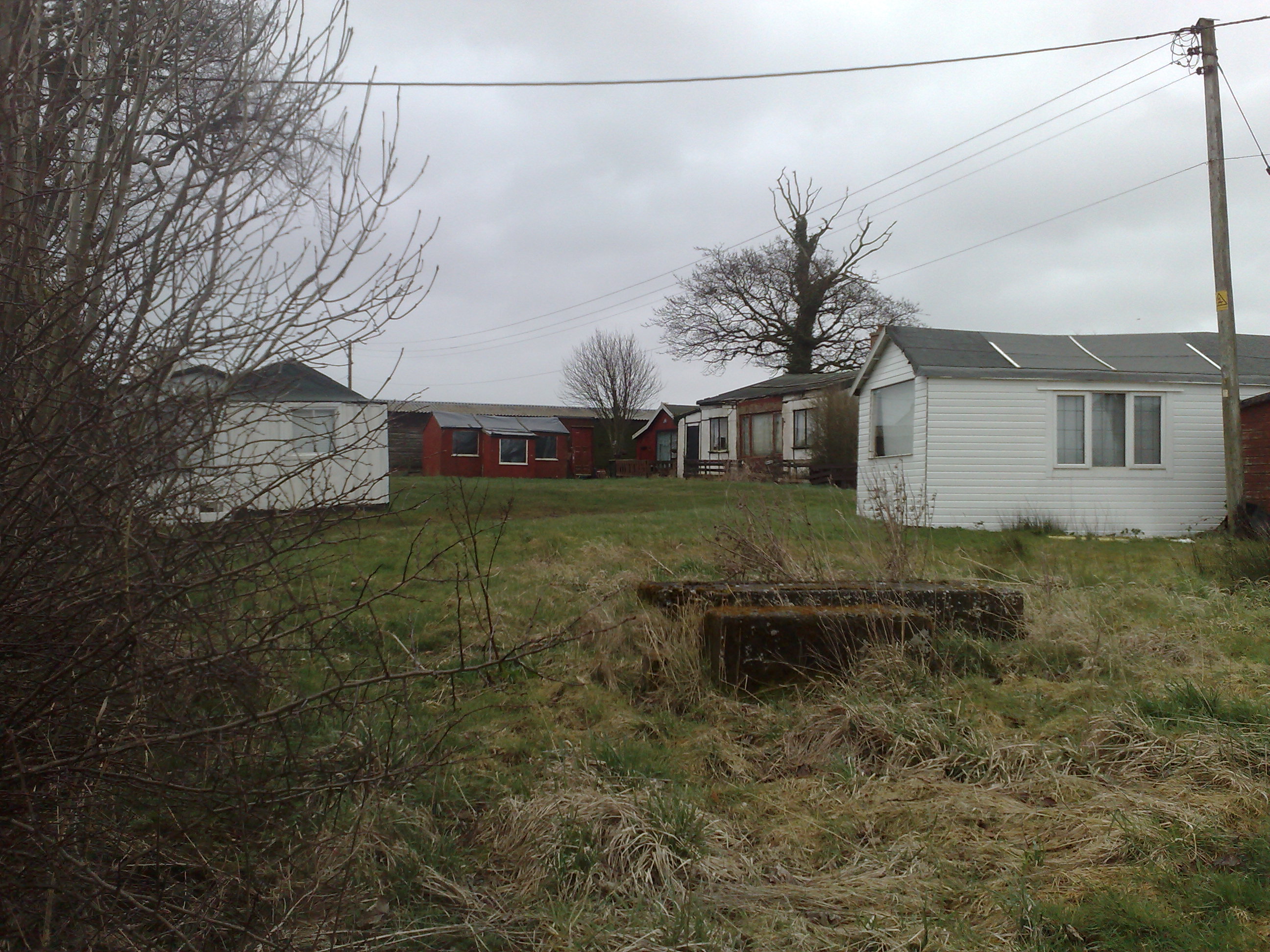
Huts near Ayr (2009) Photo: Chris Fremantle
Attending the SKOR conference in Amsterdam
Actors, Agents and Attendants: Speculations on the cultural organisations of civility
On The Structure
SKOR (the Dutch Foundation for Art and the Public Domain) set out to focus on the shift from a welfare state to a neo-liberal state, and the implications for care and civility (health and state responsibility). There were regular references to mega-changes, not only political. The construction of discourse through multiple channels was embodied in the scenography of the conference (designed by n.office architects) constructed as a podium or soapbox for statements, bleachers for discussion and a table for panels. The multiple channels extended out of the conference to commissioned works in the streets of Amsterdam and a film programme presented prior to the conference. It was also manifest in the preparatory seminars bringing together first politics and policy and then practice and research into focus.

Felix Meretis, the venue, is an independent European centre for art, culture and science and a national and international meeting place in Amsterdam.
The form of [a] poem is like the form of a new public sphere, like the structure of a new idea. Paulo Virno
On The Purpose
Superficially focused on the issues of arts and health, the underlying issues raised by the conference included:
- questioning “the role of art and its assumed ameliorative function,”
- exploring “care as a political and philosophical concept,”
- the ability for art to be critical when it is also implicated in gentrification and “consensualising the increasingly capitalised infrastructures of public care.”
“We can say that care forms the core of public art’s aesthetic assemblage: that public art has been invented to produce ameliorative caring, performances and objects within a landscape organised by a welfare state. So what happens when that landscape is radically withdrawn?”
Day 1 Fulya Erdemci, Director of SKOR, introduced the day which was chaired by Andrea Phillips.
Mark Fisher, a UK writer and philosopher, started his presentation by channelling the experience of precarious work: swipe cards to get into buildings; submitting bank details and forgetting which organisation you have done it for; logon details for different computer systems; emails from institutional administrators; occupational therapists talking about stress; psychiatrists prescribing drugs: the obverse of flexibility is contortionism. Living with the impact of the business ontology and epistemology (business models of being and thinking) that have been imposed on health, education and culture. The therapy culture which reflects everything back onto the individual and the family. He suggested that the flip side of ‘no such thing as society’ is ‘the big society’ based on ‘magical volunteerism.’ I asked about the requirement that all activity be valued as work (caring for instance needs to be transmuted into work for it to be valued by society). He suggested that there are two responses: refusal to participate or total adoption where everything is defined as work and accounted for financially. Underlying this is the need to extend the discussion of ‘externalities‘ from the environmental discourse into the wider social discourse. In other words to find ways to deal with those costs or benefits not ‘transmitted’ through price. One strand of environmental policy seeks to ensure that environmental impacts, not historically acknowledged in cost, enter into the financial systems through, for instance, carbon taxes. Is it useful to financialise the value of care any more than it is useful to financialise the value of bees? Where attributing financial value to the negative environmental impacts of human activity should enable the costs of remediation to be met, attributing financial value to positives such as elements of ecosystem services can produce absurdities. A good example was the news the day that Lehman Brothers collapsed with an impact measured in billions of dollars, that bees were worth some hundreds of millions to the economy.
Steven de Waal, a politician and social entrepreneur who argued (as I understood him) for the potential of the Dutch co-operatist system, where a significant part of the welfare state is delivered through private not-for-profit institutions, to adapt and engage with the neo-liberalisation of care by reducing the bureaucratic stranglehold and increasing citizen participation in their own care.
Alfredo Jaar, the art star speaker, in a conventional artists’ presentation, showed us a series of projects located in the ‘real world.’ NB his construction of his practice is split across the art world, real world, education – his distinction between the art world and the real world being about the audience expertise. He talked about the role of artists working in public space trying to create the cracks in spaces of consumption to draw out resistance. Although a clearly charming and skilled man, these projects were nailed by Ian Hunter as ‘the spectacle of empathy’.
[apposite quote of the day: USE AN UNACCEPTABLE COLOUR, Gavin Wade]
Edi Rama, the Mayor of Tirana in discussion with Fulya Erdemci, Director of SKOR. Rama is famous for being the man who painted Tirana. In a short film Rama talked about colour as ‘dresses’ or colour as ‘organs.’ He compared relationship of the Mayor to the electorate with the relationship of the artist to the audience. Rama talked about the role of beautification in changing a culture and re-engaging the population in civic society. His colour strategy was one of desperation on discovering himself in a kafkaesque town hall with no budget at all (no one was paying taxes). When asked by an EU official responsible for repairing a bridge (?) in Tirana, “What colour should I paint it?” Rama replied the orange of the Dutch football strip! This immediately set off a public discussion. Based only on the fact that it was actually generating a public discussion of civic space, Rama continued painting buildings and urban structures in vivid colours. He reported that they undertook a referendum. In the referendum they asked two questions: “Do you like it?” and “Should we continue?” He reported that something like 55% said they liked it but 75% said they should continue.
Anton Vidokle, artist, curator and founder of e-flux talked about his understanding of art, referencing the French Revolution and the use of the King’s art collection for public benefit. Talking about the emergence of Manet and Courbet forty years later, the first artists one would associate with a critical practice as might be understood in contemporary practice, he speculated on a connection with transmutation of the royal art collection into a public art collection. He went on to describe various e-flux projects. I’ve written about Vidokle, e-flux and in particular the Martha Rosler Library before, so I’ll move on.
Chto delat?, the Russian artists’ collective. Dimitry Vilensky challenged the core subject by arguing that care is maintenance of the status quo, and that care contradicts change. “Where is violence in this discussion?” He questioned the value of health, coming from one of the most unhealthy countries and reminded the audience of the misuse of ‘a healthy body is a healthy spirit’ by the fascists. Vilensky, in describing the ideological fight, drew out the relationship between the work of Chto delat? and the role of artists during the revolution, particularly highlighting Rodchenko’s design for a workers’ club reading room which Chto delat? have reused in exhibitions. He noted the strategy of creating pedagogical spaces using furniture, murals and newspapers. He asked “Where is the factory that we can seize?” and noted that there were no revolutionary masses outside the conference waving flags and supporting the important deliberations. He commented on the importance of not only taking over the means of production, but also inventing new means of production (such as Vidokle’s e-flux).
Gavin Wade performed part of freee‘s spoken word choir event currently taking place at Eastside Projects in Birmingham, an artist-led space he has been involved in setting up. Wade is known for amongst other works STRIKE and his involvement in the organisation Support Structure. When challenged about something he had said about art not being useful, he referenced the Artist Placement Group and the complexity of working within non-art organisations without becoming completely subsumed by their agendas. He also commented that although Eastside Projects is undoubtedly contributing to the gentrification of the area and generating increased wealth for the landlord, he said, “We are not the tailors of Utopia.” They use a billboard (the only non-commercial one in Birmingham) attached to the building. They produced a manual for Eastside Projects, making the operation of the organisation explicit.
Introducing Day 2 Fulya Erdemci reiterated the mega changes, e.g. welfare state to neo-liberalism, analogue to digital. She also commented on commissioners becoming customers with their own aesthetic preferences (perhaps suggesting some recent experiences where SKOR’s aesthetic authority has been questioned).
Beatriz Colomina‘s presentation on x-ray architecture took us on a cultural historical tour of the relationship between the body and architecture by way of renaissance anatomical/architectural drawing, section and dissection, and the emergence of x-ray and the international style (not synchronous, but not unrelated). Relating health to architecture she highlighted Le Corbusier‘s language and then demonstrated the relationship between sanatorium architecture and domestic spaces. Referencing Susan Sontag’s Illness as Metaphor Colomina talked discussed the reshaping of the city by illness, in particular TB. She explored the evolution of CAT scans into architectural practice manifest in the increasing aesthetic use of sections. One comment was that medicine is also the end of particular forms of architecture such as TB houses and leper colonies.
Hedy d’Ancona, politician, spoke about the influence of the built environment on wellbeing, the importance of the healing environment as a concept coming out of both healthcare and public housing.
Matthijs Bouw of One Architecture discussed the Jozef and Geertruiden Projects. He said “We love markets because they encourage dynamism, teams, diversity and flexibility. We hate markets because they promote atomisation, arbitrage and risk management. Asked by hospital management to finalise the layout for a housing development on a site being vacated due to relocation of services, Bouw questioned the economic model and with the support of the hospital management developed a new approach. On one site, Geertruidentuin, existing hospital buildings were regenerated as housing without the involvement of a developer. On the other nearby site, St. Jozf, the ‘allied services’ (midwives, physiotherapists, etc.) dislocated by the hospital moving to a new site, but not themselves moved in the process, became stakeholders in a new healthcare facility utilising the remodelled existing building. This important example involved questioning the ‘means of production’ (i.e. developer-led regeneration) through which more value (cash) was produced for the hospital and more value (dislocated services becoming stakeholders) was produced for the locality. Bouw also raised an interesting point about the client/commissioner because the daily reality is that these are project managers, risk managers, quantity surveyors and legal representatives rather than individuals carrying the vision.
AA Bronson channelled St Paul’s letter to the Galacians setting out his own cv and then making clear he was addressing not only those present, but also those many different absent peoples. He talked about art, death and healing. Whilst in many ways adhering to the conventional artists’ talk, it challenged fundamental ideas about boundaries and limits.
The story took us from the early years of General Idea (“Felix Partz, Jorge Zontal and AA Bronson of General Idea lived and worked together for 25 years. Partz and Zontal died in 1994.”), through the emergence of AIDS and its impact on their community, their work and their lives. Whilst AA Bronson did not describe in detail the process or experience of caring for his two friends and collaborators as they died, he did show us the works he made with them during that process, and he did allow us to understand how he has since woven together an art practice and a healing practice. The weaving together of life and art is a constant process: Felix Partz and Jorge Zontal are diagnose with AIDS so pills enter their lives and so the pills entered the work becoming sculptures and installations, as large as sofas and as light as clouds.
Describing life after their deaths, AA Bronson developed his experience of healing built up with his friends and collaborators and how this began to form a fundamental part of his life. He set out his healing practice as a thing in itself and in his art practice, creating therapy rooms in galleries, and seeing clients in them before and after gallery hours. He described more recent collaborative work with younger artists (School for Young Shamans) and the group work (Invocations for Queer Spirits). He talked about his role as a medium for individuals to speak to their own bodies.
Perhaps like Alastair McIntosh who, in Soil and Soul, addresses spirituality and environment without descending into new age waffle, so AA Bronson spoke about healing and art in a compelling and challenging way, straddling uncomfortable boundaries with a compelling presence and story.
Bik van der Pol‘s discussion of happiness started with a short anecdote about advice not to test your sense of humour on policemen in other countries, from which they developed an argument about cultural difference, but more importantly about happiness. Touching on the World Values Survey and on Laughter Yoga, they talked about using nitrous oxide as part of urban public health programmes.
The programme ended with Willem Geerlings discussion of the challenges for health. He is the Chair of the Board of the Medical Centre Haaglanden and pulled Susan Sontag’s Illness as Metaphor from his pocket.
Chris Dooks’ Elephant
Chris Dooks’ brilliant new compositions, made in pain but with hope.
Mashing Up: Art+Labour
“MASHING UP” :
Art+Labour
a public conversation
CCA 5
Tue 9th Nov 2010
12.30-6pm
http://www.variant.org.uk/events.html
Art+Labour is a public conversation exploring the conditions and experiences of creative labour in the cultural industries – working conditions, pay, working hours; freedom and autonomy, pleasure and obligation; insecurity and uncertainty; social reproduction, networking and isolation – and artists’ organising within it – unions, artists’ associations, or self-organised studio/exhibition spaces.
Panelists include:
Angela McRobbie
Professor of Communications, Dept. of Media & Communications, Goldsmiths
Scottish Artists Union
The representative voice for artists in Scotland
Graham Jeffery
Reader: Music and Performance, The School of Creative and Cultural Industries, UWS
Katarzyna Kosmala
Reader, Centre for Contemporary European Studies, UWS
Gesa Helms
Researcher & artist
Brett Bloom
Member of Chicago-based art collective Temporary Services who recently produced ‘Art Work : A national conversation about art, labour, and economics’
Owen Logan
Researcher, School of Divinity, History and Philosophy, University of Aberdeen
Facilitated by Gordon Asher
Effective Learning Tutor, UWS Centre for Academic & Professional Development
Event is free but ticketed, tickets available from CCA Box Office:
CCA, 350 Sauchiehall Street, Glasgow G2 3JD
tel : +44 (0)141 352 4900
http://www.cca-glasgow.com
“MASHING UP” : Art+Labour is organised by Leigh French, co-editor of Variant, and Sophie Hope, member of Making A Living, in co-operation with Graham Jeffery of The School of Creative and Cultural Industries, University of the West of Scotland, and supported by CCA, Glasgow.
LOANS &
INTERNSHIPS
WORKSHOP
CCA 5
Tue 9th Nov 2010
10.30am – noon
Sophie Hope & Leigh French
examine the Case Studies
Public time?
 Claire Docherty’s comments at the Mapping the Future (of public art in Scotland) event in Dundee yesterday were billed as a discussion of ‘public time’ and focused on the current state of public art. She seemed to be arguing around a need to move beyond a dichotomy of monumentalism or critical ephemeralism looking in particular at what she called public time. She described a number of projects which were iterative or cumulative or strategic, i.e. that, without monumentalism, tried to develop relationships with audiences and participants (the public?) over a period of time. She highlighted gardening and pavilion projects, slow food, conversation and referenced her own year long programme of One Day Sculpture across New Zealand. The obligatory Ranciere reference – participation does not equal critical legitimacy – was made.
But her comments remained looking around in the (public) art world. Whilst time and space are different dimensions of the same experience, the focus of public art, certainly in Miwon Kwon’s construction, has been an evolution of the understanding of space and the abilities of artists and designers to shape and reveal space.
“Yet despite the meanderings of the last 15 years we often continue to use such a search for resolution in lieu of admitting that there is a need to understand the relative value of work that deals with time as much as space.” (Proxemics, 2006, JRP Ringier, p.99)
Nothing is ever cut and dried, but when Liam Gillick raised the issue of shifting the focus from public space to public time, and I’m not sure if that’s where Docherty got the idea from, he prompted in my mind thoughts about the public experience of time, not artists’ construction of time.
Turn your thoughts to public time and approach that idea:
Waiting, waiting lists, waiting rooms, wasting
Travelling, delays, speed, dislocation,
Working, pressure, shifts, holidays, nightworkers, clickworkers, payday
Boredom, repetition, necessity, cuts, dole,
Queuing, waiting,
Shopping, retail therapy, footering
Beer o’clock
Timeless places, casinos without clocks or natural light, skara brae
Sleep disorders, postcode lotteries,
Today vs PM, rolling news,
“The geese from Siberia are three weeks earlier this year”
(the list is as long as the time invested in making it – half an hour yesterday, another five minutes today)
Time is a curious phenomenon. It is structured within society, historically by culturally determined cycles derived from the process of the planet’s angle and rotation around the star at the centre of our solar system. In Scotland, because of our Northerliness, the pattern of the seasons mean that our school holidays are different from England. We have different festivals (Michelmas has just passed, Lammas before that, and in the future Candlemas) with associated happenings, including food and drink. Marking time and the pattern of activity related to the seasons has slipped our minds’ because we shelter, light and heat our lives. Other cultures have a more present experience of seasonality, including for instance the Sami (image above). We rarely extend our timescale to even one cycle of seasons, let alone thinking beyond our own lifespan.
If there is value in drawing attention to scale, then it is equally important to draw attention to value. Time is money. Or rather there is a more complex relationship where social position is related to time and money. Just as money is unspecialised form of exchange (and humans are unspecialised animals) so time (as we organise it in Western society) is an unspecialised form of measurement enabling a little of one person’s time to be valued very highly and a lot of another person’s time to be bought extremely cheaply. In this way time is like space. Public art is complicit in the gentrification of space. Can public art not also be accused of being complicit in the gentrification of time?
Detailed summary of all three Mapping the Future events on PAR+RS website.
Postscript
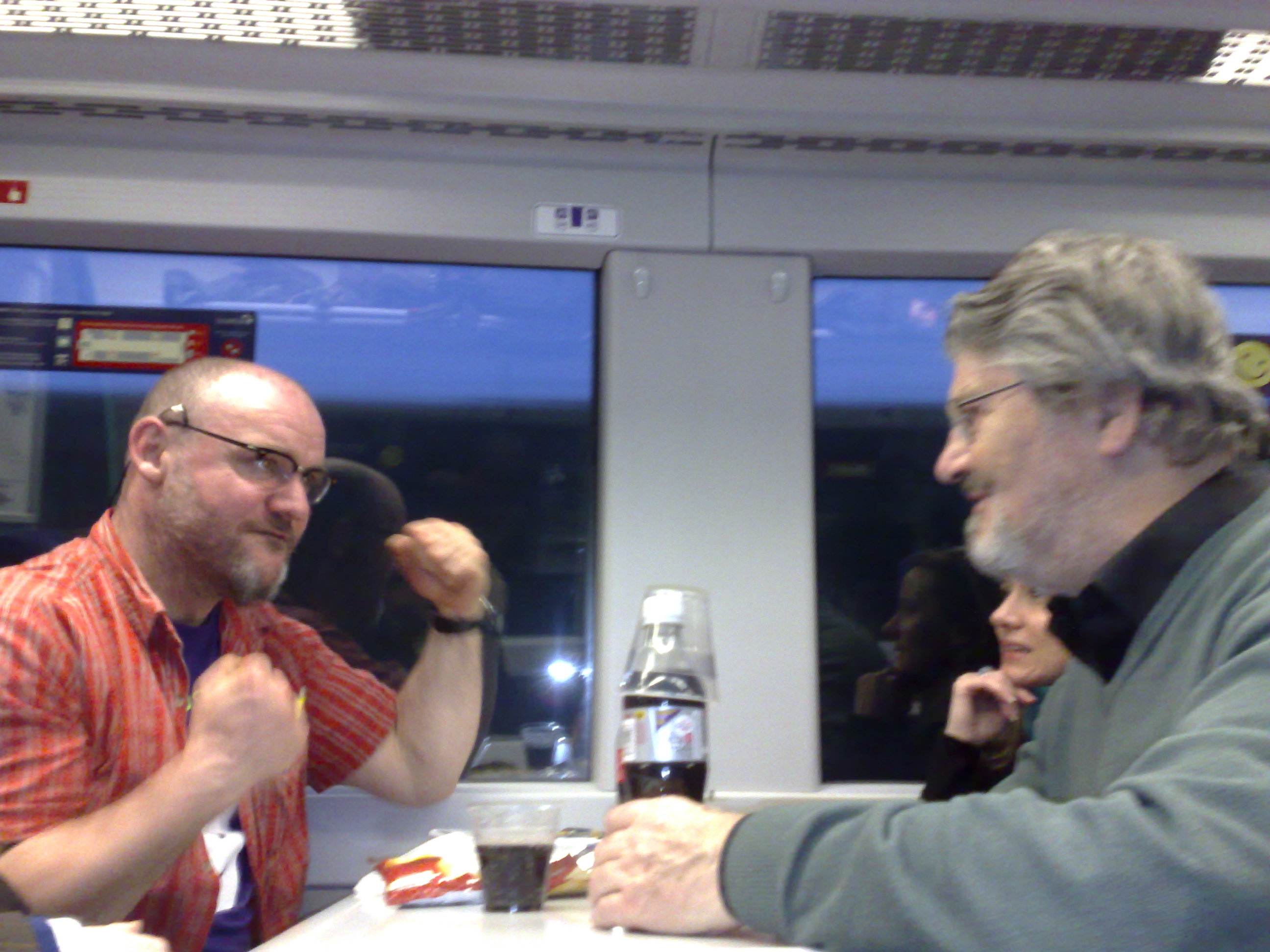
"I always knew you were wrong." Ross Sinclair and David Harding on the train returning from the seminar.
What Art have I seen?
Walid Raad‘s exhibition at the Whitechapel including the Atlas Group Archive manages to address the condition of conflict through the construction of fictions that draw out the banality and give the banal new meaning. The careful judgement exercised, that neither belittles nor glorifies, but rather makes the everyday, the personal, the experiential, seem significant. The fiction of the police agent #17 turning his camera away from the cafe’s where he’s meant to be documenting the conspirators, and instead recording sunsets is curiously powerful. It’s the story that makes the banality of the sunsets, not even well filmed, into something that keeps the attention.
Rachel Whiteread’s Drawings at Tate Britain emphasise her interest in focusing on absence. Like the Atlas Group Archives’ Sweet Talk File, the process of exclusion renders the abstract qualities of ephemeral reality into an aesthetic object.
Cameraless Photography at the V&A, curiously focuses on the opposite of Walid Raad’s work: where the work in the Atlas Group Archive uses the camera to question the nature of documentary, these artists, as at least one of them says explicitly, choose to avoid the camera precisely to avoid its implication of the documentary.
A Manifesto for a time when the environment bites back

One of 30 presented at State of Play (Saturday 9 October 2010, James Arnott Theatre, University of Glasgow) an event organised by AHM.
AHM – Ainsley Harding Moffat ‘WORK AS IF YOU LIVE IN THE EARLY DAYS OF A BETTER SOCIETY.’ Sam Ainsley, David Harding and Sandy Moffat are a collaborative group working with individuals and institutions locally, nationally, and internationally, who share similar or related aims and aspirations – namely to place the arts centrally in the making of a new Scotland.
It’s not often that artists organise conferences and symposia, but in the tradition of Littoral, this one brought together an excellent introduction to the current Scottish cultural policy context from Philip Schlesinger; a reflection on a career trajectory from Christine Borland; a critical theory dérive on the statelessness, medievalism and prosumers from Neil Mulholland and some words of wisdom from the older generation in the form of Sam Ainsley and Sandy Moffat. The next event is 2 April at the National Galleries of Scotland in Edinburgh.
It went a bit flat at the end. I think there had been such a good range of presentations that the audience didn’t know how to respond effectively. There is a sense of imminent doom, not least because of the underlying ideas shaping Creative Scotland, impending public sector retrenchment and the end of the buoyant art market. But no-one could quite put the target in focus. It was certainly helpful to have Peter McCaughey’s rallying call for the audience to join the Scottish Artists Union en masse. There is a need to bend Creative Scotland into a relevant shape (the conceptual underpinnings having been shown to be deeply flawed and the current spectral suggestions that its role is akin to an investment bank being laughable).
But equally Brett Bloom’s talks Temporary Services‘ Art Work initiative to establish a national conversation (in the US) on art, work and economics is also very much to the point. I suppose my question would be, was Christine Borland the best choice? She spoke eloquently about the importance of getting involved in Transmission and the challenges of developing a career, but there is a point where an artist is represented by one of the foremost galleries and is exhibiting in major international bienniales is reinforcing the existing model of artworld career success, rather than offering alternatives. If one of the problems is, as Bloom suggested, the proliferation of MFA programmes producing young artists geared for a conventional route, and as Schlesinger commented, the current model works on massive overproduction from which a few stars emerge, then we need to explore alternatives rather than re-state existing models.
One of the real challenges for the future events planned in this series is to explore how fine art education can or is reinventing itself, and how artists are operating outside the artworld. This was hinted at, and Christine Borland’s comments that there is evidence that doctors engaging in medical humanities as part of their education are demonstrably better able to deal with ambiguity than their peers was an interesting point of departure. What is it about a fine art education that enables engagement with other disciplines to wider social benefit, and how can we construct pedagogical models that promote this?
Art Work: Ayr
 Temporary Services‘ project Art Work has raised important questions about the personal economy and practice of artists. On the back of one-off newspaper-format publication, distributed free throughout the US and internationally, Temporary Services have kick started a discussion about the ways that artists and creative people use alternative economies to once again challenge the idea of competition and the market dominance of culture. Temporary Services produce exhibitions, events, projects and publications. They say “The distinction between art practice and other creative human endeavors is irrelevant to us.”
The Scottish Artists Union has invited Brett Bloom, one of the founders of Temporary Services, currently based in Denmark, to speak at the SAU AGM (7.00pm 30 September 2010, Stills Gallery, Edinburgh) about Art Work.
Brett Bloom will come to Ayr on Saturday 2nd October for a discussion with anyone whose interested in participating. It’ll be upstairs at Su Casa, a new cafe in the Lorne Arcade, between the Gaiety and the High Street at 2pm for as long as it goes on.
Preparatory Reading:
Art Work, the publication;
Helen Molesworth’s Work Ethic, catalogue of the Exhibition (not available online);
A response to A Call to Farms, a book resulting from a dérive organised by Temporary Services and Brian Holmes.
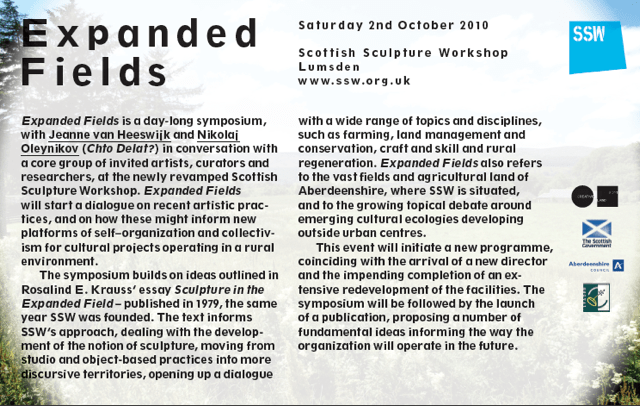
Robert Barry
I have tended to believe in the curatorial strategy, ‘find that artist who was known in the past and rediscover them.’

From left, Barry, Huebler, Kosuth, Weiner
Robert Barry is one of those names associated with the dematerialisation of art, diary courtesy of Lucy Lippard. Barry and the others in the picture above, the other names, Sol Lewitt, Robert Mangold, etc., and the organisers, e.g. Seth Siegelaub, they were the avant garde, rejecting the domination of the commercial galleries and the academy. Barry’s lecture at Glasgow School of Art as part of the events programme of his exhibition at The Common Guild, Glasgow, started with his move away from painting.
The works Barry made, e.g. Radiation Piece (1969), deeply challenging at the time, retain their edge, not least because, as Barry himself commented, post 9/11 security means that you can’t just buy radioactive materials any more. The troubles of the Critical Art Ensemble, although cleared of all charges after four years, indicate one dynamic of the interface between contemporary art and security. The more recent challenge to academic freedom by UCSD and Arizona over Ricardo Dominguez’s Transborder Immigrant Tool further highlights the sharp edge where contemporary art highlights and questions mainstream values of security, immigration, terrorism and imperialism. Where Barry talks about his invisible works, and the discovery of their form using FM Radios or Geiger Counters, the FBI are now involved in the search.
Barry moved into text pieces and The Common Guild themselves acknowledge the lineage of artists working with text in their press release, coming down to Douglas Gordon, et al.

Robert Barry, 0,5 Microcurie Radiation Installation, 1969
Something which is very near in place and time, but is not yet known to me, a work which Barry made between 1969 and 1972 is perhaps a progenitor of his more recent work. Consisting of the same sentence, Something which is very near in place and time, but is not yet known to me, with a new date added each time it was shown, the date selected for the opening of the relevant exhibition. He made it 30 times and then Seth Siegelaub published a small volume containing all 30 works.

Something which is very near in place and time, but not yet known to me, 1970
Since then Barry has focused on text works, some installed permanently in Swiss banks, such as that of his Italian dealer, and for exhibitions in galleries.

Wallpiece with Blue Mirrorwords, 2006
He described his style, and he used the word style, evolving around the use of a particular typography, a limited vocabulary of perhaps 200 words and a deep concern for the intuitive installation of the works in spaces. The words he has selected have no narrative context or meaning in relation to each other or to him, they are rather objects selected for their physicality, longer, shorter, more ‘o’s, etc. It is the space between them which is supposedly significant.

Word Lists, 2009
In the end this is the second time a Common Guild event has been a disappointment. The last one was Richard Flood, Curator at the New Museum, NY. That time I had gone because I knew of their Night School programme (Anton Vidokle’s iteration of his United Nations Plaza), but Flood didn’t mention it. When I asked a question at the end, he said, “Oh, that’s the work of the education department” and went back to telling us about all the artists he had curated. (Stills then showed the Martha Rosler Library and invited Vidokle to talk, so I got to hear (read post) the bit I was interested in). Robert Barry was also a disappointment. The avant garde becomes not much more than stylised decoration.
I’d rather have John Latham’s ‘God is Great’ or Nathan Coley’s ‘There Will Be No Miracles Here’ or Ian Hamilton Finlay, or Thomas A Clark. Maybe I’m looking for some poetry?

John Latham, God is Great, 2005

Nathan Coley, There will be no miracles here, 2009
Art Work comes to Scotland
Temporary Services‘ project Art Work has raised important questions about the personal economy and practice of artists. On the back of one-off newspaper-format publication, distributed free throughout the US and internationally, Temporary Services have kick started a discussion about the ways that artists and creative people use alternative economies to once again challenge the idea of competition and the market dominance of culture. Temporary Services produce exhibitions, events, projects and publications. They say “The distinction between art practice and other creative human endeavors is irrelevant to us.”

The Scottish Artists Union has invited Brett Bloom, one of the founders of Temporary Services, currently based in Denmark, to speak at the SAU AGM (7.00pm 30 September 2010, Stills Gallery, Edinburgh) about Art Work. Follow up events are planned for November.
Center for Urban Pedagogy
Center for Urban Pedagogy (CUP) releases another three in the series of Making Policy Public posters. CUP, based in NY, make educational projects about places and how they change.
Barriers to Reentry. This poster takes a look at formerly incarcerated people and the difficulties they face when trying to reenter the workforce. It was produced through a collaboration with the Fortune Society and Sara McKay.
I Got Arrested! Now What? This poster breaks down the juvenile justice system comic-style. It was produced through a collaboration with the Center for Court Innovation, the Youth Justice Board, and Danica Novgorodoff.

Immigrants Beware! This poster explores the immigration consequences of criminal convictions and gives non-citizens knowledge and resources to fight the deportation process. It was produced through a collaboration with Families for Freedom and designers Lana Cavar and Tamara Maletic.
Composer in residence
John Browne is Composer in Residence at the Florence Nightingale School for Nursing & Midwifery. Interesting blog including ideas in development such as a songbook for nurses.
Calendar Variations
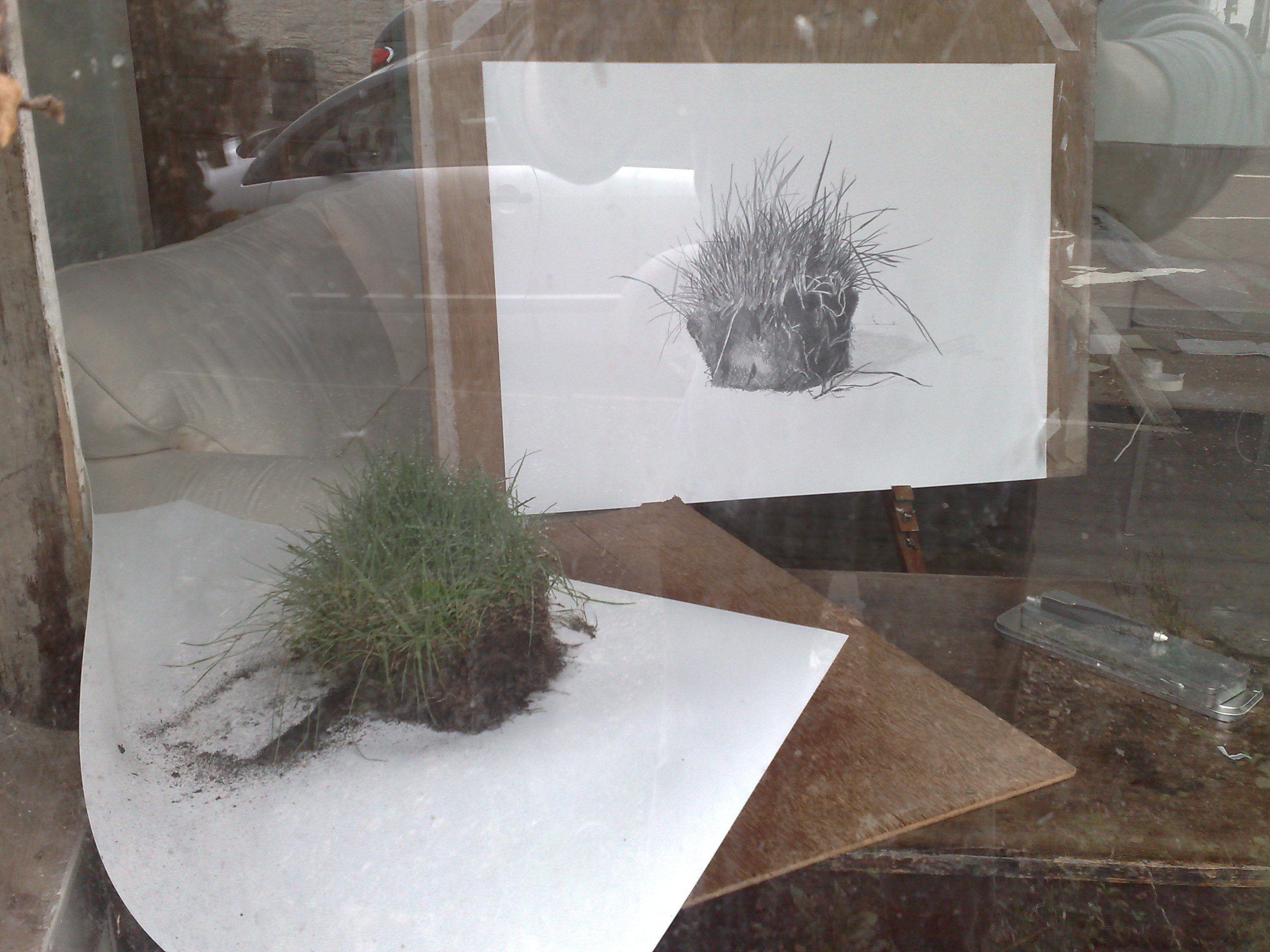
Drawing in context, C Fremantle, 2010
Walking In Long Grass Score
Looking for an area of long grass.
Walking into the middle.
Deciding on a shape: a square, a circle, even a triangle.
Walking the shape until the grass is flattened.
Walking hands outstretched to feel the stems and seeds and chaff.
Standing back and admiring your efforts.
Going back in.
Looking at the flattened grass, or
Smelling the scent, or
Walking around the perimeter of the shape to make it bigger, or
Walking the other way around the shape, or
Lying down in the middle in the long grass.
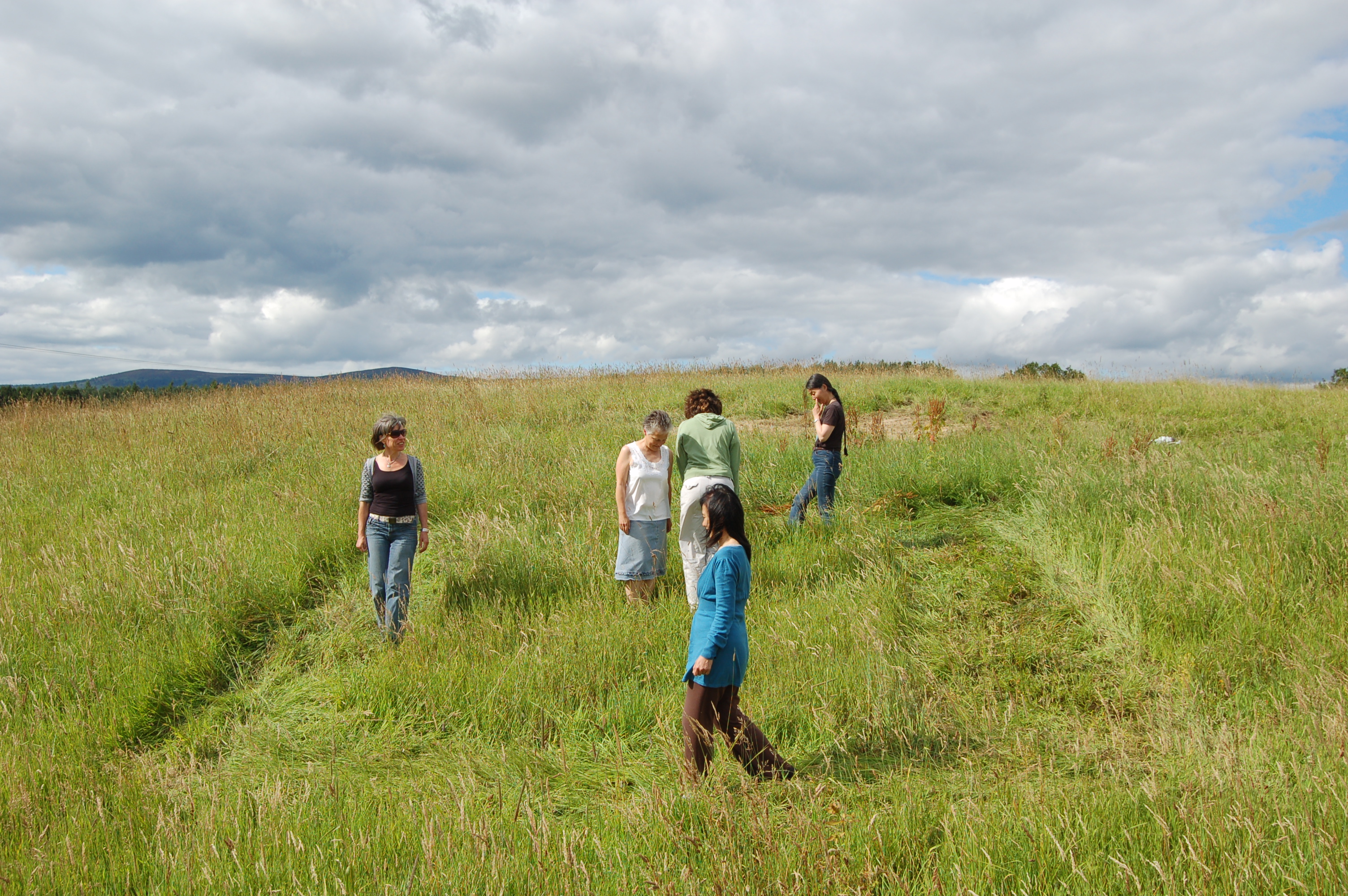
Chu Yuan, Georgina Barney, Janet McEwan, Reiko Goto and Fiona Hope - Woodend Barn
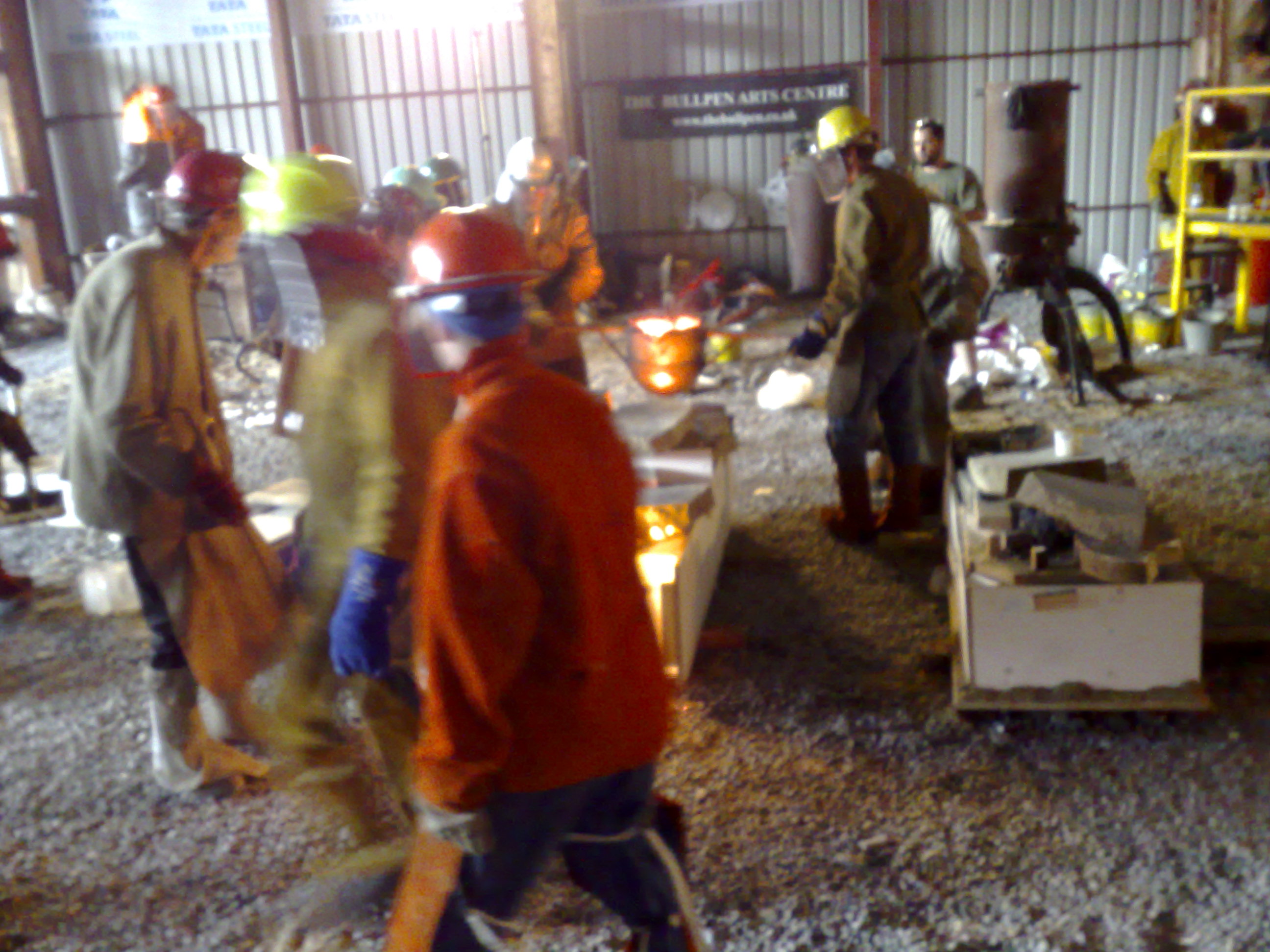
6th International Conference on Contemporary Cast Iron Art
“Come for the Fire Stay for the Art”
“Meet Melt Make”
These are the strap lines on T-Shirts in July in Kidwelly, Camarthenshire: more than a hundred artists taking over an industrial museum to live and breath casting iron. Hard hats, leather aprons and jackets, work boots, gloves, face masks, lots of moulds being made and poured…[more]
What art have I seen?

Leonora Carrington, Guardian of the Egg, 1950, Oil on canvas
Surreal Friends, Pallant House, Chichester
I wondered why this exhibition wasn’t also visiting Edinburgh, given that the Dean Gallery has Roland Penrose’ Surrealist Library amongst other materials. Then I discovered they are having a big exhibition about male surrealists at the Dean this summer. This exhibition would have been an excellent counterpoint: male/female, domestic/public etc.
Leonora Carrington (1917-2011), Spanish painter Remedios Varo and Hungarian photographer Kati Horna ended up in Mexico because of the war – all of them would have been dealt with ruthlessly by the Nazis if they had stayed in Europe. Moving to Mexico gave them space to develop their art in a context of friendship and a conducive culture: just look at Horna’s photographs of sugar skulls. Mexican culture is closer to death and of course has its own Surrealists (Frida Kahlo’s ghost is present, but does not diminish this work).
Where a lot of surrealist work emphasises the artists’ unconscious in quite a dream-like landscape (think of de Chirico’s piazzas), for these artists the surreal is also the personal – the internal personal is also the external personal. Settings are often houses and gardens. children and animals belong to families, not just to dreams.
The curatorial approach has a personal dimension not normally seen in public retrospectives – many of the essays in the catalogue are by relations and friends. Individual connections are foregrounded – Joanne Moorehead is related to Leonora Carrington. Edward James lived just down the road at West Dean as well as in Mexico and was one of the foremost collectors of the work of these artists as well as part of the social circle.
The personal iconography is of cooking merging with alchemy and families with tethered animals. Strangeness is in the opening up of the basement of everyday life as part of a complex, but lived reality. Carrington draws on the language of Italian and Dutch Renaissance painting, and there are moments where her lover Max Ernst is also referenced, but these are the interpretations of an artist with her own language. If the male surrealists draw on the aesthetic of the Barque and Classical ages, where history painting is the highest form, these artists find their inspiration in the painting of the Renaissance. Looking not only at Breugel, but also at the backgrounds of images by artists such as Leonardo, Botticelli and Raphael, Carrington populates her paintings with vignettes and scenarios. She also explores abstraction and still-life. Knowing more of Jung, Gurdjieff and hermetic writing would enable a more detailed understanding of these complex works.
AAAARG.ORG is gone
I think aaaarg left ten days ago. I didn’t notice until I wondered where the daily emails had gone. At different times I have opened them every morning, or they accumulated punctuating my inbox for a while until I worked my way back through them. There are still some in my inbox now, but they are suddenly meaningless. Now I wish that they were all still there, hundreds of them, a history punctuating my life. But change is often a new improvisation, a reconfiguration, rather than an abrupt break (those exist too: before aaaarg was not abruptly different. It took a while to come into existence, and now it has gone it exists as a possibility and a memory).
What can I say? “Sorry. Goodbye. If you come back let me know.”
Louise Bourgeois 1912-2010

Thinking about Radical Nature
I wrote a piece on the Radical Nature show but since it hasn’t been published anywhere else, I’m putting it up here…

What art have I seen?

Bishops Court quilt, Unknown, 1690-1700. Museum no. T.201-1984
Quilts 1700-2010 at the Victoria and Albert.
What art have I seen?

(s˘m-po’ze-m) sculpture, music, performance by Sarah Tripp, Ruth Barker, Martine Myrup, Kathryn Elkin in the Jeffrey Library at the Mitchell during the Glasgow International.
Ayrtime
Chris Dooks eclectic Ayrtime programme of Literature, Alt-Folk (and Alasdair Roberts was so good last night), Astronomy and Theatre taking place in Ayr at the moment. Season 2 in the Autumn.
Listening to Alastair Roberts I kept thinking about Martyn Bennett and was reminded how important it is to tell those strange and brutal stories of death.
Next is Wounded Knee.
New South Glasgow Hospitals Strategy Artists

New South Glasgow Hospitals
Ginkgo Projects is working for Brookfield Construction, in collaboration with NHS Greater Glasgow and Clyde, to develop and deliver an arts strategy for the new Acute and Children’s hospitals for South Glasgow. As part of the development of the strategy we wish to recruit two artists to work with us, between May and September, to explore and develop two interest strands based on the healing environment and waymarking / orientation.
Expressions of interest are invited from artists who are willing to collaborate with us and work to develop a grounded yet innovative strategy for the new hospitals.
Deadline for submissions: 5pm 19th April. Interview date: 27th April 2010
Project brief is available to download from here in PDF format.
What art have I seen?
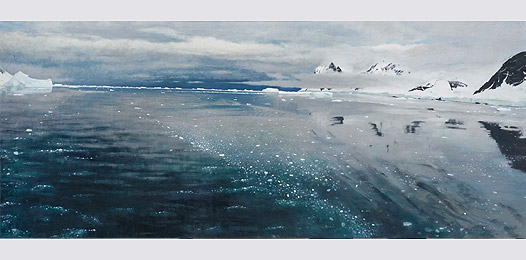
Frances Walker’s Place Observed in Solitude at Aberdeen Art Gallery.
Health, Nature and Art: the GROVE project at NHS Greater Glasgow and Clyde’s New Stobhill Hospital

New Stobhill Hospital Sanctuary, Photo: Laurie Clark
Invited paper as part of the Institute for Advanced Studies in the Humanities, University of Edinburgh, Theory in Practice programme:
“Health, Nature and Art: The Grove Project at NHS Greater Glasgow and Clyde’s New Stobhill Hospital”
2 March 2010.
Abstract:
This paper sets out the Art & Architecture collaboration resulting in the GROVE project for NHS Greater Glasgow & Clyde’s New Stobhill Hospital. This project, based on a strong conceptual framework, uses artworks as part of the construction of a environment where the experience nature plays an important role in healthcare. The paper discusses the practical aspects of this major new public art work and looks at the theoretical ideas of the artists, architects and NHS Arts & Health team.
The author, as part of NHSGGC’s Arts & Health team, has worked closely with Thomas A Clark, lead artist-poet; Reiach & Hall Architects; four other artists, and NHSGGC’s Capital and Commissioning Teams to deliver the project. The project was conceived and developed by Thomas A Clark and Reiach & Hall over a 6 year period prior to commissioning, and has been funded by Scottish Arts Council National Lottery Public Art Fund, NHSGGC Endowments, NHSGGC Staff Lottery, as well as a wide range of community groups. It forms one of a series of Arts & Health developments as part of NHSGGC’s Modernisation programme.
What Art have I seen?
Three American Artists at Glasgow Print Studio in the new Trongate 103, Glasgow
Language of Sculpture
Invited panellist, Language of Sculpture, International Sculpture Center Conference, London, April 9 2010.
Antony Gormley, Lucy Orta, and Peter Noever will headline the International Sculpture Center’s 22nd International Sculpture Conference, “What is Sculpture in the 21st Century?”, being held in London, UK, April 7-9.
This monumental event will explore topics including: The Languages of Sculpture; Public Perception and Investment; and The State of Education. In addition to the keynote speakers, conference highlights include an international roster of presenters, opening reception at Tate Modern, free admission to Henry Moore Exhibition at Tate Britain, daily ArtSlam sessions for attendees to show their work, workshop demonstrations at Chelsea College of Art & Design, and a gallery hop, as well as pre and post event optional activities.
Registration Deadline: March 16, 2010. Find more information and register online @ http://www.sculpture.org. Questions? Contact events@sculpture.org or USA 609.689-1051 x302.

Working in Public Seminars
Published on the PAR+RS Public Art Scotland website, an introduction to Working in Public (2007) by Prof Anne Douglas and Chris Fremantle. This includes links to essays written by Prof Douglas as well as Wallace Heim‘s evaluation of the project.
Reading
ARTWORK, a project by Chicago-based Temporary Services. Well worth getting a copy of this newspaper which challenges, documents, proposes and otherwise stimulates thought about alternative economies in the arts. With essays, personal stories and re-presentations of historical artworks, this is excellent food for thought, arising as it does out of the current climate which in the US is seeing the collapse of the art market, and in the UK a significant shrinking in public-sector investment in the arts, whether the government changes or not.
Reading
How not to Commission by Ray McKenzie on the PAR+RS web site.
Well articulated challenge to assumptions about public art, both against works which are simply corporate posturing, regeneration ‘place-making’, or artist’s ego, and also against the overblown claims of socially engaged art.
McKenzie makes use of Nicholas Bourriaud’s Relational Aesthetics, but I wish he had also taken into account Grant Kester’s work, a more nuanced and subtle argument. In the end the projects he discusses are compelling, and I am persuaded by his argument that the 19th Century monuments in our cities are not so far away from some contemporary public art, being focal points for community activism, celebration and memory.

 CHRIS FREMANTLE
leave a comment